
October 2024. During a week-long whistle-stop tour of Germany, we visit Dessau-Roßlau in Saxony-Anhalt, Weimar in Thuringia, Coburg in Upper Franconia (Bavaria) and Kassel in Hesse. Smaller cities, yes. But each with their own significance. Untouched by overtourism. We’re avoiding using the white trains of DB Fernverkehr, Deutsche Bahn‘s long-distance section and opt to use the red trains of DB Regio and other regional operators.
Because of the rough night on board the European Sleeper and an early connection from Berlin to Dessau, we had de facto a full day in the city of Dessau.


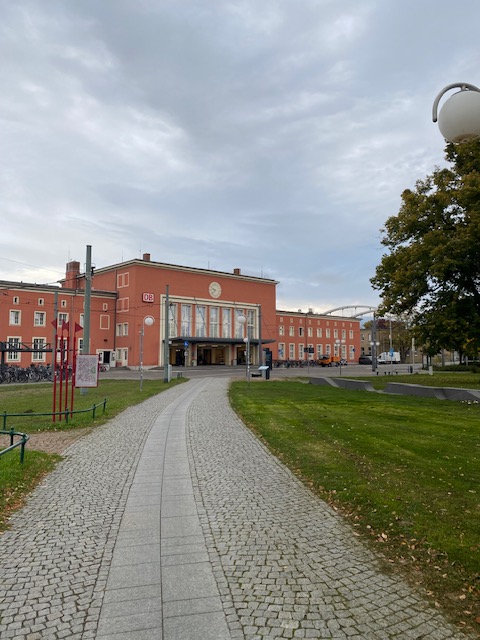
Introducing Dessau
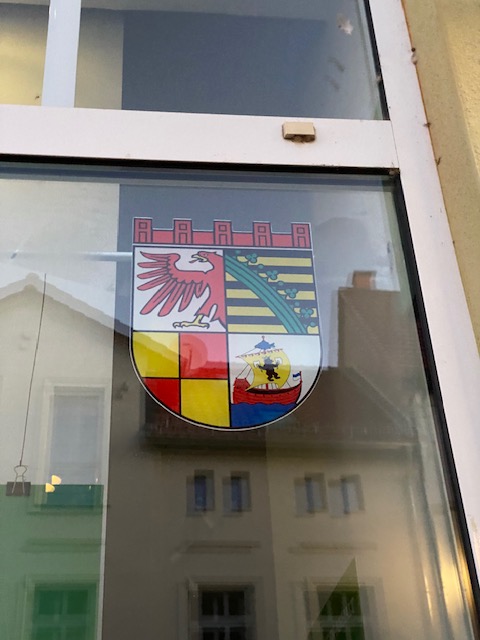
Dessau is a city in the Land or state of Saxony-Anhalt, situated at the confluence of the Elbe and Mulde rivers. As of recent estimates, it has a population of approximately 80,000 people. In 2007, Dessau merged with the neighbouring town of Roßlau, creating the combined city of Dessau-Roßlau.
The history of Dessau dates back to at least the 12th century, when it was first mentioned as a settlement. By the 16th century, it became the capital of the Principality of Anhalt-Dessau, a status it retained for several centuries. Dessau’s prominence grew under the House of Ascania, and the city became known for its cultural and scientific advancements.
During the 18th century, the Enlightenment-era ruler Leopold III Frederick Franz, Duke of Anhalt-Dessau, known as ‘Prince Franz‘, transformed the surrounding area into a centre for landscape gardening and architecture, culminating in the creation of the Dessau-Wörlitz Garden Realm, now a UNESCO World Heritage Site.
In the 20th century, Dessau gained international recognition as a hub for modernist design and architecture when the Bauhaus school of design relocated there in 1925. Led by Walter Gropius, the Bauhaus movement produced revolutionary architecture, furniture, and art.
The iconic Bauhaus Building and the Masters’ Houses, built during this period, remain architectural landmarks and are also UNESCO World Heritage Sites.

After WW II
Dessau suffered heavy bombing during World War II, which destroyed much of its historic architecture. After the war, it became part of the German Democratic Republic (GDR) aka East Germany and underwent reconstruction, but the city’s industrial base, including the Junkers aircraft factory, was diminished.
Today, Dessau is a vibrant cultural and educational centre with a strong focus on its Bauhaus heritage. Visitors can explore the Bauhaus Museum, which houses a collection of works from the movement, as well as the Bauhaus Building itself.
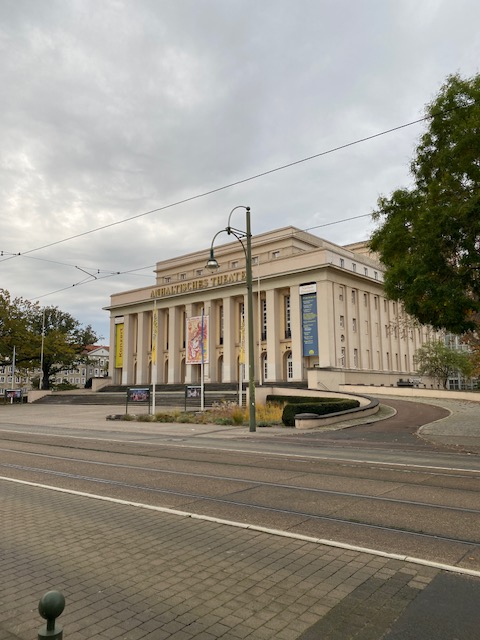
The Dessau-Wörlitz Garden Realm offers extensive parkland and historic buildings to explore, including the Wörlitz Palace. The city’s historic Anhalt Theatre continues to host performances in music, theatre, and dance.
In addition to its historical and cultural attractions, Dessau provides access to natural landscapes, with the Elbe River offering opportunities for cycling and walking along its scenic trails. The city is also a gateway to the Middle Elbe Biosphere Reserve, known for its diverse wildlife and ecosystems.
Dessau today is a regional centre for culture, tourism, and education. It maintains its historical significance while fostering a modern identity tied to its architectural and artistic heritage. It is part of the larger Dessau-Roßlau municipality and remains a key location in Saxony-Anhalt for both residents and visitors.

A contemporary feel
There’s not much left of pre-war Dessau so nowadays Dessau looks modern. Dessau is not a top tier destination. Our hotel is surely the top hotel of Dessau. Perhaps Dormero fits that bill too.
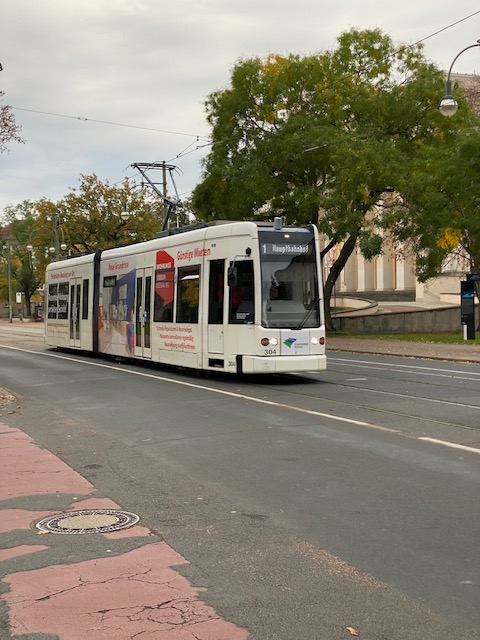
But despite not being super touristy, the city make big efforts to accommodate tourists with signs and directions to its landmarks. Getting around is easy on foot by tram.
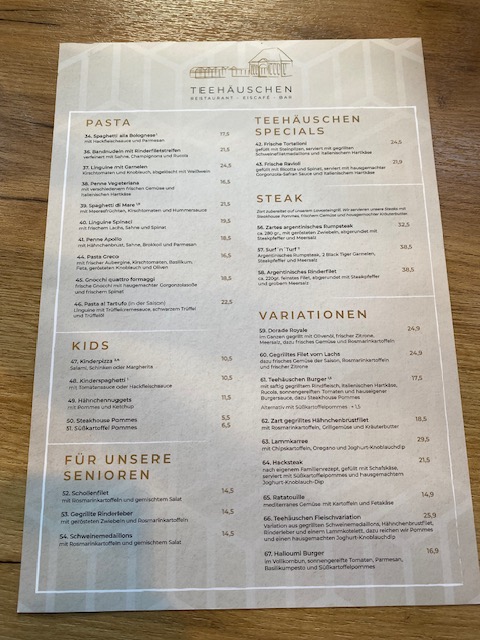
We had lunch at the one decent place we saw in the vicinity of the Bauhaus Museum Dessau. The Teehäuschen is mostly an – expensive – Italian restaurant and ice cream parlour. “Mediterranean food, delicious ice cream & cool drinks. In a nutshell: a place that invites you to linger.” A funny feature is a section for the elder. Half portions of German classics.
We had dinner at Brauhaus “Zum Alten Dessauer”. A Brauhaus is a brewery or brasserie. In other words: German pub food. Expect regional dishes.
As dessert, we both had Dessauer Buchteln 1 mit Vanillesoße und heißen Kirschen. Dessau-style Buchteln (some pastry) served with vanilla sauce and hot cherries.


So?
Dessau is probably more of a day trip destination from… somewhere else. But we wanted Bauhaus and we got Bauhaus aplenty.
 Trip By Trip
16 Comments Add yours