
In May 2024, Jeroen and I travelled to Louvain-la-Neuve in Walloon Brabant to visit the Musée Hergé or Hergé Museum. Georges Remi (1907-1983), better known as Hergé is the author of The Adventures of Tintin, which puts Belgium on many maps.
Louvain-la-Neuve, French for New Leuven, is a planned town in the municipality of Ottignies-Louvain-la-Neuve, in the province of Walloon Brabant, in the region of Wallonia. LLN, as it is also known, is situated 30 km southeast of Brussels.
The town was built to house the Université Catholique de Louvain (UCLouvain) which owns the entire territory of the town; following the linguistic quarrels that took place in Belgium during the 1960s, and Flemish claims of discrimination at the Catholic University of Leuven, the institution was split into the Dutch language Katholieke Universiteit Leuven (KU Leuven), which remained in Leuven, and the Université Catholique de Louvain.
To a great extent, it still lives following the rhythms of the university. As Belgium is quite small with some 30,000 km2, students tend to commute home for the weekend so mummy can do the laundry and send the child back to university with food leftovers for the coming werk.
However, with the construction of L’Esplanade shopping complex, the Aula Magna exhibition centre and auditorium, a large cinema complex, and five museums, it is beginning to grow beyond its academic roots.

Language crisis
Louvain-la-Neuve was born as a result of the Leuven Crisis, which led to the split of the Catholic University of Leuven. Following the elections prompted by this affair, the expansion of the French-speaking part of the Catholic University of Leuven was voted upon and approved on 18 June 1968.
A few weeks later, the separation was made official. The francophones had to move to the future site of Louvain-la-Neuve, except for the French-speaking medical faculty, which moved to Woluwe-Saint-Lambert (often called ‘Louvain-en-Woluwe‘), in the suburbs of Brussels. The first blueprints of Louvain-la-Neuve were made in a hurry and under tension.
Construction
After much deliberation, the university administration agreed on a building site near the town of Ottignies, in the French-speaking part of the province of Brabant (today’s Walloon Brabant). They bought a 9 km2 plot of beetroot farmland, which became the site from which the new town would arise. Construction started on 20 January 1969.
Put under the direction of Raymond M. Lemaire, Jean-Pierre Blondel and Pierre Laconte, this urbanistic project saw the first students and inhabitants arrive in 1972.
At this time, there were only around 600 permanent residents of the town, who were joined during the day by some students of Applied Sciences, the first faculty to open. With the completion of university buildings and the ongoing residential development, the town experienced rapid growth, with 10,477 inhabitants recorded in 1981. The final goal is to reach 30,000 inhabitants, in addition to the 15,000 students living in town during the academic year.
Property of the uni
The town was created with the sole purpose of hosting the university. As such all the grounds are property of the university. Consequently, the university was able to play an important role in the conception and planning of the town.
They decided that town should not be only inhabited by students, but rather draw a diverse community as is found in any classic town.
People, not cars
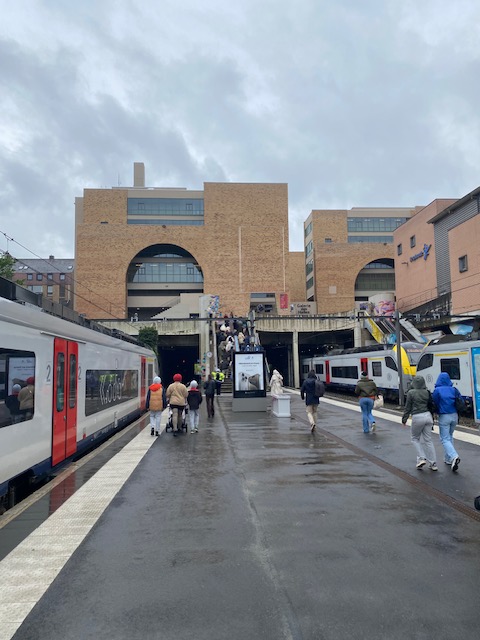
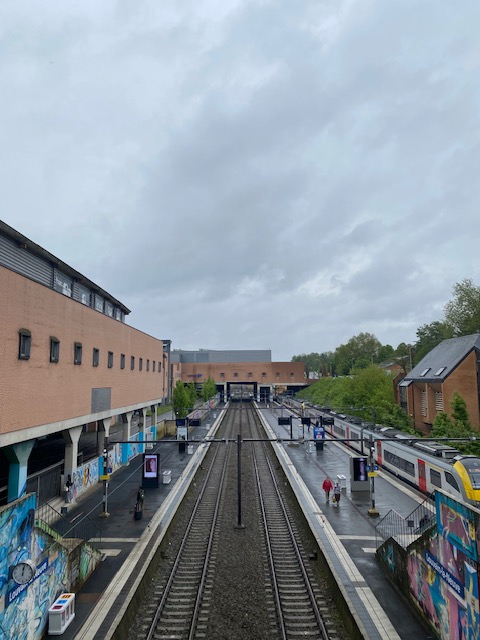
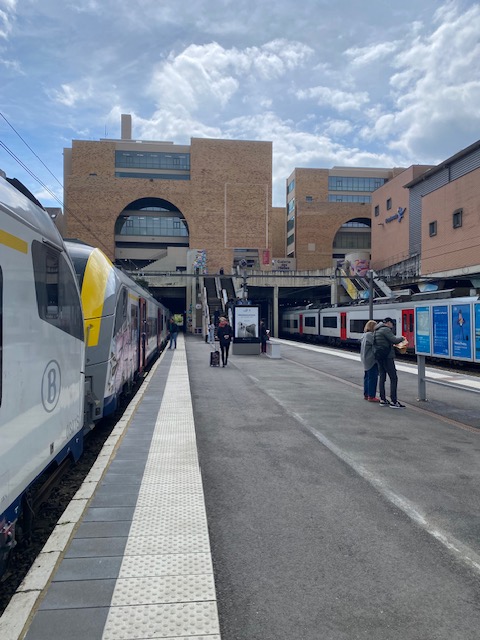
Moreover, one of the main points of the urban design of Louvain-la-Neuve was to make it people- rather than car-centred. As a consequence, the town centre is built on a gigantic concrete slab, with all motorized traffic travelling underground.
This allows most of the ground level of the town centre to be car-free. Most buildings are built on the slab (la dalle), and the pedestrian area is expanding even far from the town centre featuring many mixed use overpasses and traffic calming solutions.
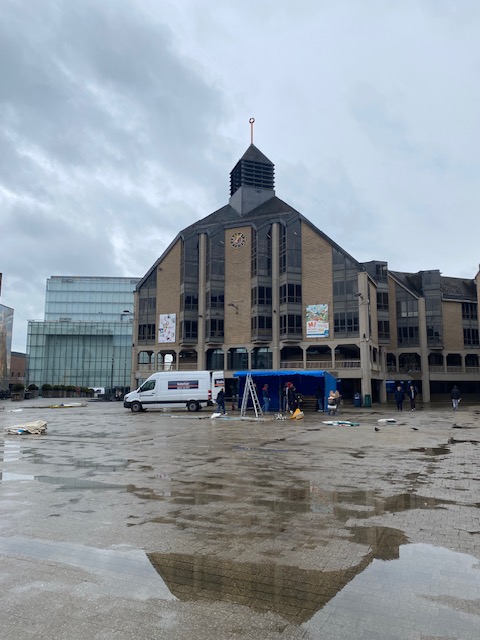
This constitutes an early example of the 15-minute city, with the Agora, Grand’ Place and train station in a tight central triangle reachable by foot within 15-20′ from the outermost districts.




Description
The town is clustered around this center in four districts: Biéreau, Lauzelle, Hocaille and Bruyères. A fifth district, Baraque, that was not planned by the university has expanded on the north side of the town.
It is distinct from the rest of the town in the willingness of its inhabitants to live outside of the common architectural framework (small cobblestoned and pedestrian streets) used in the other parts of the town.
Louvain-la-Neuve’s location 30 km south of Brussels at the crosspoint of several important roads makes it easily reachable by car. Moreover, a train extension has been built from the nearby station of Ottignies, which allows passengers to travel to or from Brussels in under an hour.
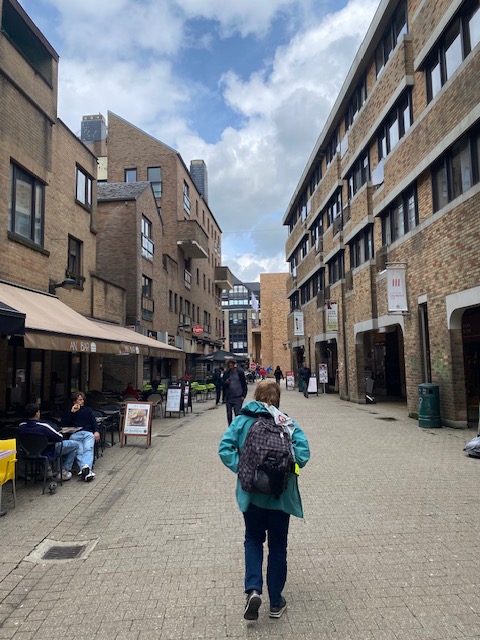
Louvain-la-Neuve is now a thriving, growing town. Construction work is constant as many more of the characteristic small two to five floor buildings made of red bricks are erected.
Due to the large student population that leaves the town during weekends and holidays, Louvain-la-Neuve can be quite empty during those periods.
Nevertheless, the student life both day and night is well developed, centered around Student Unions, “project flats” (“kot-à-projet”), regional pubs, etc.

A little tour of Louvain-la-Neuve
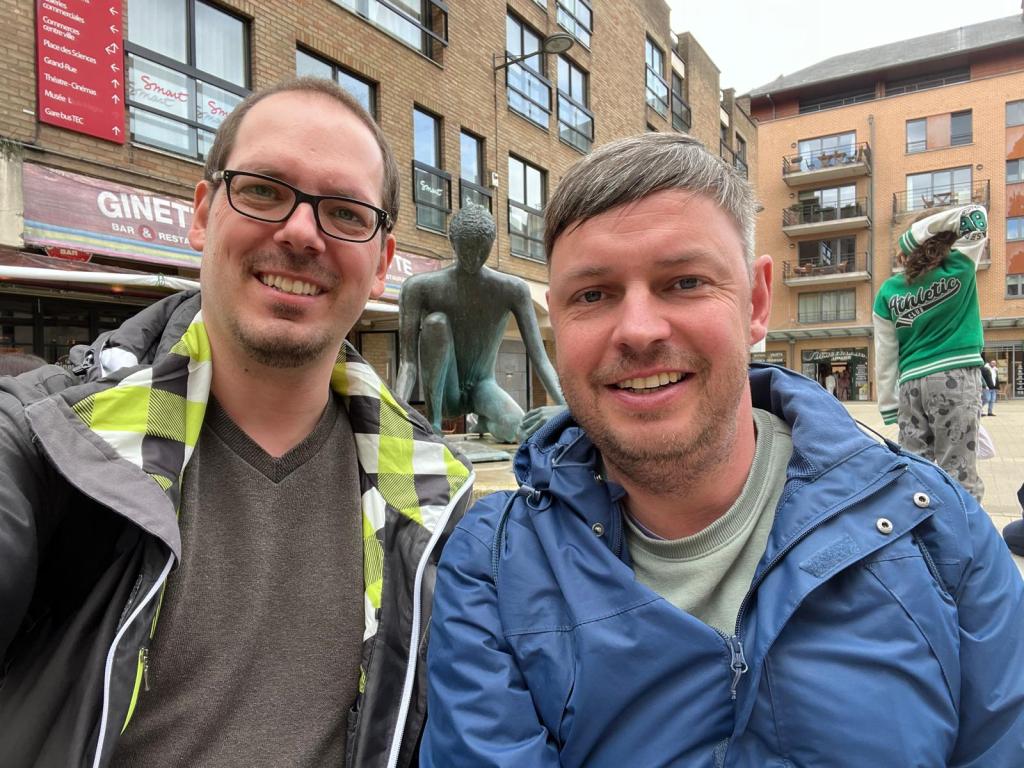
We walked through Louvain-la-Neuve to visit the Musée Hergé Museum. Nothing is far from the railway station. The railway station is hidden in the slab, s it’s underneath the town.
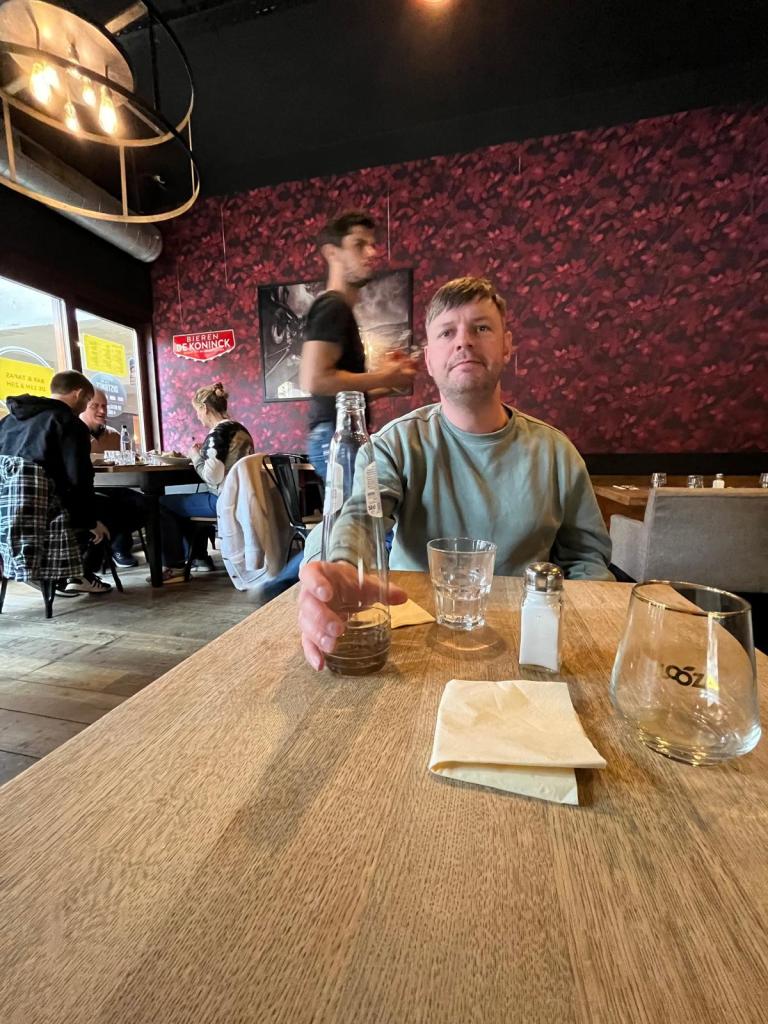
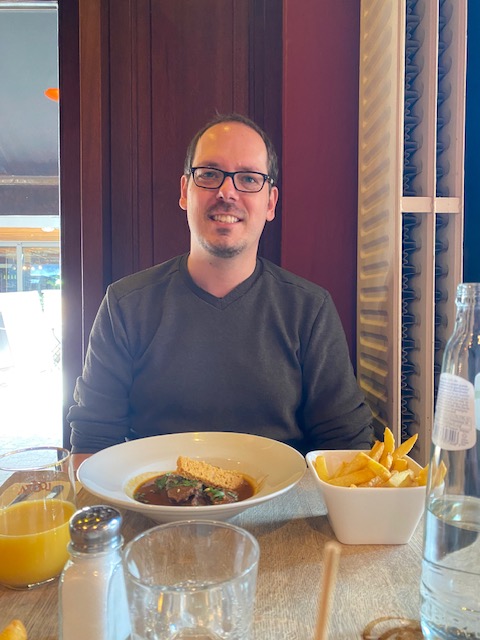
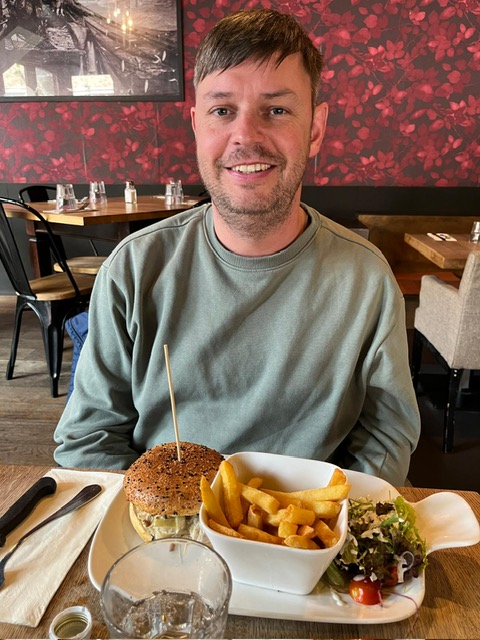
We also had lunch at La popote belge and had a little walk around town.
LLN reminds of a purpose-built ski resort town. It looks artificial and thought through. There’s no real natural evolution. Sim City in real life. But it’s a nice place to be.
In Belgium, university campuses are often integrated in an existing town and are less ‘mentally isolated’. Louvain-la-Neuve comes across as one big campus.
Jeroen describes LLN as looking Dutch. Indeed, many cities and town have this ‘once this was modern‘ look.
So, Louvain-la-Neuve is a mix of ski resort, campus and Dutch town vibes. Quite a cocktail.
 Trip By Trip
Very nice! 🙂
LikeLiked by 1 person
Thank you ☺️
LikeLiked by 1 person