
In May 2024 Thanh and I visited the Rodin exhibition at the Beaux-Arts Mons museum of fine arts. Obviously being in Mons, we explored the capital of the province of Hainaut in Wallonia.
Mons was made into a fortified city by Count Baldwin IV of Hainaut in the 12th century. The population grew quickly, trade flourished, and several commercial buildings were erected near the Grand-Place. In 1814, King William I of the Netherlands increased the fortifications, following the fall of the First French Empire.
The Industrial Revolution and coal mining made Mons a centre of heavy industry. In 1830, Belgium gained its independence and the decision was made to dismantle the fortifications, allowing the creation of large boulevards and other urban projects.
In 1914, Mons was the location of the Battle of Mons. The British were forced to retreat by a numerically superior German force and the town remained occupied by the Germans until its liberation by the Canadian Corps during the final days of the war. There are several memorial placards related to the World War I battles.
Today, the city is an important university town and commercial centre. The main square is the centre of the old city. It is paved in the manner of old cities and is home to many cafes and restaurants, as well as the City Hall and Belfry. It is forbidden to park in or drive through the centre. Together with Plzeň or Pilsen in Czechia, Mons was the European Capital of Culture in 2015.


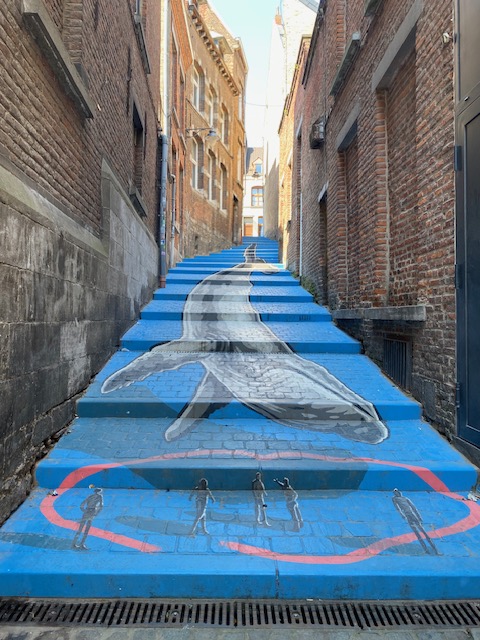


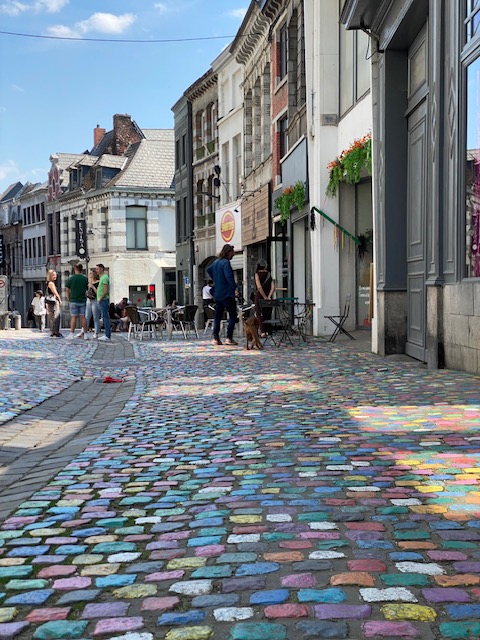


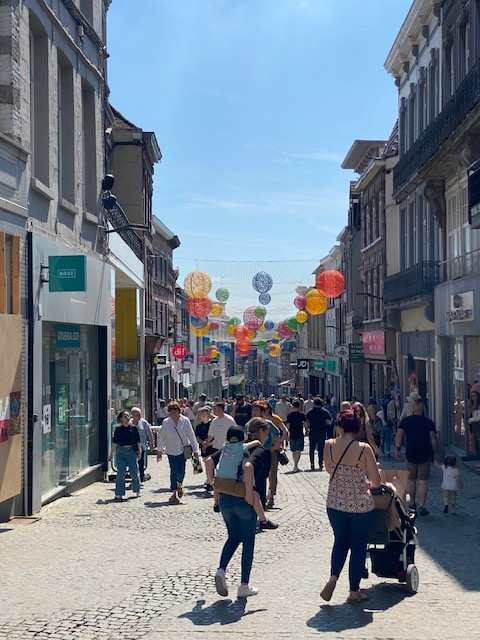


Cityscape
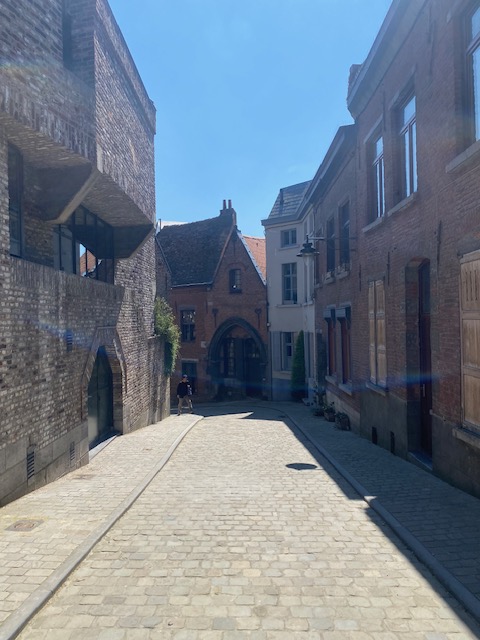
The centre consists largely of red brick houses. Although there are few old buildings and rarely new blue stone buildings, its use is generally limited to parts of the decorative walls. Much of the centre is made up of houses which are two or three storeys high. In commercial areas, the ground floor is used as commercial space, while other floors are used for housing. Generally behind the houses there is a small garden.
The Grand-Place is the centre of the old city. It is situated near the pedestrian shopping street and the Belfry. It is paved in the manner of old cities and is home to many cafes and restaurants, as well as the Cown Hall.
The outskirts of the square are accessible by car, but it is forbidden to park or drive through the centre. Each year, the square is used as an action theatre called Lumeçon to stage a battle between Saint George and Dragon.
The Grand-Place is also equipped with a fountain, which opened on 21 March 2006. It also hosts a Christmas market and sometimes an ice rink during the winter holiday period.

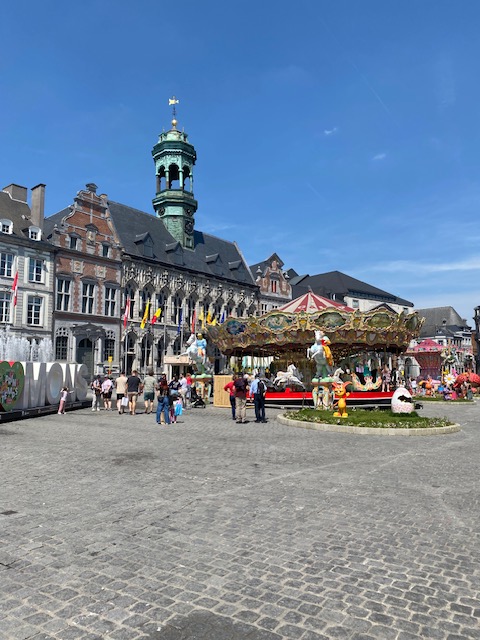
City Hall
Originally its communal organisation, Mons was a City Hall called House of Peace.
Earlier the deputy mayors were on the castle of the Counts of Hainaut, and now it is only the conciergerie, Saint-Calixte chapel and some underground rooms and the chamber.
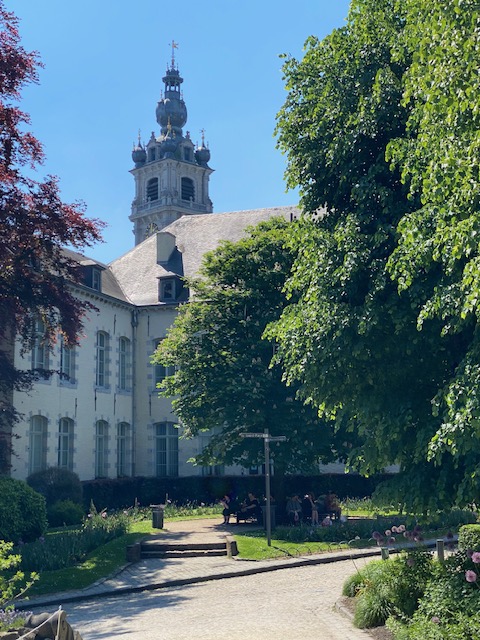
This place is now Castle Park, where you can also see the Belfry.
It was in 1323 that Count William I gave permission to build the House of Peace on the location of the current City Hall. This is called a ‘Town House’ built of stones and bricks at the base, while the superstructure is of wood. This building underwent various changes during the 15th century until 1477, when the nearby shop in the arsenal exploded.
The destroyed buildings were rebuilt and benefitted from new changes and additions over the centuries. The Renaissance campanile was added in the 18th century.
In its current state, the Cown Hall consists of a remarkable collection of various buildings housing a large proportion of municipal services.
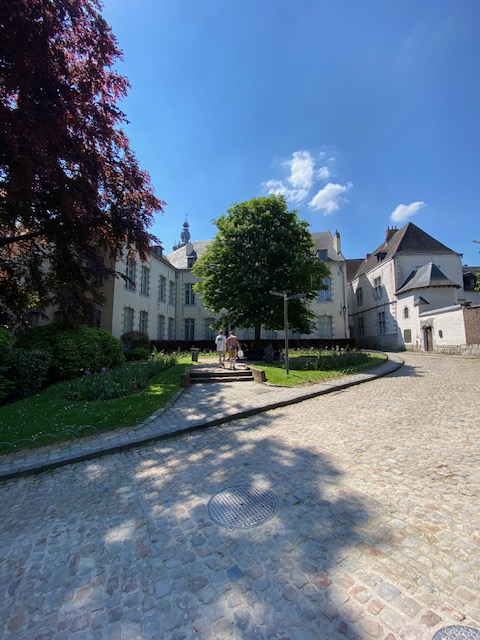
The Mayor’s Garden
These buildings surround a small, irregularly shaped square, the Mayor’s Garden (Jardin du Mayeur) from which the Rue d’Enghien descends. The Ropieur Fountain, by sculptor Léon Gobert (1869–1935), can be found in the middle of the square. The ropieur symbolizes a young insolent resident of Mons, drenching passersby with water from the fountain.


Saint Waltrude Collegiate Church
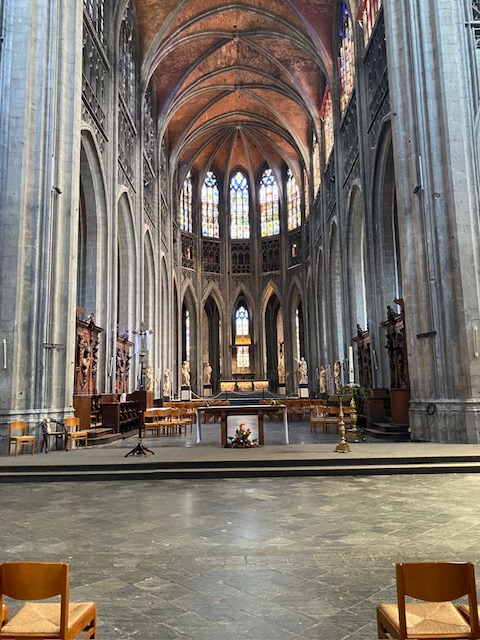
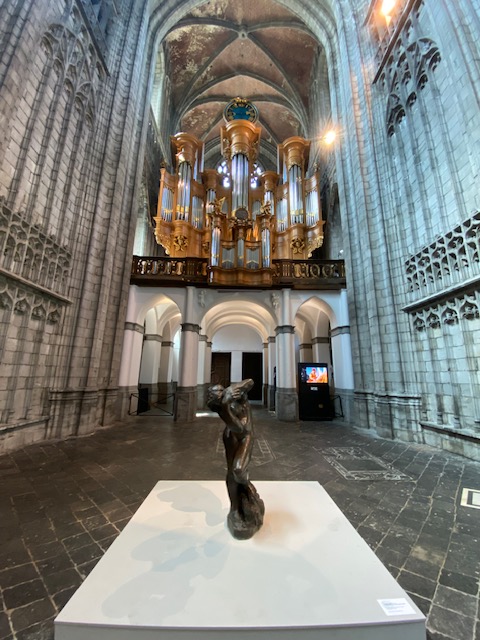
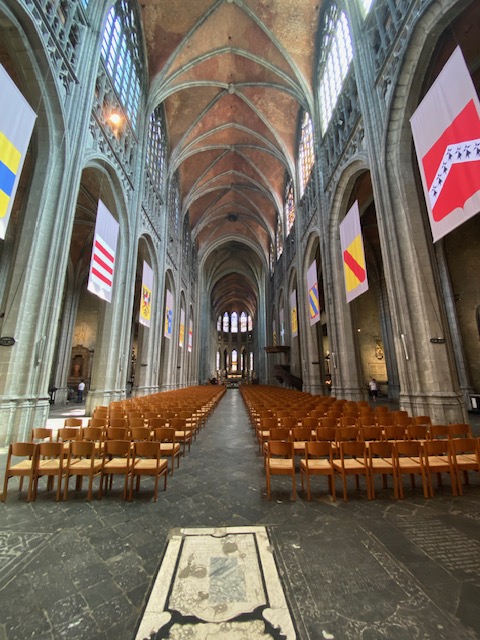
Although located in the heart of the old County of Hainaut, the Saint Waltrude Collegiate Church is one of the most characteristic churches and most homogeneous of Brabantine Gothic architecture.
The collegiate was built in the 15th century on the orders of canons. Along with the nearby Belfry, it is considered as a major symbol of the city of Mons.




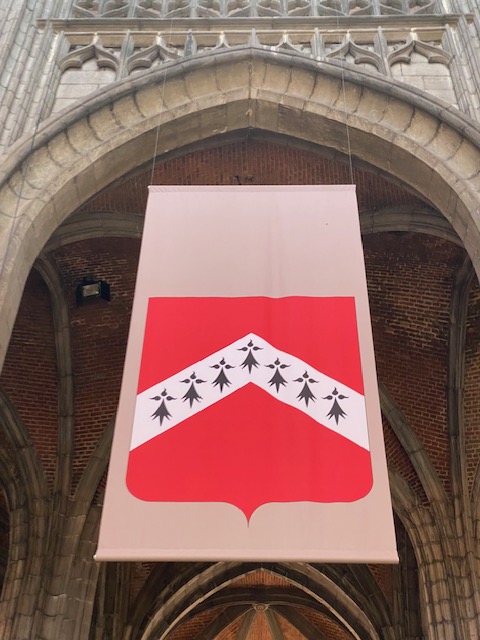
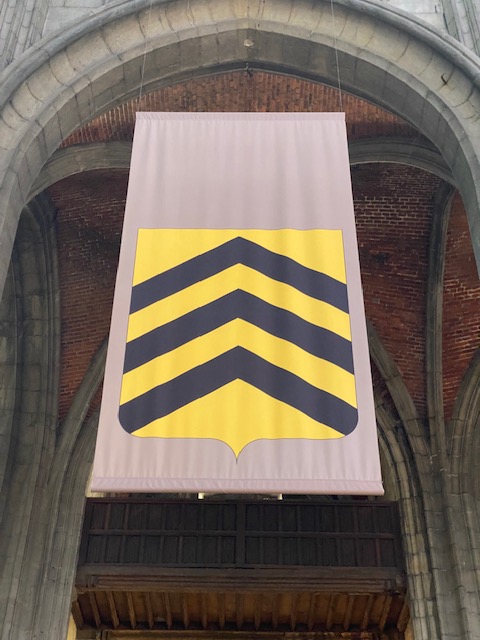
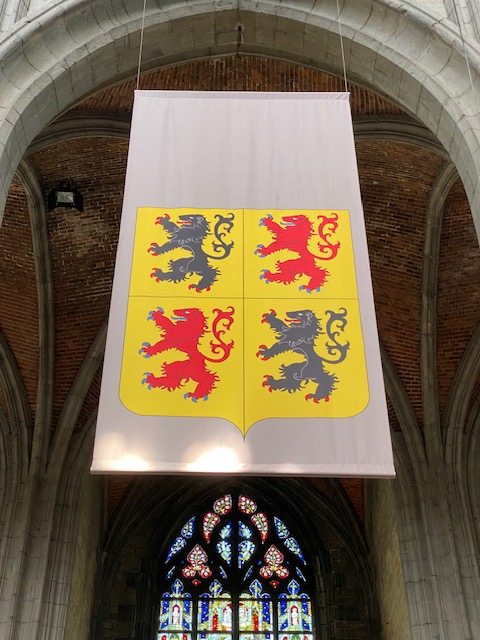

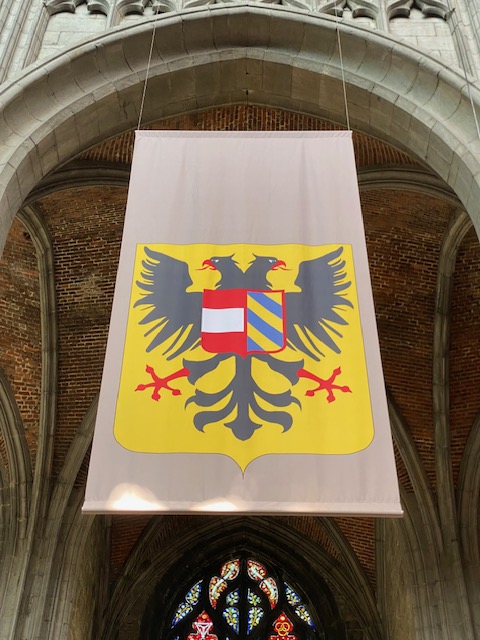


The Belfry
Also called El Catiau by the people of Mons, it was built in the 17th century. The Belfry is the only Baroque style building in Belgium that reaches a height of 87 meters. In its top section it contains a 49 bell carillon. It was classified as a UNESCO World Heritage Site in 1999, as part of the Belfries of Belgium and France site.

Landmarks we didn’t see or weren’t aware we saw
- The Press House or Spanish House.
- The Water Machine.
- Waux-Hall.
- La Parfaite Union masonic lodge.
- The Carré des Arts.
- The Rouge-Puits, at the corner of the Rue de la Coupe and the Rue de la Chaussée.
- The Casemates.
- The Valenciennoise Tower.
- The Concourse of the Courts.
Doudou
During our walk around town, we saw many dragons. They refer to the Doudou. There is a Doudou Museum (Musée du Doudou).
The Ducasse de Mons or Doudou, is a traditional folk festival held in Mons, on Trinity Sunday, 57 days after Easter. The feast comprises two important parts: the procession, including the descent and the uprising of the Saint Waltrude‘s shrine, as well as the combat named Lumeçon between Saint George and the dragon.


Mons Railway Station
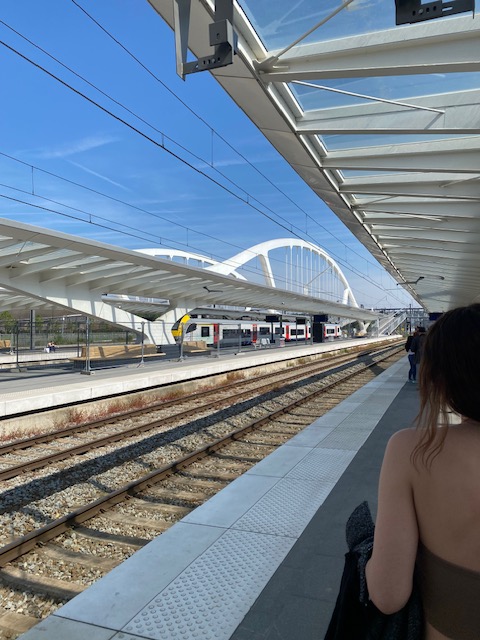
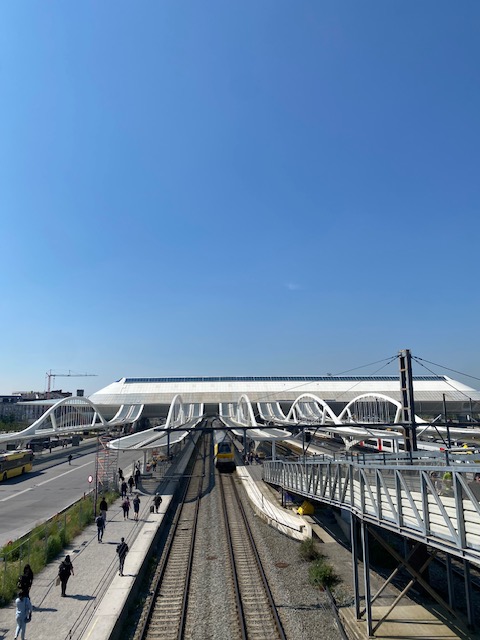
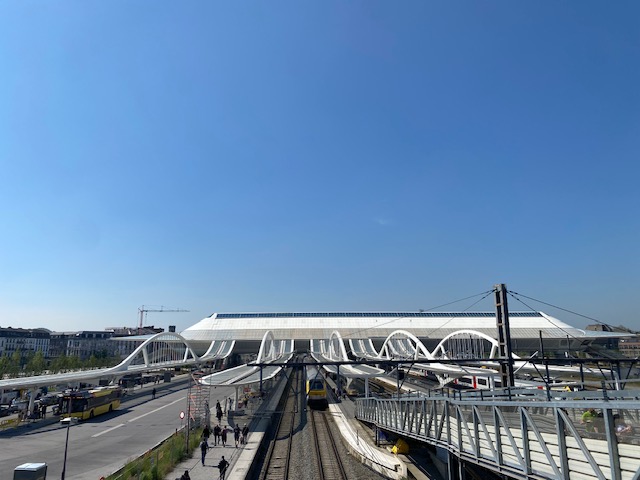
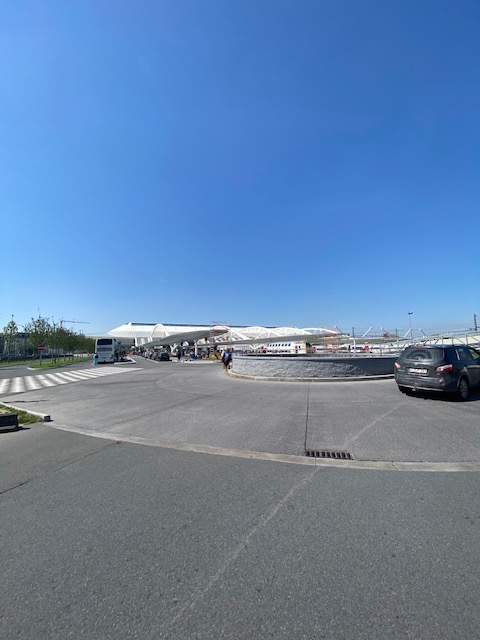
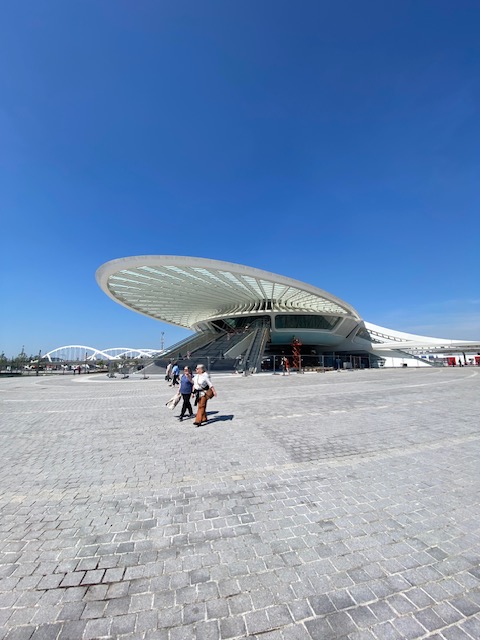
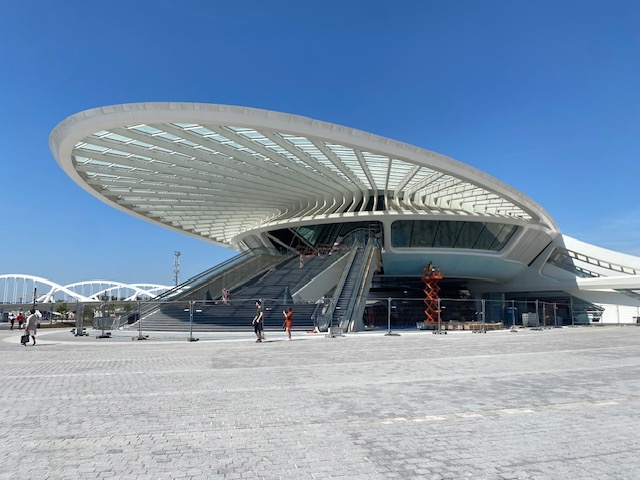
Mons is getting a new railway station and construction is a ‘procession of Echternach‘, as we say in Belgium.
The first station opened in 1841, a new one was built in 1874 and again a new one in 1952. In 2013 construction started for the coming station building. New Mons railway station is designed by Santiago Calatrava Valls from Spain. You’ll recognise his familiar style. He also designed Liège-Guillemins Railway Station, the Oculus of the World Trade Center Transportation Hub in New York and many more.
The station should have been completed in 2015. But no. They’re still working on the project.






So?
Mons is not large and although it was a Saturday, it was calm. Perhaps because it was a long weekend.
We were quickly done in Mons, to be honest, but writing this post I see missed a few spots. So there’s a reason to return.
 Trip By Trip
17 Comments Add yours