
October 2024. During a week-long whistle-stop tour of Germany, we visit Dessau-Roßlau in Saxony-Anhalt, Weimar in Thuringia, Coburg in Upper Franconia (Bavaria) and Kassel in Hesse. Smaller cities, yes. But each with their own significance. Untouched by overtourism. We’re avoiding using the white trains of DB Fernverkehr, Deutsche Bahn‘s long-distance section and opt to use the red trains of DB Regio and other regional operators.
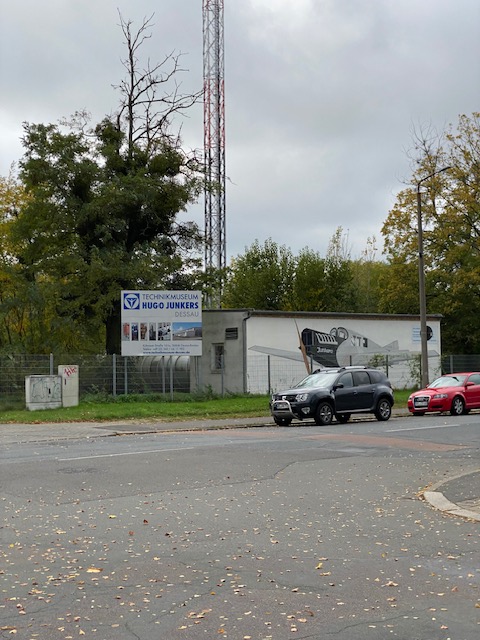
Amidst an avalanche of Bauhaus, we visited the Technikmuseum Hugo Junkers or Hugo Junkers Engineering Museum.

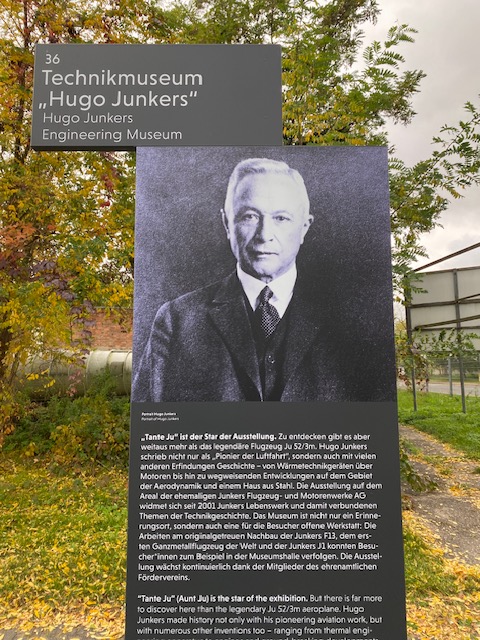
Who was Hugo Junkers?
Hugo Junkers (3 February 1859 – 3 February 1935) was a German aircraft engineer and designer renowned for pioneering the development of all-metal aeroplanes and flying wings. His company, Junkers Flugzeug- und Motorenwerke AG, became a cornerstone of the German aviation industry between World War I and World War II. His multi-engine, all-metal passenger and freight aircraft played a significant role in establishing airlines in Germany and worldwide.
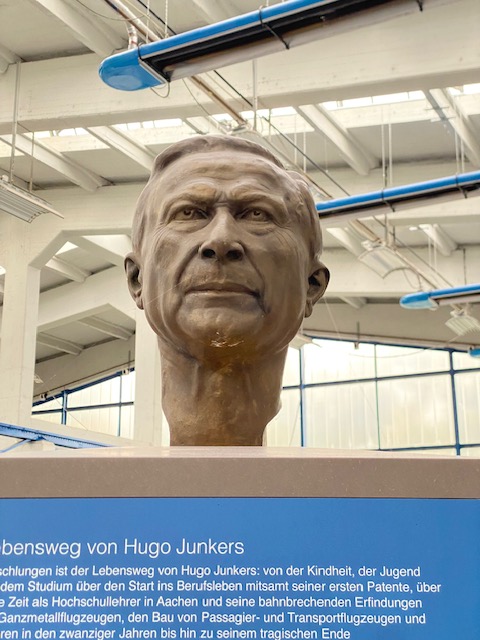
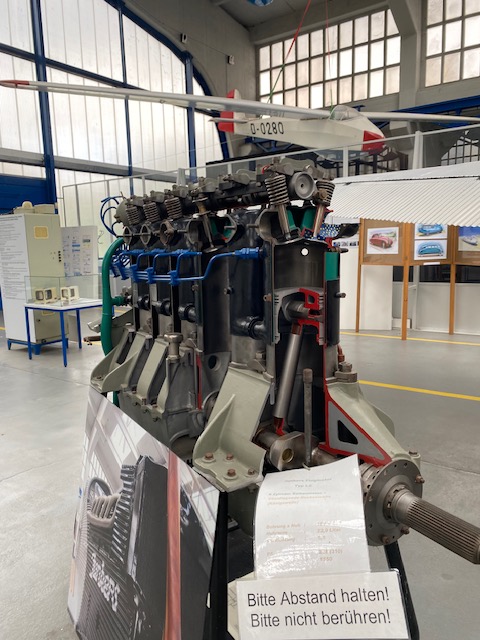
Beyond aviation, Junkers contributed to advancements in engine technology, producing both diesel and petrol engines, and held numerous patents in thermodynamics and metallurgy.
He was also a prominent supporter of the Bauhaus movement, facilitating its relocation from Weimar to Dessau in 1925, where his factory was located.
Junkers’ career highlights include the Junkers J 1 (1915), the first practical all-metal aircraft featuring a cantilever wing design without external bracing, and the Junkers F 13 (1919), the first all-metal passenger plane. Other notable designs include the Junkers W 33, which achieved the first heavier-than-air east-to-west Atlantic crossing, the innovative Junkers G.38 flying wing, and the iconic Junkers Ju 52, affectionately known as ‘Tante Ju‘, one of the most famous airliners of the 1930s.
When the Nazi regime came to power in 1933, they sought Junkers’ support for German rearmament. His refusal led to his house arrest in 1934, and his patents and company were seized. Junkers passed away the following year. Under Nazi control, his company went on to produce many of the Luftwaffe’s most successful aircraft during World War II.
Born in Rheydt in Prussia, Junkers was the son of a wealthy industrialist. After completing his Abitur, a qualification granted at the end of secondary education, in 1878, he studied at the Technische Hochschulen in Charlottenburg (now Technische Universität Berlin) and Aachen (now RWTH Aachen), earning his engineering degree in 1883.
Initially working in his father’s company, he later pursued advanced studies in electromagnetism and thermodynamics under Adolf Slaby. Slaby connected him with the Continental-Gasgesellschaft in Dessau, where Junkers developed the first opposed-piston engine.
He patented a calorimeter for measuring heating value in 1892 and presented it at the 1893 World’s Columbian Exposition in Chicago, where it won a gold medal.
This success led him to patent and refine a gas-fired bath boiler and found Junkers & Co. in 1895 to market his inventions.
In 1897, Junkers became a professor of mechanical engineering at Aachen, a position he held until 1912. During this period, he continued his engineering work, securing patents and developing devices such as calorimeters, gas stoves, pressure regulators, and fan heaters.
Junkers’ aeronautical pursuits began at the age of 50, collaborating with engineer Hans Reissner on an all-metal aircraft.
In 1915, he designed the Junkers J 1 Blechesel (Sheetmetal Donkey), the world’s first practical all-metal aircraft. During World War I, his company produced the armoured Junkers J.I, considered the finest ground-attack aircraft of the war, and the pioneering Junkers D.I, the first all-metal monoplane fighter.
His innovative use of corrugated metal for structural strength influenced designers like Andrei Tupolev in the Soviet Union and William Bushnell Stout in the United States.
After the war, Junkers focused on civil aviation, creating successful aircraft such as the Junkers F 13 and Ju 52, and founding airlines like Deutsche Lufthansa. Despite economic challenges, his ambitious designs, including the massive Junkers G.38, pushed the boundaries of aviation technology.
Junkers’ opposition to Nazi policies in 1933 led to the seizure of his company and patents.
He died under house arrest on his 76th birthday, 3 February 1935. His legacy endures in aviation history, with his innovations influencing aircraft design worldwide. He was posthumously inducted into the International Air & Space Hall of Fame in 1976 and featured in Hayao Miyazaki’s 2013 Studio Ghibli-film ‘The Wind Rises‘.


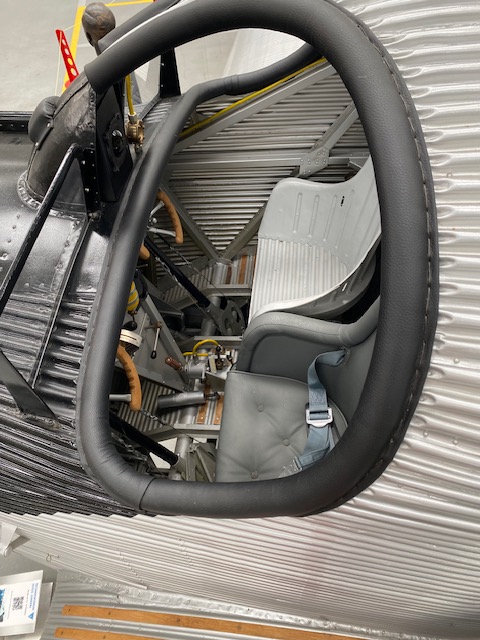
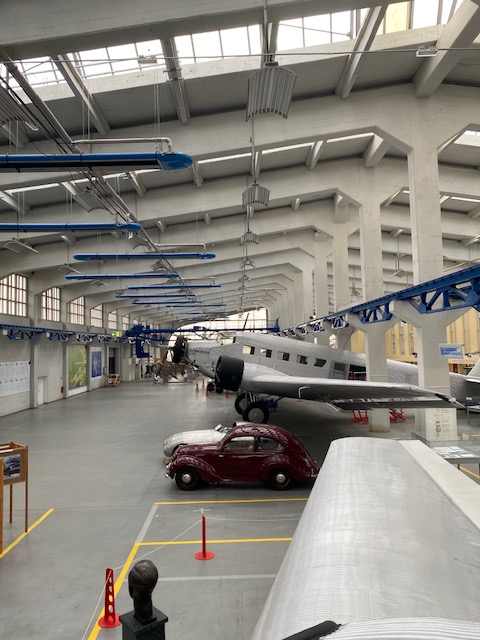

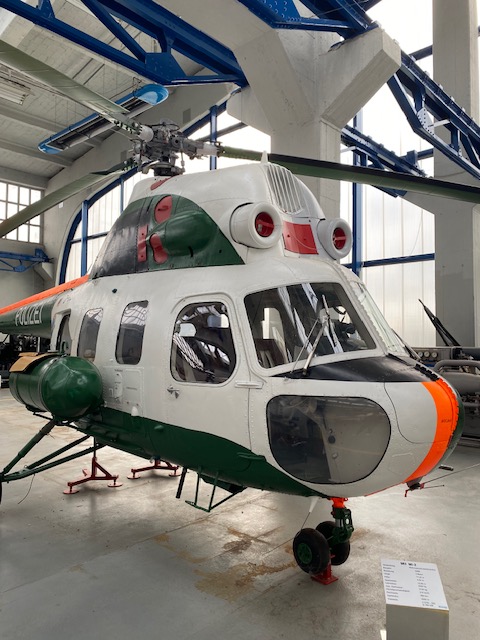
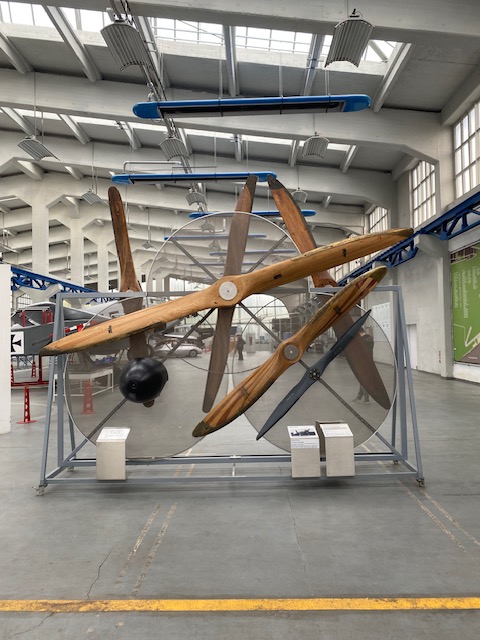
Junkers planes and boilers
Junkers Flugzeug- und Motorenwerke AG, commonly known as Junkers, was a prominent German manufacturer of aircraft and aircraft engines. Founded by Hugo Junkers in Dessau, Germany, in 1895, the company originally focused on producing boilers and radiators.
During World War I and the years that followed, Junkers gained international recognition for its innovative all-metal aircraft designs.
By the Second World War, the company was producing aircraft and engines for the German Luftwaffe, although this was after Hugo Junkers had been ousted by the Nazi regime in 1934.
In the early post-war years, Junkers introduced the Junkers F 13, the world’s first all-metal airliner, which first flew in 1919. Designed as a four-passenger monoplane, the F 13 found success in Europe and North America, where it was used primarily for airmail services. The Treaty of Versailles initially prohibited aircraft production in Germany, but Junkers circumvented this restriction by partially relocating its operations to the Soviet Union in 1922.
At a facility in Fili, near Moscow, the company resumed production and developed aircraft such as the G.24 and G.31, although these early designs achieved limited commercial success.
By the mid-1920s, Junkers launched the W33 and W34 series, which proved more successful. These aircraft were used in various roles, including passenger transport, cargo hauling, and later, military applications. The series also set notable aviation records, including milestones in flight duration, distance, and altitude. During this period, Junkers also experimented with innovative concepts, such as the 1924 J.1000 Super Duck, a revolutionary design for a transatlantic passenger plane with seating in both the wings and fuselage.
The company faced increasing financial difficulties in the 1930s, exacerbated by the global economic depression. A restructuring effort in 1932 resulted in the creation of Junkers Motoren-Patentstelle GmbH to manage Hugo Junkers’ engine patents.
However, the Junkers consortium was ultimately salvaged by selling Junkers Thermo Technik GmbH to Robert Bosch GmbH, which retained the Junkers brand for its products. Hugo Junkers himself was forced out of the company as the Nazis took control, and the regime restructured the enterprise to focus on military production.
During the Second World War, Junkers produced a range of military aircraft, including some of the most notable German warplanes, and developed both piston and jet engines.
After the war, the Junkers brand survived through various reconfigurations. The company was reconstituted as Junkers GmbH and later became part of the Messerschmitt-Bölkow-Blohm (MBB) consortium. Junkers GmbH contributed to aerospace research during the 1950s and 1960s, employing notable figures such as Eugen Sänger, who worked on advanced spacecraft designs.
The Junkers name disappeared in 1969 when the company was fully absorbed into MBB, marking the end of an era for one of aviation’s most influential manufacturers. The legacy of Junkers lives on through its contributions to aircraft design and engineering, which influenced aeronautical development worldwide.


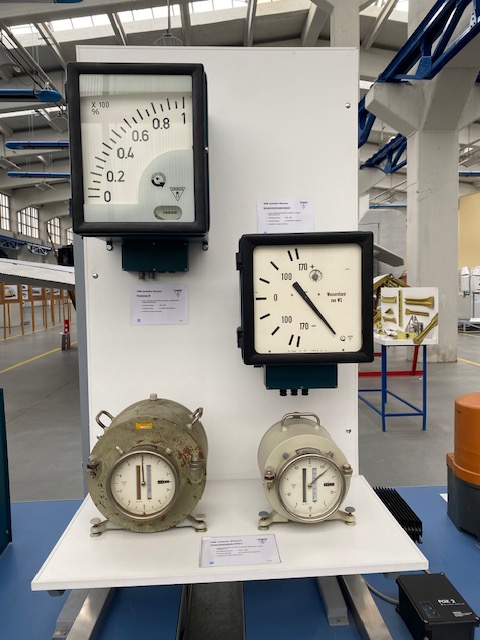


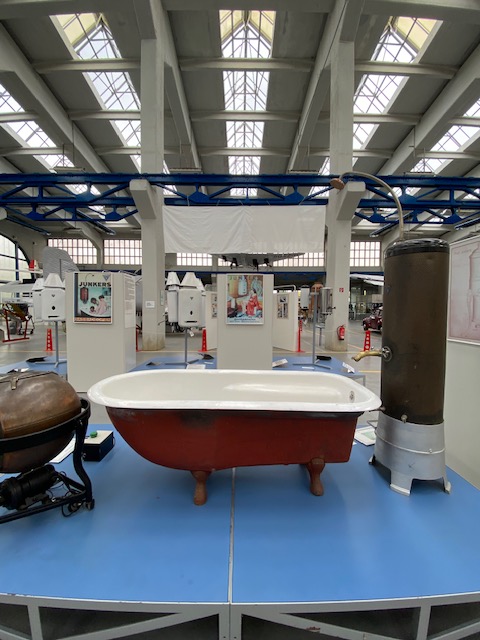
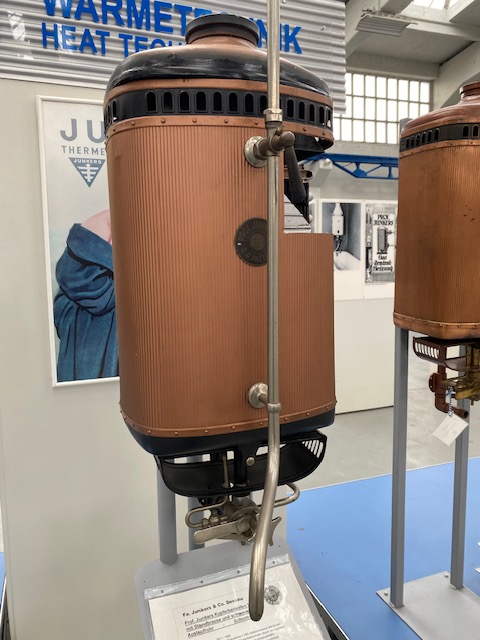
The museum
The Technikmuseum Hugo Junkers is a museum dedicated to the life, work, and innovations of Hugo Junkers, as well as the technological and industrial heritage associated with his contributions. The museum is housed in a historic hangar at the former Dessau airfield, where much of his pioneering work in aviation and engineering took place.
The museum showcases a wide range of exhibits, including original aircraft and replicas, engines, technical models, and historical documents. Among its highlights are examples of Junkers’ groundbreaking all-metal aircraft designs, such as the Junkers F 13 and Ju 52.
The museum also explores Junkers’ work in heating technology and other engineering fields, offering insights into his diverse achievements.
Interactive displays and detailed historical accounts provide visitors with an understanding of Junkers’ influence on aviation and industrial design. The museum also addresses the historical context of his work, including the impact of the World Wars and the role of the Junkers company during the Nazi era. It serves as both an educational and memorial site, preserving the story of one of Germany’s most influential engineers and industrialists.


A visit
Don’t expect too much. The museum is run by volunteers, that is clear. You can see the enthusiasm, but the Technikmuseum Hugo Junkers lacks the gravitas of a professionally run and subsidised museum.
Many panels are only in German.
But the museum offers a nice overview of Hugo Junkers’ life and achievement and shows the brand Junkers was very versatile.
 Trip By Trip
💜
LikeLiked by 2 people
💛
LikeLike