
October 2024. During a week-long whistle-stop tour of Germany, we visit Dessau-Roßlau in Saxony-Anhalt, Weimar in Thuringia, Coburg in Upper Franconia (Bavaria) and Kassel in Hesse. Smaller cities, yes. But each with their own significance. Untouched by overtourism. We’re avoiding using the white trains of DB Fernverkehr, Deutsche Bahn‘s long-distance section and opt to use the red trains of DB Regio and other regional operators.
All right. When you think of Weimar, what do you think of? Yes, the Weimar Republic. The era between the abdication of Emperor William II (Kaiser Wilhelm II) in late 1918 and 1933, when the NSDAP takes over power, is commonly known as the Weimar Republic.
The Weimar Republic, officially known as the German Reich, was a period in German history spanning from 9 November 1918 to 23 March 1933. It marked Germany’s first constitutional federal republic and was also informally referred to, and unofficially proclaimed itself, as the German Republic.
In English, the republic was typically called “Germany,” with the term “Weimar Republic”—coined by Adolf Hitler in 1929—gaining wider usage only in the 1930s. The Weimar Republic operated under a semi-presidential system.
At the conclusion of the World War I (1914–1918), Germany, facing exhaustion and impending defeat, sought peace. This situation precipitated a revolution, the abdication of Kaiser Wilhelm II, formal surrender to the Allies, and the proclamation of the republic on 9 November 1918.
The Republic faced severe challenges during its early years, including hyperinflation, political extremism, numerous political assassinations, and attempted coups by rival paramilitary groups. Internationally, it endured isolation, diminished diplomatic standing, and strained relations with major powers.

However, by 1924, significant monetary and political stability had been achieved, ushering in a period of relative prosperity lasting five years. Known as the Golden Twenties, this era saw notable cultural advancement, social progress, and improved foreign relations.
The Locarno Treaties of 1925 marked a key step in normalising relations with Germany’s neighbours, as the country accepted most territorial changes imposed by the Treaty of Versailles and committed to peaceful diplomacy.
In 1926, Germany’s admission to the League of Nations signified its reintegration into the global community. Despite these advances, resentment over the Treaty of Versailles persisted, especially among conservatives and right-wing factions.
The Great Depression of 1929 dealt a devastating blow to the Republic’s fragile stability. Rising unemployment and widespread social unrest caused the collapse of Chancellor Hermann Müller’s grand coalition, leading to the era of presidential cabinets.
From 1930, President Paul von Hindenburg increasingly relied on emergency powers to support successive chancellors—Heinrich Brüning, Franz von Papen, and Kurt von Schleicher.
Brüning’s deflationary policies exacerbated the economic crisis, further fuelling unemployment. On 30 January 1933, Hindenburg appointed Adolf Hitler as Chancellor, leading a coalition government in which the Nazi Party held only two of ten cabinet seats. Vice-Chancellor von Papen believed he could control Hitler, underestimating his political acumen.
By March 1933, the Reichstag Fire Decree and the Enabling Act had granted Hitler sweeping powers, effectively dismantling parliamentary democracy. These measures allowed him to suppress civil liberties and consolidate power, culminating in the establishment of a one-party dictatorship.
Although the Nazis governed under the guise of constitutional legality until the end of World War II in 1945, Hitler’s rise to power (Machtergreifung) had effectively ended the Weimar Republic. The constitutional framework was replaced by the Führerprinzip, wherein the Führer’s will superseded all written laws.
The name ‘Weimar Republic’ originated from the Weimar National Assembly, which adopted its constitution between 6 February and 11 August 1919. However, the term only gained popularity after 1933.
Although the National Assembly chose to retain the traditional name Deutsches Reich (as per Article 1 of the Constitution), this designation was rarely used during the Weimar period.
Different political factions proposed alternative names, such as Deutscher Volksstaat (German People’s State) and Deutsche Republik (German Republic).
By the mid-1920s, the latter term was most commonly used, though many Germans, particularly conservatives, viewed it as a painful reminder of national humiliation and the monarchy’s downfall.

The Weimar Republic in present-day Weimar
In present-day Weimar, several locations and landmarks remain as reminders of the Weimar Republic. The most prominent is the Deutsches Nationaltheater or German National Theatre, where the National Assembly convened in 1919 to draft and adopt the Weimar Constitution, officially establishing the republic. The theatre remains a significant cultural institution and a historical symbol of Germany’s early democratic aspirations.
Nearby, the Haus der Weimarer Republik or House of the Weimar Republic on Theaterplatz serves as a museum and educational centre dedicated to the history of the Weimar Republic. It provides exhibits, documentation, and insights into the challenges and legacy of this pivotal period in German history.
Other remnants include plaques and memorials scattered throughout the city that mark locations associated with the Republic’s formation.
Weimar itself, as a cultural hub, retains its association with the intellectual and artistic vitality that flourished during the Golden Twenties under the republic, even though much of its built environment predates this era. The city remains a UNESCO World Heritage Site for its broader historical significance, including its association with figures like Goethe and Schiller, whose legacy continued to influence the Weimar Republic’s cultural policies.
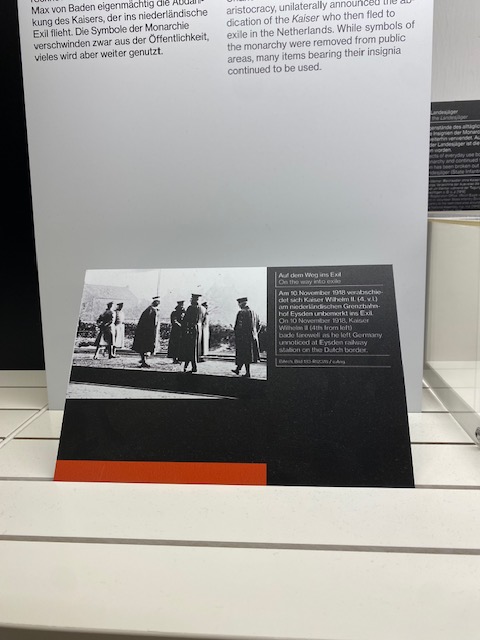


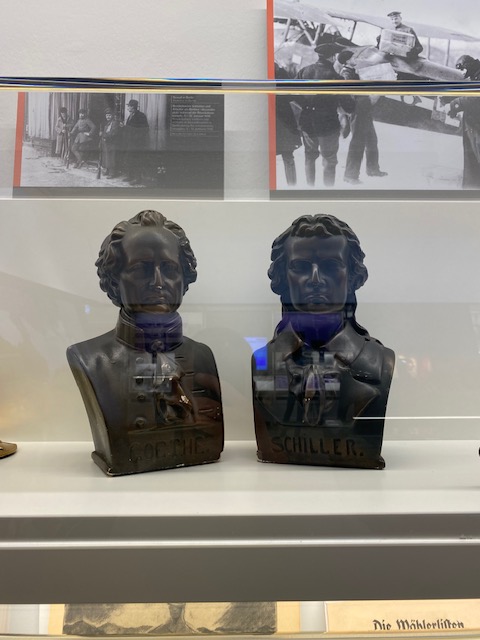
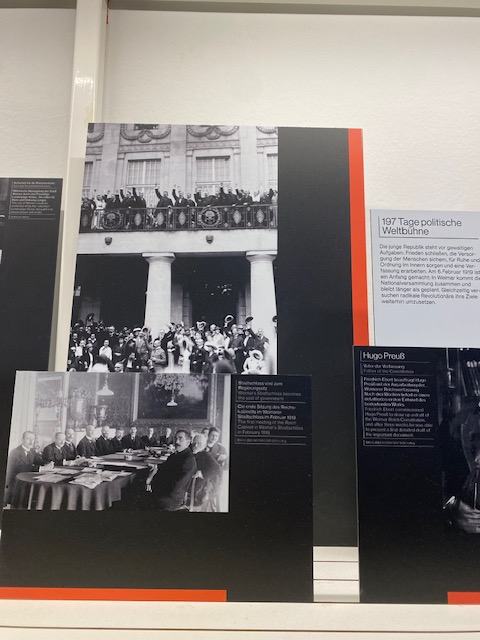

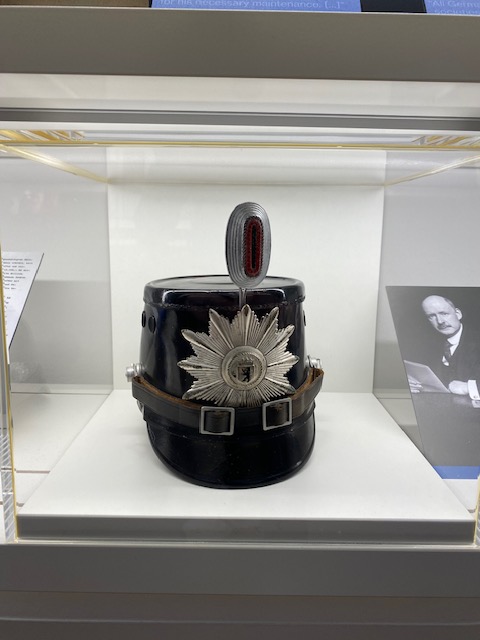







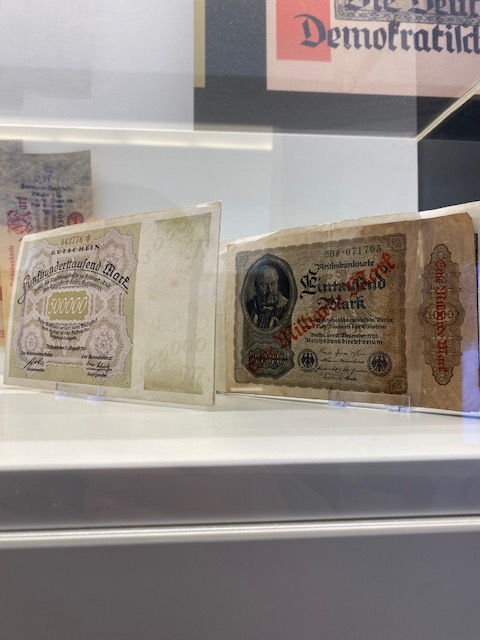


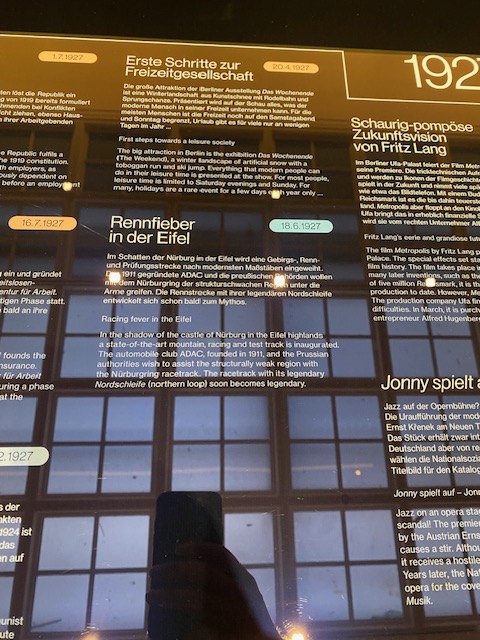
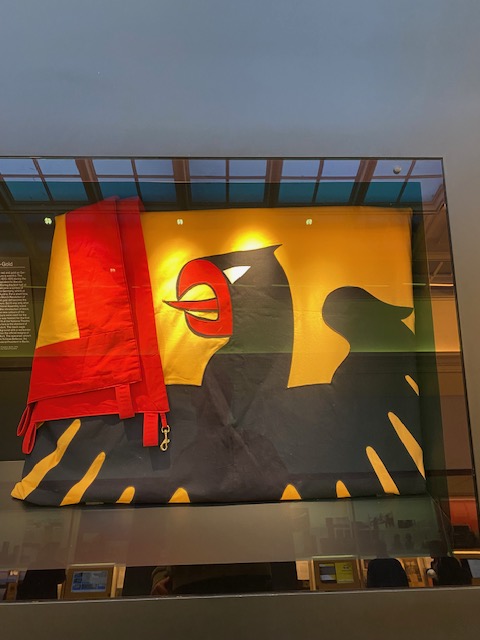
House of the Weimar Republic
The Haus der Weimarer Republik is dedicated to the history and legacy of the Weimar Republic, focusing on its formation, political challenges, cultural achievements, and eventual collapse. The institution aims to educate visitors about this critical period in German history, highlighting both its democratic aspirations and the factors that led to its downfall.
The permanent exhibition at the Haus der Weimarer Republik explores key themes of the Republic’s history, including the drafting of the Weimar Constitution, the social and political upheavals of the time, and the Republic’s cultural and intellectual contributions.
The exhibition employs multimedia presentations, historical documents, photographs, and interactive elements to engage visitors and provide an in-depth understanding of the era. Specific attention is given to the socio-political conditions that facilitated the rise of Nazism and the Republic’s ultimate demise.

The myth of Weimar
A very interesting panel of the exhibition was ‘The myth of Weimar‘. The Roaring Twenties are often associated with partying, decadence, moral and sexual liberation, a thriving Gay Berlin.
But all that fun was only for the happy few. Both geographically as financially, many couldn’t enjoy these freedoms. Because there were crises and a conservative heartland. So one shouldn’t be surprised when the occasion arised for these socially conservative forces to gain traction and power, they just did that.
Parallels with the present are (not) pure coincidence.
Dessau – Weimar – Coburg – Kassel 2024
- REVIEW | European Sleeper night train.
- GERMANY | Bauhaus in Dessau.
- DESSAU | Technikmuseum Hugo Junkers Engineering Museum.
- REVIEW | Radisson Blu Fürst Leopold Hotel Dessau.
- SAXONY-ANHALT | A day in Dessau.
- GERMANY | Bauhaus in Weimar.
- GERMANY | Weimar Classicism, the Wittumspalais of Duchess Anna Amalia and the Weimar Haus Experience.
 Trip By Trip
13 Comments Add yours