
October 2024. During a week-long whistle-stop tour of Germany, we visit Dessau-Roßlau in Saxony-Anhalt, Weimar in Thuringia, Coburg in Upper Franconia (Bavaria) and Kassel in Hesse. Smaller cities, yes. But each with their own significance. Untouched by overtourism. We’re avoiding using the white trains of DB Fernverkehr, Deutsche Bahn‘s long-distance section and opt to use the red trains of DB Regio and other regional operators.

After Ehrenburg Palace or Schloss Ehrenburg, it was time, for that other landmark in Coburg: Veste Coburg or Coburg Castle or Coburg Fortress. For some reason the German name Veste Coburg is more common, even in English.
To gain access to Veste Coburg, you must clim up the hill, which features the Court Garden or Hofgarten. It’s quite a climb.


Veste Coburg
The Veste Coburg is one of Germany’s best-preserved medieval fortresses. It stands at an altitude of 464 metres above sea level and rises 167 metres above the town itself. Measuring approximately 135 by 260 metres, it is considered a medium-sized fortress by German standards.
The hill on which the fortress stands has been inhabited since the Neolithic period, with evidence of continuous use through the early Middle Ages. The first recorded mention of Coburg dates to 1056, when Richeza of Lotharingia donated properties in the area to Archbishop Anno II of Cologne to establish Saalfeld Abbey. A chapel dedicated to Saint Peter and Saint Paul was documented on the fortified Coberg in 1075, and a Vogt named Gerhart administered the Benedictine possessions from the hill. By 1206, the site was referred to as mons Coburg in a document issued by Pope Honorius II.
During the 13th century, the hill overlooked the town of Trufalistat, Coburg’s predecessor, and a key trade route connecting Nuremberg, Erfurt, and Leipzig.

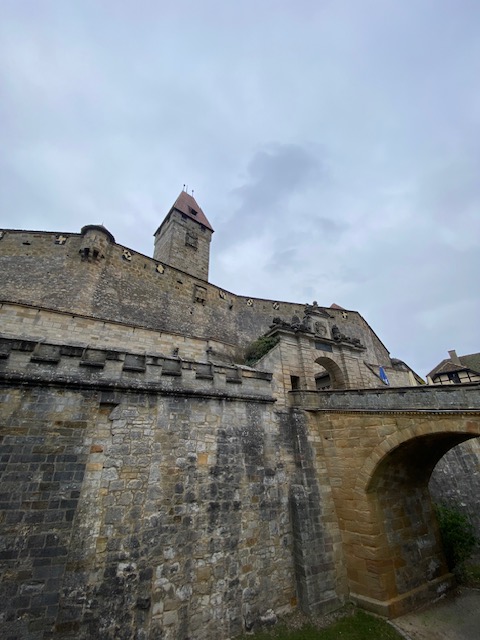
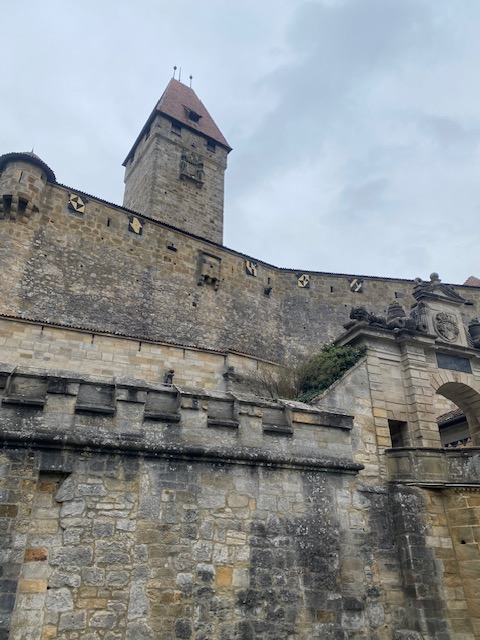
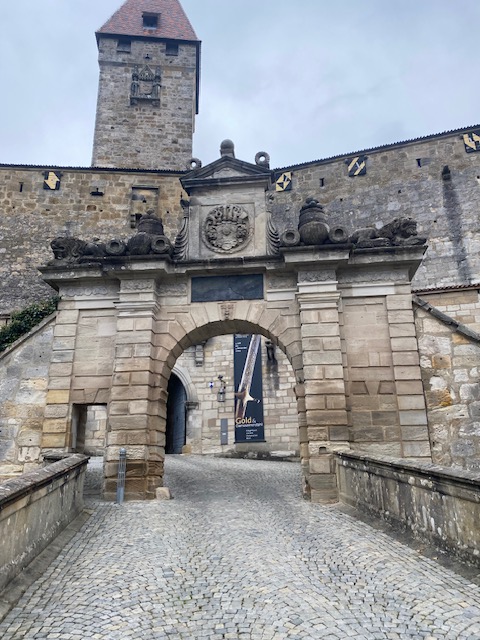


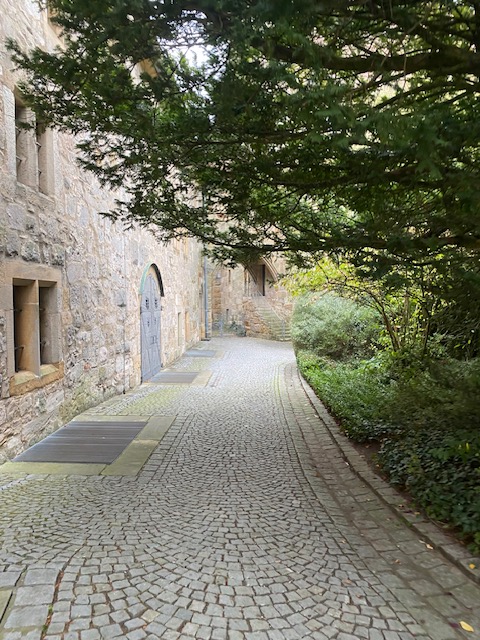

By 1225, the term Schloss (palace) appeared in documents, indicating the existence of a significant fortification. The Dukes of Merania controlled the area until 1248, followed by the Counts of Henneberg, who ruled until 1353, except for a brief period when the House of Ascania held sway.
In 1353, Coburg became part of the holdings of Friedrich, Margrave of Meissen, of the House of Wettin. Despite its Franconian location, it became associated with Saxony due to Wettin rule.
During the Hussite Wars in 1430, the fortress’s defences were expanded. In 1485, following the Partition of Leipzig, it passed to the Ernestine branch of the Wettin dynasty. Elector Johann der Beständige (John the Steadfast) used the fortress as a residence from 1499, and it hosted Lucas Cranach the Elder in 1506–07. Martin Luther took refuge there from April to October 1530 during the Diet of Augsburg, translating the Bible into German while under Imperial ban.
By 1547, the ducal family relocated their residence to the more modern Ehrenburg Palace in Coburg, leaving the fortress as a military stronghold.




Coburg became the seat of the Duchy of Saxe-Coburg under Johann Casimir, who modernised the fortress’s defences. During the Thirty Years’ War, it withstood a seven-day siege in 1632 under Georg Christoph von Taupadel. However, after a five-month siege in 1635, the fortress was surrendered to Imperial forces using a falsified letter of command.
From 1638 to 1672, Coburg and the fortress were part of the Duchy of Saxe-Altenburg before passing to the Dukes of Saxe-Gotha and, later, Saxe-Saalfeld.

By 1826, it became part of the Duchy of Saxe-Coburg-Gotha under Duke Ernst I, who had the fortress converted into a Gothic Revival residence after military use ceased. Outer fortifications were demolished between 1803 and 1838, and restoration projects aimed to reflect medieval architectural authenticity.
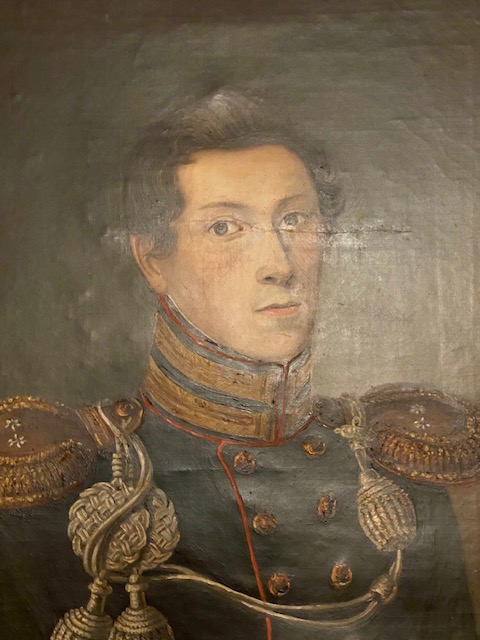


The last ruling duke, Charles Edward, was deposed in the 1918–1919 revolution. The fortress became state property but remained his residence until his death.
Art collections owned by the ducal family were transferred to the Coburger Landesstiftung, which operates the museum today.
During World War II, the fortress suffered significant damage from artillery fire, but extensive renovations were undertaken post-war by the Bavarian Administration of State-Owned Palaces, Gardens and Lakes.


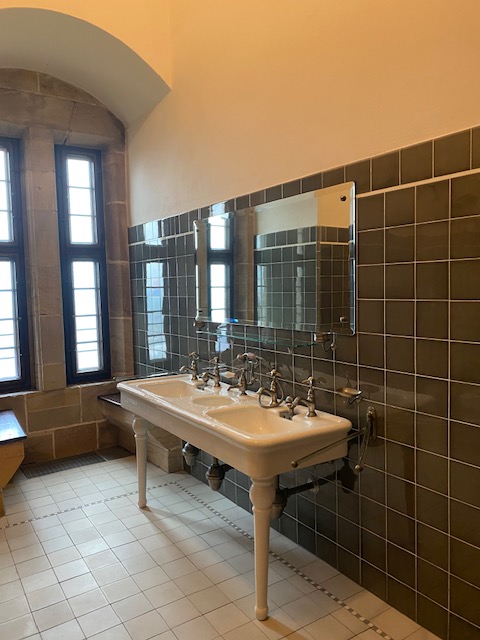
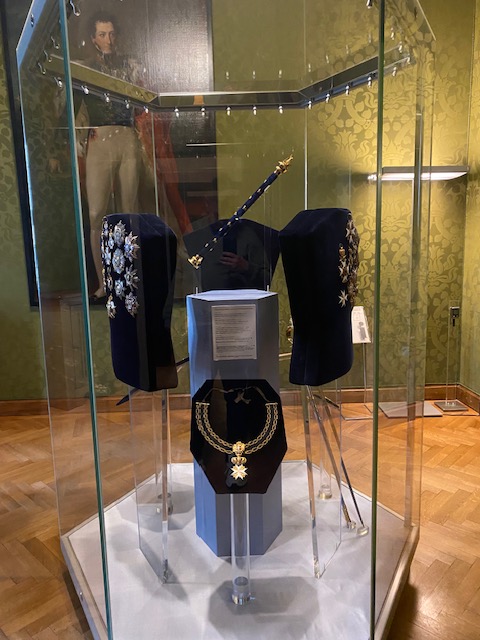

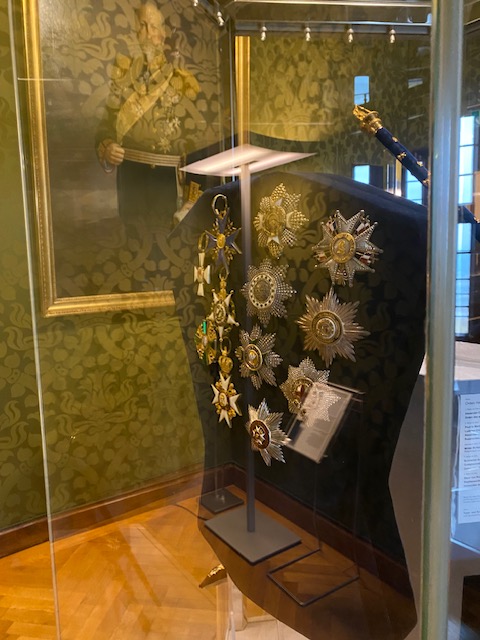


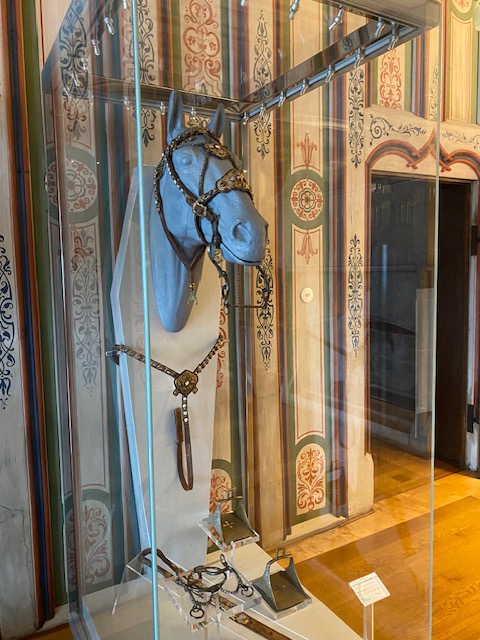


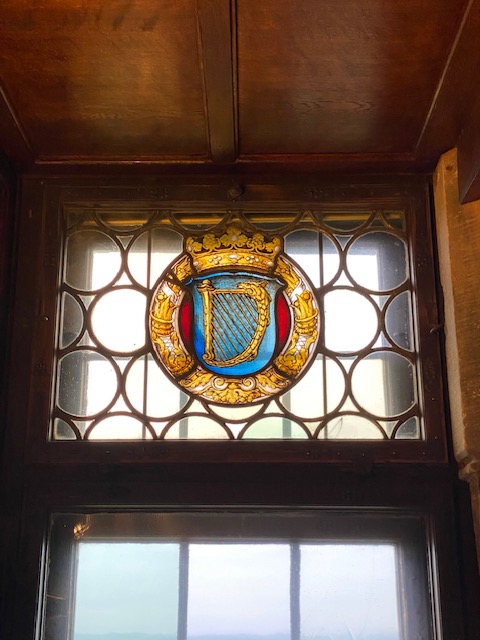


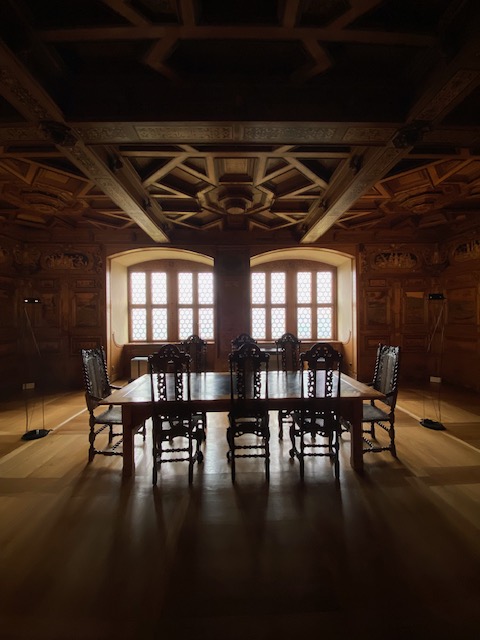
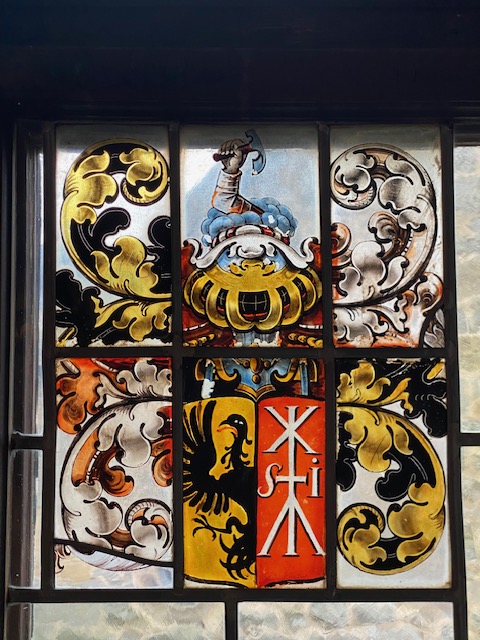

Veste Coburg today
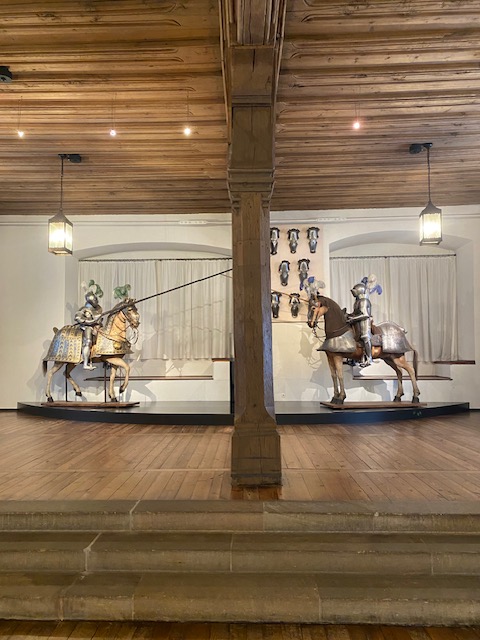
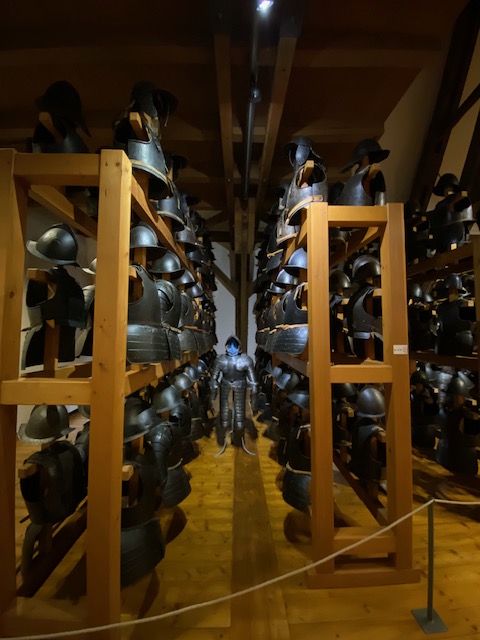
The fortress houses the Kunstsammlungen der Veste Coburg or Art Collections of the Veste Coburg, which include extensive collections of art, historical artefacts, and decorative items. Highlights include works by Lucas Cranach the Elder, a collection of medieval and Renaissance arms and armour, and fine examples of glassware spanning centuries.
The fortress also features a chapel, still preserved from the medieval period, and several historical rooms, including the Luther Room, where Martin Luther resided during his stay in 1530. The interior exhibits are complemented by an impressive display of Romantic landscape paintings and Dutch and Flemish art from the 16th and 17th centuries.
Visitors can explore the fortress’s extensive grounds, including its outer fortifications, which provide panoramic views of the surrounding Franconian landscape and the town of Coburg below. The architecture of the fortress itself, a mix of medieval and Gothic Revival styles, is a key attraction for those interested in history and design. Temporary exhibitions are also hosted regularly, adding a dynamic element to the visitor experience.
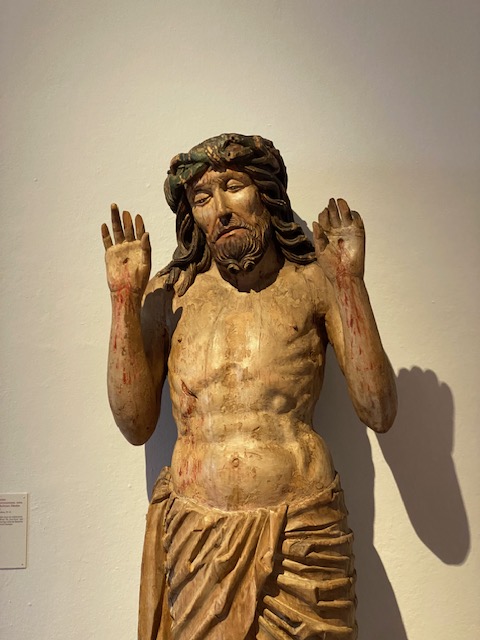

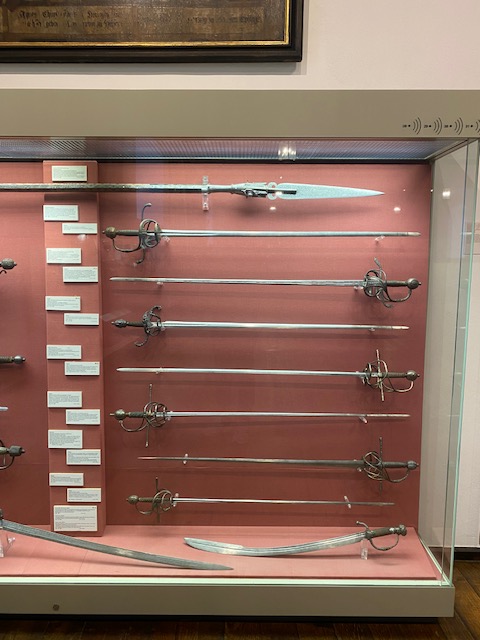
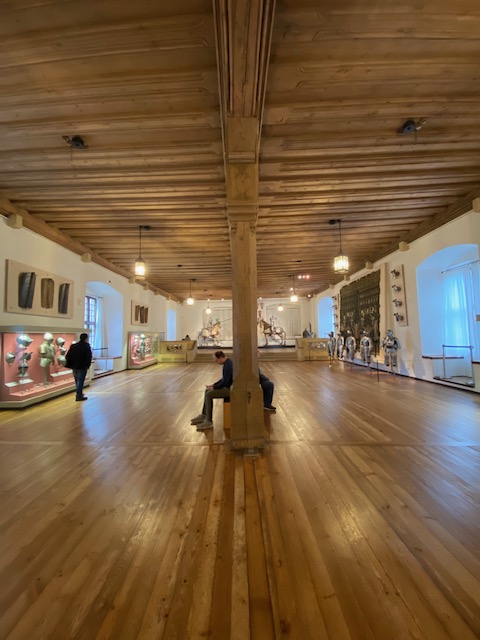
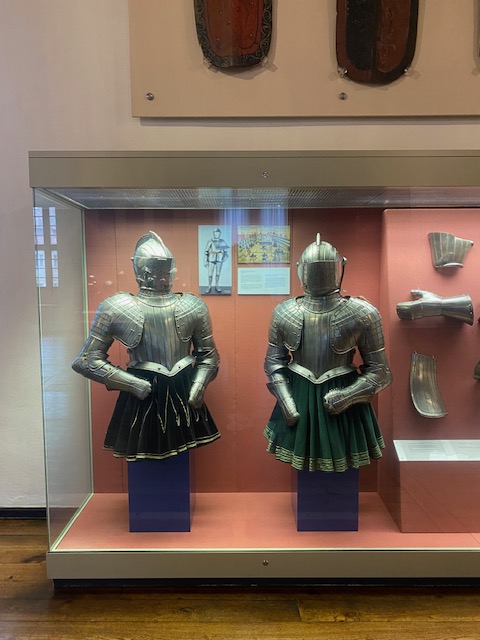




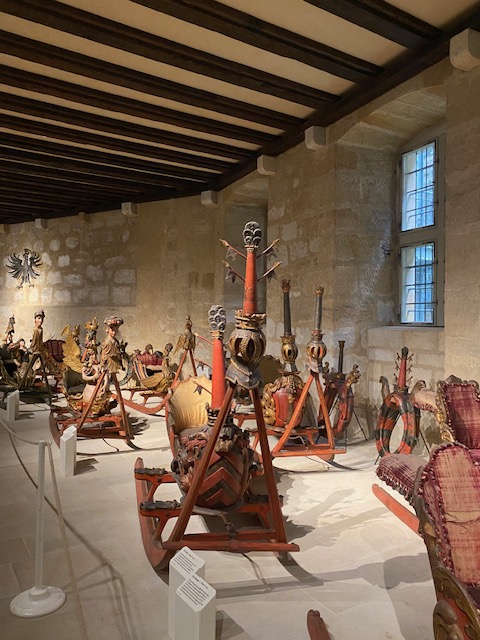


A visit
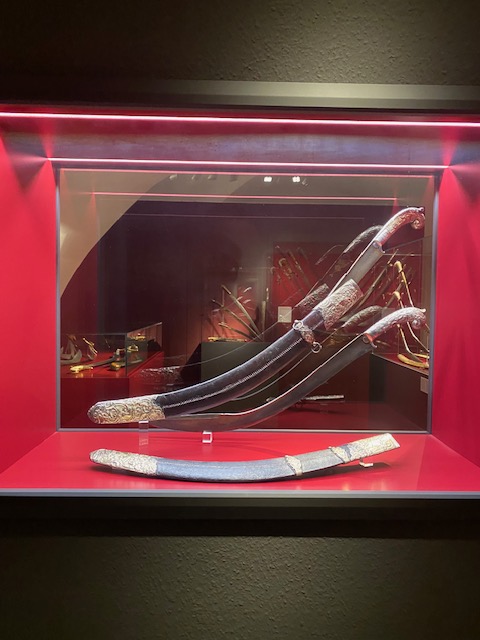
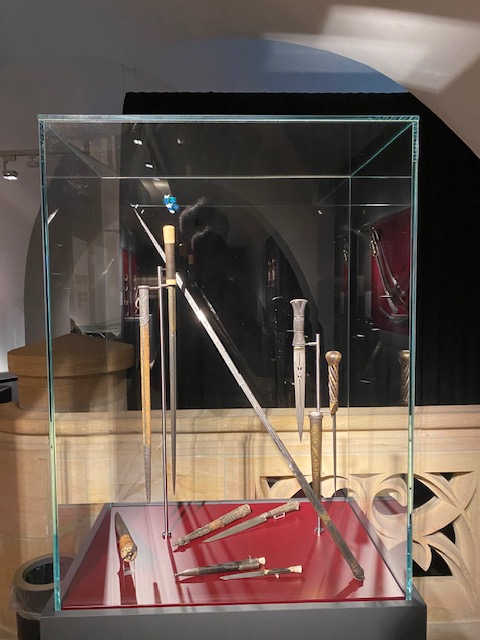
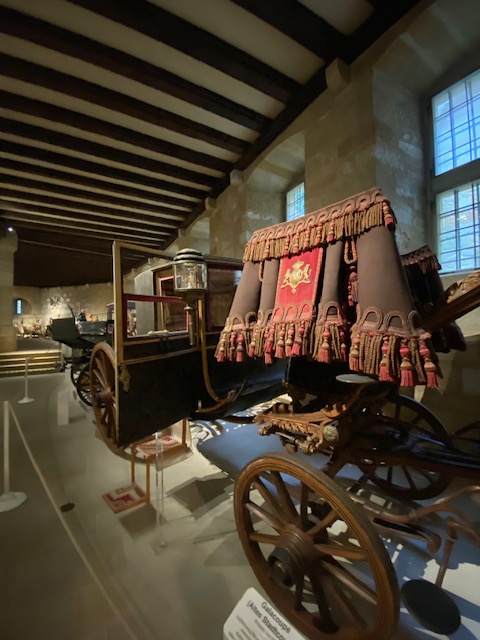
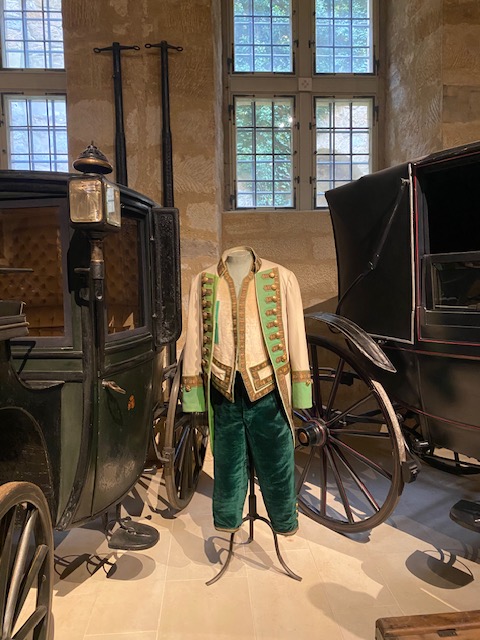
The Veste Coburg is more than a museum in a castle. We started with a temporary exhibition on swords of the Ottoman Empire. Then we toured the castle.
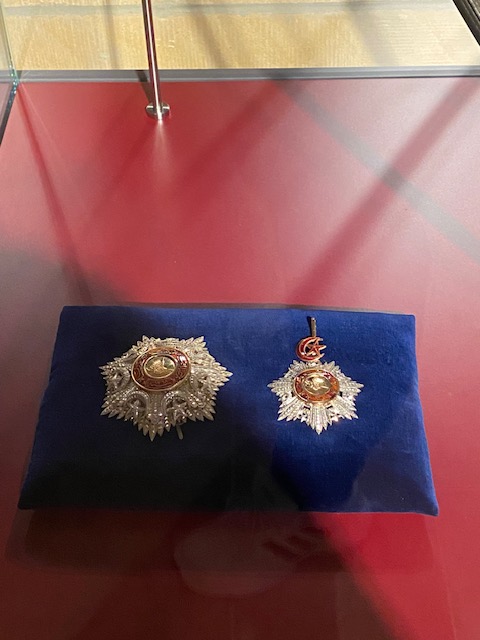
Many ‘typical castle’ rooms show us how people lived until quite recently in the castle. Old furniture, art, objects, medals, and all sorts of weaponry and armours.
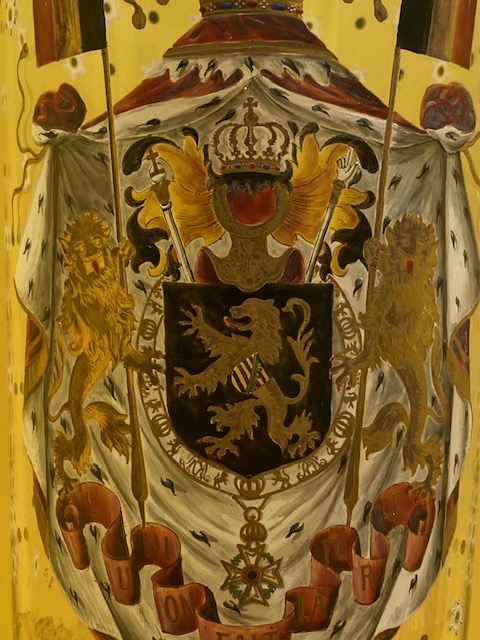
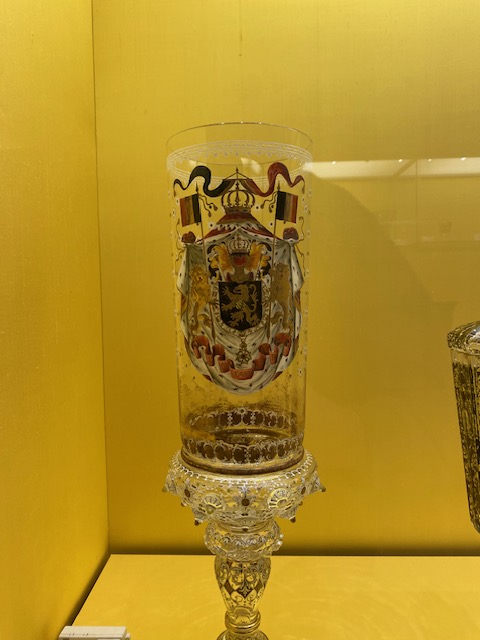

As the Veste was habited residence until the 1980s (if I remember well), the castle is nit completely stuck in time. Apart from Charles Edward, the deposed Tsar of Bulgaria, Ferdinand I, also resided there.
Certainly a castle worth visiting.
Dessau – Weimar – Coburg – Kassel 2024
- REVIEW | European Sleeper night train.
- GERMANY | Bauhaus in Dessau.
- DESSAU | Technikmuseum Hugo Junkers Engineering Museum.
- REVIEW | Radisson Blu Fürst Leopold Hotel Dessau.
- SAXONY-ANHALT | A day in Dessau.
- GERMANY | Bauhaus in Weimar.
- GERMANY | Weimar Classicism, the Wittumspalais of Duchess Anna Amalia and the Weimar Haus Experience.
- GERMANY | The ‘Weimar’ in Weimar Republic.
- REVIEW | Hotel Elephant Weimar.
- THURINGIA | A day in Weimar.
- COBURG | Ehrenburg Palace.
 Trip By Trip
15 Comments Add yours