
Six days. Five overnight stays in five cities in Spain. Lunch in Paris. Stopover in Barcelona. Then Córdoba, Seville, Granada and Málaga. An Andalusia Whirlwind Tour where we visit the Mezquita and the Alhambra. We’re touring Andalusia in October 2023 to follow the trend of travelling to hot spots outside summer, as we did with Italy in 2022.
After arriving late at Seville-Santa-Justa Railway Station we hurried to our hotel, Posada del Lucero, and then we hurried to our first appointment of the day, the Real Alcázar de Sevilla. Real as in Royal, not as in “not fake”.
Seville is the cultural epicentre of Andalusia. Among its numerous landmarks, the Real Alcázar of Seville stands as a symbol of the city’s grandeur and the diverse influences that have shaped its history.
The Real Alcázar of Seville, also known as the Royal Alcazars of Seville, is a palace complex with a history that spans over a thousand years. It serves as a physical embodiment of Seville’s complex past and the myriad cultural influences that have left their mark on this city.


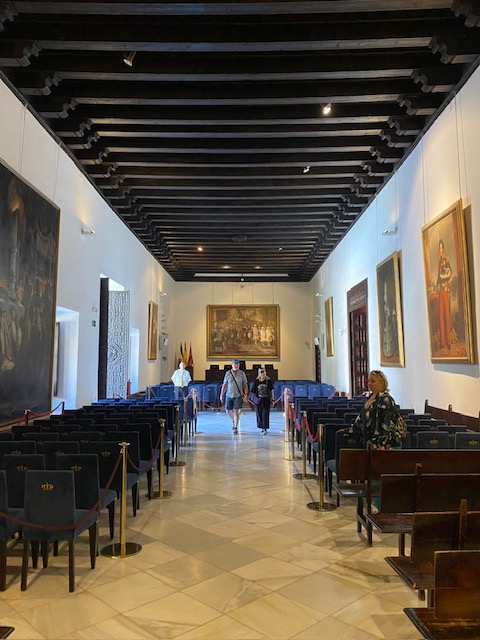
Moorish origins
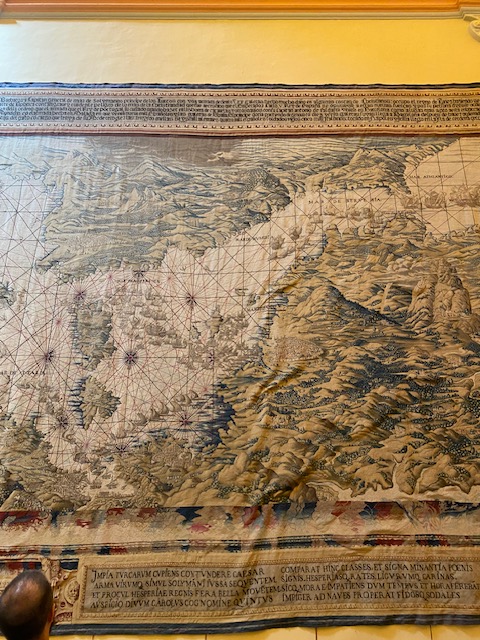
The Real Alcázar‘s story begins during the time of the Moors in the 10th century. The Almohad dynasty initiated its construction, creating a palace that showcased their distinctive architectural style characterized by intricate stucco work, horseshoe arches, and geometric designs. It was originally designed as a fortress, and parts of this Moorish structure can still be seen today, including the Patio del Yeso and the Patio de las Doncellas.

Christian transformation
After the Reconquista in the 13th century, the Real Alcázar underwent significant transformations at the hands of Christian monarchs.
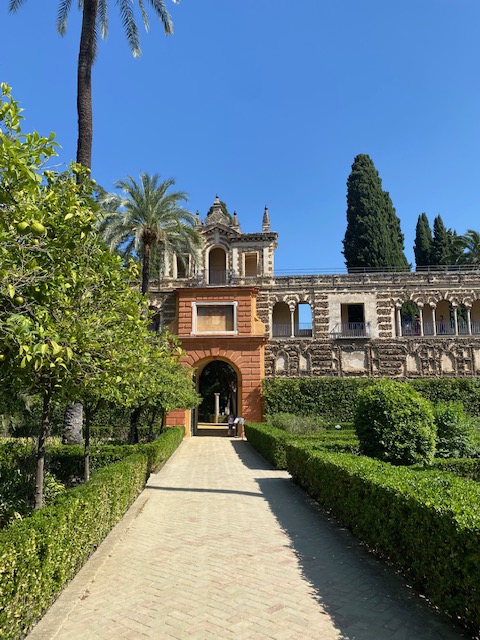
This fusion of Moorish and Christian architectural elements is emblematic of the complex history of the region. Notably, the Palace of Peter I, constructed during the reign of Peter I of Castile, exemplifies this blend with its Gothic and Mudejar features.

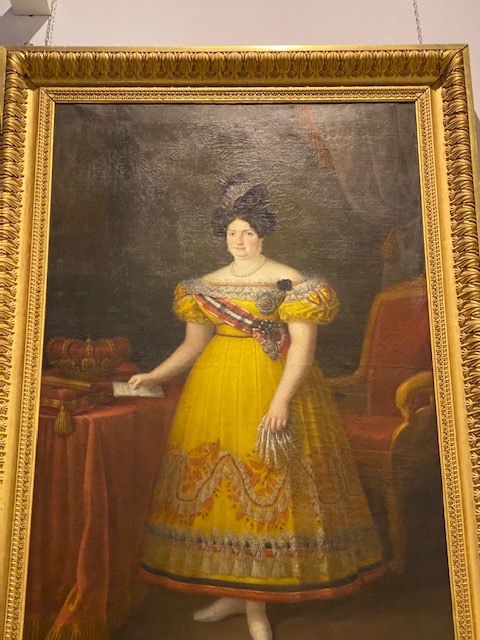


Later additions
Subsequent monarchs, including the omnipresent Catholic Monarchs Ferdinand II of Aragon and Isabella I of Castile, also left their mark on the Real Alcázar. The 16th century saw the addition of the Charles V Palace, showcasing Renaissance architecture, a stark departure from the palace’s earlier designs. These various layers of architectural styles offer a visual journey through the passage of time and the evolving cultural influences in Seville.

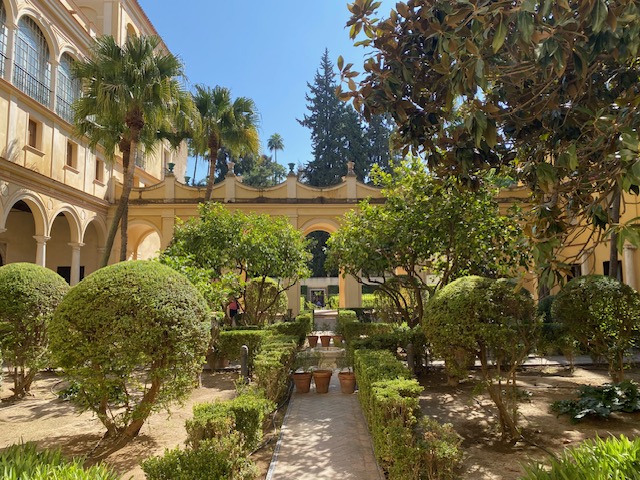

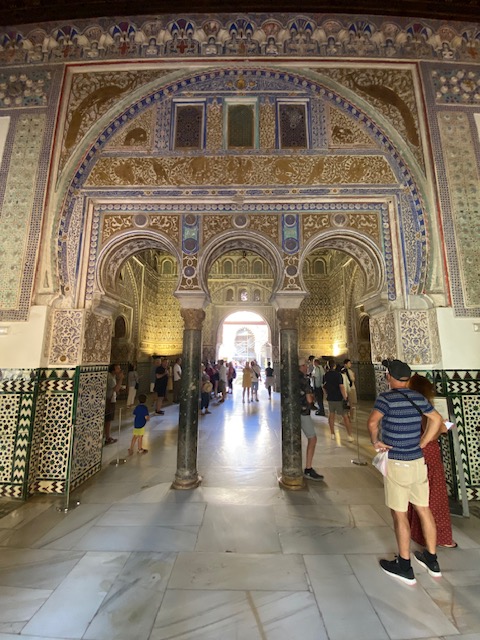

Architectural features
The Real Alcázar of Seville is a striking example of the amalgamation of architectural styles, each reflecting different epochs and cultural influences. Some of its most noteworthy features include:
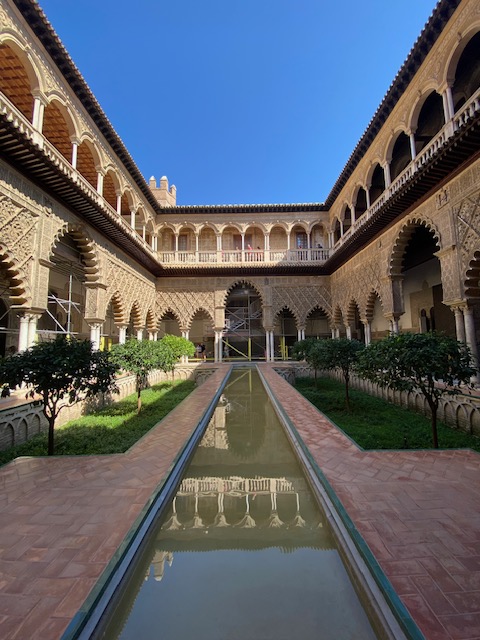
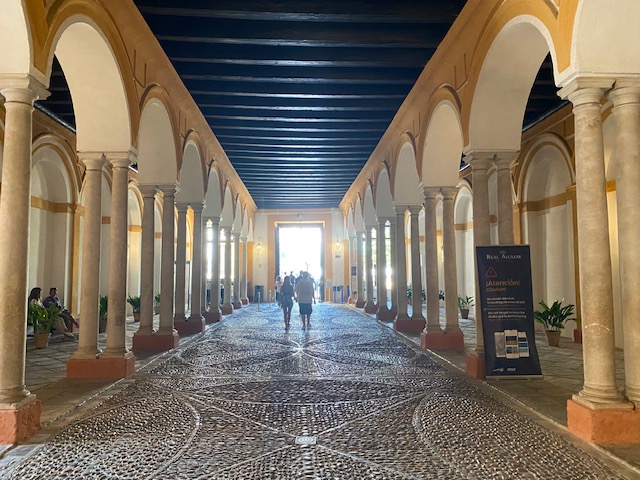
- Patio de las Doncellas: this central courtyard is an exquisite representation of Mudejar architecture. The name translates to the Courtyard of the Maidens and it is adorned with a reflecting pool and delicate stucco ornamentation, featuring Arabic inscriptions.
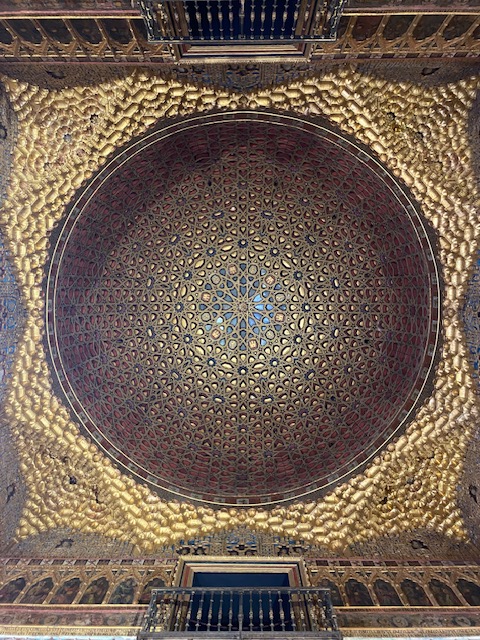
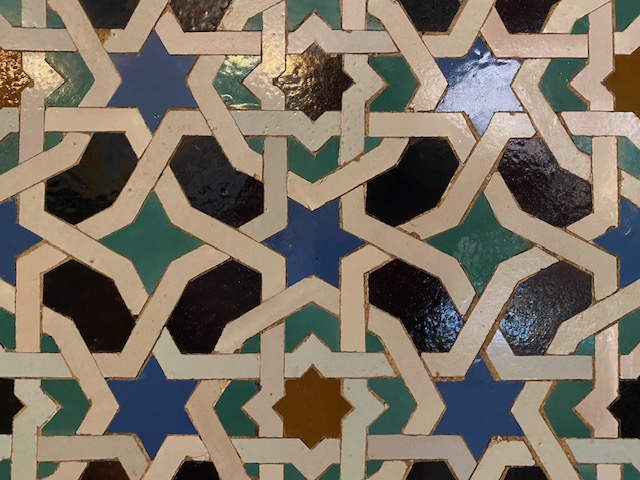
- Hall of Ambassadors: this opulent chamber was constructed during the reign of Peter I and showcases a stunning wooden ceiling, intricate tilework, and ornate arches. It was used for ceremonial and official functions.
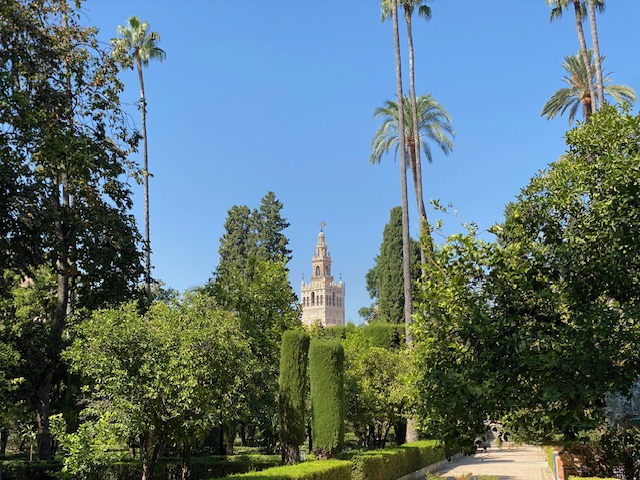
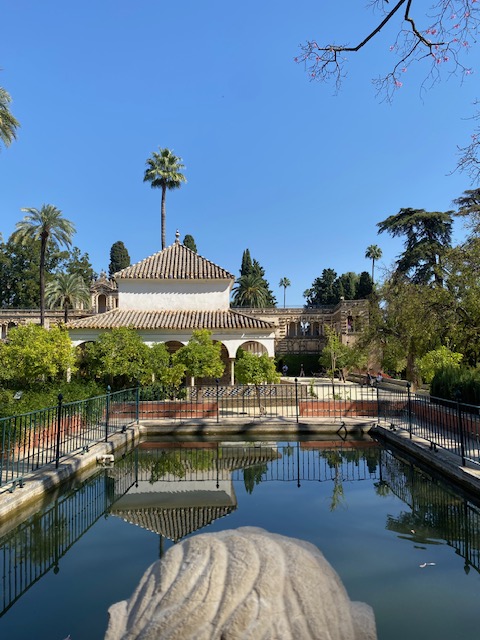
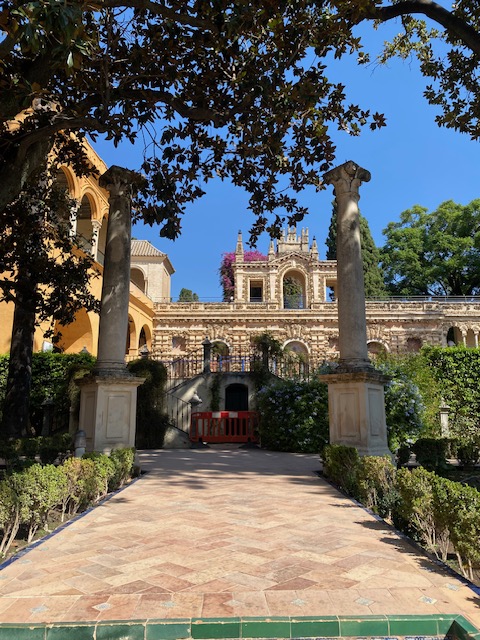
- Gardens: the Real Alcázar is surrounded by splendid gardens that feature an array of botanical species, tranquil fountains, and serene walkways. The gardens are divided into different sections, such as the English Garden, the Galeria de Grutescos (Gallery of the Grotesque), and the Garden of the Prince.
- Charles V Palace: a contrast to the predominantly Mudejar and Gothic designs, the Charles V Palace boasts Renaissance-style architecture. Its circular patio is a testament to the innovations of the era, with Doric columns and detailed stonework.
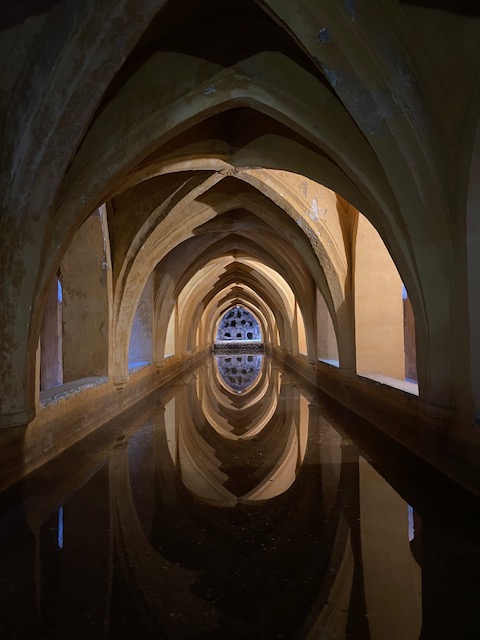
- The Baths of Maria de Padilla: named after a noblewoman, these underground chambers feature a mesmerizing vaulted ceiling and are renowned for their unique acoustics.


Cultural significance
The Real Alcázar is not just an architectural masterpiece; it is a repository of Spanish history and culture. Its significance extends to various aspects of the country’s heritage:
In 1987, the Real Alcázar was designated a UNESCO World Heritage Site, recognizing its historical, architectural, and cultural importance. This prestigious status underscores its significance on a global scale.
The Real Alcázar has played a prominent role in film and television, further increasing its cultural significance. It has been featured in productions like ‘Game of Thrones‘, where it was transformed into the Water Gardens of Dorne.
The palace complex continues to be a venue for cultural events, including concerts, exhibitions, and festivals. It remains a vibrant and dynamic space where contemporary culture blends with centuries-old traditions.
The Real Alcázar attracts millions of tourists each year, making it an essential component of Seville’s tourism industry. It provides visitors with a unique opportunity to delve into the city’s history and immerse themselves in its rich cultural tapestry.
The Real Alcázar serves as an educational hub, offering insights into the architectural, historical, and artistic achievements of different eras. It plays a crucial role in preserving and passing on the knowledge of Spain’s heritage to future generations.



Conclusion
The Real Alcázar of Seville is a true jewel in the crown of Spanish heritage. It’s also still an active Royal Palace for the current ruling monarchs of Spain.
Its historical significance, architectural marvels, and cultural importance converge to create an unparalleled experience for visitors and an enduring symbol of Seville’s enduring charm. As a living testament to the complexities of history and the interplay of various cultural influences, the Real Alcázar stands as a reminder of the enduring legacy of this vibrant city and the rich tapestry of Spain itself. Its enduring allure invites all who visit to step back in time and explore the diverse threads that have woven together to create the unique fabric of Seville’s culture and history.
A visit
As with the Mezquita in Córdoba, book your ticket and time slot well in advance and be on time! Bring the passport or identity card you used when booking with you. You can include the Royal Apartments, but these were sold out when we were there. We didn’t book well in advance enough.
An audioguide? If you want. We didn’t take one and enjoyed the palace without the long comments. There is café with not a great assortment of snacks.

2023 Andalusia Whirlwind Tour
- PRELUDE | Visiting Gibraltar in 2013.
- REVIEW | Eurostar Amsterdam – Antwerp – Brussels – Paris in 2023.
- PARIS | Restaurant Le Train Bleu at the Gare de Lyon.
- REVIEW | SNCF TGV inOui from Paris-Gare-de-Lyon to Barcelona-Sants.
- REVIEW | Hotel Barcelo Sants.
- INTERMEZZO | Spain saw a surge of Belgians visiting in the first quarter of 2024.
- SPAIN | Renfe Sala Club or Club Lounge at Adif stations.
- REVIEW | Renfe AVE in Premium from Barcelona-Sants to Córdoba.
- SPAIN | The Mezquita or Mosque-Cathedral of Córdoba.
- CÓRDOBA | The Alcázar de los Reyes Cristianos or Castle of the Christian Monarchs.
- REVIEW | Hotel Eurostars Palace Córdoba.
- ANDALUSIA | Half a day in Córdoba.
- TRAINS IN SPAIN | Iryo in Infinita class from Córdoba to Seville.
 Trip By Trip
💛
LikeLiked by 1 person
💚🤍💚
LikeLike
So beautiful! We hope to be in Seville this October. I just looked at tickets, and I hope there’s still a few available. We never know our schedule until a few days or a week in advance. Great info. Maggie
LikeLiked by 1 person
Well, book as soon as you can. It’s beautiful indeed.
LikeLike