
Easter Holiday 2024. Danny and Sam visited Porto in February, I visited the capital, Lisbon, in April with Steve, Philippe and Nicolas. I had my free week during a school holiday and as the boys work in education, I made the best of it. We chose Portugal for its convenience and our hope for fair weather. It wasn’t our first time in Lisbon, but my last visit dated from 2004. Twenty years is a long time. We had three full days.
On day 2 we focused on the Baixa Pombalina and Alfama neighbourhoods. ‘Core Lisbon’, in a way.


The Baixa Pombalina neighborhood or just Baixa is a historically significant area known for its orderly grid layout and distinctive architectural style. Developed in the late 18th century after the devastating earthquake of 1755, this neighborhood was meticulously planned under the direction of Sebastião José de Carvalho e Melo, 1st Marquis of Pombal, who aimed to rebuild Lisbon in a more organised and resilient manner.
Baixa Pombalina features elegant buildings characterized by straight streets, uniform facades, and arcaded sidewalks. The architectural style reflects the principles of the Enlightenment era, with an emphasis on functionality and practicality. Many of the buildings are adorned with decorative elements, such as wrought iron balconies and intricate stonework.
Today, Baixa Pombalina is a vibrant district bustling with shops, restaurants, and cultural attractions. Its central location makes it a popular destination for both tourists and locals alike, offering easy access to major landmarks such as Praça do Comércio (Commerce Square), Praça da Figueira (Fig Tree Square) and Praça de D. Pedro IV (King Pedro IV Square), better known as the Rossio.

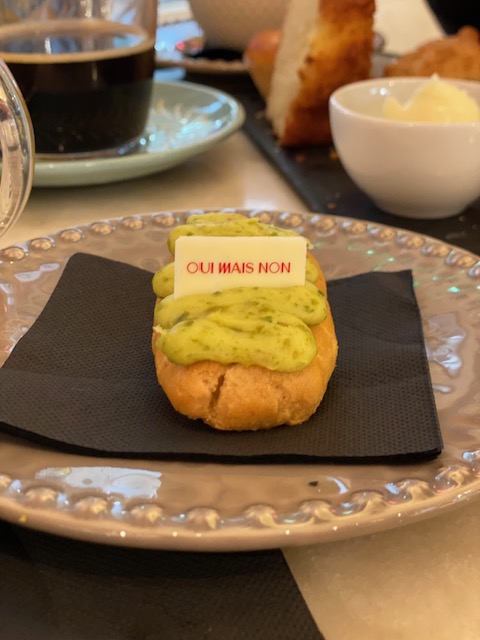
Yes but no
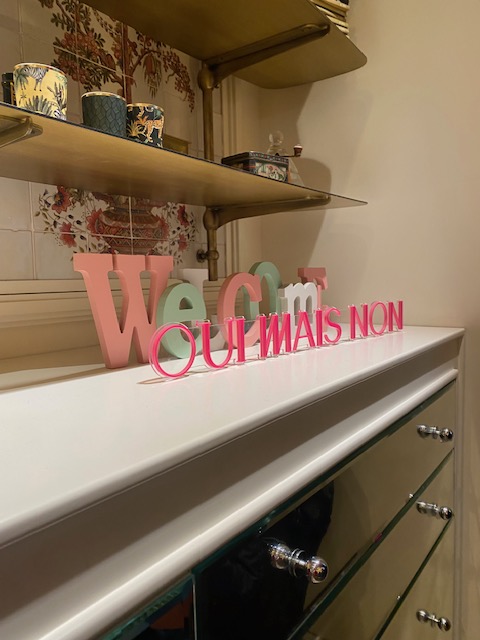
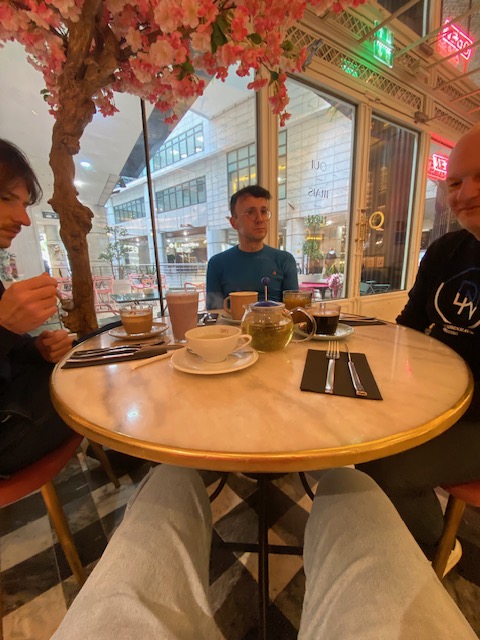
We started the day with late breakfast (but not yet brunch) at Oui Mais Non on Avenida da Liberdade (Liberty Avenue). Slightly hidden in a shopping mall, Oui Mais Non has the vibes of a candy shop, patisserie, chocolaterie and brunch space on a sugar rush.




Shady deals at Commerce Square
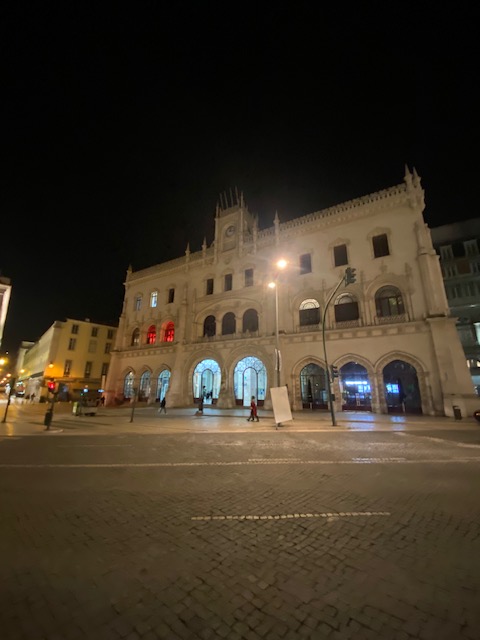
After breakfast we walked from our apartment at Praça do Restauradores (Restorers Square) via the magnificent Rossio Railway Station and Praça de D. Pedro IV towards Rua Augusta (August Street) and Praça do Comércio.


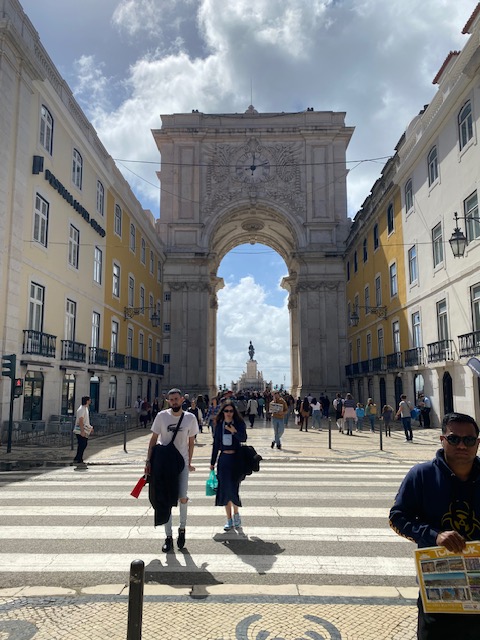
We passed, but did not use the Elevador de Santa Justa or Santa Justa Lift.

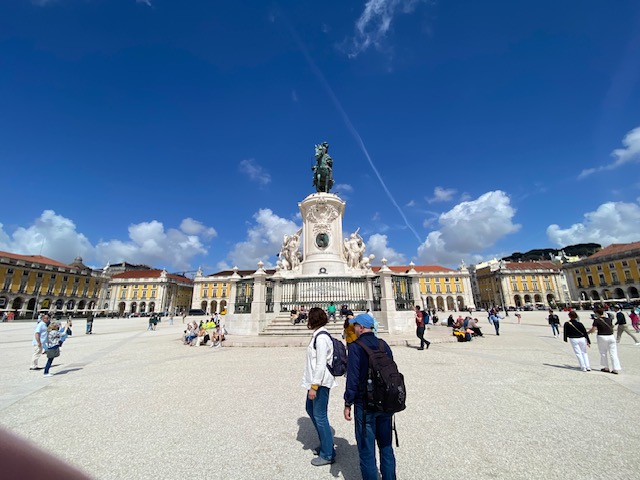
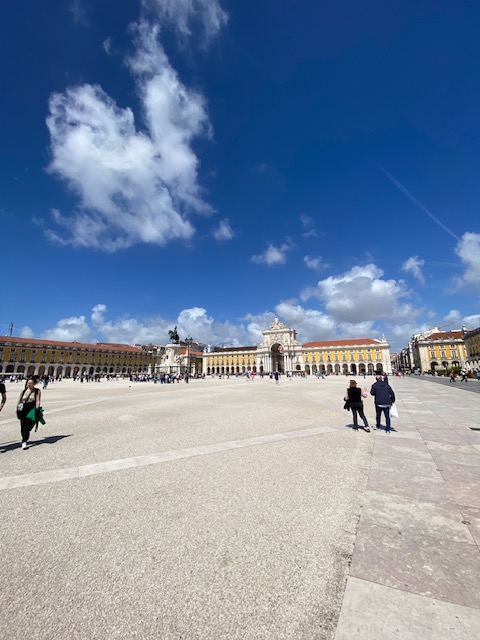
Praça do Comércio is situated near the Tagus River, it has been a focal point of the city’s commerce and administration for centuries. The square is known for its grandeur and historical significance.
The architecture of Praça do Comércio is characterised by its symmetrical layout and neoclassical style. It is surrounded by elegant yellow buildings with arcades and features a large open space in the center. At the north end of the square stands the imposing Rua Augusta Arch, which leads to the bustling shopping street of Rua Augusta.
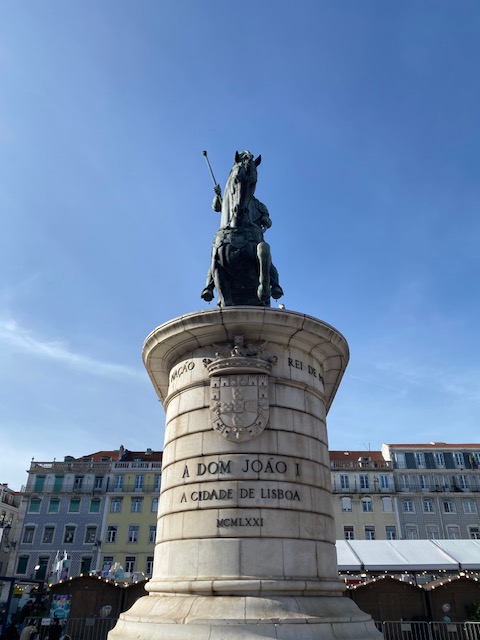
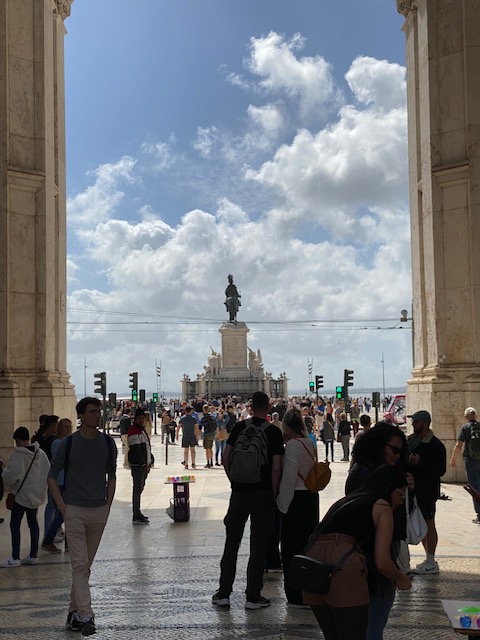
In the center of the square, there is a statue of King Joseph I, which adds to the regal atmosphere of the area. The statue is mounted on a horse and is a prominent landmark in the square.
Praça do Comércio has long been a hub of activity in Lisbon, hosting events, markets, and celebrations. It serves as a gathering place for locals and tourists alike, offering stunning views of the river and the surrounding cityscape.
Praça do Comércio is an important historical and cultural site in Lisbon, attracting visitors with its architectural beauty and vibrant atmosphere.
The square is also the place of many shady deals. Vendors trying to sell sunglasses, but also trying to sell marihuana, hashish and cocaine. Everyone gets the question, not only youngsters looking like they’re looking for a party. So, no discrimination.


Alfama
From Praça do Comércio we more or less, stressing less, followed a hike outlined in my Eyewitness Guidebook. It would take us into the Alfama neighbourhood.
Alfama is one of the oldest and most traditional neighborhoods in Lisbon. Perched on a hillside overlooking the Tagus River, it is known for its narrow winding streets, historic buildings, and vibrant atmosphere.


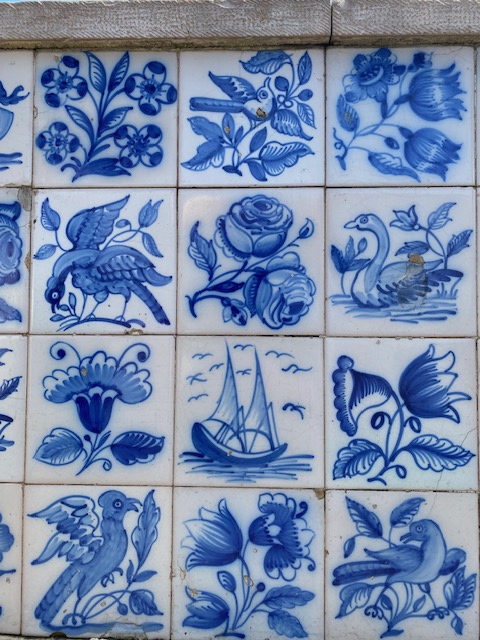
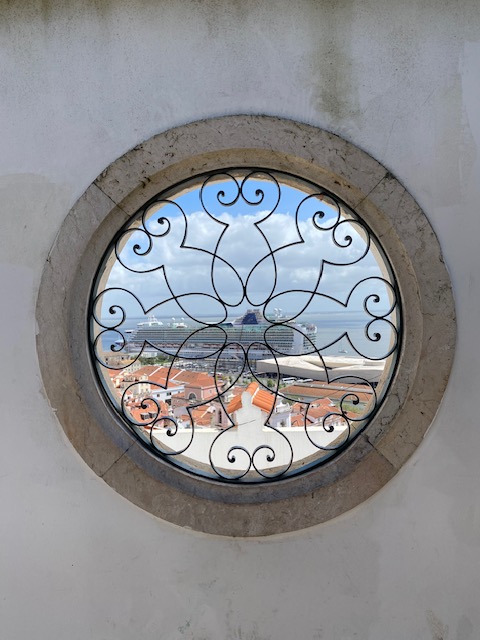


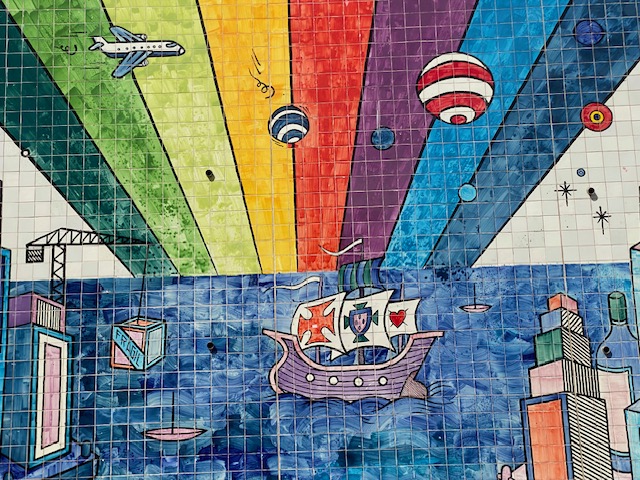
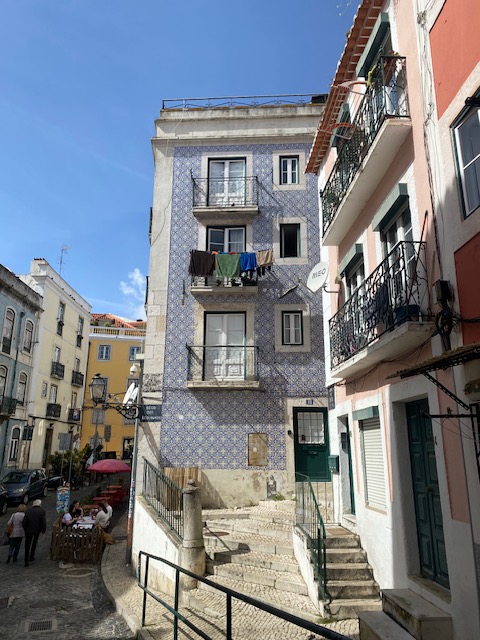
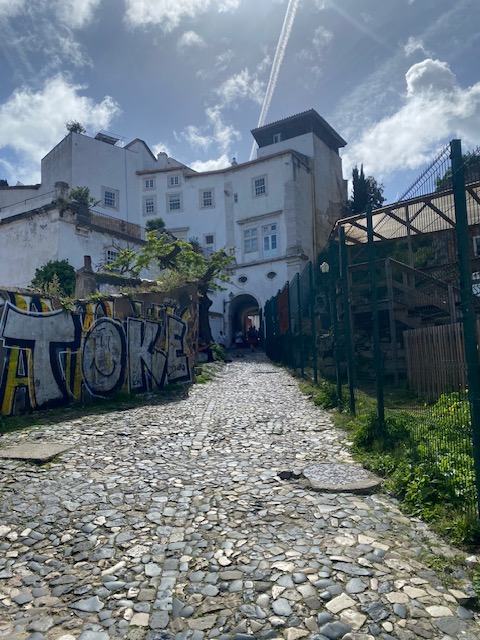


The architecture of Alfama is characterized by its narrow alleys, tiled facades, and ancient buildings adorned with colorful laundry hanging from windows. Many of the buildings in this neighborhood date back centuries, giving it a distinctively old-world charm.
Alfama is also home to several notable landmarks, including the São Jorge Castle, a medieval fortress perched atop the highest hill in Lisbon, offering panoramic views of the city. Additionally, the neighborhood is known for its numerous churches, including the Cathedral of Saint Mary Major (Lisbon Cathedral or Sé), which dates back to the 12th century.
In addition to its historical significance, Alfama is also a lively and bustling area, with traditional Fado music echoing through its streets and squares. There are plenty of restaurants, bars, and cafes where visitors can enjoy authentic Portuguese cuisine and immerse themselves in the local culture.
Alfama is a charming and atmospheric neighborhood that offers a glimpse into Lisbon’s rich history and cultural heritage. It remains a popular destination for tourists seeking an authentic Lisbon experience. So, it’s crowded.
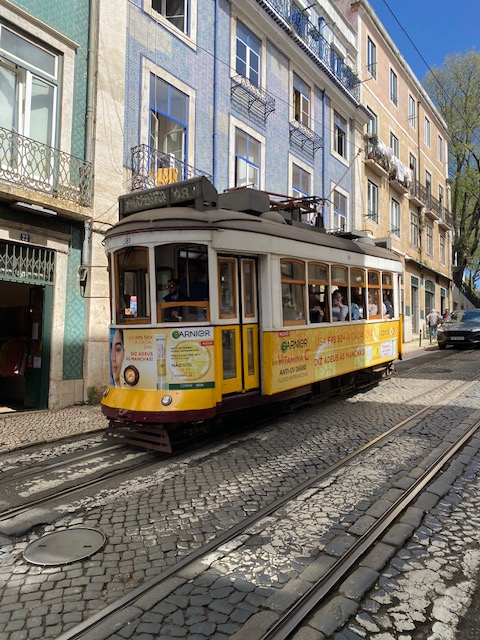

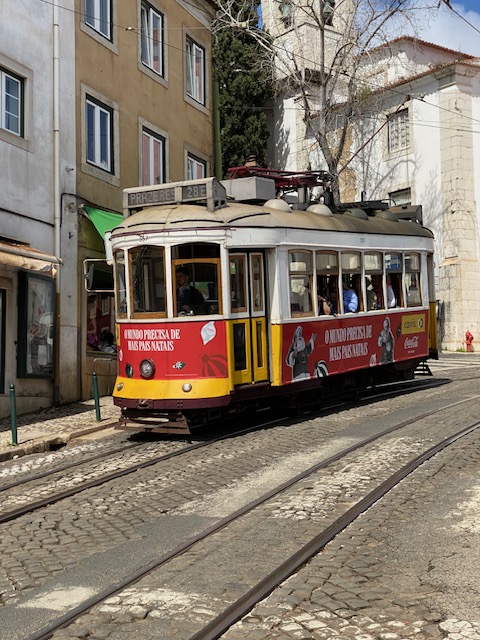

Exploring Alfama
Passing by the Terminal Fluvial Sul e Sueste (South & South East River Terminal) we climbed the streets towards the Miradouro de Santa Luzia or Saint Lucy’s Viewpoint.


Further up the road, we ad an Aperol Spritz and a snack at Largo Portas do Sol (Sun Gates Square), which also offers a viewpoint.


Our next stop was the Church and Monastery of São Vicente de Fora or Saint Vincent Outside the Walls.
Nearby, you find the Igreja de Santa Engrácia or Church of Santa Engrácia which is nowadays the Panteão Nacional or National Pantheon.
We didn’t go inside the churches, neither did we go inside Saint George’s Castle.


Dinner
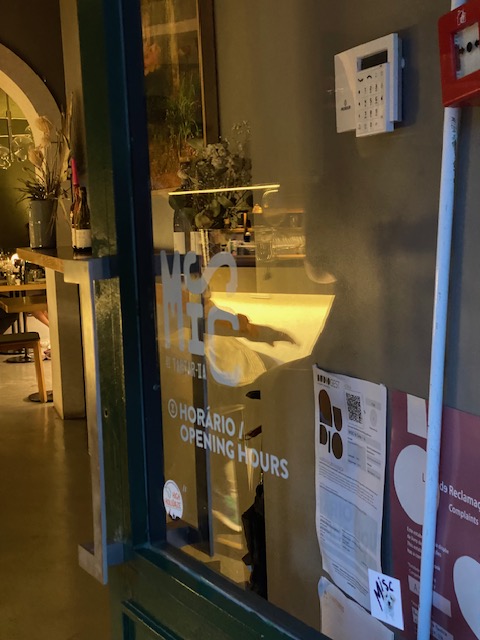
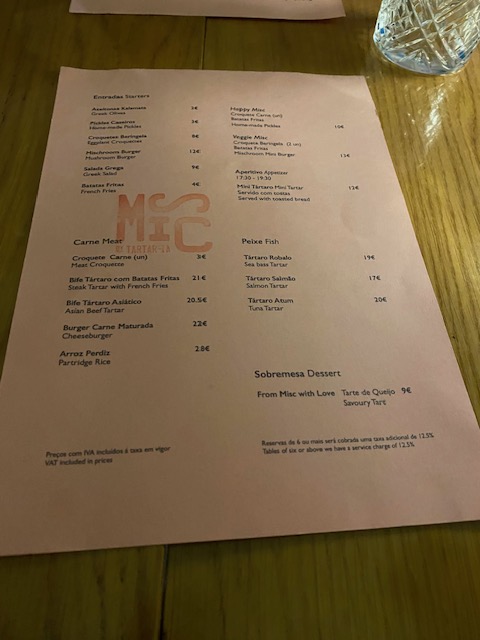
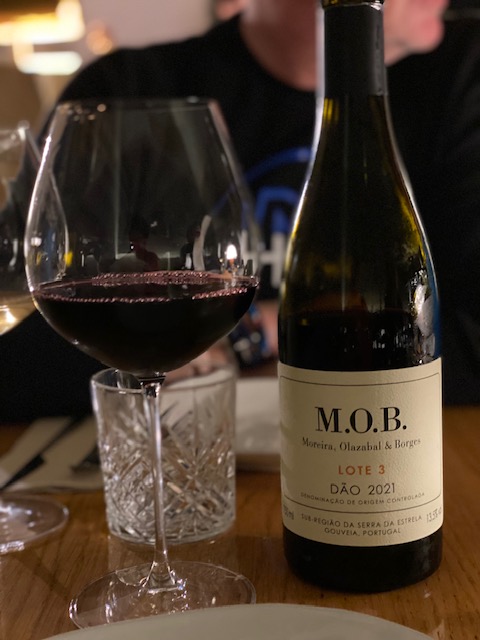
After returning to the apartment, we ventured to Bairro Alto (High Neighbourhood) to have dinner at MISC by Tartar-ia. This restaurant was a bit more upscale than other places we dined at. Make sure to book.


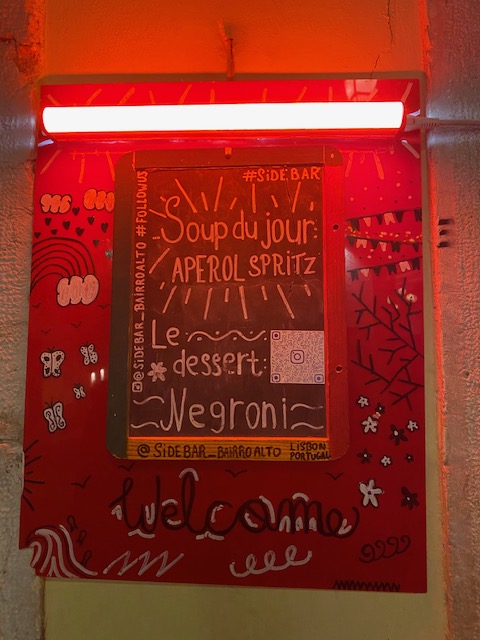
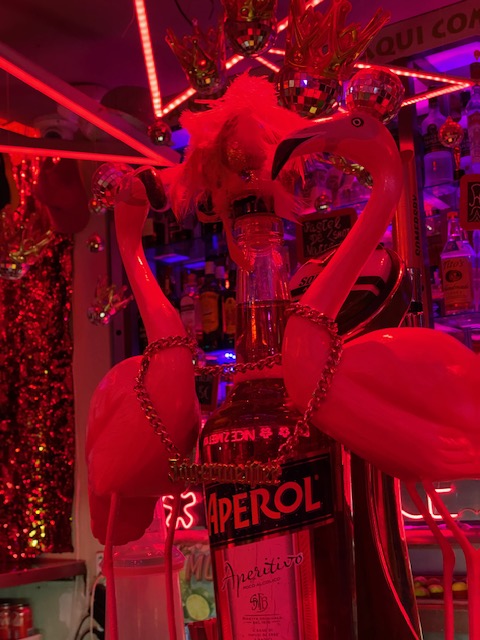
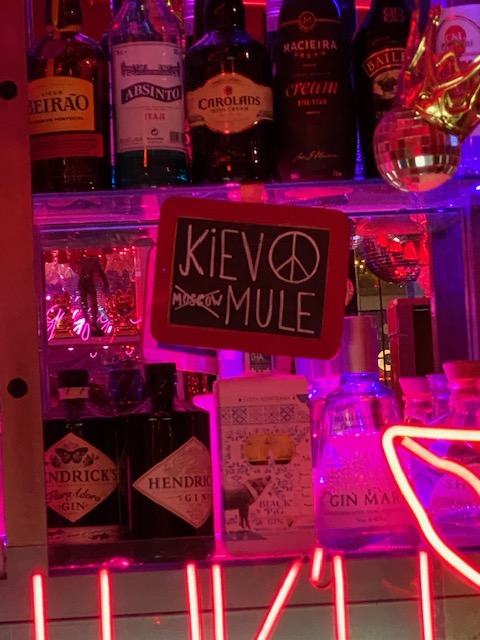
We ended the day at Side Bar, a gay space nearby. A small bar with a very camp interiour design. “Let’s get together at the corner of the world”, it says. Every day there’s a “soupe du jour” and a “dessert du jour“. Don’t worry, these are cocktails.


Languages
The “soupe du jour” reminds me I noticed how in Lisbon when signs are multilingual, they’re in Portuguese, English and French. Not in Spanish. There’s definitely some historical beef between them.

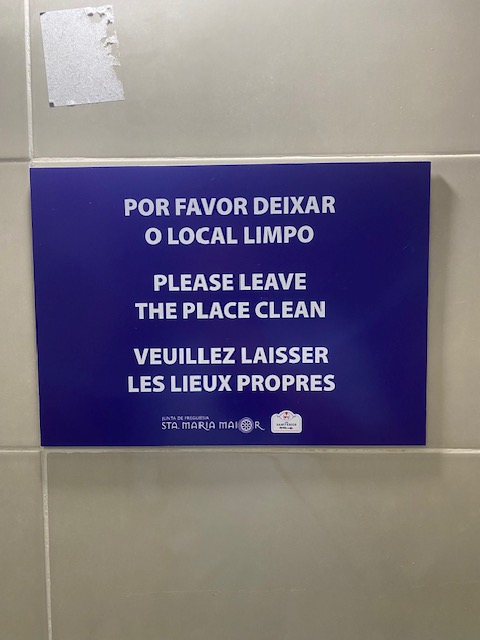
Oriol thinks Spaniards don’t come to Portugal in high numbers. And the languages are mutually pretty comprehensible.
 Trip By Trip
5 Comments Add yours