
Autumn 2024. Ten years after my first trip to Seoul in 2014, I am returning to the Republic of Korea, better known as South Korea. Not solo this time, but with Oriol, who has never been to Korea. On the itinerary: flying with Qatar Airways to Incheon via Doha, the capital Seoul, the historic city of Gyeongju, Busan, Jeju Island and a second stint in Seoul, where we are joined by Sehyeon. We’re spending two weeks in South Korea. The ROK is such a popular destination now. Will we experience overtourism?
After visiting Gyeongbokgung Palace it was too late to include Changdeokgung Palace that day. So we decided to see other areas. To start with: Bukchon Hanok Village.
Bukchon Hanok Village
Bukchon Hanok Village (북촌한옥마을) is a residential neighborhood in Jongno District, known for its preserved traditional Korean houses, called hanok. It has become a popular tourist destination, causing some tension with the residents.
The Bukchon area, including Wonseo-dong, Jae-dong, Gye-dong, Gahoe-dong, and Insa-dong, was traditionally a residential quarter for high-ranking government officials and nobility during the Joseon period. Located north of Cheonggyecheon and Jongno, it was named Bukchon, meaning ‘North Village‘.


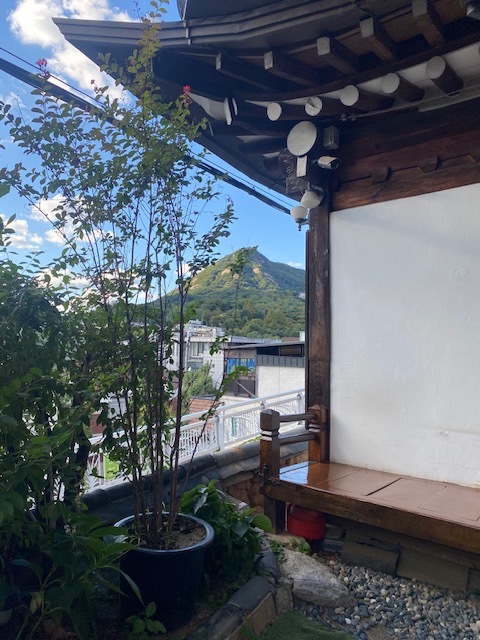
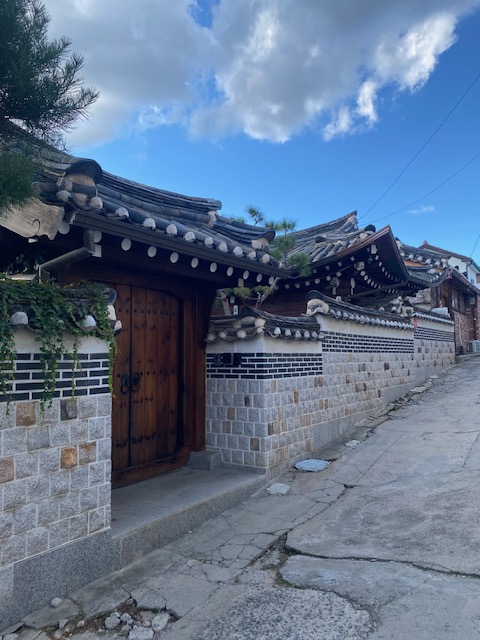
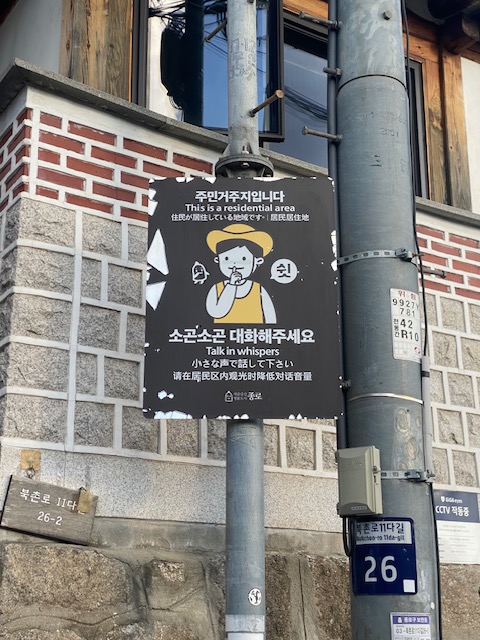
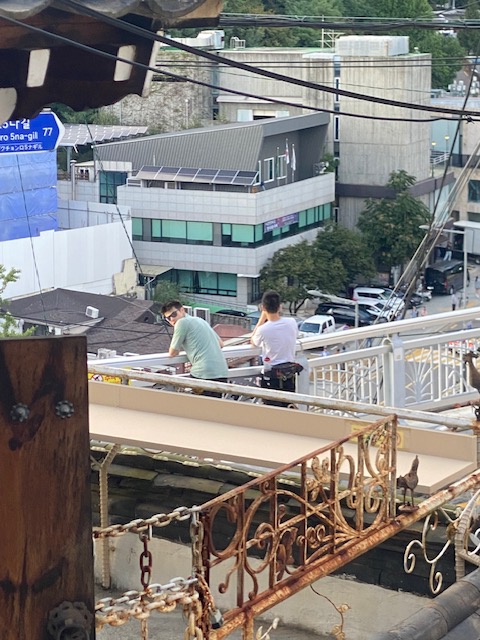
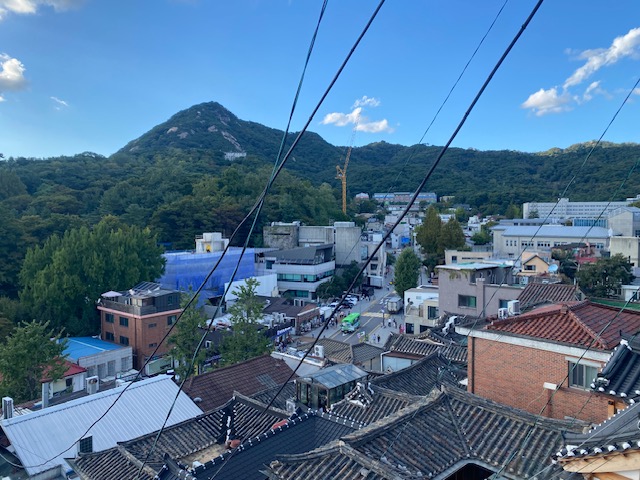
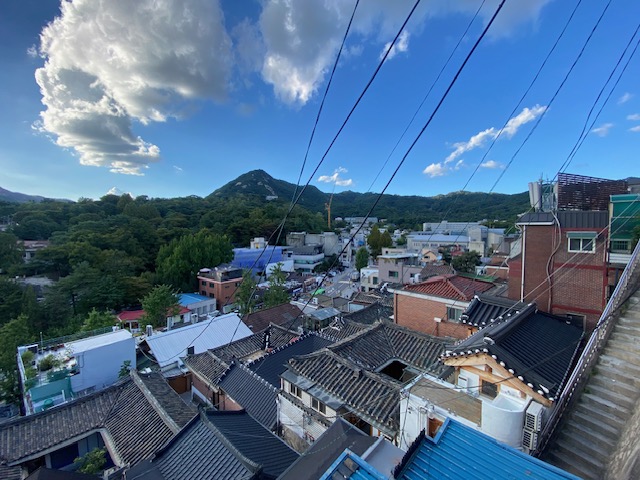


(Over)tourism at Bukchon Hanok Village
Bukchon Hanok Village has been preserved and revitalized as a unique tourist attraction. Its alleyways lined with traditional houses offer a glimpse into the past. In 1997, amid the Asian financial crisis, the Korean government decided to preserve hanok instead of demolishing them.
The village’s proximity to Gyeongbokgung Palace and Changgyeonggung Palace makes it an ideal place to learn about Korean traditional architecture and cultures. A poll conducted in 2011 found that exploring Bukchon’s narrow streets was the fourth favorite activity for foreign visitors in Seoul.
The number of visitors to Bukchon Hanok Village has increased significantly in recent years, especially after being featured in television programs. According to the Tourism Research Institute, an estimated 37,100 people visited during the week and 54,200 people visited on weekends between October 2016 and June 2017.
Bukchon Hanok Village has become a top destination in Seoul for tourism. The Korean government has been actively developing the area as a new tourist attraction by renovating traditional hanok into cultural centers, guesthouses, hotels, restaurants, and tea houses.
Tourists can visit preserved hanok or explore hanok cafes, which offer Korean classic desserts and trendy drinks. Some hanok have been renovated into workshops for artists and designers, and young people have been purchasing and renovating old hanok with sustainable materials.
In addition to sightseeing, tourists can enjoy various activities such as kimchi-making at the Seoul Kimchi Academy. Walking tours offered by Korean and Seoul organizations provide a deeper understanding of the area. Other activities include pedicab tours, photoshoots, and hanbok rentals.

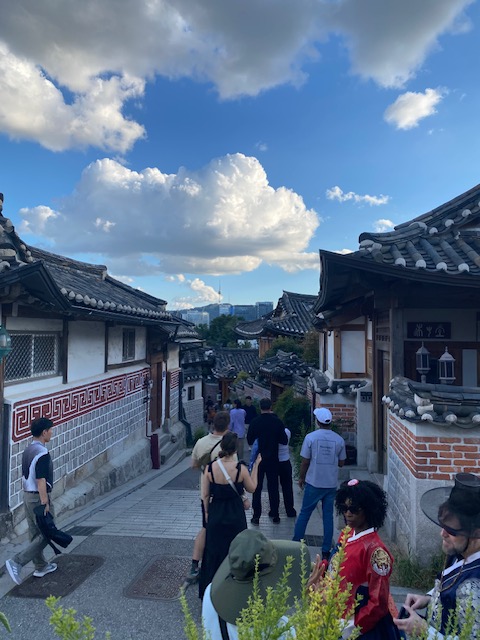


Concerns from residents
Despite the growing popularity of Bukchon Hanok Village, residents still live in the area. In 2016, it was reported that 3,534 people lived there. The large number of tourists compared to residents has caused some friction. Residents have put up signs discouraging tourists from loitering near their homes.
The Seoul tourism website advises visitors to be mindful of noise levels, avoid littering, keep group sizes small, and respect the privacy of homes. The loss of hanok due to insufficient funding for remodeling and excessive urbanization policies is a major concern. Residents may face difficulties living in traditional houses without modern amenities, and the community may lose its neighborhood connections.
Excessive tourism has also been an issue for residents. In the past, there was a rule restricting tourist visits to Monday through Saturday and limiting visits on Sunday. In 2018, residents appealed to tourists to respect their privacy.
Websites like Visit Seoul emphasize proper etiquette for tourists visiting Bukchon Hanok Village and remind them that it is a residential area. The struggle of local residents caused by tourist attraction remains a complex issue in Korea.
Opening hours
In Belgium, we sometimes laugh Bruges is a theme park “which closes at 8 PM”. For Bukchon Hanok Village, there are real opening hours.
Since October 2024 (when we were there) Bukchon is a “special management area” to control the number of tourists. Travellers will be banned in the area from 5 PM to 10 AM, and charter buses will be restricted in some areas to reduce traffic. The village will be divided into three zones (red, orange, and yellow) to manage crowds. Fines will be given to those who break the rules.
But honestly, while we did see some crowds, we weren’t there at the appropriate time. Oops.


Insadong Culture Street
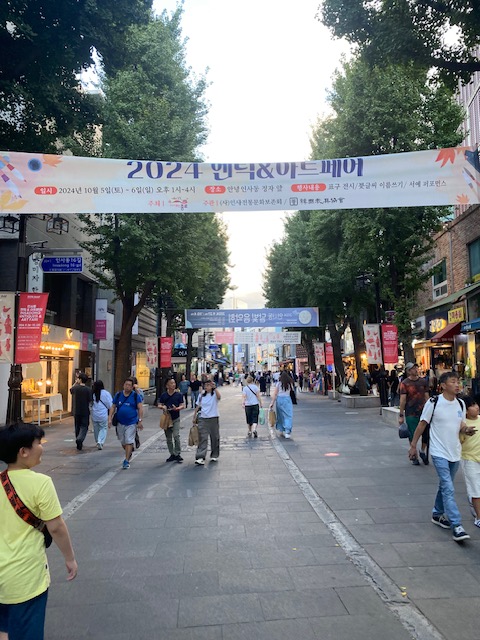
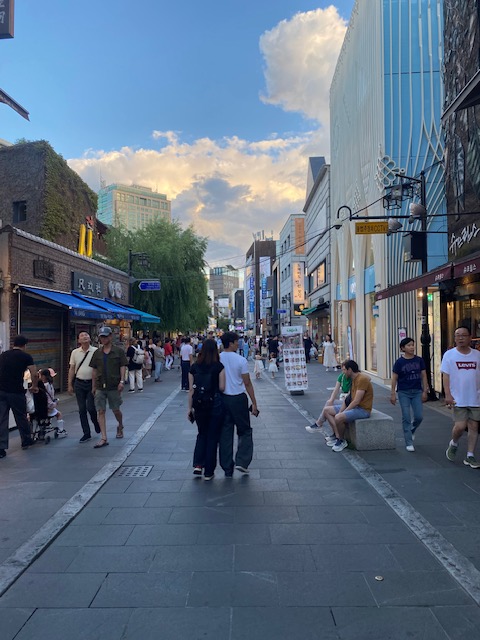
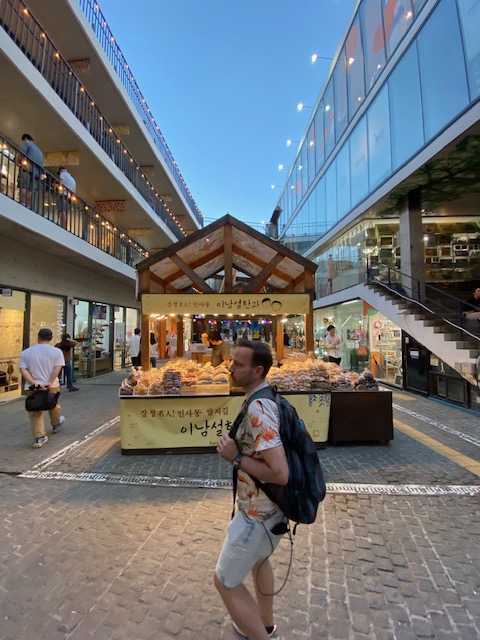
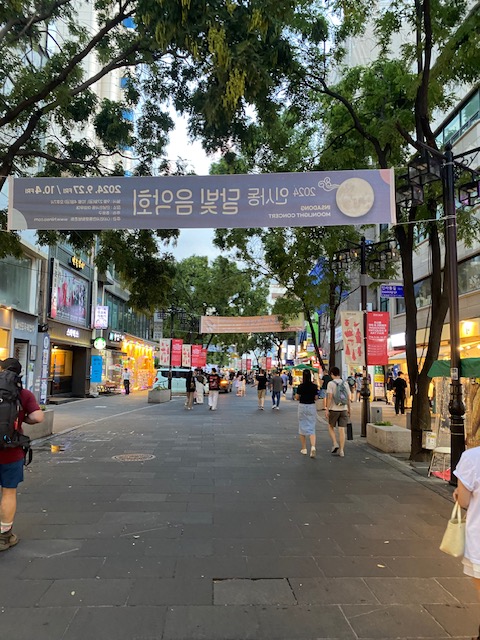
Insadong or Insa-dong (인사동) is a dong, or neighborhood, in Jongno District. Its main street is Insadong-gil, which is connected to a number of alleys that lead deeper into the district, with modern galleries and tea shops. Historically, it was the largest market for antiques and artwork in Korea.
Galleries are a prominent feature of Insa-dong, showcasing a wide range of traditional Korean fine art, from paintings to sculptures. Notable galleries include Hakgojae Gallery, known for folk art, and Gana Art Gallery, which promotes emerging artists.
Teahouses and restaurants complement the galleries, offering a tranquil escape in the winding alleys. The shops in Insa-dong are diverse and popular among people of all ages.
Every weekend, the main street is closed to traffic and transformed into a cultural space. Stores set up booths outside, and traditional candy merchants, fortune tellers, and cultural performances can be found. Insa-dong is especially popular among international tourists seeking to experience traditional Korean culture and purchase fine art.






Jogyesa Temple
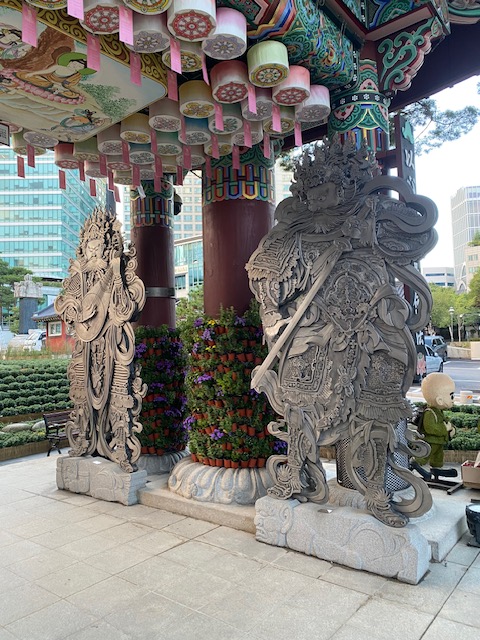
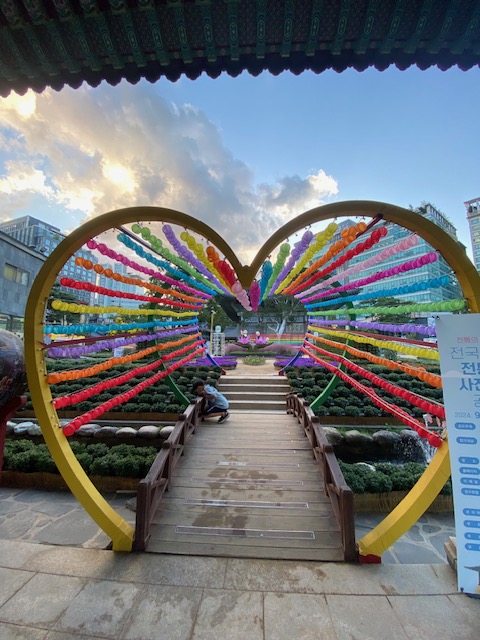
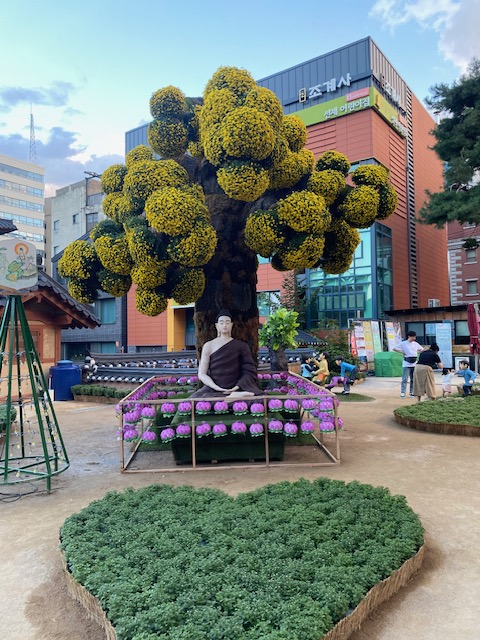
Jogyesa or Jogye Temple (조계사) is the chief temple of the Jogye Order of Korean Buddhism. It dates back to the late 14th century and became the order’s chief temple in 1936. Jogyesa plays a leading role in the current state of Seon Buddhism in South Korea.
The temple was first established in 1395 at the beginning of the Joseon Dynasty. The modern temple was founded in 1910 and initially called ‘Gakhwangsa‘. The name was changed to ‘Taegosa‘ during Japanese rule and then to the present name in 1954.
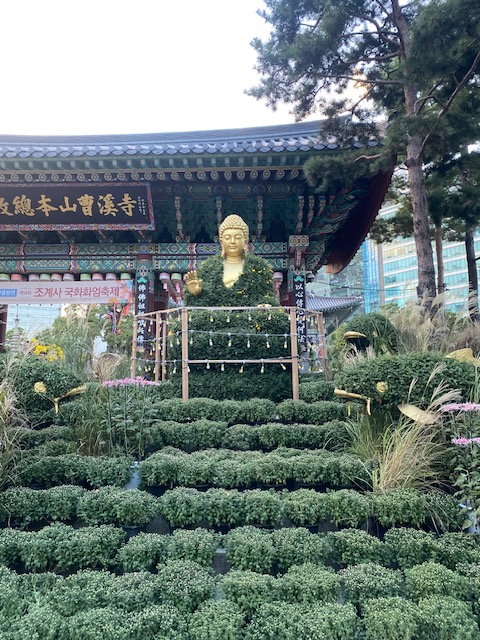

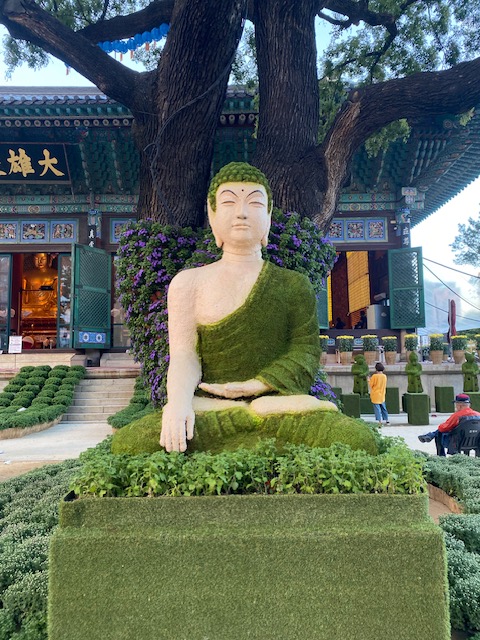

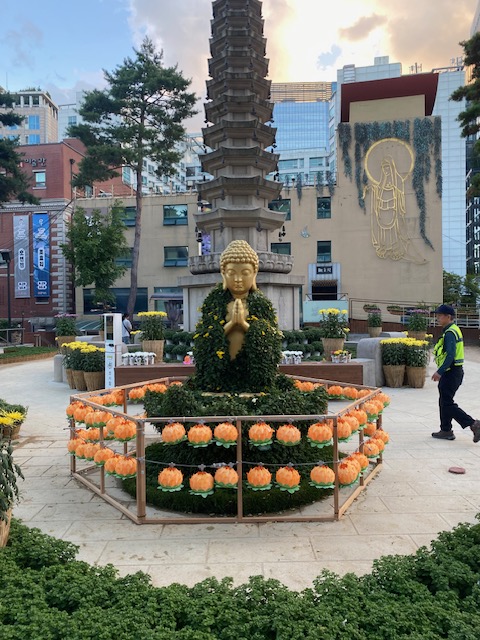
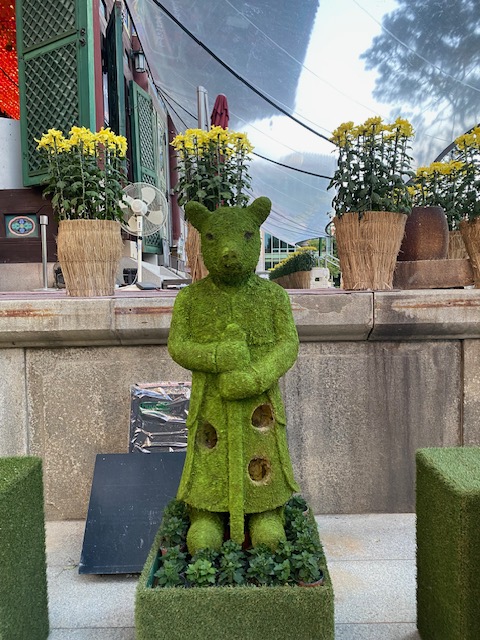
History of the temple
During the Japanese colonial period (1910-1945), Gakhwangsa Temple became a center of resistance against Japanese efforts to suppress Korean Buddhism. In 1937, a movement for the establishment of a Central Headquarters led to the construction of the Main Buddha Hall of Jogyesa Temple in Seoul in 1938.
The temple became known as Taegosa Temple in 1938 and adopted its current name, Jogyesa Temple, in 1954. The name ‘Jogyesa’ signifies its status as the main temple of the Jogye Order, which has a history of 1700 years and is the most representative of Korean Buddhist Orders. The Jogye Order follows the Seokgamoni doctrine and teachings of the Buddha, focusing on the mind and nature.
The Daeungjeon (Main Buddha Hall), built in 1938 with pine wood from Baekdu Mountain, is filled with the sounds of chanting. The temple courtyard features two 500-year-old trees, a White Pine and a Chinese Scholar tree.
The White Pine, about 10 metres high, is named after the nearby area, ‘Susong-dong‘. It was brought by Chinese missionaries during the Joseon Dynasty and is designated as a Natural Monument due to its rarity and biological value. The Chinese Scholar tree, standing at 26 metres tall, silently watches over the temple grounds.
Jogyesa Temple’s architecture is a blend of traditional temple and palace styles. The lattice designs on the doors and windows of the Daeungjeon are unique. The temple also features the Geuknakjeon (Hall of Supreme Bliss), housing the Amitabha Buddha, the Beomjongnu (bell tower), and an information center for foreign visitors.
The temple features colorful matsya (fish), which are sacred to Hindu-Buddhists. To enter the temple, visitors must pass through the Iljumun or ‘one pillar gate’, which represents the division between the mortal world and the world of Buddha.



Gwangjang Market
After all that, it was time to eat. Someone tipped us to go to Gwangjang Market (광장시장), a traditional street market located in Jongno District. It is one of the oldest and largest traditional markets in South Korea, with over 5,000 shops and 20,000 employees. Approximately 65,000 people visit the market daily.
Founded in 1911, the market association that manages Gwangjang Market is one of the oldest active companies in the country. Gwangjang Market originated from the Gabo Reforms during the Joseon period, which eliminated merchant monopolies. As a result of these reforms, licensed merchants and shop owners in Seoul faced increased competition. To address this, King Gojong created a warehouse market called Changnaejang, which eventually developed into Namdaemun Market.
After Korea came under Japanese colonial occupation in 1905, the Japanese took control of Namdaemun Market. In response, a group of private Korean investors formed the Gwangjang Corporation and purchased land for a new market. They used the existing Bae O Gae Market as the foundation and named the new market Dongdaemun Market.
Dongdaemun Market became the first permanent market open every day of the week, distinguishing itself from most other markets at the time, which were temporary and only open occasionally. In 1960, the market was renamed Gwangjang Market.
The name ‘Gwangjang Market’ comes from the two bridges, Gwangkyo and Jangkyo, between which the market’s central shopping center was built.
Initially, the market only sold agricultural and seafood products. However, as it grew to become one of the largest markets in Korea, it expanded its offerings to include various products.
Today, the market has approximately 1,500-2,000 vendors selling a wide range of items, including fruits, vegetables, meat, fish, bread, clothing, textiles, handicrafts, kitchenware, souvenirs, and traditional Korean medicinal items.
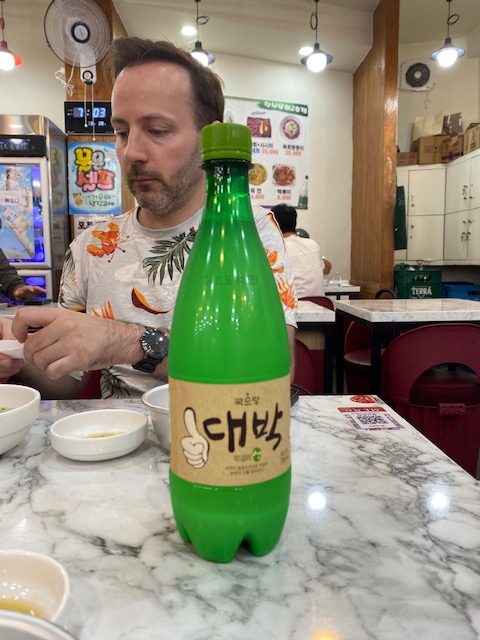
The market is also renowned for its numerous restaurants and food stalls offering traditional Korean cuisine. Among the most famous dishes are bindaetteok (mung bean pancakes) and mayak gimbap.
Gwangjang Market is easily accessible from Jongno 5-ga or Euljiro 4-ga metro stations.




Cheonggyecheon Stream
Cheonggyecheon (청계천) or Cheonggyecheon Stream or is a 10.9-kilometre-long stream and public space in downtown Seoul. It was historically maintained as part of Seoul’s early sewerage system until the mid-20th century. In the 1970s, the stream was covered with concrete and an elevated freeway, the Cheonggye Expressway, was built in its place.
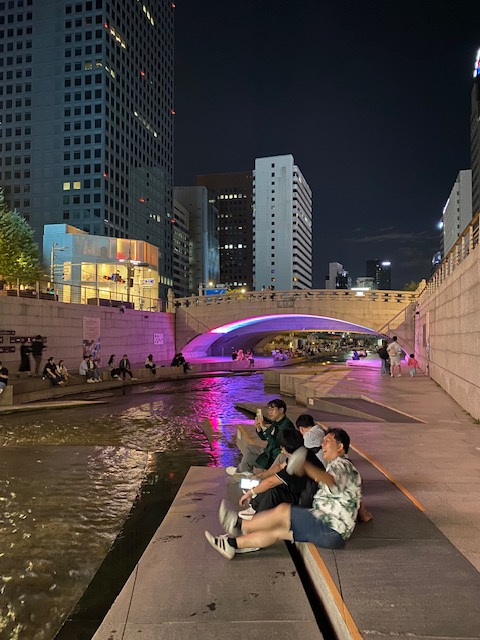

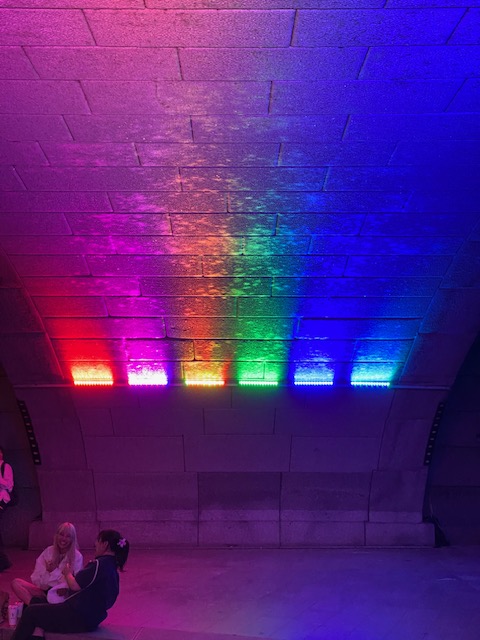

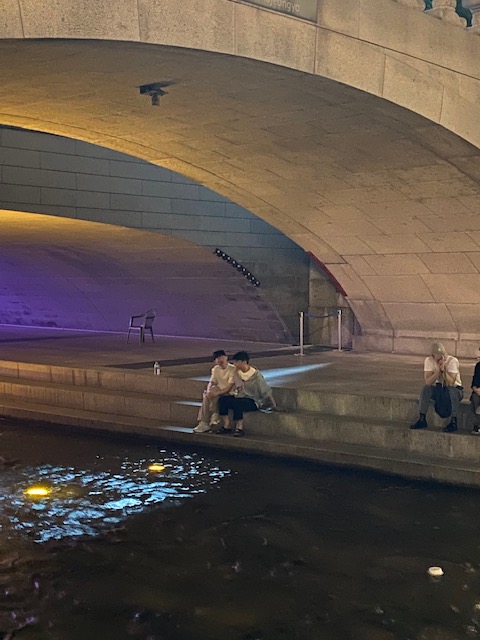
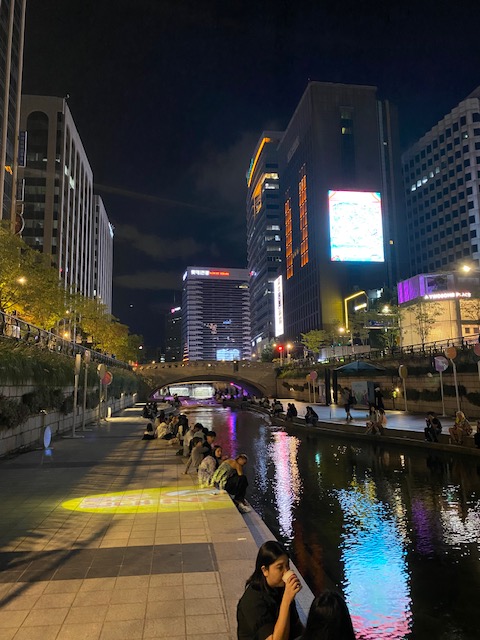
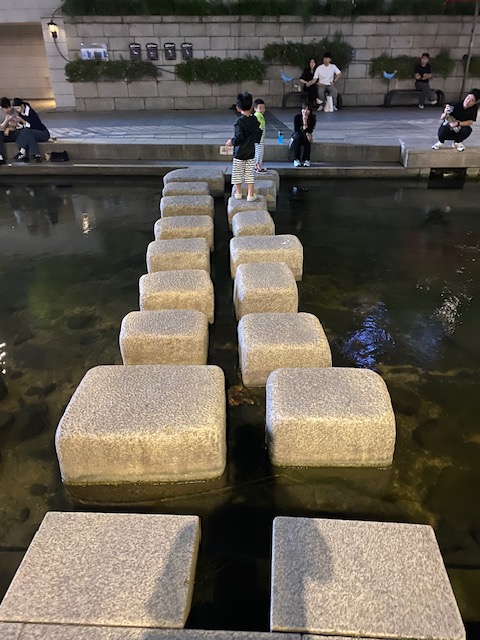


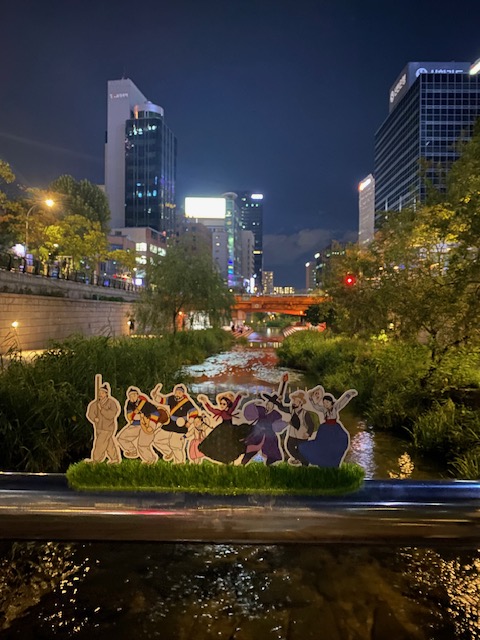


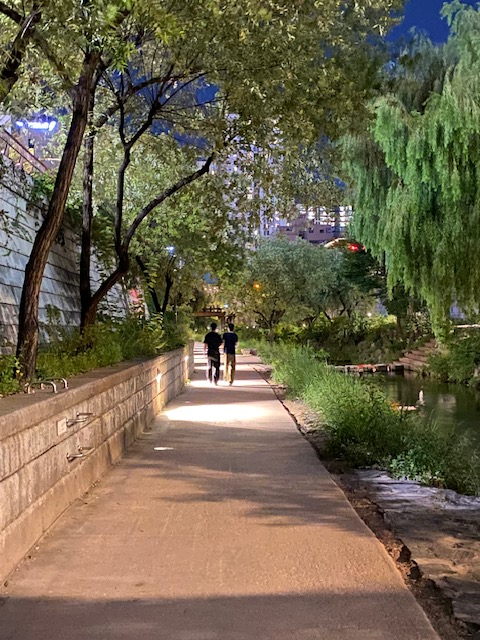
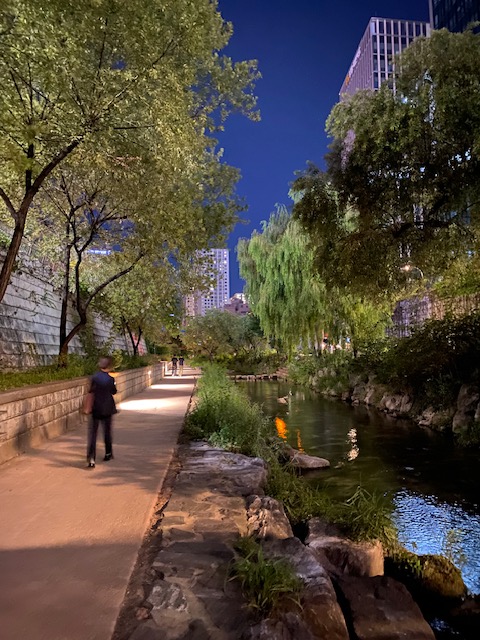


In 2003, the city government initiated a project to restore the stream by removing the elevated highway and restoring the natural stream. The project, completed in 2005, attracted significant public criticism but has since become popular among residents and tourists.
The stream was originally named Gaecheon and was refurbished several times during the Joseon period. It was renamed Cheonggyecheon during Japanese rule. After the Korean War, the stream became polluted and deteriorated due to rapid urbanization and increased waste.
The Cheonggyecheon restoration project aimed to preserve the natural environment and historic resources in the area. It involved removing the elevated highway, restoring the stream, and addressing traffic issues. The project also included restoring two historic bridges, Gwangtonggyo and Supyogyo.
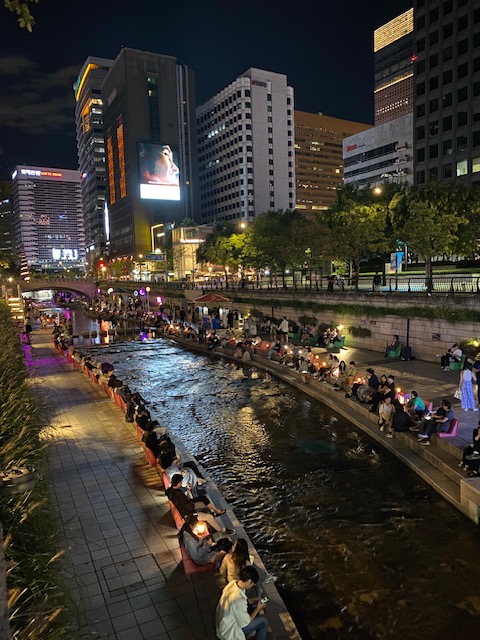
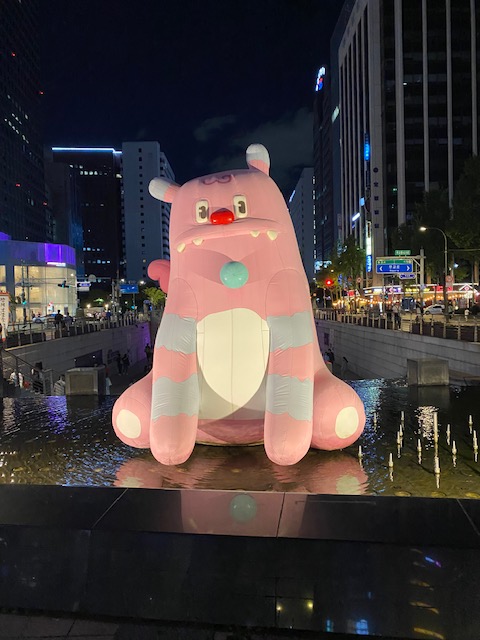
The restoration project has had several positive consequences, including increased biodiversity, reduced urban heat island effect, improved air quality, and reduced respiratory diseases among residents. Additionally, the project has led to increased use of public transportation and decreased traffic congestion.
However, the project has also faced criticism, including concerns about high costs, lack of ecological and historical authenticity, and gentrification of adjacent areas. The cost of managing Cheonggyecheon has been rising each year.
Despite the criticisms, the Cheonggyecheon restoration project remains a significant achievement in urban renewal and beautification. It has transformed the area into a popular destination for residents and tourists, showcasing the successful integration of nature and urban development.
If anything, Cheonggyecheon is very popular. We walked there on a late Saturday night and on an Sunday evening and locals love going there. It’s popular with couples and we even caught glimpses of tentative same-sex public display of affection. Gay couples don’t really do PDA in Korea.
The Stream is certainly a nice way to avoid regular streets and zebra crossings.
South Korea 2024
- QUESTION | Should you be scared of travelling to South Korea?.
- REVIEW | Qatar Airways – economy – Boeing 787-8 Dreamliner – Brussels to Doha.
- QATAR | Hamad International Airport (DOH) in Doha.
- REVIEW | Qatar Airways – economy – Airbus A350 – Doha to Seoul / Incheon.
- SOUTH KOREA | Landing at Incheon, retrieving the Wowpass and taking the AREX to Seoul Station.
- REVIEW | Fraser Place Namdaemun Seoul near City Hall.
- SEOUL | Deoksugung Palace by day.
- SEOUL | Admiral Yi Sun-sin – King Sejong the Great – Gyeongbokgung Palace – National Folk Museum SEOUL | Admiral Yi Sun-sin – King Sejong the Great – Gyeongbokgung Palace – National Folk Museum.
 Trip By Trip
36 Comments Add yours