
October 2024. During a week-long whistle-stop tour of Germany, we visit Dessau-Roßlau in Saxony-Anhalt, Weimar in Thuringia, Coburg in Upper Franconia (Bavaria) and Kassel in Hesse. Smaller cities, yes. But each with their own significance. Untouched by overtourism. We’re avoiding using the white trains of DB Fernverkehr, Deutsche Bahn‘s long-distance section and opt to use the red trains of DB Regio and other regional operators.
If you use ‘auto fill in’ on your phone, start typing Weimar. And tell us if the AI starts showing Republic. Because that’s what Weimar is known for. A couple of years ago the city in Thüringen also featured in a ‘Great Continental Railway Journeys‘ episode. So that put the city on my wish list. And for Danny, Weimar is foremost the birthplace of Bauhaus. So we included Weimar in our week-long whistle-stop tour.

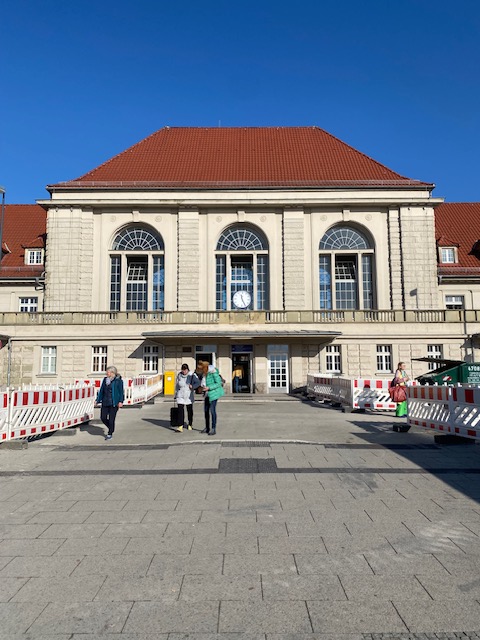
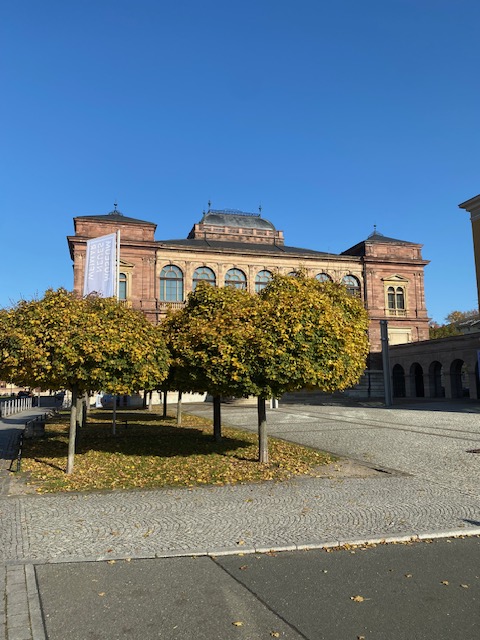


Introducing Weimar
Weimar is a historic city located in the central German state of Thuringia, about 80 kilometres southwest of Leipzig. With a population of approximately 65,000 residents as of 2024, it is a relatively small city but one of immense cultural and historical significance. Its name is closely tied to some of Germany’s most influential cultural movements, figures, and political moments.
Historically, Weimar rose to prominence in the late Middle Ages and Renaissance as a ducal residence, but its golden age began in the late 18th century when it became a centre of the German Enlightenment and Classical culture.
This era was defined by the presence of literary giants such as Johann Wolfgang von Goethe and Friedrich Schiller, both of whom lived and worked in Weimar. Their contributions to literature, drama, and philosophy earned the city its reputation as the heart of German intellectual and artistic life.
The cultural significance of Weimar continued into the 19th century with the Weimar School of Art and later with the establishment of the Bauhaus movement in the early 20th century. The Bauhaus, founded by Walter Gropius in 1919, revolutionised modern architecture and design, merging functionality with artistic aesthetics. Weimar’s Bauhaus period has left a lasting legacy in global art and design history.
Politically, Weimar played a central role in German history during the early 20th century. After World War I, the city became the birthplace of the Weimar Republic, Germany’s first attempt at a democratic government. The Weimar Constitution was drafted and adopted there in 1919, lending its name to the republic. However, the period was fraught with economic instability, political extremism, and social unrest, leading to the republic’s collapse and the rise of the Nazi regime.
Weimar’s darker chapters include its proximity to the Buchenwald concentration camp during the Nazi era. Established in 1937, Buchenwald stands as a stark reminder of the atrocities committed during the Holocaust. Today, the camp is preserved as a memorial and museum.
In modern times, Weimar is known for its cultural and historical heritage, attracting visitors from around the world. It is home to numerous UNESCO World Heritage Sites, including the Classical Weimar ensemble and the Bauhaus sites. Key landmarks include Goethe’s and Schiller’s residences, the Duchess Anna Amalia Library, and the Bauhaus Museum.


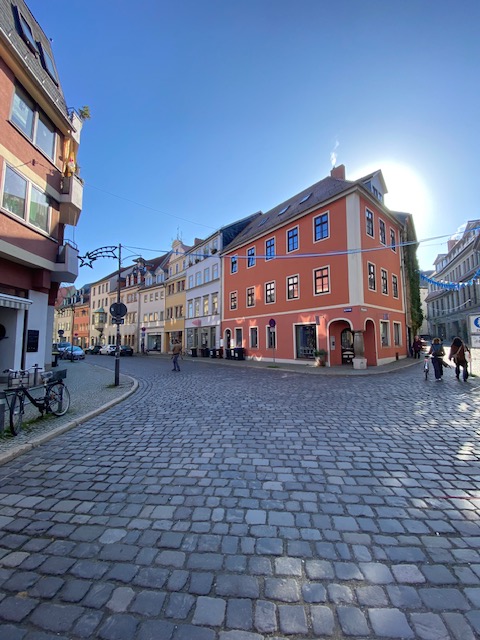
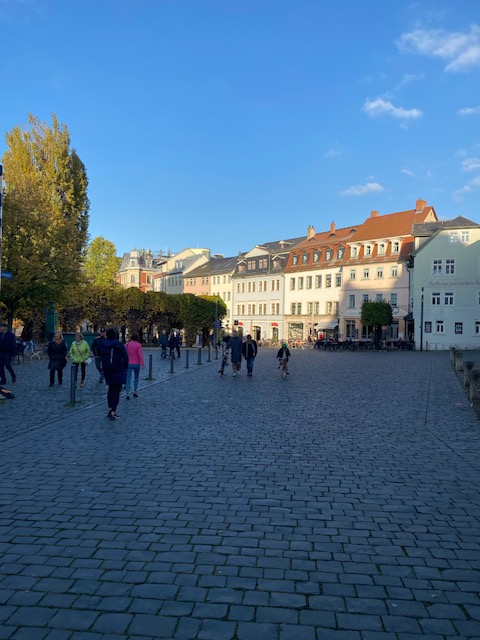
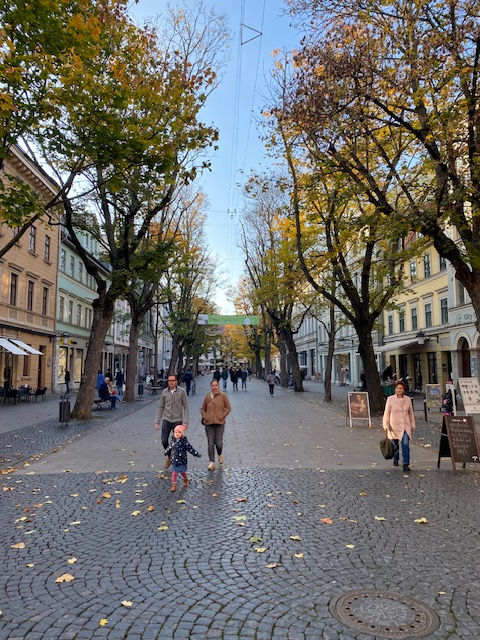
The city remains a vibrant cultural centre, hosting festivals, exhibitions, and performances that celebrate its artistic and intellectual traditions.
Weimar is also a university town, hosting the Bauhaus-Universität Weimar and the University of Music Franz Liszt. These institutions uphold its reputation as a hub for creativity and learning. Economically, the city relies on tourism, education, and small-scale manufacturing, while maintaining a focus on preserving its historical identity.
Weimar today is a harmonious blend of its illustrious past and a forward-looking present. Its cobbled streets, well-preserved historical architecture, and vibrant cultural scene make it a living testament to the enduring influence of its artistic and intellectual heritage.

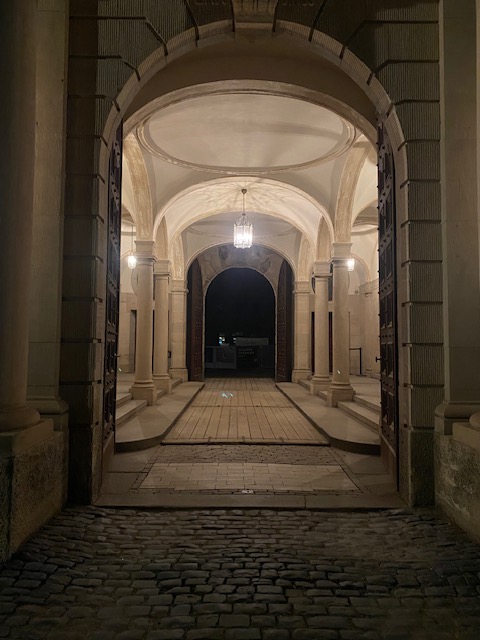
Authentic?
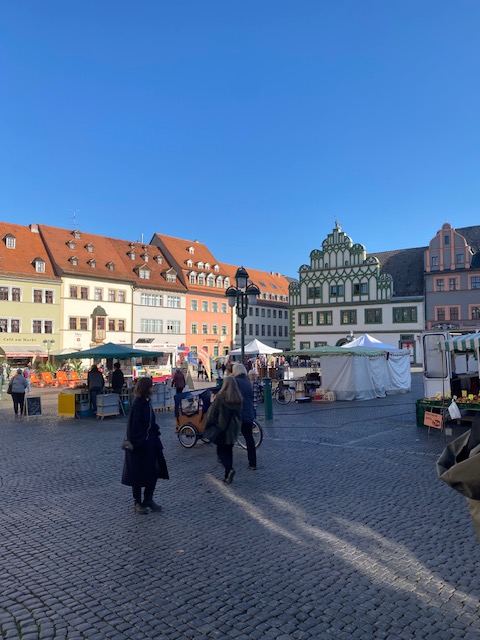
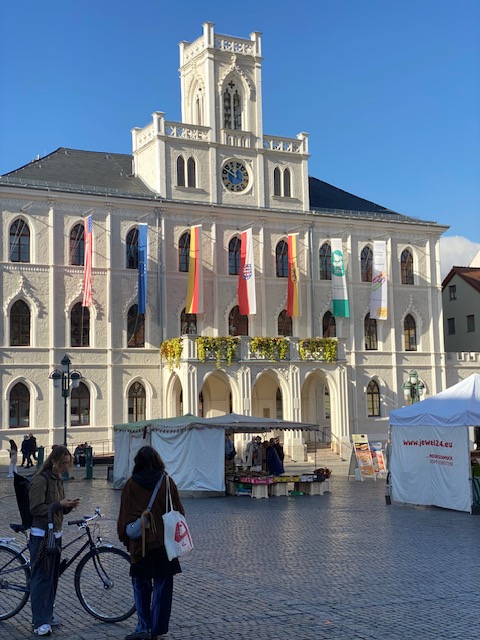
It looks like Weimar was spared from heavy bombings in WW II, as many old buildings remain. Weimar looks much more charming and lively than Dessau, our previous stop. There were more tourists as well. We heard a lot of French. One Française was complaining (to me?) about spoiling het photo. Well, be faster, you’re not alone.

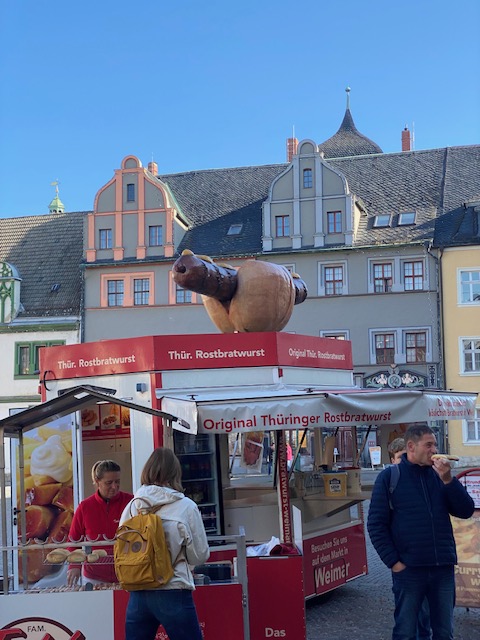


Food
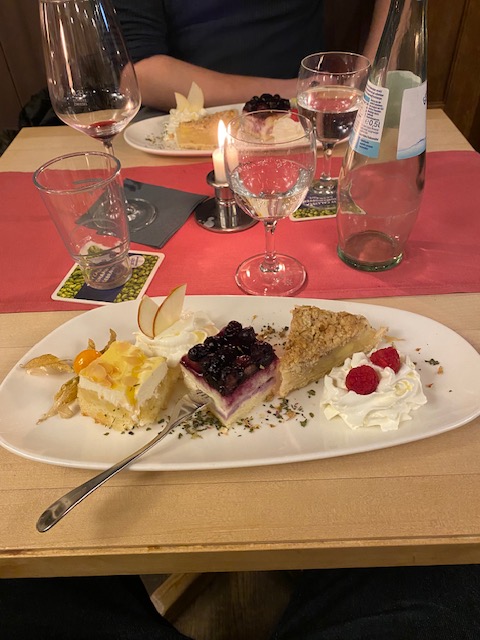
We had forgettable burgers for lunch at Franz & Willi and Weimar sausage for dinner at Gasthaus zum weißen Schwan.
Gasthaus zum weißen Schwan has its own German Wikipedia page. “At Frauentorstraße 23, at the corner of Seifengasse, opposite Goethe’s house on Frauenplan, there is a house that was mentioned on the city map as early as 1569 and was called the inn ‘in front of the Frauentor‘ in 1638.”
The innkeeper Sebastian John was mentioned in ‘im weißen Schwan‘ from 1688 onwards. In 1764 there was talk of an ‘inn zum schwane in front of the Frauentor…’.
“Goethe’s proximity to the inn led to a significant rise in popularity, especially since he, in turn, particularly valued this establishment. Goethe also used to put his visitors up there. On 18 February 1827, Goethe left Carl Zelter the following lines: ‘The white swan greets you at any time with open wings. The list of well-known personalities who were Goethe’s guests and at the same time those of the white swan is long.'”
The building is on the list of cultural monuments in Weimar.


So?
Weimar is a cozy culturally historic hot spot, which you can visit in a day if you have a certain ‘visiting speed’. We wouldn’t know what we’d do a second day.
Dessau – Weimar – Coburg – Kassel 2024
- REVIEW | European Sleeper night train.
- GERMANY | Bauhaus in Dessau.
- DESSAU | Technikmuseum Hugo Junkers Engineering Museum.
- REVIEW | Radisson Blu Fürst Leopold Hotel Dessau.
- SAXONY-ANHALT | A day in Dessau.
- GERMANY | Bauhaus in Weimar.
- GERMANY | Weimar Classicism, the Wittumspalais of Duchess Anna Amalia and the Weimar Haus Experience.
- GERMANY | The ‘Weimar’ in Weimar Republic.
- REVIEW | Hotel Elephant Weimar.
 Trip By Trip
What a fascinating glimpse into Weimar! I loved how you captured the city’s cultural depth—from Goethe and Schiller to the Bauhaus legacy. Your honest take on the food and that moment with the French tourist added a nice personal touch. It’s great to see lesser-known cities like Weimar get the attention they deserve.
LikeLiked by 1 person
Thank you. And thank you for passing by!
And yes, Weimar is underrated outside of Germany.
LikeLiked by 1 person