
Autumn 2024. Ten years after my first trip to Seoul in 2014, I am returning to the Republic of Korea, better known as South Korea. Not solo this time, but with Oriol, who has never been to Korea. On the itinerary: flying with Qatar Airways to Incheon via Doha, the capital Seoul, the historic city of Gyeongju, Busan, Jeju Island and a second stint in Seoul, where we are joined by Sehyeon. We’re spending two weeks in South Korea. The ROK is such a popular destination now. Will we experience overtourism?


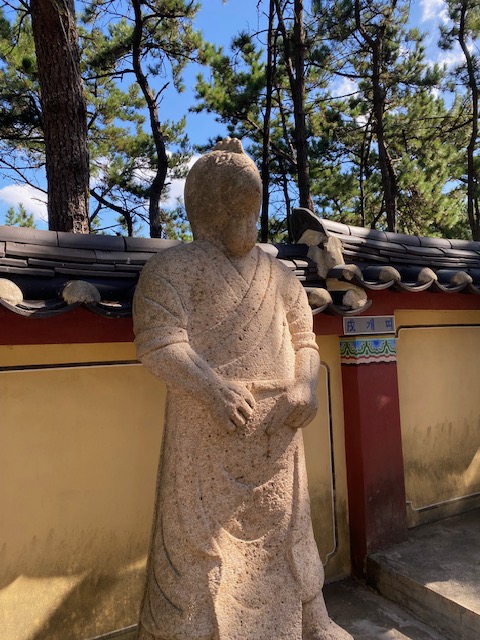
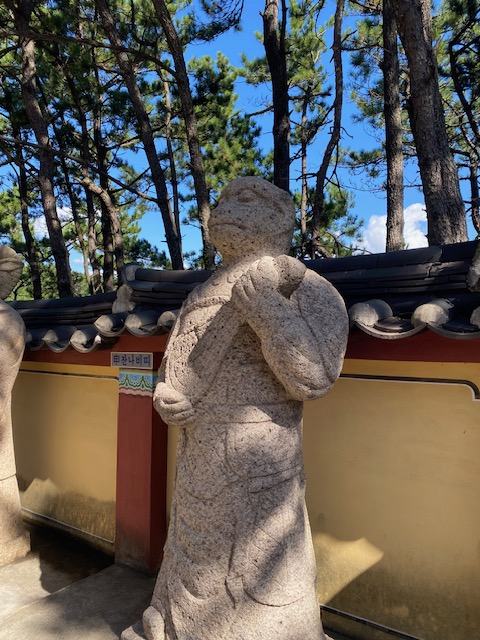

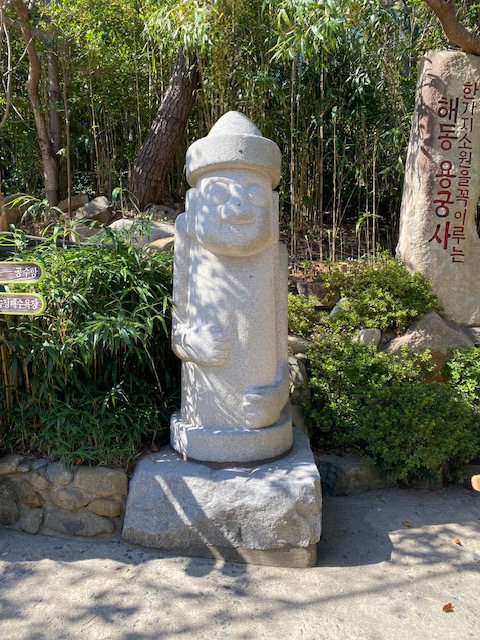


We had 1.5 days in Busan and day 2 was a full day. We started by taking a long bus ride to Haedong Yonggung Temple or Haedong Yonggungsa (해동 용궁사).
Seaside location
Haedong Yonggung Temple is a historic Buddhist temple located along the northeastern coast of Busan. Unlike most Buddhist temples in Korea, which are typically situated in mountainous areas, Haedong Yonggung Temple is unique for its seaside location, offering striking views of the East Sea.
Founded in 1376 during the Goryeo Dynasty by the Buddhist teacher Naong Hyegeun, the temple was initially built to honor the sea goddess and to pray for peace, abundance, and safety. The name ‘Haedong Yonggung’ translates to ‘Korean Dragon Palace Temple‘ emphasizing its connection to both the sea and mythical symbolism.

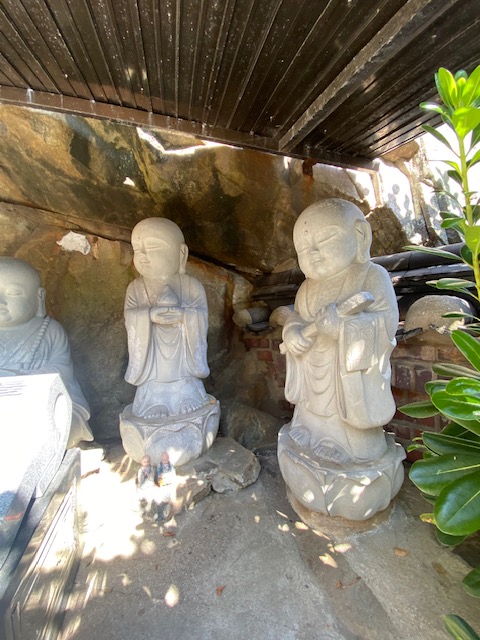


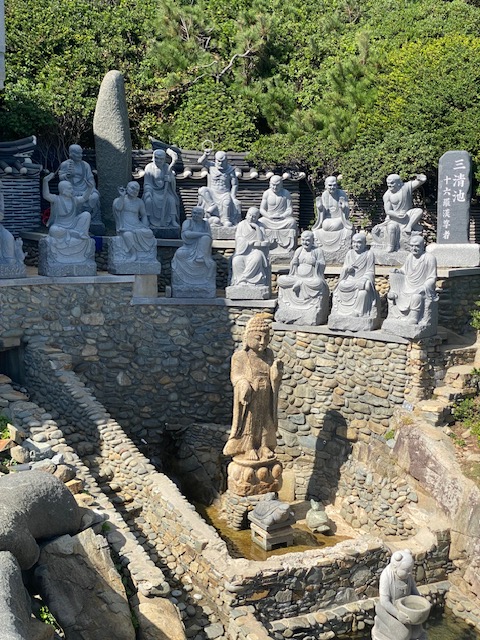
(Re)constructions
The temple complex has undergone numerous reconstructions over the centuries, especially after it was destroyed during the Japanese invasions of Korea in the late 16th century.
It was eventually rebuilt in the 1930s, and more recent restorations in the early 1970s further enhanced its structures and aesthetic appeal, transforming it into one of Busan’s popular cultural and tourist attractions.


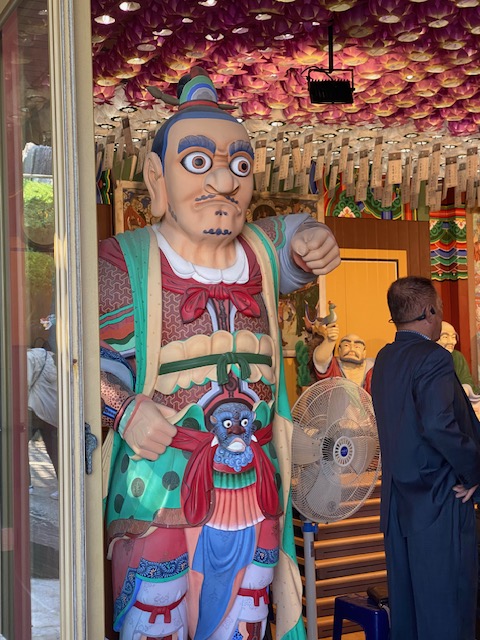


Architecture
The architecture of Haedong Yonggung Temple combines traditional Buddhist design with unique coastal elements. As visitors approach the temple, they walk along a stone stairway of 108 steps, symbolizing the 108 earthly temptations in Buddhism. This pathway, flanked by stone lanterns, winds down towards the sea and temple buildings, creating a serene entrance that is enhanced by the sound of crashing waves.
At the base of the stairs, visitors encounter a large statue of Haesu Gwaneum Daebul, a bodhisattva associated with mercy and compassion. This statue, overlooking the ocean, represents the temple’s deep-rooted connection to the water.
One of the central structures within the complex is the Daeungjeon Hall, the main hall dedicated to Buddha. The hall features traditional Korean architectural elements, such as curved tiled roofs, colorful dancheong patterns, and intricate wood carvings. A
nother notable feature is the pagoda adorned with four stone lions, each representing different human emotions—joy, anger, sadness, and happiness. This symbolism reflects the Buddhist teaching of understanding and transcending emotions to reach enlightenment.
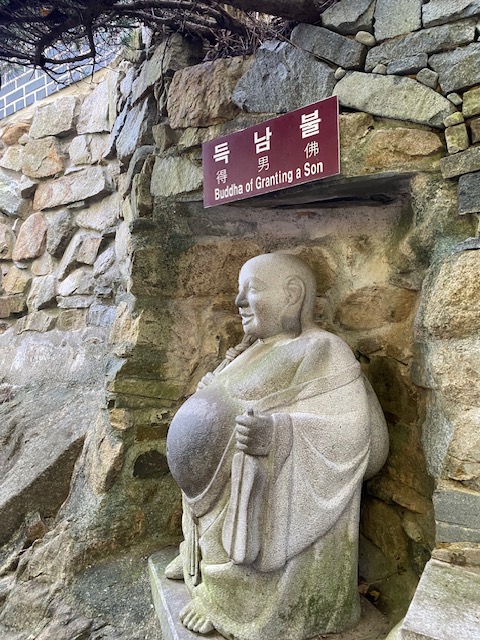
The temple complex also includes a sanctuary dedicated to Yacksayeorae, the Buddha of Medicine, where worshippers come to pray for health and healing. In addition, there is a dragon-headed statue and a small grotto dedicated to the revered Goddess of Mercy, reflecting the influence of Korean shamanistic beliefs integrated into Buddhist practice. Smaller statues of the twelve zodiac animals are positioned throughout the temple grounds, adding to the cultural and spiritual richness of the site.
Birthday Buddha
Haedong Yonggung Temple is especially popular during Buddha’s Birthday, celebrated in May, when the temple is adorned with colorful lanterns that illuminate the coastal setting.
This festival draws thousands of visitors who come to witness the temple bathed in light, creating an ethereal atmosphere that complements its picturesque surroundings.
The temple’s seaside architecture, blending traditional Buddhist elements with a unique coastal setting, has made Haedong Yonggung Temple a revered site both spiritually and culturally. Its combination of scenic beauty, historical significance, and architectural detail makes it one of the most iconic and frequently visited temples in South Korea.


A visit
It was very crowded at Haedong Yonggungsa. Overtourism? Well yes and no. We had a few public holidays when we were in Korea and our visit might have coincided with either a holiday or a ‘bridge day’ to the weekend. I don’t remember exactly.
While there were caucasian tourists, most visitors were Asians. So regional tourism. Is that (over)tourism or just crowded? Where do you draw the line?
The temple is not super accessible. There are a lot of stairs and some are unequal and / or slippery.
South Korea 2024
- QUESTION | Should you be scared of travelling to South Korea?.
- REVIEW | Qatar Airways – economy – Boeing 787-8 Dreamliner – Brussels to Doha.
- QATAR | Hamad International Airport (DOH) in Doha.
- REVIEW | Qatar Airways – economy – Airbus A350 – Doha to Seoul / Incheon.
- SOUTH KOREA | Landing at Incheon, retrieving the Wowpass and taking the AREX to Seoul Station.
- REVIEW | Fraser Place Namdaemun Seoul near City Hall.
- SEOUL | Deoksugung Palace by day.
- SEOUL | Admiral Yi Sun-sin – King Sejong the Great – Gyeongbokgung Palace – National Folk Museum SEOUL | Admiral Yi Sun-sin – King Sejong the Great – Gyeongbokgung Palace – National Folk Museum.
- SEOUL | Bukchon Hanok Village – Insadong Culture Street – Jogyesa Temple – Gwangjang Market – Cheonggyecheon Stream.
- SEOUL 2024 | Dongdaemun Design Plaza.
- SHOPPING IN SEOUL | Myeongdong – Lotte Young Plaza – Avenuel – Lotte Department Store.
- SEOUL | Namsan Mountain Park and N Seoul Tower.
- SOUTH KOREA | Seoul Station.
- REVIEW | Korail KTX Seoul – Gyeongju – Busan.
- GYEONGJU | Daereungwong – Cheonmachong – Cheomseongdae Observatory – Banwolseong Fortress – Anapji Pond – Woljeonggyo Bridge – Gyo-dong.
- REVIEW | Hotel Palace in Gyeongju.
- GYEONGJU | Bulguksa Temple and Seokguram Grotto.
- GYEONGJU | Woljeonggyo Bridge – Gyeongju National Museum – Eupseong Fortress – Shopping.
- REVIEW | Korail KTX Gyeongju to Busan 1st class.
- BUSAN | Gamcheon Culture Village.
- BUSAN | Jagalchi Fish Market.
- REVIEW | Commodore Hotel Busan.
 Trip By Trip
26 Comments Add yours