
Autumn 2024. Ten years after my first trip to Seoul in 2014, I am returning to the Republic of Korea, better known as South Korea. Not solo this time, but with Oriol, who has never been to Korea. On the itinerary: flying with Qatar Airways to Incheon via Doha, the capital Seoul, the historic city of Gyeongju, Busan, Jeju Island and a second stint in Seoul, where we are joined by Sehyeon. We’re spending two weeks in South Korea. The ROK is such a popular destination now. Will we experience overtourism?
We decided to start the next day at Gangnam District or Gangnam-gu (강남구).
Gangnam
Gangnam is one of the most iconic and affluent areas in the city, well-known for its modern infrastructure, luxury lifestyle, and vibrant culture. The term ‘Gangnam’ means ‘south of the river’, as the district lies south of the Han River and forms part of the larger Gangnam-gu, which also includes the Seocho and Songpa districts.
The area gained worldwide fame in 2012 with the release of the viral music video ‘Gangnam Style‘ by Psy, which humorously satirized the upscale lifestyle of Gangnam residents. Since then, Gangnam has become a symbol of South Korean pop culture and a hotspot for tourists seeking a taste of Seoul’s high-end shopping, dining, and entertainment.

Historically, Gangnam was not always a bustling urban area. Until the late 20th century, it was mostly farmland. However, following Seoul’s rapid economic development during the 1970s and 1980s, Gangnam underwent a remarkable transformation, driven by the South Korean government’s efforts to decentralize urban areas and expand the capital.
As a result, Gangnam evolved into a central business district with tall skyscrapers, luxury apartments, and modern infrastructure, making it a symbol of South Korea’s economic growth and prosperity.
Today, Gangnam is known for its upscale lifestyle, luxury shops, and world-class entertainment. Apgujeong Rodeo Street is a prime location for high-end shopping, boasting designer brands like Louis Vuitton, Gucci and Chanel, as well as smaller boutiques with unique, locally designed products. This area is especially popular with fashion enthusiasts and serves as a focal point for South Korea’s luxury fashion industry.
Cheongdam-dong, also known as ‘Cheongdam Luxury Street‘, is another upscale shopping area where flagship stores of international designer brands are located, and it is also home to plastic surgery clinics, giving it the nickname ‘Beauty Belt‘.
Many South Koreans and tourists come to this area not only for shopping but also for cosmetic procedures, as South Korea is a global leader in the beauty and plastic surgery industry.
K-pop
Gangnam is a hub for entertainment companies, particularly those associated with K-pop. The headquarters of SM Entertainment, JYP Entertainment, and other major K-pop agencies are located here, drawing fans from around the world hoping to catch a glimpse of their favorite idols or experience K-pop culture firsthand.
Many entertainment companies offer fan experiences or small museums where fans can learn about their favorite artists, see memorabilia, and occasionally attend meet-and-greet events. The Hallyu (Korean Wave) phenomenon has further enhanced Gangnam’s reputation as a cultural epicenter, with countless K-pop fans visiting the district each year.
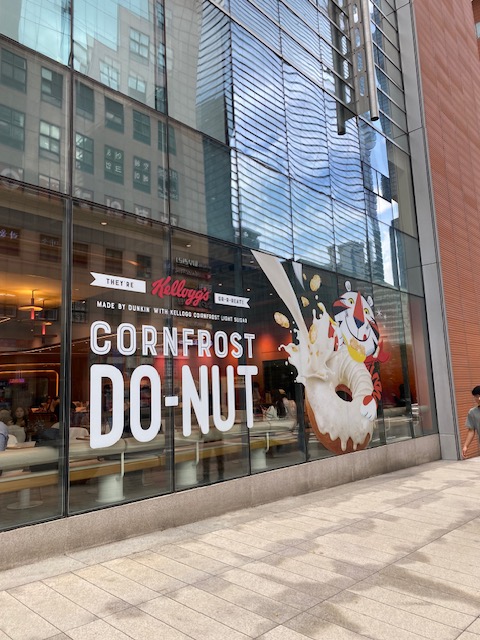
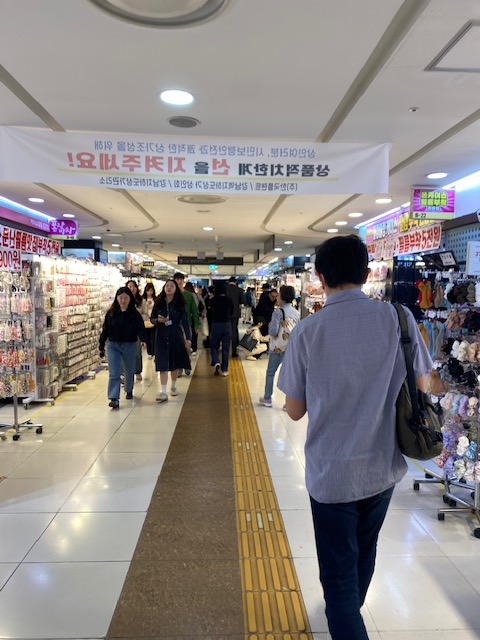

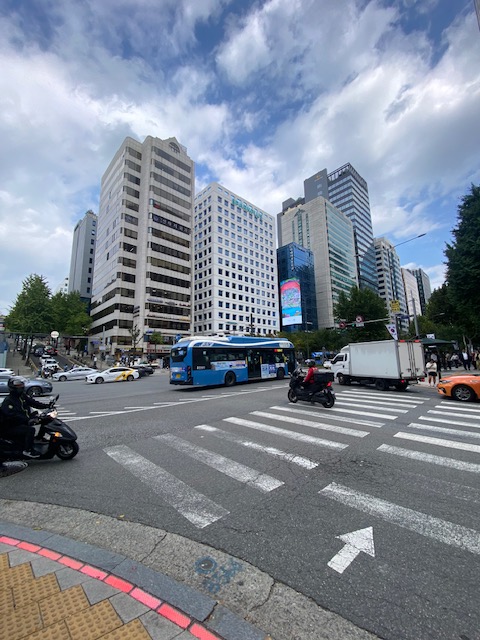
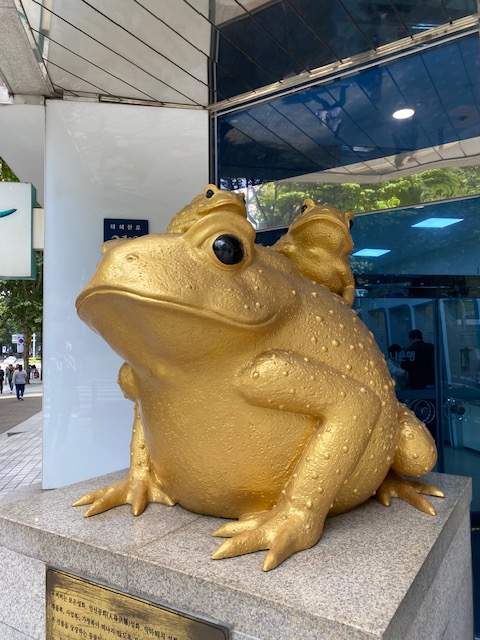


Shopping centre
COEX Mall, Asia’s largest underground shopping mall, is a major attraction in Gangnam, offering a vast array of shopping, dining, and entertainment options under one roof.
COEX Mall also houses the famous Starfield Library, a spacious public library featuring towering bookshelves filled with a diverse selection of books and magazines.
The mall’s aquarium, COEX Aquarium, is one of the largest in Korea and features thousands of marine species, making it a popular family attraction. The mall hosts various international conferences, exhibitions, and cultural events, underscoring its role as a major business and cultural center in Seoul.
Gangnam’s nightlife is another major draw, with numerous bars, nightclubs, and lounges scattered throughout the district, particularly around Gangnam Station and the Apgujeong and Cheongdam areas.
Clubs like Octagon and Arena are internationally renowned and attract both locals and tourists for their energetic atmosphere, live DJ performances, and upscale ambiance.
These venues offer a blend of electronic, hip-hop, and K-pop music, creating a lively nightlife scene that is among the most famous in Seoul. Gangnam’s club culture is known for being high-end, often featuring VIP sections and table reservations, catering to the affluent and fashion-conscious crowd.


Culture
Aside from its modern attractions, Gangnam also has several cultural and historical sites. Bongeunsa Temple, a Buddhist temple founded in the 8th century, provides a serene contrast to the district’s urban environment.
Located near COEX Mall, Bongeunsa Temple offers traditional temple stays and meditation programs, allowing visitors to experience Korean Buddhist practices amidst the hustle and bustle of Gangnam. The temple grounds are especially popular during the annual Lotus Lantern Festival, where colorful lanterns illuminate the area in celebration of Buddha’s birthday.
The Gangnam district is also a destination for fine dining, with a wide range of high-end restaurants and trendy cafés. From Korean barbecue and traditional hanjeongsik (Korean full-course meals) to international cuisines such as Italian, Japanese, and French, Gangnam caters to diverse tastes.
Cafés and bakeries
The area around Garosu-gil, a tree-lined street in Sinsa-dong, is known for its stylish cafés, bakeries, and bistros, drawing young people and tourists alike. Garosu-gil is particularly popular for its artsy atmosphere, unique shops, and photogenic settings, making it a hotspot for influencers and photographers.
Gangnam’s economic significance extends beyond retail and entertainment, as it is also a major business district.
Teheran
Teheran-ro, often referred to as ‘Teheran Valley‘ is home to many corporate headquarters, IT startups, and financial institutions, earning it comparisons to Silicon Valley. The area has a high concentration of tech companies, venture capital firms, and coworking spaces, making it a key location for South Korea’s technology and finance industries. This street also houses numerous hotels and conference centers, which host international business events, adding to Gangnam’s reputation as a commercial hub.
Challenges
Despite its many attractions, Gangnam faces certain challenges. The district’s rapid development has led to high property prices and living costs, making it one of the most expensive areas in Seoul.
This exclusivity has created social disparities, with critics arguing that Gangnam embodies South Korea’s income inequality and overemphasis on material success.
Additionally, the district’s traffic congestion is a longstanding issue, as the area is densely populated and frequently visited by both locals and tourists. Efforts to improve public transportation and reduce traffic are ongoing, with the Seoul Metropolitan Government implementing measures such as expanded subway lines and bus routes to ease congestion.
Pressure
There is also some opposition to Gangnam’s highly commercialized and consumer-oriented culture, with critics pointing out that it promotes a lifestyle of luxury and materialism. Some argue that the district’s focus on beauty, wealth, and high-end living places unnecessary social pressure on young people and fuels the demand for cosmetic surgery.
Additionally, the presence of plastic surgery clinics, beauty salons, and luxury boutiques has led some to view Gangnam as emblematic of South Korea’s intense beauty standards and societal expectations, which can have psychological effects on individuals, particularly the youth.
In terms of tourism, Gangnam’s international popularity has significantly boosted Seoul’s economy but has also led to issues such as overcrowding in popular spots and environmental concerns. The influx of tourists, especially K-pop fans, has transformed certain neighborhoods, sometimes altering the character of traditional areas. To manage this, the city has taken steps to promote responsible tourism and ensure that the local culture and environment are respected.
Seolleung and Jeongneung Royal Tombs
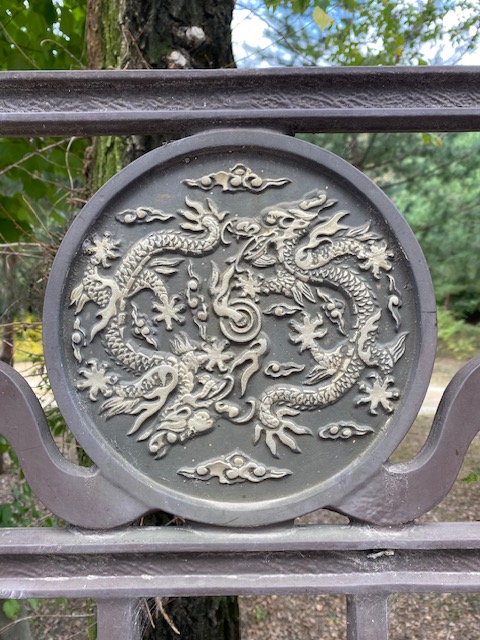
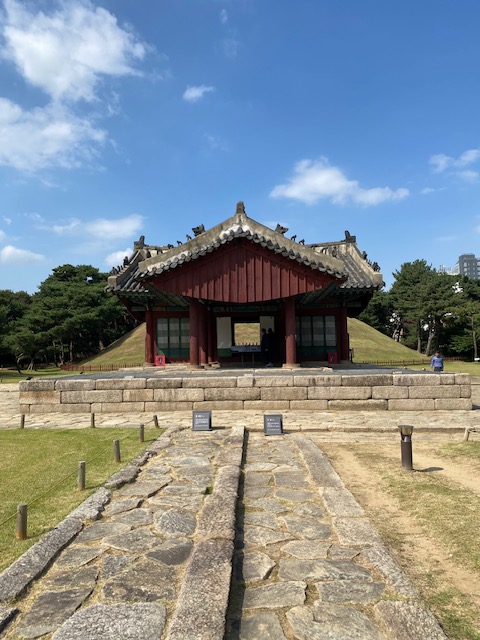
Sehyeon took us to the Seolleung and Jeongneung Royal Tombs (서울 선릉과정릉). These are located in Gangnam.
The Seolleung and Jeongneung Royal Tombs are part of the UNESCO World Heritage Site collectively known as the Royal Tombs of the Joseon Dynasty.
These tombs serve as the final resting places for several key figures of the Joseon Dynasty, which ruled Korea for over five centuries from 1392 to 1910. The site includes the tombs of King Seongjong, the 9th king of the Joseon Dynasty, his second wife Queen Jeonghyeon, and their son King Jungjong, the 11th king.
Seolleung refers specifically to the tombs of King Seongjong and Queen Jeonghyeon, while Jeongneung is the tomb of King Jungjong. Together, they represent the reverence that the Joseon Dynasty placed on honoring and remembering its ancestors, a key value in Confucianism, which strongly influenced Korean society.
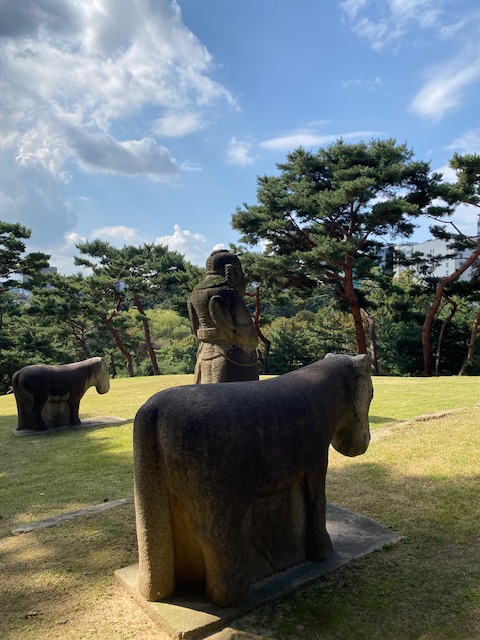
King Seongjong, who reigned from 1469 to 1494, is remembered for his contributions to stabilizing the Joseon government, as well as fostering culture and education. His tomb is surrounded by a variety of traditional structures and stone sculptures, including guardian figures that represent soldiers, tigers, and sheep. Queen Jeonghyeon, who was a significant royal consort, rests in her own tomb near Seongjong’s. King Jungjong, buried in Jeongneung, reigned from 1506 to 1544 and is remembered for implementing governmental reforms. His reign also included some significant turmoil, such as the Third Literati Purge, a time of political strife.
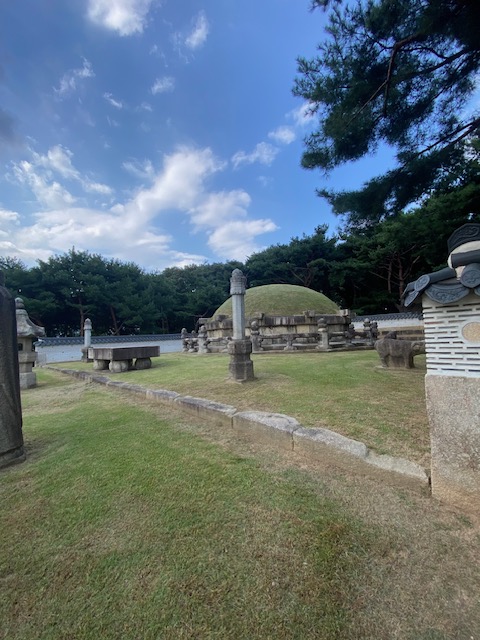
The tombs of King Seongjong and Queen Jeonghyeon are located adjacent to each other at Seolleung, while King Jungjong’s Jeongneung tomb lies nearby but separated by a wooded area.
The tombs showcase the traditional burial practices of the Joseon Dynasty, embodying elements of feng shui, Confucianism, and Korean geomancy, which dictated that royal tombs be positioned in harmony with nature. As such, the tombs are surrounded by hills, forests, and a carefully designed landscape.
The paths and surroundings are laid out to ensure the spiritual and physical protection of the deceased.
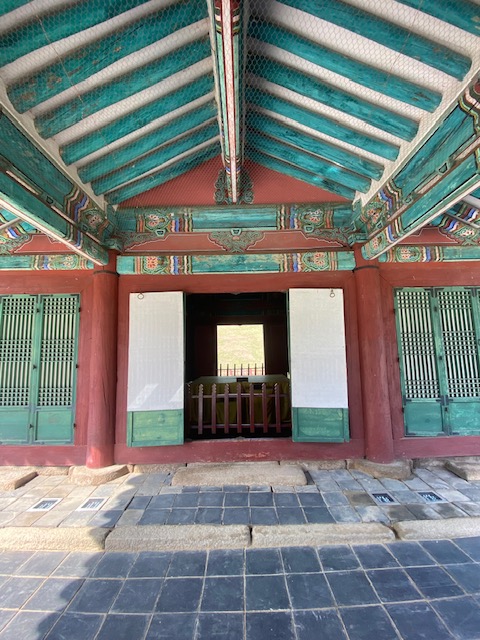
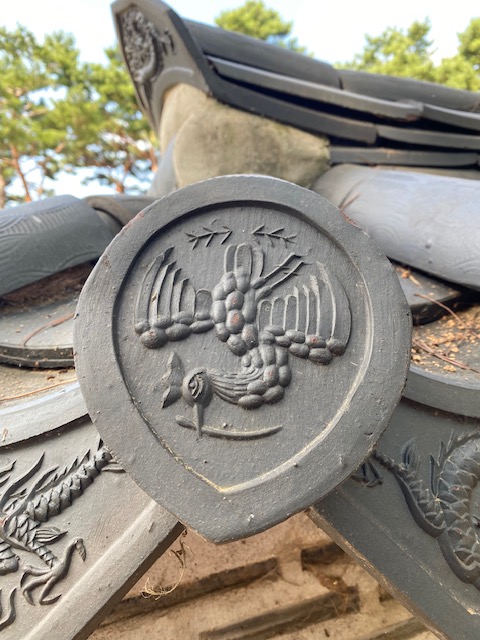
Key architectural features of the tomb complex include the “spirit road” leading up to each tomb, ceremonial pavilions, and various stone monuments that honor the deceased royals. Each tomb site is marked by stone tablets and elaborate carvings, which serve as symbols of respect and protection. The ceremonial shrines are where ritual offerings and ancestral rites were historically conducted by the Joseon court to honor the kings and queens interred there.
The Seolleung and Jeongneung tombs are important not only for their historical and cultural significance but also as an example of Joseon Dynasty craftsmanship. The tombs illustrate traditional Korean masonry, stonework, and ritualistic designs.
They offer insight into Joseon burial customs and the architectural styles of the time, characterized by simplicity, elegance, and harmonious integration with the natural environment. Stone guardians, intricately carved, stand in pairs alongside the tomb mounds to guard against evil spirits. These include statues of military officials, which represent loyalty and valor, as well as animal carvings, each with specific symbolic meanings.
Despite the modern encroachment of high-rise buildings and city development, the Seolleung and Jeongneung Royal Tombs have been carefully preserved to maintain their historical and cultural integrity. They are managed by the Cultural Heritage Administration of Korea, which oversees conservation efforts to protect the tombs from environmental and urban impact.



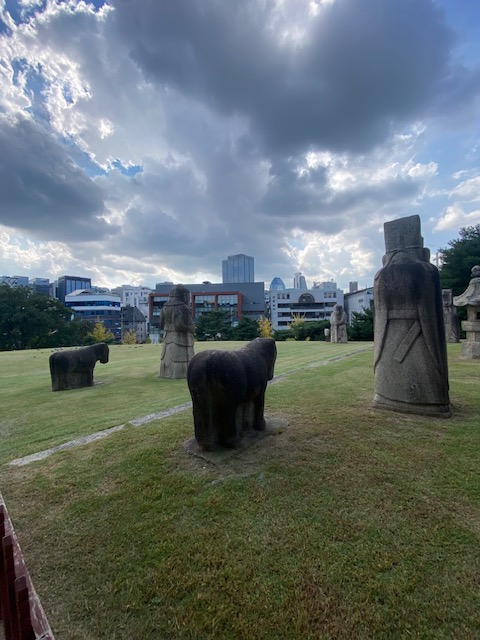

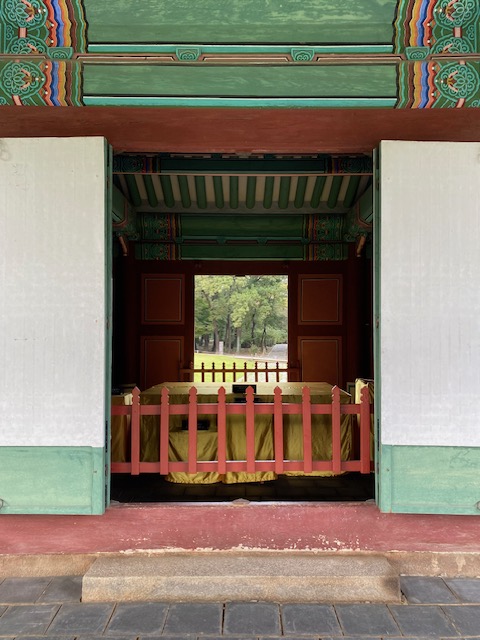

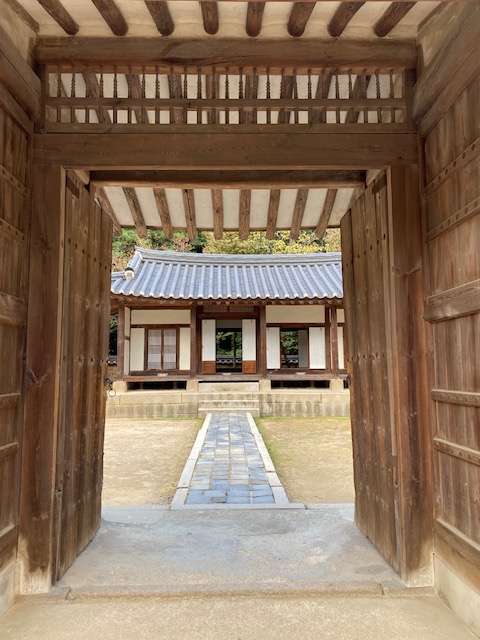

Starfield COEX Mall & Library
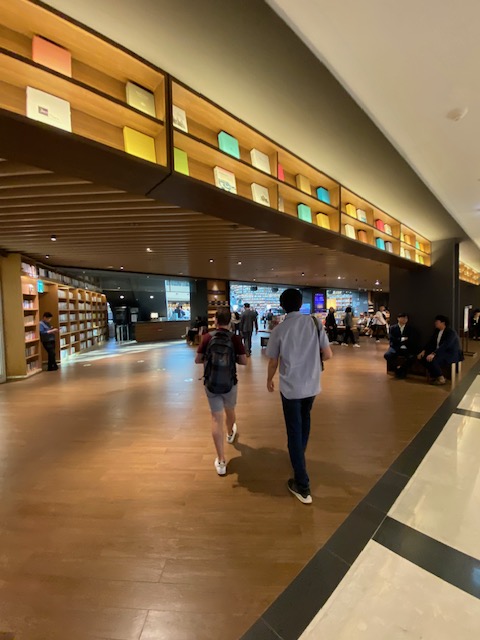
Starfield COEX Mall (스타필드코엑스몰) and the Starfield Library are two popular destinations located within the COEX complex in Gangnam. COEX Mall, operated by the Shinsegae Group, features a diverse array of shopping, entertainment, and cultural attractions. With over 500 stores, the mall provides a broad selection of fashion, beauty, lifestyle, and dining options. The mall also includes movie theaters, an aquarium, gaming centers, and event spaces, offering a multifaceted experience for visitors. As a major retail hub, Starfield COEX Mall draws locals and tourists alike, appealing to a wide range of interests.


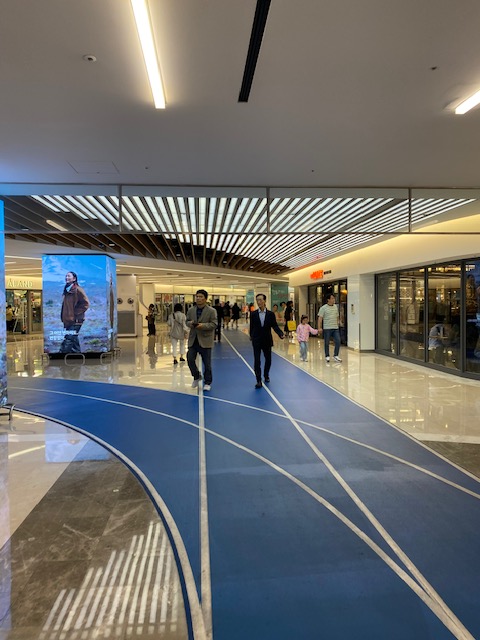





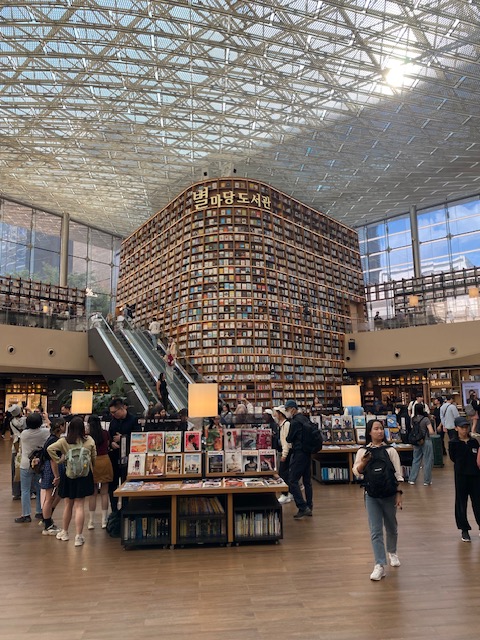
The Starfield Library, located at the heart of COEX Mall, is a strikingly designed public library space that has become an iconic feature of the complex. Covering an open area of around 2,800 m², the library is known for its dramatic, floor-to-ceiling bookshelves that extend over three stories.
Its collection includes more than 50,000 books and magazines, covering genres such as literature, art, history, and travel. The library is open to the public free of charge, inviting visitors to browse, read, and even work in a unique, visually captivating environment.
The Starfield Library is as much an architectural photo opportunity as it is a library, featuring minimalistic, contemporary design with bright lighting and ample seating areas. Large skylights and a sense of openness create an inviting and relaxing atmosphere, making it a popular spot for readers, students, and tourists. The library also hosts various cultural and educational events, such as author readings, seminars, and art exhibitions, enriching the community experience.


Banpo Hangang Park
Day was slowly turning into evening. We said goodbye to Sehyeon, who had planned an evening with a friend in Seoul. So Oriol and I went to Banpo Hangang Park (반포한강공원).
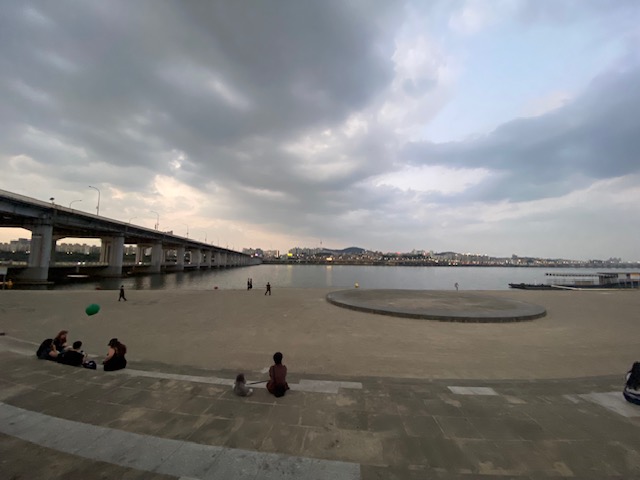
Banpo Hangang Park is known for its scenic views, leisure facilities, and its centerpiece attraction, the Banpo Bridge Rainbow Fountain.
The Rainbow Fountain, which stretches along both sides of the Banpo Bridge, is one of the world’s longest bridge fountains, with over 380 water jets creating colorful displays synchronized with music and lights. The fountain show takes place from spring to fall and attracts large crowds, especially in the evening when the lights add an extra layer of beauty to the spectacle.
We did not wait for the lights as it would been too long to wait for and there were insects. We decided to use our time differently.
Banpo Hangang Park features expansive lawns, walking and biking trails, playgrounds, picnic areas, and sports facilities. There are several bike rental stations, making it easy for visitors to explore the park along the dedicated riverside trails.
A section of the park called Moonlight Square is a favored spot for outdoor events, concerts, and various cultural gatherings. Families, couples, and friends often come to the park for relaxing picnics, and it’s common to see people flying kites, playing frisbee, or simply enjoying the open spaces.



Some Sevit
The park also has ecological attractions, such as the Some Sevit (세빛섬) floating islands, three artificial islands connected by pathways and designed to host exhibitions, performances, and dining experiences. The islands have become an iconic part of the Seoul landscape and provide visitors with dining and entertainment options right on the river.
Built as part of a project to enhance Seoul’s cultural and leisure spaces, Some Sevit was completed in 2014 and quickly became a prominent landmark along the Han River, blending innovative architecture with recreational facilities. Each island has its own theme and purpose, making the complex a multipurpose venue for dining, exhibitions, performances, and events.

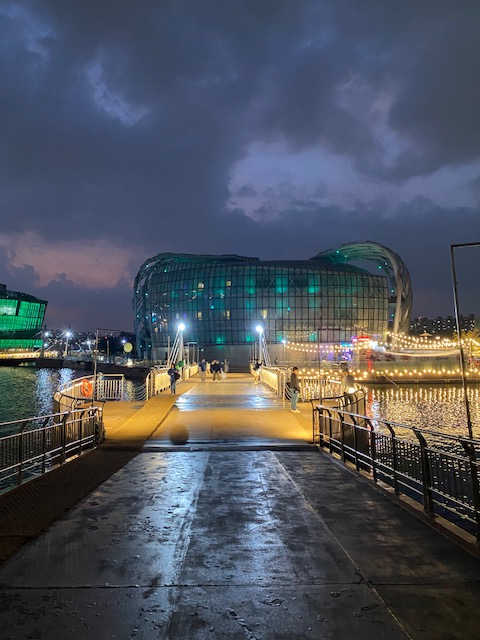
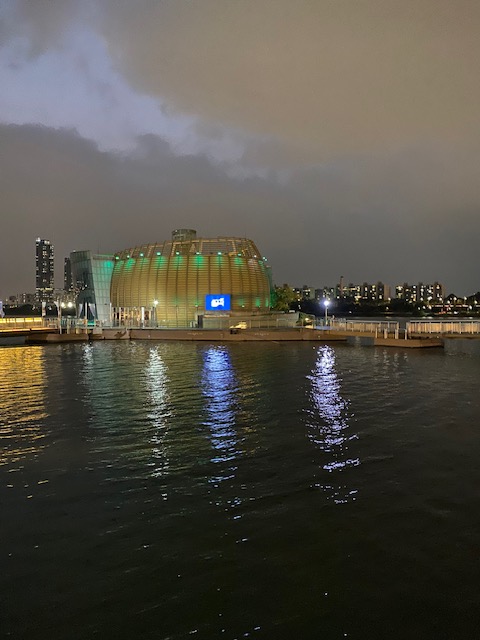


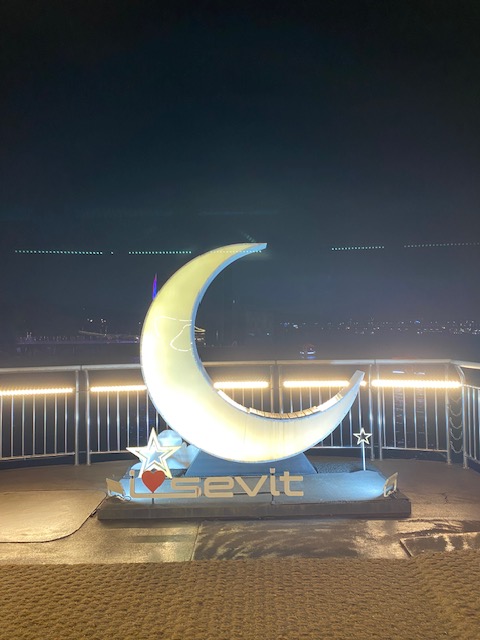
The three islands are named Some Gavit, Some Chavit, and Some Solvit.
Some Gavit, the largest of the three, is designed primarily as an entertainment and cultural space. It hosts events, performances, and exhibitions, as well as restaurants and cafes with river views, offering visitors both cultural experiences and dining options.
Some Chavit functions as a dining and banquet hall, ideal for weddings, private parties, and corporate events. It also features a cafe with scenic river views.
Some Solvit is more educational and is often used for exhibitions and workshops, focusing on themes related to ecology, art, and sustainability.
At night, Some Sevit transforms into an even more striking visual landmark. The islands are illuminated with LED lights that change colors, creating a vibrant spectacle that reflects off the river and draws photographers and visitors. The islands are designed to integrate green technologies, including solar power, and their structure is anchored securely to the riverbed to withstand various water levels.
South Korea 2024
- QUESTION | Should you be scared of travelling to South Korea?.
- REVIEW | Qatar Airways – economy – Boeing 787-8 Dreamliner – Brussels to Doha.
- QATAR | Hamad International Airport (DOH) in Doha.
- REVIEW | Qatar Airways – economy – Airbus A350 – Doha to Seoul / Incheon.
- SOUTH KOREA | Landing at Incheon, retrieving the Wowpass and taking the AREX to Seoul Station.
- REVIEW | Fraser Place Namdaemun Seoul near City Hall.
- SEOUL | Deoksugung Palace by day.
- SEOUL | Admiral Yi Sun-sin – King Sejong the Great – Gyeongbokgung Palace – National Folk Museum SEOUL | Admiral Yi Sun-sin – King Sejong the Great – Gyeongbokgung Palace – National Folk Museum.
- SEOUL | Bukchon Hanok Village – Insadong Culture Street – Jogyesa Temple – Gwangjang Market – Cheonggyecheon Stream.
- SEOUL 2024 | Dongdaemun Design Plaza.
- SHOPPING IN SEOUL | Myeongdong – Lotte Young Plaza – Avenuel – Lotte Department Store.
- SEOUL | Namsan Mountain Park and N Seoul Tower.
- SOUTH KOREA | Seoul Station.
- REVIEW | Korail KTX Seoul – Gyeongju – Busan.
- GYEONGJU | Daereungwong – Cheonmachong – Cheomseongdae Observatory – Banwolseong Fortress – Anapji Pond – Woljeonggyo Bridge – Gyo-dong.
- REVIEW | Hotel Palace in Gyeongju.
- GYEONGJU | Bulguksa Temple and Seokguram Grotto.
- GYEONGJU | Woljeonggyo Bridge – Gyeongju National Museum – Eupseong Fortress – Shopping.
- REVIEW | Korail KTX Gyeongju to Busan 1st class.
- BUSAN | Gamcheon Culture Village.
- BUSAN | Jagalchi Fish Market.
- REVIEW | Commodore Hotel Busan.
- KOREA | Haedong Yonggung Temple in Busan.
- BUSAN | Haedong Blue Line Park, Sky Capsules, Beach Train and Haeundae Green Railway.
- BUSAN | Shinsegae Centum City Department Store, Gwangalli Beach, Busan Tower.
- QUEER KOREA | Beomil-ro, Busan’s gay street.
- SOUTH KOREA | Jin Air from Busan to Jeju.
- SOUTH KOREA | Jeju City during Tamna Culture Festival.
- REVIEW | Astar Hotel in Jeju City.
- JEJU ISLAND | Hamdeok Beach – Seongsan Ilchilbong volcano – Ilchulland with lava tube – Wonang Waterfalls – Cheonjiyeon Waterfalls.
- JEJU ISLAND | Sojeonbang & Jeonbang Waterfalls – Eongtto Waterfalls – Gaetkkak Jusangjeollidae Cliffs – Cheonjeyeon Waterfall & Seonim Bridge.
- JEJU ISLAND | Museum of Sex and Health in Seogwipo.
- JEJU ISLAND | Eongal Coastal Trail and Iho Tewoo Horse Lighthouses.
- SOUTH KOREA | Jeju Island.
- HOW TO | Hotel saunas in South Korea.
- SOUTH KOREA | Flying Jin Air from Jeju City to Seoul Gimpo.
- SEOUL | Changdeokgung – Secret Garden – Changgyeonggung.
- SEOUL | Seodaemun Hongje Waterfall – Yeouido Hangang Park – Ttukseom Hangang Park – 2024 Seoul Hangang River Light Drone Light Show – Hwayang-dong.
 Trip By Trip
6 Comments Add yours