
Autumn 2024. Ten years after my first trip to Seoul in 2014, I am returning to the Republic of Korea, better known as South Korea. Not solo this time, but with Oriol, who has never been to Korea. On the itinerary: flying with Qatar Airways to Incheon via Doha, the capital Seoul, the historic city of Gyeongju, Busan, Jeju Island and a second stint in Seoul, where we are joined by Sehyeon. We’re spending two weeks in South Korea. The ROK is such a popular destination now. Will we experience overtourism?
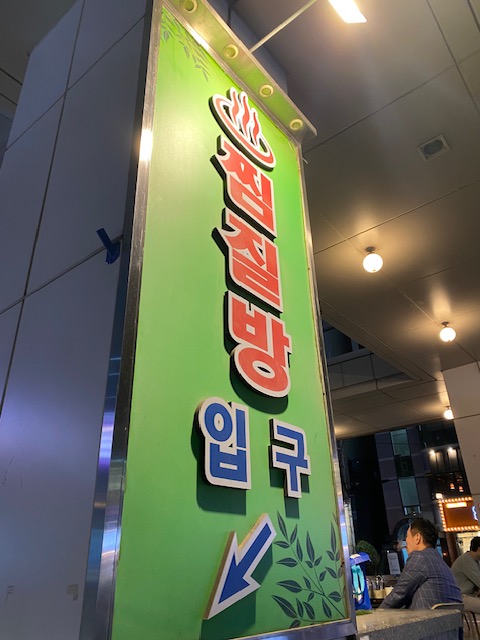
Oriol is not a big fan of spas as such. But as we had some hours to kill before fetching our luggage and going to the airport, we decided to go to a spa, sauna, wellness or jjimjilbang (찜질방).
As we were at Starfield COEX Mall, we chose one nearby. The internet calls it Lotte Boseok Sauna Jjimjilbang (골드로즈사우나). But I also found the name GM Spa and Spa 5. The address is: Gangnam District, Seolleung-ro 86-gil, 31 롯데골드로즈2 B1. It seems the name now is Spa5 or Spa 5.

What is jjimjilbang?
A jjimjilbang is a traditional Korean bathhouse which mixes functionality – it is a public bathhouse whee people wash, shave, bathe… – and relaxation and socializing.
that provides a unique blend of relaxation, bathing, and socializing, offering an experience distinct from spas in other parts of the world.
The word ‘jjimjilbang’ combines ‘jjimjil‘, which refers to heating or steaming, and ‘bang‘, meaning room, essentially denoting a place where people gather to experience heat treatments and relaxation. Jjimjilbangs play a prominent role in Korean culture, reflecting the nation’s focus on wellness, community, and the therapeutic properties of heat and water.
A typical jjimjilbang has various hot, warm, and cool rooms, each designed with specific health and relaxation purposes. These facilities have become an essential part of Korean culture, where people of all ages come to relax, rejuvenate, and socialize in a communal setting.

Lay-out
The layout of a jjimjilbang usually includes several key areas: separate bathing areas for men and women, mixed dry sauna rooms, relaxation lounges, sleeping areas, and often a food court or café.
Upon arrival, guests are provided with a uniform consisting of comfortable shorts and a T-shirt, which are worn in the communal, mixed areas. After paying an entrance fee, which grants access to the jjimjilbang for a set number of hours (usually 12 to 24), visitors can use the facilities as they please.
Mogyoktang
The bathing area, known as the mogyoktang (목욕탕) is typically separated by gender and is equipped with hot tubs, cold plunge pools, steam rooms, and showers. Showers can be low, with a tabouret or stool to sit on, or high, standing up.
Before entering the bathing area, guests are required to shower thoroughly to maintain cleanliness in shared spaces. It’s not uncommon to see people brush their teeth under the shower, shave their beard or groom their pubic hair.
People are comfortable being naked, being seen naked and seeing other same-sex people naked.
The pools are kept at different temperatures to offer a range of options, from intensely hot to very cold, allowing bathers to alternate between temperatures, which is believed to improve circulation and promote relaxation.
Some jjimjilbangs may have specialized baths infused with herbs, minerals, or salts, which are thought to provide various health benefits, such as skin nourishment, muscle relaxation, and detoxification.
Seshin
In addition to soaking, visitors can exfoliate their skin in a process called seshin (세신), a vigorous body scrub performed by a professional attendant or done by individuals themselves.
This traditional Korean exfoliation technique is known for its effectiveness in removing dead skin cells and leaving the skin smooth and refreshed. Seshin is often considered a key part of the jjimjilbang experience and is popular among regular visitors. Most jjimjilbangs offer this service for an additional fee, with trained staff available in the bathing areas.
Common areas
After bathing, guests can change into the provided uniform and move to the communal areas of the jjimjilbang, where they can relax in various heated rooms.
Each jjimjilbang typically offers an array of jjimjil rooms, or dry saunas, each maintained at different temperatures and sometimes infused with natural elements such as jade, salt, charcoal, or clay.
These rooms are designed to provide a range of health benefits, from improving circulation and relieving joint pain to promoting skin health. The charcoal room, for example, is believed to detoxify the body, while the salt room is thought to have antibacterial and anti-inflammatory effects.
The temperature of these rooms ranges from comfortably warm to intensely hot, allowing visitors to choose according to their preference. Moving between rooms at varying temperatures is common, as it is said to boost metabolism and aid in relaxation.
Socializing
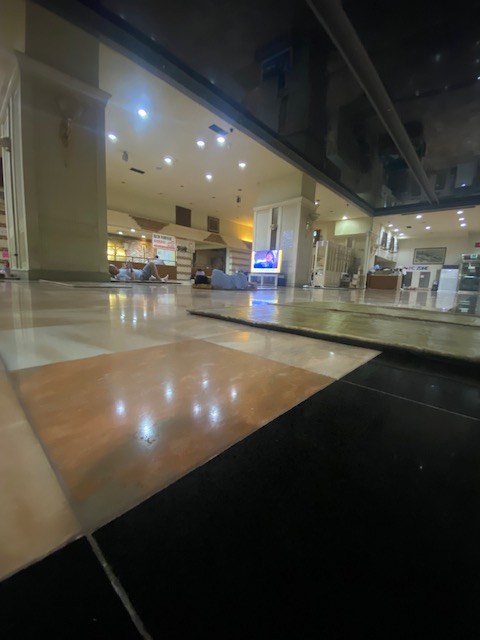
Beyond the jjimjil rooms, jjimjilbangs also provide spaces for rest and socializing. Lounges are equipped with comfortable seating or mats, where people can chat, watch TV, or even play board games.
Larger jjimjilbangs sometimes include arcade games, karaoke rooms, and internet cafés to add to the entertainment options.
Sleeping
There are also designated sleeping areas, where guests can rest on mats or in sleeping capsules, making jjimjilbangs a popular and affordable overnight accommodation option.
These sleeping rooms are quiet and dimly lit, ensuring that guests have a calm place to rest if they decide to stay overnight.

Eat and drink
The food court is another essential part of the jjimjilbang experience. Korean bathhouses offer a selection of traditional snacks and dishes, such as sikhye (a sweet, cold rice drink), boiled eggs, ramyeon, and bingsu (a shaved ice dessert).
Sikhye (식혜), in particular, is a jjimjilbang staple and is believed to aid digestion and provide refreshment after time in the saunas. The food court area serves as a social hub within the jjimjilbang, where people relax, eat, and rehydrate.

Quiet
While jjimjilbangs encourage socializing, no-one is being loud. It’s all very demure, very mindful, sometimes even cutesy.
Visitors are expected to adhere to certain customs that help maintain a respectful and comfortable environment. Cleanliness is highly valued, so everyone is required to shower thoroughly before entering any communal baths.
Wearing the provided uniform in the mixed areas is mandatory, and talking loudly or behaving disruptively is generally frowned upon, especially in the relaxation and sleeping areas.
While jjimjilbangs are social spaces, respecting the personal space of others is encouraged, and phones are often discouraged in certain areas to preserve a peaceful atmosphere.
Jjimjilbangs are more than just places for bathing; they offer a communal space
where people can unwind, enjoy self-care routines, and interact with others.
Friends and family
Traditionally, jjimjilbangs have been frequented by families and groups of friends who come to spend time together in a relaxed setting.
In recent years, jjimjilbangs have become popular with tourists seeking an authentic Korean cultural experience. The unique blend of facilities, from therapeutic saunas to recreational areas, makes them attractive to a wide range of visitors.
Some jjimjilbangs have even added more luxurious amenities, such as skincare services, massage therapy, a gym and yoga classes, to cater to modern wellness trends.
Solo
I did see quite a few patrons being alone. It was Friday night. Maybe they were looking for some me-time before returning home? Many Koreans live with their parents in a (relatively) small apartment
Or they’re looking for some quiet time before going out?
Korean life condensed
Overall, a visit to a jjimjilbang provides a unique glimpse into Korean culture, emphasizing the importance of health, relaxation, and community in daily life. Whether a person seeks a few hours of relaxation, an overnight stay, or a complete wellness routine, the jjimjilbang caters to various needs and provides a versatile, affordable way to unwind.
Spa 5
The jjimjilbang we went to, Spa 5, is not very large but has many facilities. A mogyoktang obviously, with both types of showers, four baths with various temperature and a ‘beauty area’ for grooming and doing your hair afterwards. An attendant sells amenities such as toothbrushes.
The common area has a few types jjimjils, a large hall with mats and plastic pillows to rest on (and even sleep). There power outlets you can use to charge your phone.
There’s a café counter where I bought some sikhye and there’s a restaurant section. Sikhye tastes like sweet liquid rice crispies.
There’s also a computer area and a smokers’ lounge. The computer area is monitored by CCTV so don’t go surf to porn sites!
So?
Well, compared to my memories of Dragon Hill Spa – which doesn’t exist anymore – Spa 5 is more basic, but feels more authentic. If or when I return to South Korea, I will definitely return to a jjimjilbang and spend more time there. We only stayed two hours or so.
South Korea 2024
- QUESTION | Should you be scared of travelling to South Korea?.
- REVIEW | Qatar Airways – economy – Boeing 787-8 Dreamliner – Brussels to Doha.
- QATAR | Hamad International Airport (DOH) in Doha.
- REVIEW | Qatar Airways – economy – Airbus A350 – Doha to Seoul / Incheon.
- SOUTH KOREA | Landing at Incheon, retrieving the Wowpass and taking the AREX to Seoul Station.
- REVIEW | Fraser Place Namdaemun Seoul near City Hall.
- SEOUL | Deoksugung Palace by day.
- SEOUL | Admiral Yi Sun-sin – King Sejong the Great – Gyeongbokgung Palace – National Folk Museum SEOUL | Admiral Yi Sun-sin – King Sejong the Great – Gyeongbokgung Palace – National Folk Museum.
- SEOUL | Bukchon Hanok Village – Insadong Culture Street – Jogyesa Temple – Gwangjang Market – Cheonggyecheon Stream.
- SEOUL 2024 | Dongdaemun Design Plaza.
- SHOPPING IN SEOUL | Myeongdong – Lotte Young Plaza – Avenuel – Lotte Department Store.
- SEOUL | Namsan Mountain Park and N Seoul Tower.
- SOUTH KOREA | Seoul Station.
- REVIEW | Korail KTX Seoul – Gyeongju – Busan.
- GYEONGJU | Daereungwong – Cheonmachong – Cheomseongdae Observatory – Banwolseong Fortress – Anapji Pond – Woljeonggyo Bridge – Gyo-dong.
- REVIEW | Hotel Palace in Gyeongju.
- GYEONGJU | Bulguksa Temple and Seokguram Grotto.
- GYEONGJU | Woljeonggyo Bridge – Gyeongju National Museum – Eupseong Fortress – Shopping.
- REVIEW | Korail KTX Gyeongju to Busan 1st class.
- BUSAN | Gamcheon Culture Village.
- BUSAN | Jagalchi Fish Market.
- REVIEW | Commodore Hotel Busan.
- KOREA | Haedong Yonggung Temple in Busan.
- BUSAN | Haedong Blue Line Park, Sky Capsules, Beach Train and Haeundae Green Railway.
- BUSAN | Shinsegae Centum City Department Store, Gwangalli Beach, Busan Tower.
- QUEER KOREA | Beomil-ro, Busan’s gay street.
- SOUTH KOREA | Jin Air from Busan to Jeju.
- SOUTH KOREA | Jeju City during Tamna Culture Festival.
- REVIEW | Astar Hotel in Jeju City.
- JEJU ISLAND | Hamdeok Beach – Seongsan Ilchilbong volcano – Ilchulland with lava tube – Wonang Waterfalls – Cheonjiyeon Waterfalls.
- JEJU ISLAND | Sojeonbang & Jeonbang Waterfalls – Eongtto Waterfalls – Gaetkkak Jusangjeollidae Cliffs – Cheonjeyeon Waterfall & Seonim Bridge.
- JEJU ISLAND | Museum of Sex and Health in Seogwipo.
- JEJU ISLAND | Eongal Coastal Trail and Iho Tewoo Horse Lighthouses.
- SOUTH KOREA | Jeju Island.
- HOW TO | Hotel saunas in South Korea.
- SOUTH KOREA | Flying Jin Air from Jeju City to Seoul Gimpo.
- SEOUL | Changdeokgung – Secret Garden – Changgyeonggung.
- SEOUL | Seodaemun Hongje Waterfall – Yeouido Hangang Park – Ttukseom Hangang Park – 2024 Seoul Hangang River Light Drone Light Show – Hwayang-dong.
- SEOUL | Gangnam – Seonjeongneung Royal Tombs – Starfield COEX Mall & Library – Banpo Hangang Park – Some Sevit.
- GAY ITAEWON | Homo Hill = Usadan-ro 12-gil (우사단로12길) in Seoul, South Korea.
- GAY SEOUL | Jongno 3-ga ft. Bar MoU.
- SEOUL | Skipping Myeongdong to shop at Starfield COEX Mall in Gangnam.
 Trip By Trip
3 Comments Add yours