
In May 2024, Jeroen and I travelled to Louvain-la-Neuve in Walloon Brabant to visit the Musée Hergé or Hergé Museum. Georges Remi (1907-1983), better known as Hergé is the author of The Adventures of Tintin, which puts Belgium on many maps.
The museum is located in the centre of the university town, on the edge of the the Parc de la Source. Its address is Rue Labrador 26 Tintin’s first home in the series, before he moves in with his partner captain Archibald Haddock.
The museum building was designed by the French architect Christian de Portzamparc, with a scenography inside designed by the cartoonist Joost Swarte from the Netherlands.
The museum opened in June 2009 and thus turned fifteen years old.
It consists of three floors with a total of nine exhibition rooms, a café, museum shop and mini cinema.
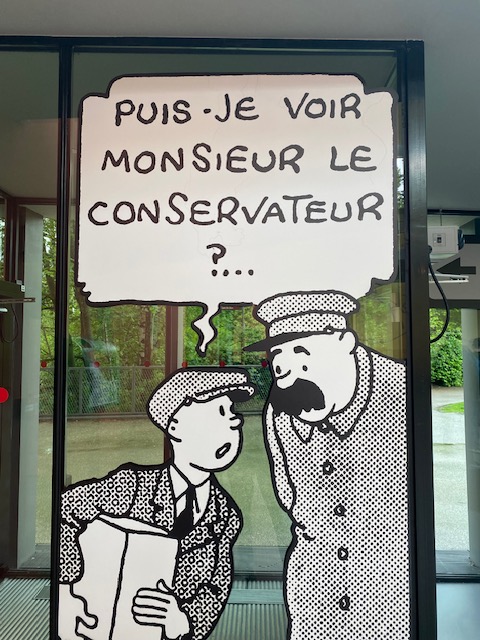

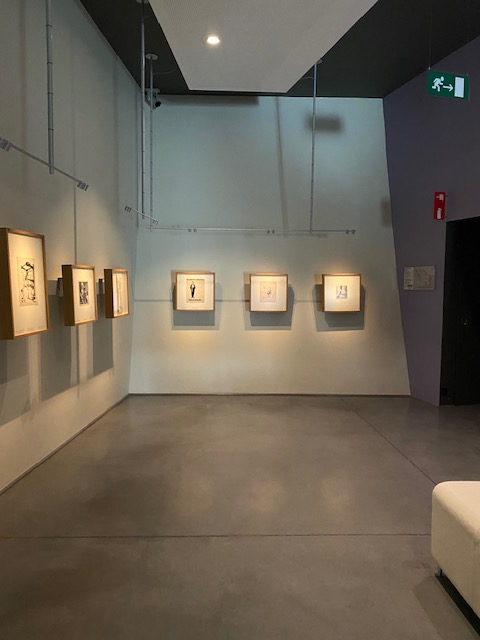
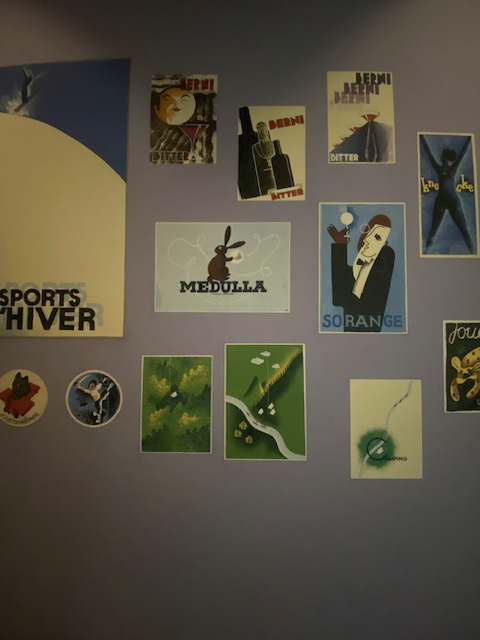


History of the museum
The idea of a museum dedicated to the work of Hergé can be traced back to the end of the 1970s, when Hergé himself was still alive. After his death in 1983, Hergé’s widow, Fanny, led the efforts, undertaken at first by the Hergé Foundation and then by the new Studios Hergé, to catalogue and choose the artwork and elements that would eventually become part of the Hergé Museum’s exhibitions.
The Hergé Museum: concept and construction
The location for the Hergé Museum in Louvain-la-Neuve was originally chosen in 2001 and construction was finished in 2009.
During the museum’s inauguration, journalists were informed of the museum’s policy that no photos are allowed to be taken inside the museum to prevent “copyright abuse due to the work exposed”, Wikipedia says.
Disgruntled, some journalists left the museum. Journalists were allowed to photograph some parts of the museum when King Albert II toured the museum the following month.
The museum website doesn’t prohibit photography. “To protect the work on display, flash photography is not allowed.”
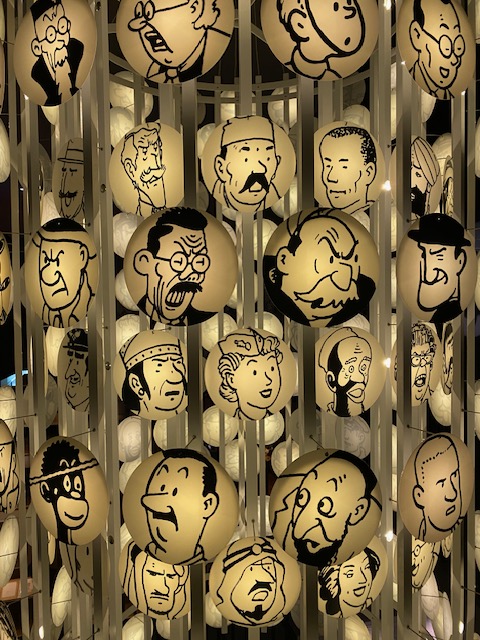


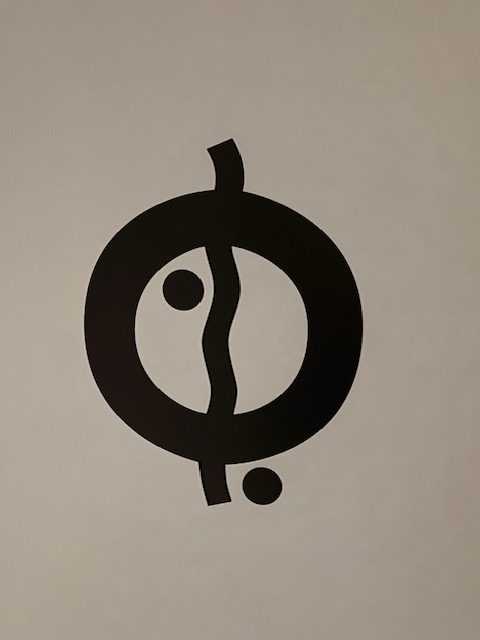


Layout
The Hergé Museum contains eight permanent galleries displaying original artwork by Hergé, and telling the story of his life and career. Although his most famous creation, The Adventures of Tintin, features prominently, his other comic strip characters, such as Jo, Zette and Jocko, and Quick and Flupke, are also present. The exhibitions also include examples of Hergé’s diverse and prolific output working as a graphic designer in the 1930s.
As is popular with modern museums, a visit starts at on the top floor and you work your way down.
The first room is dedicated to Hergé’s life. The second room displays Hergé’s many interests, his early commercial illustrations, and his early comics.
The third room introduces the world of Tintin, with nine glass displays dedicated to the main characters of the series. The fourth room focuses on Hergé and cinema.
One floor dow, the largest hall is devoted to places in the world Tintin has travelled. Next to this is another large room of Professor Cutberth Calculus‘ laboratory, which focuses on science in the Tintin books.
Crossing a lower bridge, visitors learn about the prolific Studios Hergé. The final room is called ‘Hergé Acclaim’, showing Hergé’s connections to politicians, artists and philosophers.
The museum houses a temporary exhibition gallery on the main floor, which is updated every few months to host new exhibitions, with diverse titles such as ‘Tintin, Hergé and Trains‘ and ‘Into Tibet with Tintin‘.
We didn’t see this hall. Did we miss it, or wasn’t there a temporary exhibition on?
A visit
We did not use the audioguide. To use the audioguide, you must forst download the museum app and then activate the audioguide by scanning a QR code. The audioguide is then accessible for four hours.
Our visit lasted some two hours.
What the museum does and does not
The Musée Hergé offers many Hergé related artifacts and many original drawings. It is insightful and informative and you learn a lot about Tintin mostly, but also about his other works.
The museum is run by Hergé’s heirs and that shows. Hergé is (was) not uncontroversial. His views on Congo, then a Belgian colony, and other worldly issues, were quite racist. Hergé certainly wasn’t alone with these views, which were quite mainstream.
Still, you can’t unsee these views. Hergé’s handling of life in Nazi occupied Belgium is also not uncontroversial.
The author grew up and came of age as reactionary, conservative catholic. Nowadays, this could be approaching alt-right.
Hergé also battled with depression, but in the museum he’s only portrayed as a “a very smart, cheerful man, sociable, with a large circle of friends and an enormous creative power (which certainly no one disputes)”, Die Welt wrote in 2009. “The visitor learns absolutely nothing about his sympathies for Brussels‘ racist policies in the Belgian Congo and Nazi Germany – which the artist later openly regretted -, about his partially reactionary, strictly Catholic upbringing or even about his severe depression.”
Three booklets do actually shows Hergés reactionary catholic views. One of these ‘For A New Order‘, indicates where his sympathies laid.


These regrets are illustrated – pun intended – in the rewritings and redrawings of his early albums.
So?
I grew up with Tintin. I still enjoy the storytelling. Hergé was creative and visionary. But he wasn’t perfect. No-one is. The museum is interesting and absolutely worth a visit.
Also, as Jeroen put it: “The museum is not childish, it’s not a playground. Too many museums are turning into playgrounds.”
A more critical look at his oeuvre wouldn’t hurt his legacy.
 Trip By Trip
That shark sub is better than Hirst’s shark tank. Looks great! Charming, witty, and stylish.
LikeLiked by 2 people
Since I’m a child, I have loved Hergé’s ‘clear line’ style. It’s simple, yet quite detailed. So I agree 🙂
LikeLiked by 2 people