
October 2024. During a week-long whistle-stop tour of Germany, we visit Dessau-Roßlau in Saxony-Anhalt, Weimar in Thuringia, Coburg in Upper Franconia (Bavaria) and Kassel in Hesse. Smaller cities, yes. But each with their own significance. Untouched by overtourism. We’re avoiding using the white trains of DB Fernverkehr, Deutsche Bahn‘s long-distance section and opt to use the red trains of DB Regio and other regional operators.
Our second leg of this week-long whistle-stop tour of Germany was Weimar in Thuringia (Thüringen). Weimer is famous from the Weimar Republic and for German high culture. But also as the birthplace of Bauhaus.
Bauhaus in Weimar
The Bauhaus in Weimar marks the origin of one of the most influential design schools of the 20th century, established in 1919 by the architect Walter Gropius.
Rooted in the desire to unify art, craft, and technology, the Bauhaus was revolutionary in its approach to education and aesthetics. It sought to break down traditional boundaries between fine arts and practical design, fostering a holistic approach to creating functional and beautiful objects, architecture, and urban environments.
The Bauhaus was born in a period of upheaval following World War I. Gropius’s vision for the school was a response to the devastation of the war, seeking to rebuild society through innovative and inclusive design.
The school attracted prominent artists, architects, and designers, including Paul Klee, Lyonel Feininger, Johannes Itten, Wassily Kandinsky, and Marcel Breuer, who contributed to its interdisciplinary ethos.
Weimar was the initial home of the Bauhaus because of its cultural and historical significance as the city associated with German Enlightenment figures like Goethe and Schiller.
The city also offered an intellectual and artistic environment conducive to the experimental aspirations of the school. The Bauhaus operated in Weimar until 1925, when political pressures and financial constraints, exacerbated by the conservative political climate in Thuringia, forced its relocation to Dessau.
Today, remnants of the Bauhaus legacy in Weimar can still be seen. The Bauhaus University, housed in the original school building designed by Antwerp native Henry Van de Velde, preserves this heritage.

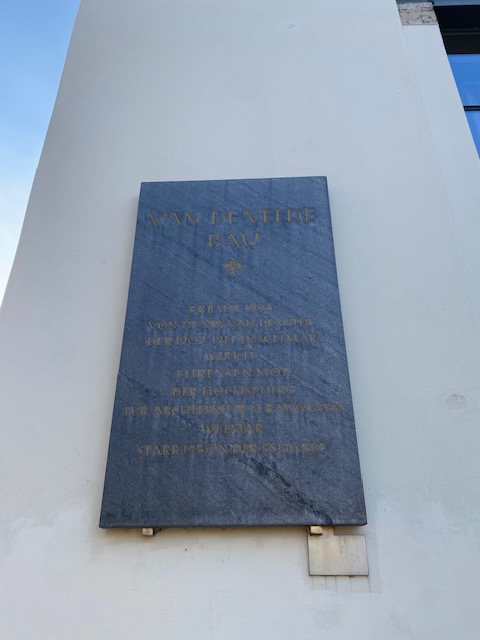
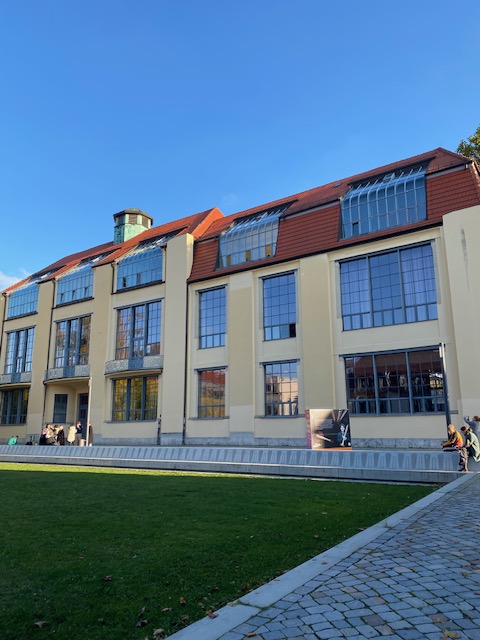


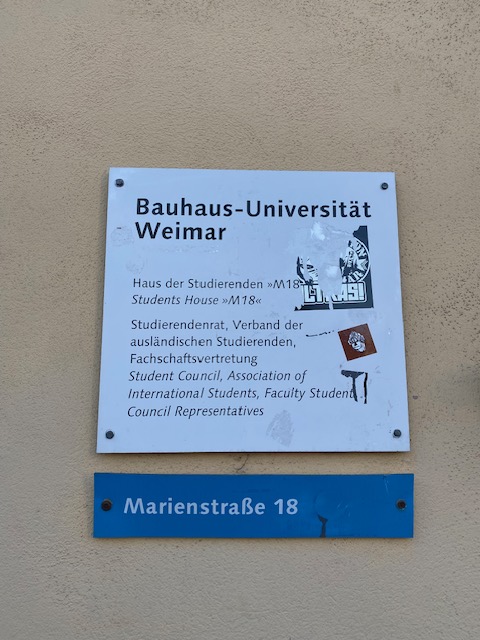
The building itself is a UNESCO World Heritage Site and stands as a testament to early 20th-century design and the revolutionary spirit of the Bauhaus movement. The Haus am Horn, a model home constructed in 1923 as part of the Bauhaus Exhibition, also survives as a prime example of functional Bauhaus architecture.
Henry van de Velde, a Belgian architect and designer, played a crucial role in laying the groundwork for the Bauhaus in Weimar.
Before Gropius, van de Velde directed the Grand-Ducal Saxon School of Arts and Crafts (1902–1915), which merged with the Weimar Academy of Fine Art to form the Bauhaus. Van de Velde’s approach to uniting art and industry and his advocacy for the applied arts significantly influenced Gropius’s vision for the school. Van de Velde also personally recommended Gropius as his successor when he left Weimar due to the anti-foreigner sentiment during World War I.
Van de Velde’s architectural style and pedagogical ideas bridged the Art Nouveau movement and modernism, shaping the intellectual and artistic climate in which the Bauhaus emerged.
His innovative building designs, including the current Bauhaus University building, exemplify his commitment to functionally elegant design, a principle that the Bauhaus would later refine and expand.
The Bauhaus’s influence extends far beyond Weimar, profoundly shaping modern art, architecture, and design globally. Its emphasis on functionalism, minimalism, and the integration of technology with creativity has had a lasting impact on fields as diverse as graphic design, interior design, and urban planning. Despite its initial challenges and eventual closure by the Nazis in 1933, the Bauhaus remains a symbol of innovation and a cornerstone of modernist aesthetics.
Bauhaus-Museum Weimar
The Bauhaus Museum (with a hyphen in German) in Weimar is a cultural institution dedicated to the history and legacy of the Bauhaus movement. The museum houses an extensive collection of objects, documents, and artworks related to the early years of the Bauhaus and its influential role in the development of modern art, design, and architecture.
The current museum building, designed by the German architect Heike Hanada, opened to the public in April 2019, coinciding with the centenary of the Bauhaus’s founding.
The minimalist and modern structure reflects the principles of Bauhaus design, with a focus on simplicity, functionality, and clarity. It stands in Weimar’s city centre and serves as a focal point for exploring the movement’s origins and its enduring influence.
The museum’s collection is built upon the holdings of the Klassik Stiftung Weimar, which includes works by notable Bauhaus figures such as Walter Gropius, Paul Klee, Lyonel Feininger, and Marcel Breuer.
Highlights of the collection include furniture, ceramics, textiles, and graphic designs created during the school’s formative years.
The museum also presents archival materials, including photographs, sketches, and written documents, which provide insight into the school’s philosophy, teaching methods, and cultural context.
In addition to its permanent exhibition, the Bauhaus Museum hosts temporary exhibitions, educational programmes, and events that explore the broader impact of the Bauhaus movement and its relevance to contemporary design and society. It serves as an essential resource for understanding the origins of modernism and the revolutionary ideas that emerged from the Bauhaus in Weimar.


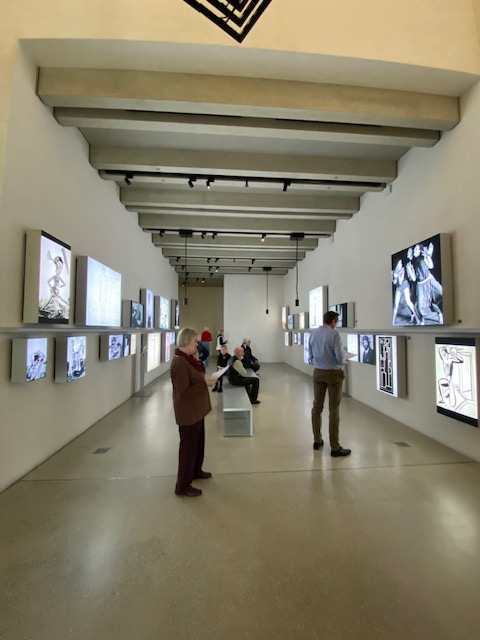


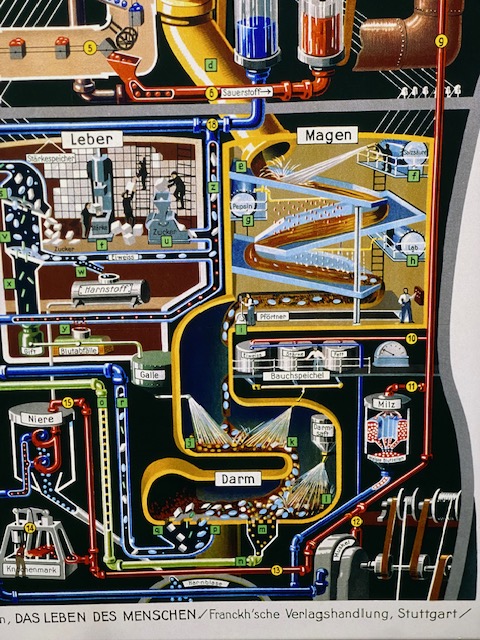
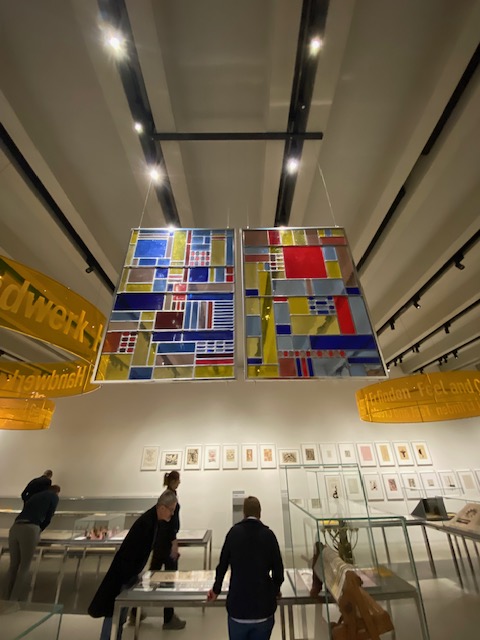





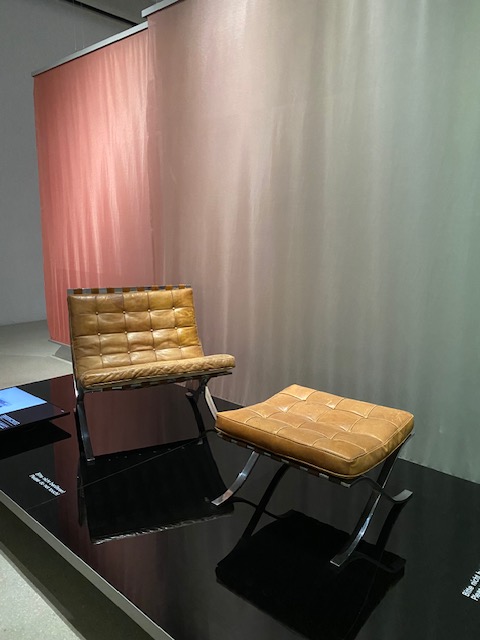
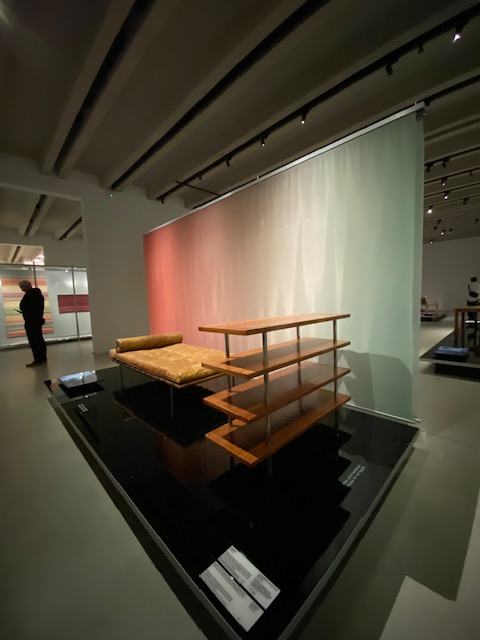

A visit of the museum
More so than the Bauhaus-Museum Dessau, the Bauhaus-Museum Weimer delves deeper in the beginnings of the movement but also the fight for survival against conservative politicians and the NSDAP.
The Bauhaus-Museum Weimar is more complete.
Who was Henry Van de Velde?
Henry Van de Velde (1863–1957) was a Belgian architect, designer, and painter who played a pivotal role in the development of modern design and the transition from Art Nouveau to modernism.
Born in Antwerp, he initially trained as a painter but turned to applied arts and architecture, where he made his most significant contributions. His work emphasised functionalism and simplicity, rejecting excessive ornamentation in favour of clean lines and practical forms, which were foundational principles for modern design movements.
Van de Velde’s connection to the Bauhaus lies in his role as a precursor and enabler of its founding. In 1902, he was appointed as the director of the Grand-Ducal Saxon School of Arts and Crafts in Weimar.
He reshaped the school into an influential institution, advocating the integration of art and craft and fostering a creative environment that influenced the development of modernist ideas.
When he was forced to resign in 1915 due to rising anti-foreigner sentiment during World War I, he recommended Walter Gropius as his successor. This recommendation led to the eventual transformation of the school into the Bauhaus in 1919 under Gropius’s leadership. Van de Velde’s educational reforms and his vision of uniting art and industry deeply influenced the Bauhaus philosophy.
In Belgium, Henry Van de Velde made notable contributions to railway design, particularly for the NMBS /SNCB. Van de Velde also presided over the jury which selected the current NMBS /SNCB logo. The logo design is by railway employee Jean De Roy. The shape of the B is inspired by the shape of the B of the Bentley logo.

He designed a series of Art Nouveau-inspired train station interiors and related elements. His most famous contribution was the design of elegant, functional dining car interiors and luxurious train carriages for the Compagnie Internationale des Wagons-Lits, enhancing passenger comfort and elevating the aesthetics of rail travel.
These designs reflected his commitment to combining beauty and utility, an ethos that aligned with his broader design philosophy and that of the Bauhaus movement he helped inspire.
 Trip By Trip
16 Comments Add yours