
October 2024. During a week-long whistle-stop tour of Germany, we visit Dessau-Roßlau in Saxony-Anhalt, Weimar in Thuringia, Coburg in Upper Franconia (Bavaria) and Kassel in Hesse. Smaller cities, yes. But each with their own significance. Untouched by overtourism. We’re avoiding using the white trains of DB Fernverkehr, Deutsche Bahn‘s long-distance section and opt to use the red trains of DB Regio and other regional operators.
Sometimes we forget there’s a Germany before 1871. In that pre-German Empire period, there were countless semi sovereign and sovereign states. Kingdoms, principalities, grand duchies, duchies…
One of these was the Saxe-Weimar (Sachsen-Weimar), one of the Ernestine duchies.
In present-day Weimar the era of Weimar Classicism or Weimarer Klassik is revered. That era was dominated by patron of the arts Duchess Anna Amalia of Saxe-Weimar and Eisenach, née Anna Amalia of Brunswick-Wolfenbüttel, and her son Charles August, Carl August or Karl August, Duke of Saxe-Weimar-Eisenach.
This gives Weimar a status of somewhat a culture capital of Germany.
Weimar Classicism
Weimar Classicism was a German literary and cultural movement that emerged in the late 18th and early 19th centuries. Its practitioners sought to establish a new humanism, synthesising elements of Romanticism, Classicism, and Enlightenment thought. The movement is named after the city of Weimar, where its leading figures, Johann Wolfgang von Goethe and Friedrich Schiller, lived and worked.
The origins of Weimar Classicism can be traced to 1771, when Duchess Anna Amalia invited the Seyler Theatre Company, led by Abel Seyler, to her court in Weimar.
This troupe, renowned for its pioneering role in the Sturm und Drang movement, helped establish a cultural foundation for the city. The movement gained further prominence with the arrival of Christoph Martin Wieland, Goethe, and Johann Gottfried Herder, who enriched Weimar’s intellectual life.
However, it was during the collaboration between Goethe and Schiller, from 1788 to 1805, that Weimar Classicism reached its zenith.
Weimar Classicism developed in the context of the German Enlightenment, which combined Empiricism and Rationalism as advanced by Christian Thomasius and Christian Wolff.
This intellectual foundation was challenged by the perceived inability to reconcile emotion and reason, leading to Immanuel Kant‘s critical philosophy and an increased focus on aesthetics. Alexander Baumgarten’s ‘Aesthetica‘ (1750–1758) laid the groundwork for understanding aesthetics as a form of sensuous knowledge, influencing the subsequent Sturm und Drang movement, of which Goethe and Schiller were early proponents.
Anna Amalia’s patronage played a crucial role in establishing Weimar as a cultural hub. In addition to the Seyler Theatre Company, she invited Wieland to educate her sons, further enriching the city’s intellectual atmosphere.
Goethe, who joined Weimar in 1775, evolved from a leader of Sturm und Drang to a proponent of classical ideals, influenced by his travels to Italy in 1786. Schiller, initially known for his emotionally charged plays, also transitioned to a more classical style in the late 1780s. Their eventual friendship and collaboration in 1794 became the cornerstone of Weimar Classicism.
The movement sought to harmonise the emotional intensity of Sturm und Drang with the intellectual clarity of Enlightenment thought, embodying this synthesis in works such as Goethe’s ‘Wilhelm Meister‘ and ‘Faust‘ and Schiller’s ‘Wallenstein‘ and ‘William Tell‘.
Their shared aesthetic principles included Gehalt (the work’s inexpressible essence), Gestalt (aesthetic form), and Stoff (the material or content). These ideas underscored the unity of form and content in creating enduring art.
Weimar Classicism also engaged with contemporaneous movements such as German Romanticism, which often stood in opposition to its ideals. Goethe and Schiller critiqued Romanticism’s subjectivity and sought to establish universal standards for art and literature. Their collaboration extended beyond literature to philosophy, science, and the arts, enlisting figures such as Alexander von Humboldt in their efforts to elevate German culture.
The movement included contributions from women, with Schiller’s journal ‘Die Horen‘ publishing works by Caroline von Wolzogen, Sophie Mereau, and others. This inclusivity reflected the broader humanistic aspirations of Weimar Classicism.
After Schiller’s death in 1805, the movement waned but left a lasting legacy. It became a cornerstone of Germany’s cultural and intellectual identity in the 19th century, influencing the nation’s political unification and continuing to resonate in literature, philosophy, and the arts.

Who was Duchess Anna Amalia?
Anna Amalia of Brunswick-Wolfenbüttel (24 October 1739 – 10 April 1807) was a German princess, composer, and cultural patron. By marriage, she became the Duchess of Saxe-Weimar-Eisenach and served as regent of the states of Saxe-Weimar and Saxe-Eisenach from 1758 to 1775.
Born in Wolfenbüttel, Anna Amalia was the third child of Karl I, Duke of Brunswick-Wolfenbüttel, and Princess Philippine Charlotte of Prussia. Her maternal grandparents were Frederick William I of Prussia and Sophia Dorothea of Hanover. She was the aunt of Queen Caroline, wife of King George IV of the United Kingdom.
As a princess, Anna Amalia received a comprehensive education and studied music with Friedrich Gottlob Fleischer and Ernst Wilhelm Wolf.
On 16 March 1756, she married Ernst August II Konstantin, Duke of Saxe-Weimar-Eisenach, in Brunswick. The couple had two sons, but Ernst August’s sudden death in 1758 left Anna Amalia as regent for their infant son, Karl August.
Despite the challenges of the Seven Years’ War, she managed the duchy with prudence, strengthening its resources and maintaining its stability. Alongside her official duties, she pursued her intellectual and artistic interests, studying composition and keyboard under Weimar’s leading musicians. She also engaged Christoph Martin Wieland, a poet and translator of Shakespeare, to tutor her son.
When Karl August reached his majority in 1775, Anna Amalia retired from political life but continued to play a pivotal role in fostering Weimar’s cultural and intellectual prominence. She gathered prominent scholars, poets, and musicians at her Wittum Palace for discussions and musical performances. Known as the “court of the muses,” her circle included luminaries such as Johann Gottfried Herder, Johann Wolfgang von Goethe, and Friedrich Schiller. She also succeeded in bringing Abel Seyler’s theatre company, considered Germany’s finest, to Weimar.
She continued the tradition of Singspiel performances in Weimar, including staging her own compositions set to Goethe’s texts in the court’s amateur theatre.
As a composer, Anna Amalia created works in the Empfindsamkeit style, blending song and arioso elements. In recent years, previously unknown works by her were discovered in the collection of Archduke Rudolf of Austria, adding to her recognised contributions to music.
Anna Amalia also established the Duchess Anna Amalia Library, which became a repository of knowledge and culture. Today, the library houses approximately one million volumes and stands as a testament to her intellectual legacy. Goethe honoured her memory in his work ‘Zum Andenken der Fürstin Anna-Amalia‘.

Who was Karl August?
Karl August (3 September 1757 – 14 June 1828), was the Duke of Saxe-Weimar and Saxe-Eisenach from 1758. Following the unification of these territories, he became Duke of Saxe-Weimar-Eisenach in 1809 and was elevated to Grand Duke in 1815, a title he held until his death. His court became renowned for its intellectual vibrancy and cultural significance.
Born in Weimar, Karl August was the eldest son of Ernst August II and Duchess Anna Amalia. His father’s death in 1758, when Karl August was only nine months old, left him under the regency of his mother. His education was overseen by Count Johann Eustach von Görtz, and in 1771 Christoph Martin Wieland was appointed as his tutor. In 1774, during a trip to Paris with his brother Frederick Ferdinand Constantin and their tutors, Karl August met Johann Wolfgang von Goethe in Frankfurt, an encounter that marked the beginning of a significant relationship.
In Karlsruhe on 3 October 1775, Karl August married Luise Auguste, daughter of Louis IX, Landgrave of Hesse-Darmstadt, shortly after assuming the governance of his duchy.
One of his first actions as ruler was to invite Goethe to Weimar in 1776, making him a member of the privy council. Despite criticism, Karl August praised Goethe’s intellect and trusted his contributions to the administration.
A patron of the arts, sciences, and education, Karl August was instrumental in fostering Weimar Classicism. He supported Goethe, founded the Weimar Princely Free Drawing School, and brought Johann Gottfried Herder to Weimar to reform the educational system.
Under his reign, the University of Jena achieved its peak, and Weimar emerged as a hub of intellectual and cultural activity. He was also an avid outdoorsman and is credited with developing the Weimaraner breed of hunting dogs.
Karl August played an active role in German and European politics. Recognising the decline of the Holy Roman Empire, he sought to advance German unity. He opposed Emperor Joseph II’s plans to centralise power within the Habsburg monarchy, becoming a key figure in the establishment of the Fürstenbund or League of Princes in 1785 under Frederick the Great’s leadership.
Although he joined the Prussian army in 1788 and participated in key battles such as Valmy (1792) and Mainz (1794), his dissatisfaction with the political climate led him to resign. He rejoined the army during the reign of Frederick William III but faced setbacks during the disastrous campaign at Jena in 1806.
Subsequently, he joined the Confederation of the Rhine under Napoleon to avoid territorial confiscation, but in 1813 he aligned with the Sixth Coalition against France and commanded a corps of 30,000 troops in the Netherlands.
At the Congress of Vienna in 1815, Karl August protested against the reactionary policies of the powers. His contributions to the war effort were rewarded with additional territories and the title of Grand Duke. However, his liberal reforms, including granting a constitution and press freedoms, brought him into conflict with Austria, Prussia, and Russia. The Carlsbad Decrees curtailed press freedom, yet his rapport with his people helped mitigate their harshest effects.
Karl August died in Graditz near Torgau in 1828.
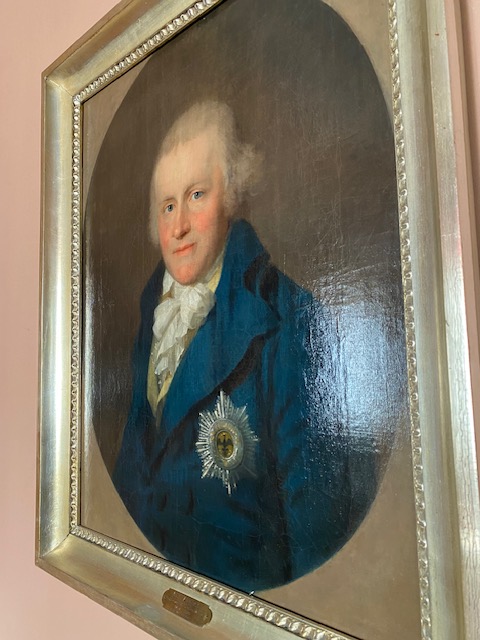
Wittumspalais
You can visit the Wittumspalais, Wittum Palace or Palais de la Veuve, where Anna Amalia resided.
Wittum (Latin: vidualitium), also spelled Widum or Witthum, is a medieval Latin legal term used in both marital and ecclesiastical law. Originally, it referred to provisions made by a husband at the time of marriage to ensure financial support for his wife in the event of his death. The wittum was often regulated or mandated by law.
The Wittumspalais was the residence of Duchess Anna Amalia for many years until her death in 1807. It was in this Baroque palace that she hosted her famous social gatherings. The Duchess’s former parlour, with its original furnishings, remains one of the most authentic rooms in the building, offering a glimpse into domestic life around 1800.
The palace is open to visitors today from 10 AM to 4 PM, and it offers a range of exhibitions and tours. The tour takes visitors through the Duchess’s former parlours and representative rooms, which are furnished in the style of the late 18th century, shedding light on Anna Amalia’s wide-ranging interests. Following the end of her regency in 1775, she dedicated herself to music, theatre, and drawing.
Numerous paintings and drawings on display depict her family and the many guests she entertained at her social events.


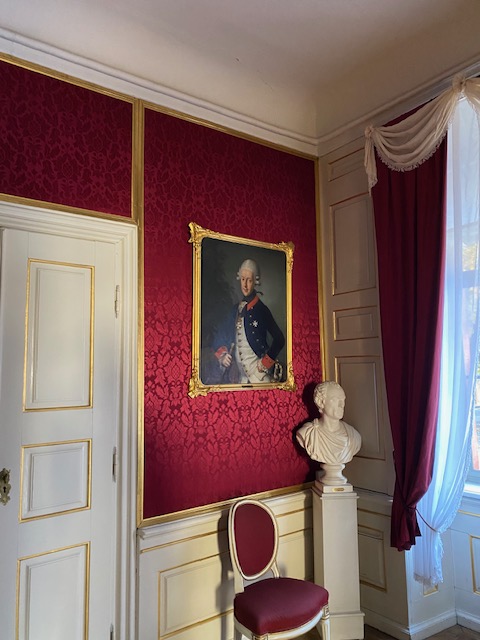


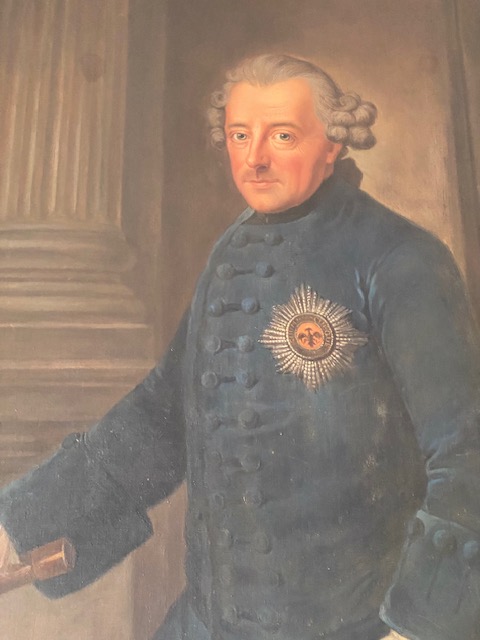


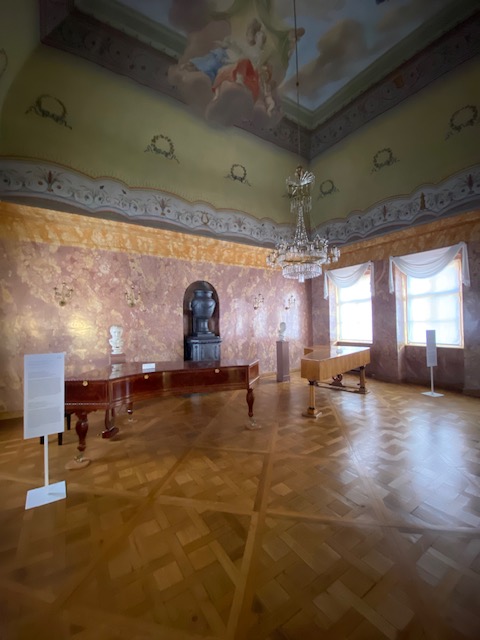
Notable highlights of the exhibition include the furnishings of the Round Table room, a ceiling mural in the dining room, and the almost completely authentic Green Salon, the Duchess’s parlour. On the ground floor, an interactive multimedia exhibition details the history of the Wittumspalais.
The palace was purchased by Anna Amalia after the devastating fire at the Weimar Castle in 1774.
The property, originally owned by her minister Jakob Friedrich Baron von Fritsch, was built between 1767 and 1769. Upon acquiring the mansion, the Duchess commissioned Adam Friedrich Oeser, director of the Leipzig Art Academy, to refurbish the rooms according to her wishes, including the creation of ceiling murals. She also designed the surrounding gardens, which were later removed in the early 19th century to make way for the construction of Theaterplatz.
Following Anna Amalia’s death, her son, Karl August, inherited the artworks and furnishings. The Duchess had bequeathed several pieces to members of her court. The palace was managed by the ducal administrative office and was rented out for a period. In the 1870s, Grand Duke Karl Alexander renovated the Wittumspalais and transformed it into a museum in memory of his great-grandmother.
The Wittumspalais complex includes two additional historic buildings: the Schönfärbe, originally a dye house dating back to 1711, and the Kammerfrauenhaus, which housed the court ladies.
These buildings were incorporated into the palatial residence during its construction in the 1760s. Between 2016 and 2018, both structures were restored with financial support from the European Regional Development Fund (ERDF) and the Free State of Thuringia, in compliance with historical landmark regulations. Today, these buildings are used by the Department of Research and Education of the Klassik Stiftung Weimar, which plans to stage educational events, projects for young people, teacher training seminars, and social programmes, such as the ‘Art and Coffee‘ initiative.
For a palace, the Wittumspalais is quite modest.
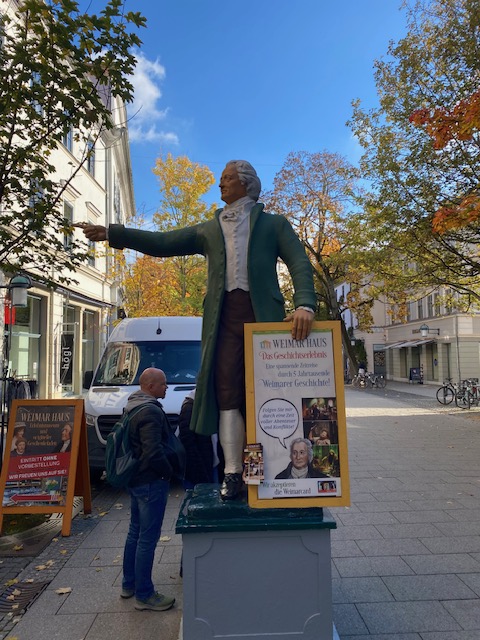


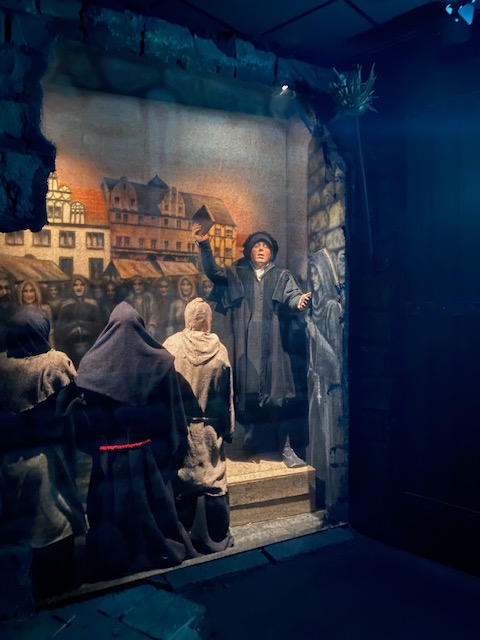


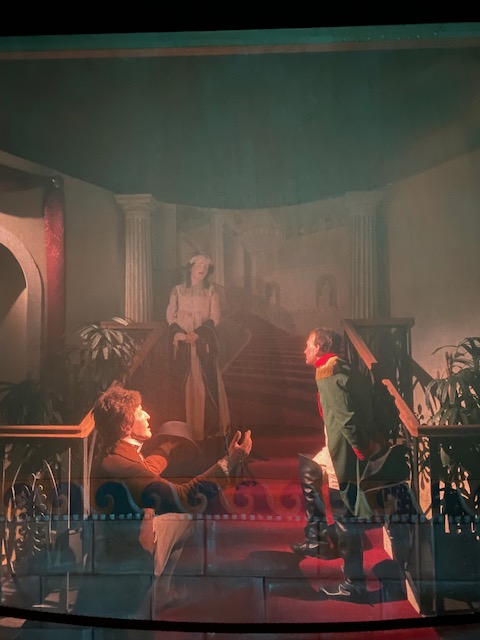
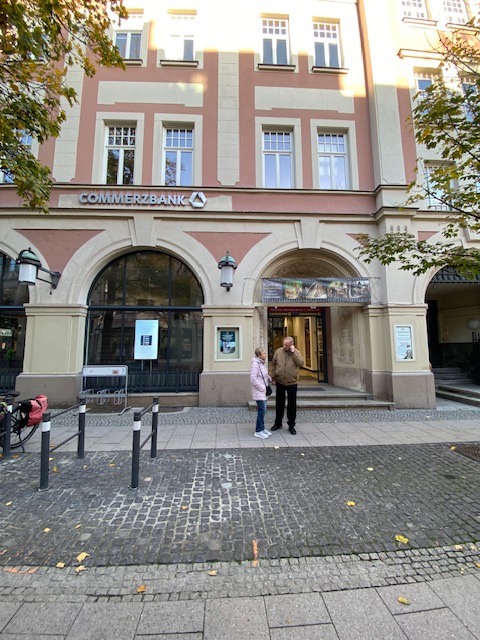
Weimar Haus Experience
Besides the very official Wittumspalais, we also visited the Weimar Haus Experience.
Lonely Planet says of the Weimar Haus: “Set over seven rooms in the centre of town, the Weimar Haus is a history museum for people who are bored by history museums. Sets, sound and light effects, wax figures and even an animatronic Goethe accompany you on your 30-minute journey into Thuringia’s past, from prehistory to the Enlightenment. The production values can be comical, but the entertainment factor is inarguably high.”
I agree. It’s less tacky than I feared, to be honest, and offered an overview of Weimar’s history.
 Trip By Trip
Beautiful photos 😊
LikeLiked by 1 person
Thank you 🙂
LikeLiked by 1 person
https://notionpress.com/write_contest/details/1559/ashalata. Please support me with 50 points through the link. It’s a short story competition. Thank you 👍 🙏
LikeLiked by 1 person