
Autumn 2024. Ten years after my first trip to Seoul in 2014, I am returning to the Republic of Korea, better known as South Korea. Not solo this time, but with Oriol, who has never been to Korea. On the itinerary: flying with Qatar Airways to Incheon via Doha, the capital Seoul, the historic city of Gyeongju, Busan, Jeju Island and a second stint in Seoul, where we are joined by Sehyeon. We’re spending two weeks in South Korea. The ROK is such a popular destination now. Will we experience overtourism?
Gyeongju’s high-speed railway station is quite afar from the city centre. So after a wild bus ride to town and checking in at Hotel Palace, it was time to explore the city.
We had 1.5 days in Gyeongju, or rather half a day and one. As we had read the city is beautiful both during the day and at night, we got on with it.
Introduction to Gyeongju
Gyeongju (경주) is often referred to as a ‘museum without walls’. It served as the capital of the ancient Kingdom of Silla for nearly 1,000 years (57 BCE – 935 CE). Its historical significance and wealth of cultural treasures have made it one of South Korea’s most important cities for cultural tourism.
Gyeongju is home to numerous UNESCO World Heritage Sites, ancient temples, royal tombs, palaces, and artifacts that offer a glimpse into the grandeur of the Silla dynasty, one of Korea’s most prosperous and influential historical periods.
Nestled between the mountains and the East Sea, Gyeongju is not only rich in historical sites but also offers scenic landscapes and natural beauty, making it a popular destination for both history enthusiasts and nature lovers. The city retains a unique blend of ancient relics, Buddhist heritage, and serene natural settings, contributing to its distinct charm.


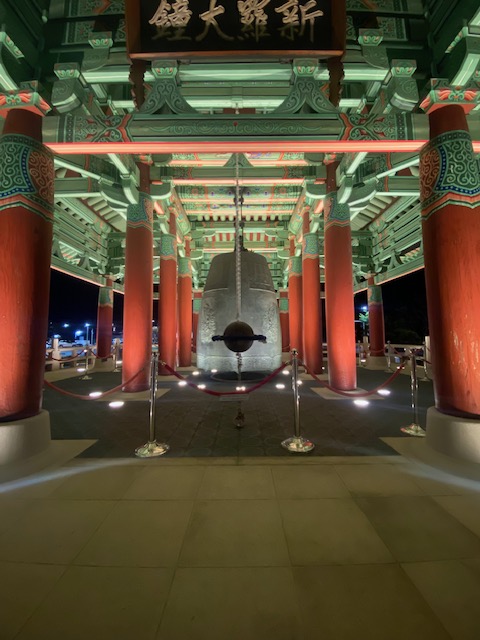

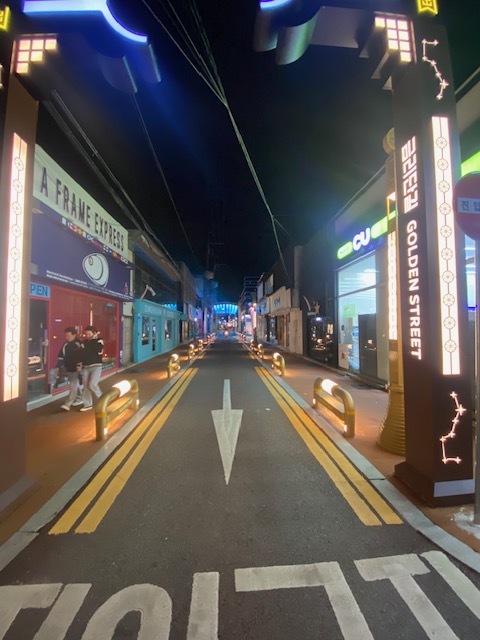
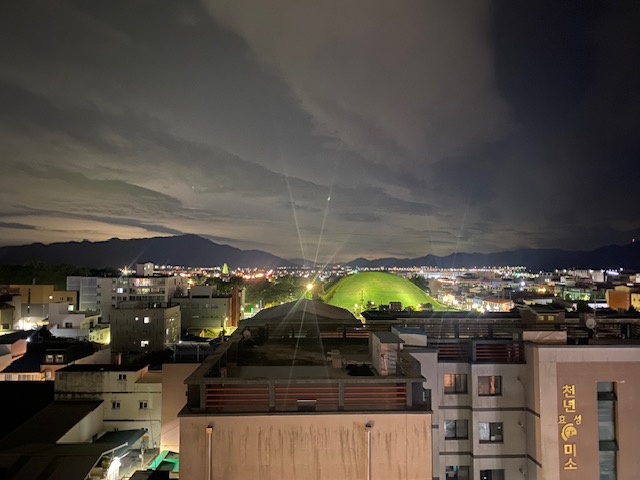
History
Gyeongju’s history is deeply intertwined with the rise and fall of the Silla Kingdom, one of the Three Kingdoms of Korea, along with Goguryeo and Baekje. The Silla Kingdom was founded in 57 BCE and gradually unified much of the Korean Peninsula.
Under the leadership of successive monarchs, Silla grew in strength and expanded its territory, culminating in the unification of the Korean Peninsula in the 7th century through a series of military and diplomatic campaigns. The unification of Silla in 668 CE marked the first time in Korean history that most of the peninsula was united under a single rule.
As the capital of Silla, Gyeongju or Seorabeol became a political, cultural, and economic center of the kingdom. The city was adorned with impressive palaces, royal tombs, and Buddhist temples, many of which remain today. It was a hub for scholars, artists, and artisans who contributed to the flourishing of Korean art, literature, and Buddhist culture.
During this golden age, Gyeongju attracted traders and visitors from neighboring kingdoms and as far away as China and Japan, making it a cosmopolitan city.
The decline of Silla began in the late 9th century as internal strife, corruption, and external threats weakened the kingdom. Gyeongju, once a thriving metropolis, faced political turmoil and economic stagnation. In 935 CE, Silla was absorbed into the Goryeo Dynasty, marking the end of Gyeongju’s prominence as the capital of Korea.
Nevertheless, the city’s historical and cultural significance continued, and it remains a symbol of Korea’s ancient past.
Gyeongju by day
Being October and being closer to the Equator than Belgium, it got dark around 6 PM. So we tried to see some sights by daylight first.
Gyeongju Nodong-ri, Noseo-ri Tombs and Daereungwong
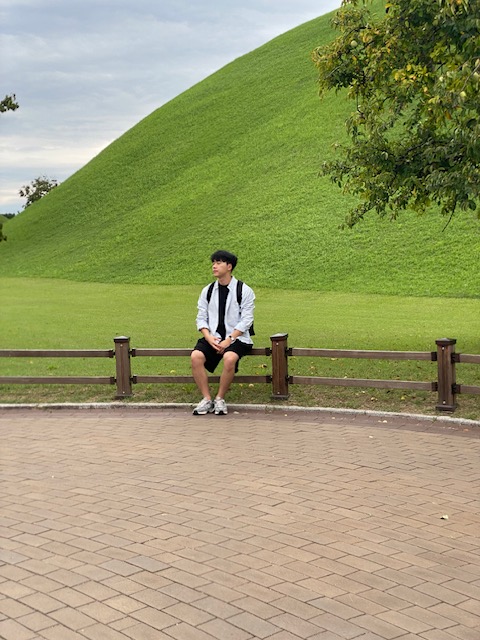
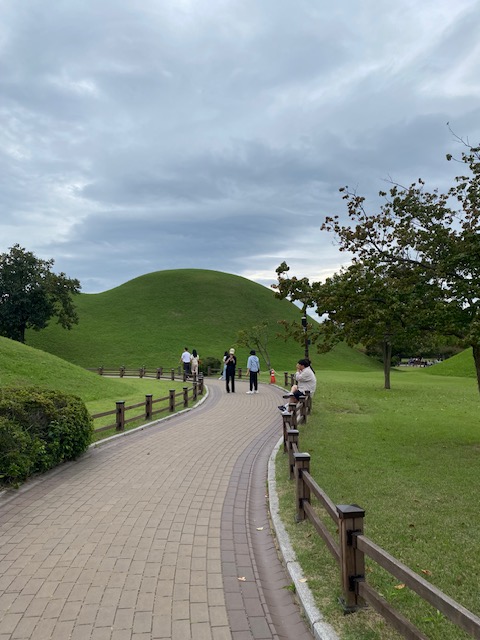
On my photos I find ‘The Silla Dynasty Tombs Information Center‘ and Gyeongjy Daerungwon. Gyeongju Daereungwon Tomb Complex consists of five tombs, Ancient Tombs of Gyeongju Nodong-ri, Noseo-ri, Hwangnam-ri, Hwango-ri, and Inwang-ri.
At the Information Center, the attendant was very directive. “First see this, then see that”. Definitely a pattern during our trip.
The tombs are distributed in Hwangnam-dong, Gyeongju-si, and are located in the Daereungwon area. Within Daereungwon Tomb Complex is Cheonmachong Tomb, which was excavated in 1973. Furthermore, Hwangnamdaechong Tomb was excavated between 1973 and 1975, and is a set of twin tombs belonging to a presumed married couple.
The tombs are scenic and photogenic tumuli. The grass was very green and one spot is very popular for Instagram.
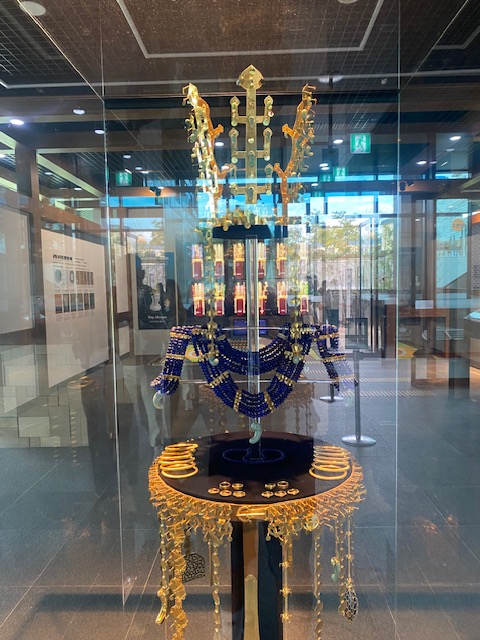
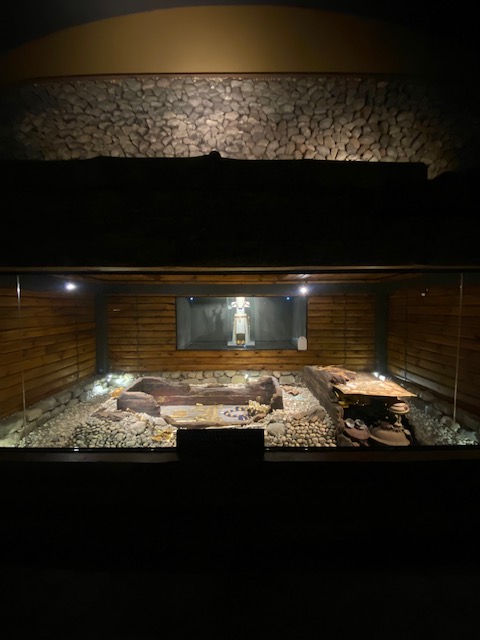
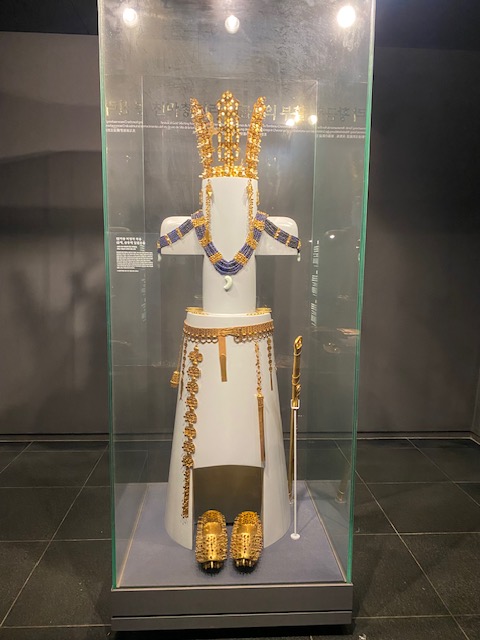
Among the tombs, Cheonmachong (‘Heavenly Horse Tomb‘) is particularly famous because of the rich array of artifacts discovered inside it, including gold crowns, jewelry, and the famous ‘heavenly horse’ painting, after which the tomb was named.
Visitors can enter the Cheonmachong Tomb to view the treasures unearthed from the tomb, which reflect the wealth and craftsmanship of the Silla aristocracy. The Daereungwon Tomb Complex is an evocative place to explore, as the tombs stand as silent reminders of the city’s ancient past.








Cheomseongdae Observatory
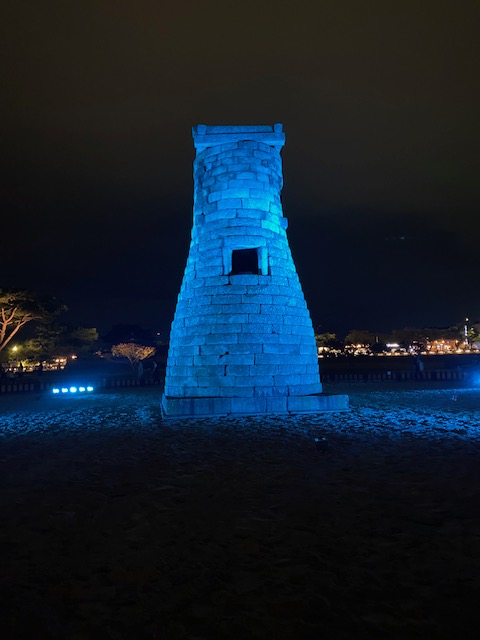
Cheomseongdae Observatory is the oldest surviving astronomical observatory in East Asia, built during the reign of Queen Seondeok (632–647) of Silla. This cylindrical stone structure was used to observe the stars and monitor celestial events, which were believed to influence the fate of the kingdom.
Cheomseongdae is constructed from 362 stone blocks, symbolizing the days of the lunar year, and its shape reflects the Silla belief in the harmony of the universe.
Though relatively small, Cheomseongdae holds great cultural importance and is an enduring symbol of the scientific achievements of the Silla Kingdom. It remains a popular site for visitors interested in the history of astronomy and the intellectual pursuits of ancient Korea.


Gyeongju Wolseong Palace Site (Banwolseong Fortress)
Gyeongju Wolseong Palace Site or Banwolseong Fortress (경주월성(반월성)) was the location of the palace-fortress during the Silla Dynasty. The fortress takes after its name, which, literally translates to mean a crescent moon shape on top of a hill. The famous history books of Samgukyusa mention that Silla’s 4th King Seoktalhae (57-80) thought this area was an ideal spot for the fortress and bought the land from a nobleman. The 2nd King Namhae (AD 4-24) impressed by Seoktalhae’s actions, took him in as his son-in-law, later, becoming the 4th king. The area was then under Silla’s rule for 900 years, the last king being the 56th, Gyeongsoon (927-935).
Although the palace is now just an empty lot, it has been told that this area was filled with imperial buildings during the Silla dynasty. Currently, the region of Wolseong has a freezer made out of rocks called Seokbinggo, an archery range, a horse-riding field, and a traditional playground, which resembles the grounds of the Joseon Period, the dynasty that ruled the Korean peninsula from 1392 to 1910.


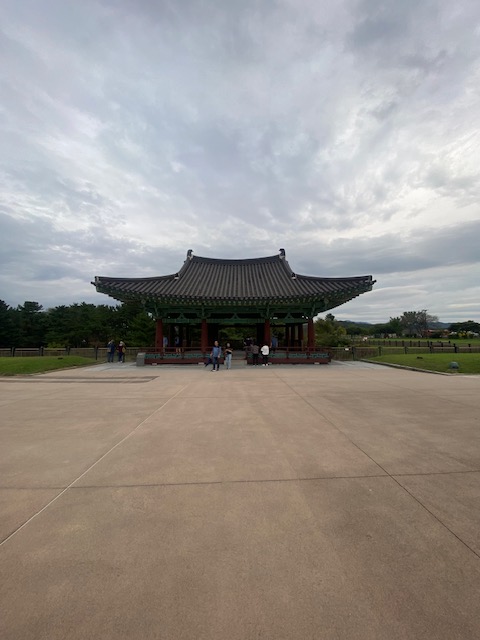
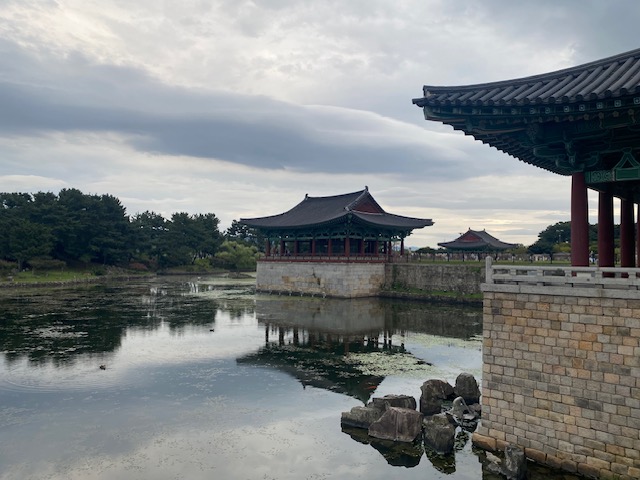
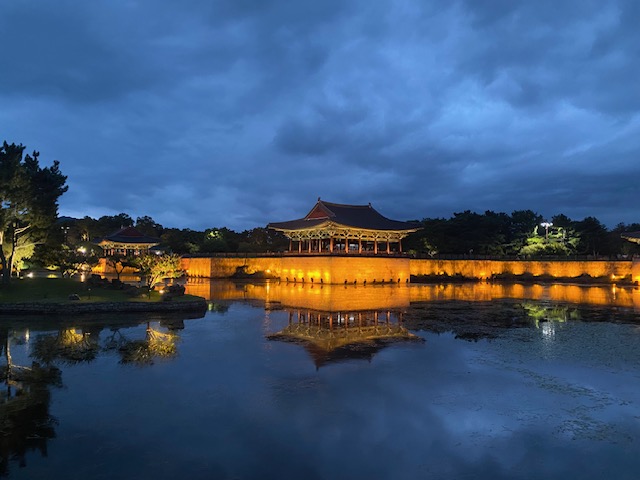
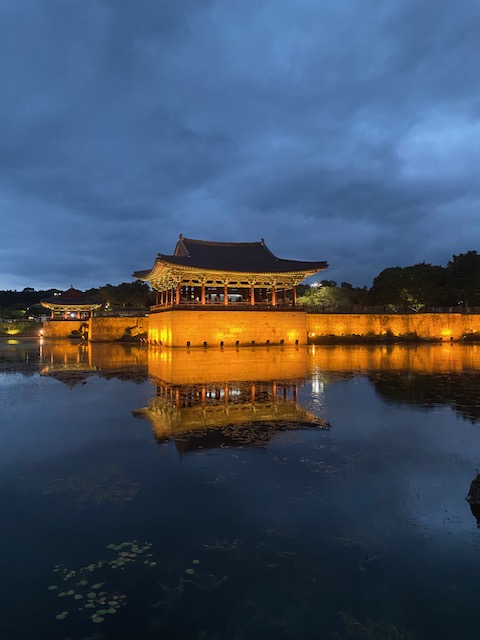
Anapji Pond (Donggung Palace and Wolji Pond)
Anapji Pond (Donggung Palace and Wolji Pond), originally called Wolji, was an artificial lake constructed in 674 during the reign of King Munmu of Silla.
It was part of a larger palace complex known as Donggung, which served as a royal villa for princes and officials. The pond was designed to represent the ideal harmony between humans and nature, a common theme in Silla art and culture.
Anapji Pond is renowned for its beauty, particularly at night when the reconstructed pavilions and buildings around the pond are illuminated, reflecting in the water. Excavations at the site have revealed a wealth of artifacts, including ceramics, jewelry, and wooden structures, which offer insights into the luxurious lifestyle of Silla royalty. Today, Anapji Pond is a popular destination for tourists, who come to enjoy its tranquil beauty and explore its historical significance.
And yes, we waited for the night to fall.





Woljeonggyo Bridge
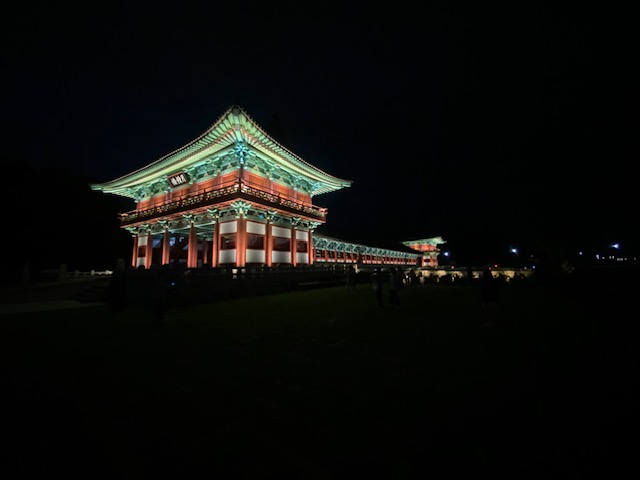
Woljeonggyo Bridge (월정교), located in Gyo-dong, was built during the Unified Silla period (AD 676-935), but was burnt down during the Joseon dynasty.
Through historical research, the bridge was rebuilt in April 2018 to become the largest wooden bridge in Korea. According to Samguk Sagi, author of ‘History of the Three Kingdoms‘, the bridge was built during the 19th year of King Gyeongdeok’s reign (760), connecting Wolseong and Namsan together.
The bridge is a very popular photo spot.



Gyo-dong
Gyo-dong is home to several significant cultural properties. These include tangible heritage sites such as the Gyeongju Hyanggyo, which was the local Confucian academy, Choe Sik‘s house, and the Gyeongju Samuso, the historical council building for government officers in the area.
The neighborhood also contains the remains of Cheongwan Temple (Cheongwansaji).
Additionally, Gyo-dong is famous for producing Gyeongju Gyo-dong Beopju, a traditional rice wine that has been recognized as an Important Intangible Cultural Property. Together, these cultural and historical elements make Gyo-dong an area of rich heritage in Gyeongju.


In reverse
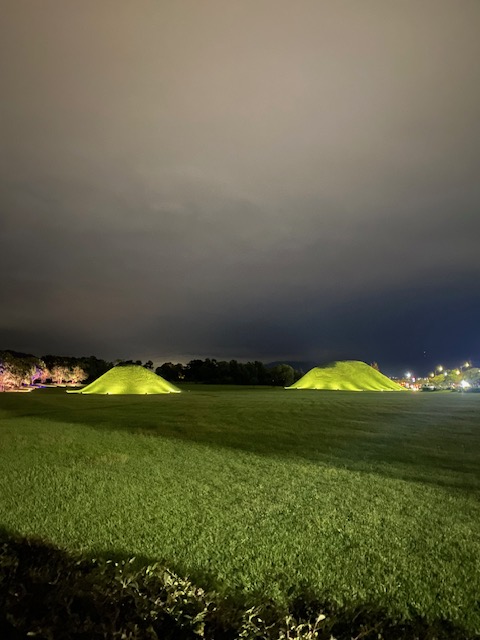
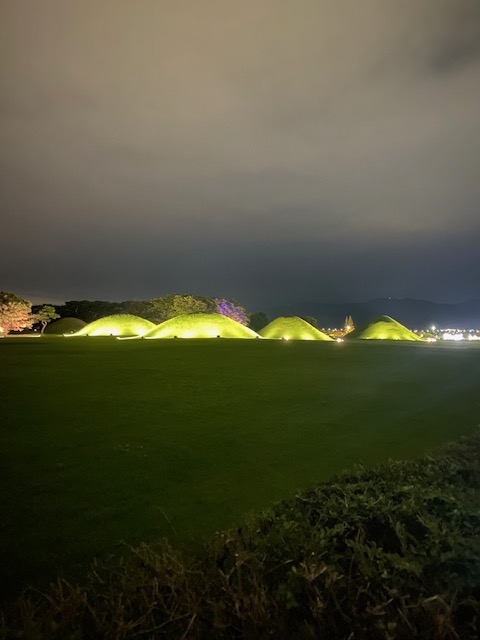
Now we walked parts of tour in reverse, going to Daereungwon and Cheonmachong and see some landmarks by night.


We had a lovely dinner at Favourite House, eating Korean tartare and a cocktail at Bar Prep. With such a name, we couldn’t miss out.
South Korea 2024
- QUESTION | Should you be scared of travelling to South Korea?.
- REVIEW | Qatar Airways – economy – Boeing 787-8 Dreamliner – Brussels to Doha.
- QATAR | Hamad International Airport (DOH) in Doha.
- REVIEW | Qatar Airways – economy – Airbus A350 – Doha to Seoul / Incheon.
- SOUTH KOREA | Landing at Incheon, retrieving the Wowpass and taking the AREX to Seoul Station.
- REVIEW | Fraser Place Namdaemun Seoul near City Hall.
- SEOUL | Deoksugung Palace by day.
- SEOUL | Admiral Yi Sun-sin – King Sejong the Great – Gyeongbokgung Palace – National Folk Museum SEOUL | Admiral Yi Sun-sin – King Sejong the Great – Gyeongbokgung Palace – National Folk Museum.
- SEOUL | Bukchon Hanok Village – Insadong Culture Street – Jogyesa Temple – Gwangjang Market – Cheonggyecheon Stream.
- SEOUL 2024 | Dongdaemun Design Plaza.
- SHOPPING IN SEOUL | Myeongdong – Lotte Young Plaza – Avenuel – Lotte Department Store.
- SEOUL | Namsan Mountain Park and N Seoul Tower.
- SOUTH KOREA | Seoul Station.
- REVIEW | Korail KTX Seoul – Gyeongju – Busan.
 Trip By Trip
Such a beautiful and enriching post! Your return to South Korea after a decade feels so special—especially with Oriol along for the journey. Gyeongju truly comes alive through your storytelling, blending history, scenic charm, and personal touches. Loved the detail about the “directive” attendants and the night views at Anapji Pond and Woljeonggyo Bridge—magical! Can’t wait to follow the next chapter of your adventure!
LikeLiked by 2 people
Thank you!
Next episode is next week 🙂
LikeLiked by 2 people
Well written
LikeLiked by 1 person
Thank you.
LikeLiked by 1 person