
Autumn 2024. Ten years after my first trip to Seoul in 2014, I am returning to the Republic of Korea, better known as South Korea. Not solo this time, but with Oriol, who has never been to Korea. On the itinerary: flying with Qatar Airways to Incheon via Doha, the capital Seoul, the historic city of Gyeongju, Busan, Jeju Island and a second stint in Seoul, where we are joined by Sehyeon. We’re spending two weeks in South Korea. The ROK is such a popular destination now. Will we experience overtourism?
Hello Jeju Island. Hello Jeju City. After collecting our luggage at Jeju International Airport, a friendly shuttle bus took us to Jeju Auto House, home of Lotte Rent-A-Car.
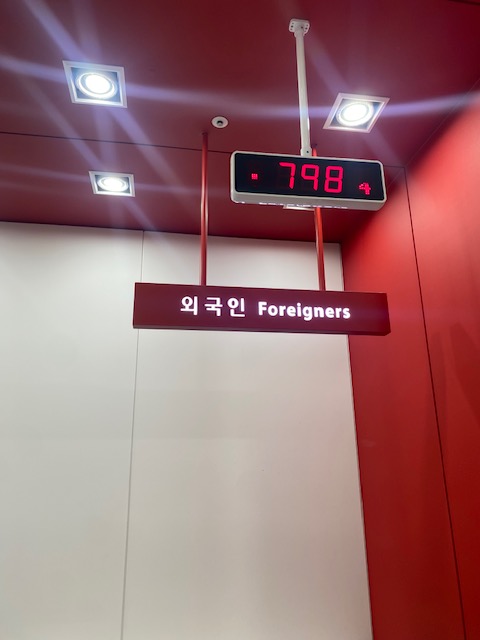
Oriol and I used our best Belgian skills to be the first of a full bus at the rental car desk. But there was a desk especially for foreigners and we were swiftly helped. Our car was a Hyundai Son Ta. A what? A Sonata, but the A was missing.
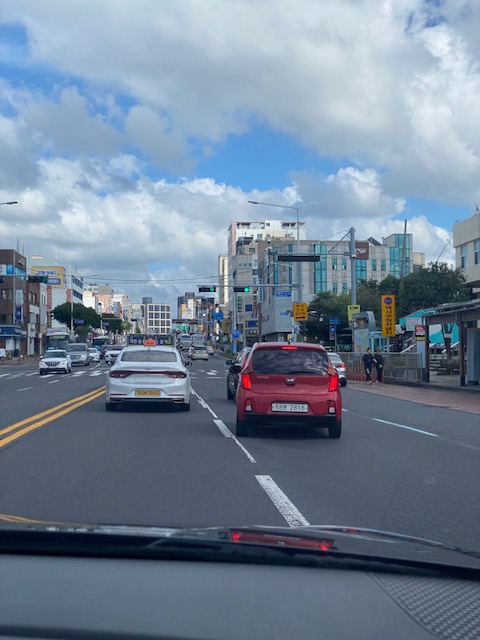
As I am not allowed to drive a car other than my own – a handicap prevents me that – Oriol took the wheel and had to adapt to the car, the Korean roads and the Korean driving code. For instance, you’re expected to ignore the red light when turning right. This American habit is very confusing for Europeans.
Anyway, after getting to the hotel, and checking in, we decided to explore Jeju City. The rest of the island would be for the following two days.




Introducing Jeju City
Jeju City (제주시) is the capital and largest city of the Jeju Special Self-Governing Province (제주특별자치도), located on Jeju Island (제주도), the largest island off the coast of the Korean Peninsula.
This city serves as the political, economic, and cultural hub of Jeju Province and is a significant gateway for tourism in South Korea. Jeju City is known for its subtropical climate, scenic landscapes, and cultural attractions, making it a popular destination for both domestic and international travelers.
With a population of approximately 488,000 people as of the most recent data, it is the most populated city on Jeju Island, housing the majority of the island’s residents and supporting a robust tourism industry that has driven rapid development in recent decades.
Jeju City’s primary function is as the administrative center of Jeju Province, which has a semi-autonomous status within South Korea, allowing it certain local governance rights to manage its unique ecosystem and cultural heritage.
As the island’s main urban area, Jeju City houses the provincial government offices, business centers, and a growing number of hotels, restaurants, and tourist-oriented services.
The city is also home to Jeju International Airport, South Korea’s second-busiest airport, which connects the island to mainland Korea and international destinations, thereby facilitating tourism and commerce.
Additionally, Jeju City has a role in the island’s agricultural trade, with traditional markets and businesses that export local produce, including Jeju’s famous citrus fruits and seafood, to other parts of the country.
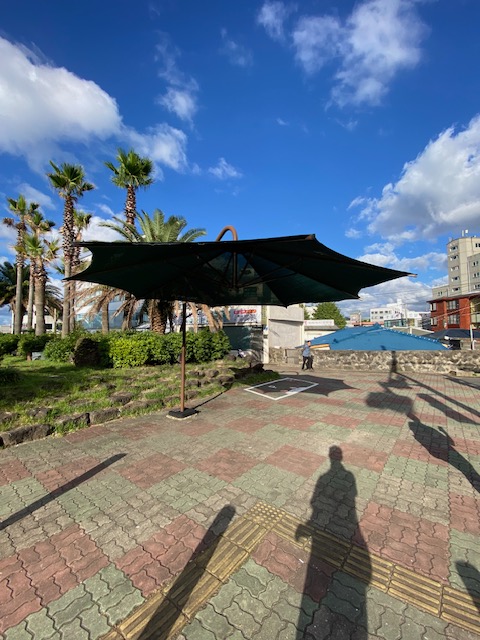
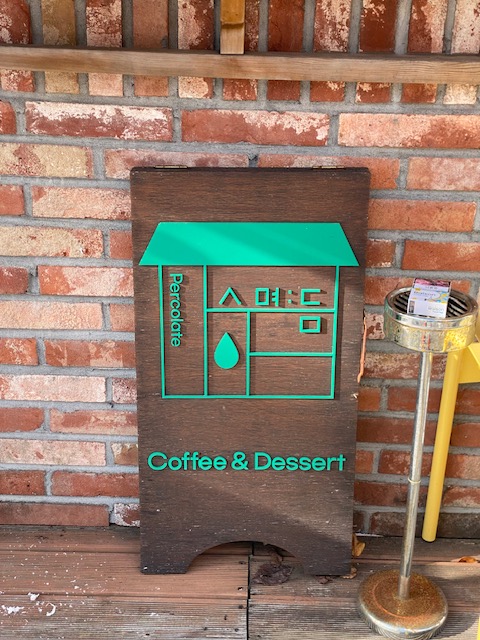
Own development
Historically, Jeju Island has a unique cultural and political history that distinguishes it from mainland South Korea. The island was originally inhabited by indigenous people and has, over time, developed its own dialect, customs, and cultural practices.
Historically, Jeju was somewhat isolated from the mainland and was even used as a place of exile for political prisoners during various Korean dynasties. The island’s culture was shaped by its geographic isolation, resulting in distinctive traditions and practices, such as shamanistic rituals, folk music, and the Haenyeo, or female divers, known for their skill in free diving to collect seafood. In the modern era, Jeju City played a significant role in the rapid development of Jeju Province as the South Korean government began promoting the island as a tourist destination in the late 20th century. Economic investments turned Jeju into a popular spot for honeymooners, family vacations, and, more recently, eco-tourism.


Tourism
Today, Jeju City offers a variety of attractions and activities that cater to its millions of annual visitors. The city has a blend of natural and cultural sites, reflecting both Jeju’s unique environment and its traditional heritage.
Hallasan National Park, one of the main attractions near Jeju City, encompasses Hallasan Mountain, South Korea’s tallest mountain and a dormant volcano. Hikers are drawn to Hallasan for its diverse flora, volcanic craters, and panoramic views from the summit. The mountain is considered a sacred site and has been designated a UNESCO Biosphere Reserve for its unique biodiversity.
Jeju City is also home to a number of cultural and historical sites, including the Jeju Folklore and Natural History Museum, which offers exhibits on the island’s geology, flora, fauna, and traditional lifestyles.
Nearby, the Jeju Stone Park showcases the island’s volcanic stone formations and cultural sculptures, which are deeply symbolic in Jeju’s folklore.
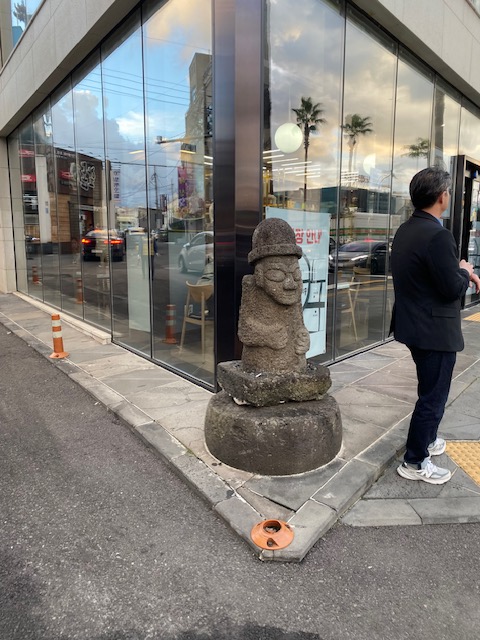
The iconic Dol Hareubang, large stone statues traditionally carved to ward off evil spirits, are prominently displayed throughout the park. For those interested in the island’s spiritual heritage, Jeju City offers access to numerous Buddhist temples, including Samseonghyeol Shrine, which is associated with the island’s founding mythology.
In addition to its natural and historical attractions, Jeju City offers a variety of recreational activities, catering to different types of travelers. Jeju’s coastline near the city provides opportunities for water sports, including snorkeling, scuba diving, and windsurfing.



Yongduam Rock, or Dragon Head Rock, is a striking coastal rock formation shaped like a dragon’s head, which is especially popular for photographs and sunset views. Jeju City’s waterfront also hosts several seafood restaurants where visitors can try local delicacies such as black pork, abalone porridge, and various types of fresh sashimi.
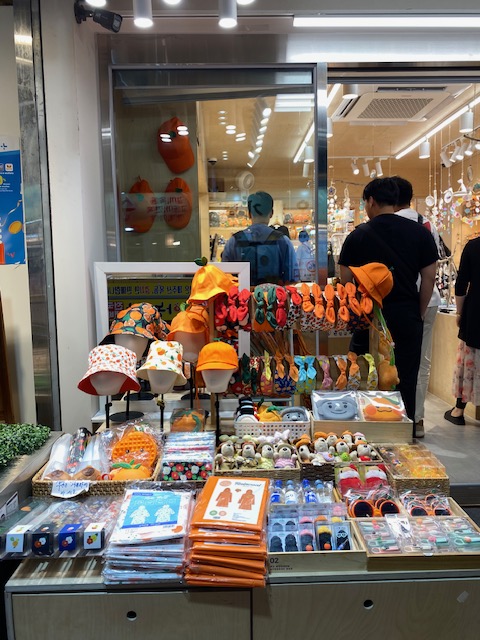
The city’s shopping districts, including the Dongmun Traditional Market, offer visitors a taste of Jeju’s agricultural bounty, with stalls selling local fruits, seafood, and handmade crafts. The city’s downtown area also has several modern shopping centers, cafes, and entertainment options that cater to tourists and locals alike.
Dongmun Market, in particular, is known for its vibrant atmosphere and a wide selection of Jeju’s famous tangerines, seafood, and specialty snacks.
Jeju City has increasingly focused on eco-tourism and sustainability, reflecting a growing awareness of the need to protect the island’s unique ecosystems. The city has implemented measures to limit environmental degradation from the high volume of visitors and has developed eco-friendly attractions, such as the Jeju Olle Trail.
The Olle Trail consists of a series of coastal and countryside walking paths around the island, allowing visitors to explore Jeju’s landscapes on foot and experience the island’s quieter, rural areas away from more crowded tourist spots.
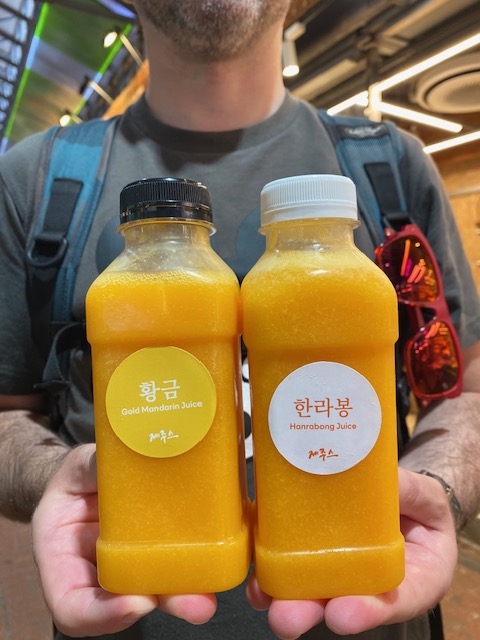
In addition to tourism, Jeju City supports a vibrant agricultural and fishing economy, which contributes to its cultural and culinary offerings. The city’s markets and restaurants feature fresh, locally sourced ingredients, and its cuisine has developed a reputation for unique flavors and health benefits. Specialties like Jeju black pork and seafood caught by the Haenyeo divers are popular among visitors, as are the island’s signature citrus fruits, such as Hallabong oranges.
Jeju City has continued to expand as an international destination, attracting visitors from Asia and beyond. Its accessibility, especially with Jeju International Airport connecting directly to multiple international cities, has increased its appeal to global tourists.
The city has also become known as a conference and convention destination, hosting events that capitalize on its scenic location and modern facilities. The combination of natural beauty, cultural significance, and convenient infrastructure has made Jeju City an essential part of South Korea’s tourism industry, and its reputation continues to grow as it adapts to the needs of a diverse visitor population.
Overall, Jeju City is both a cultural and economic anchor for Jeju Island, balancing traditional heritage with modern development. Its rich history, unique environment, and diverse attractions have made it a standout destination, drawing millions each year to experience its combination of scenic beauty, cultural depth, and recreational options.




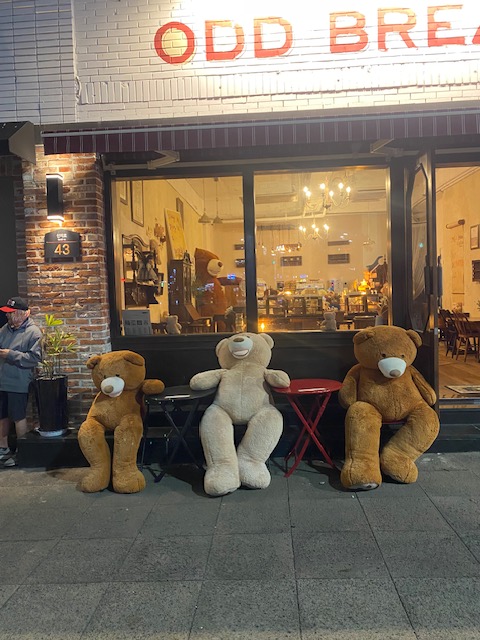


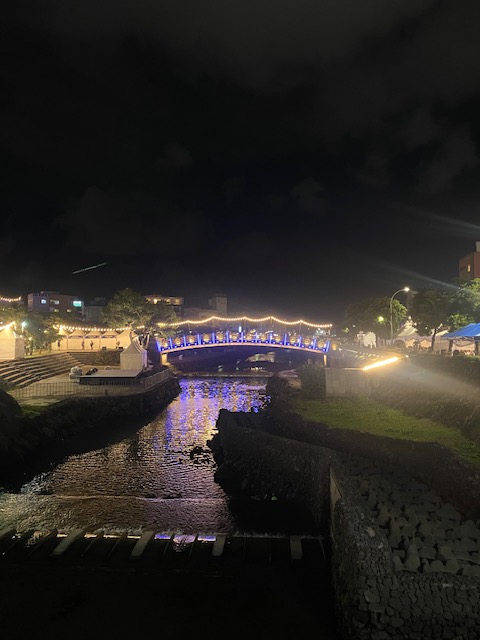
Underwear!
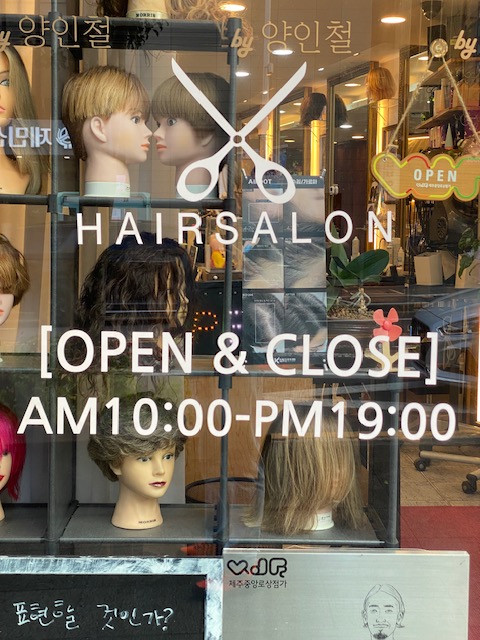
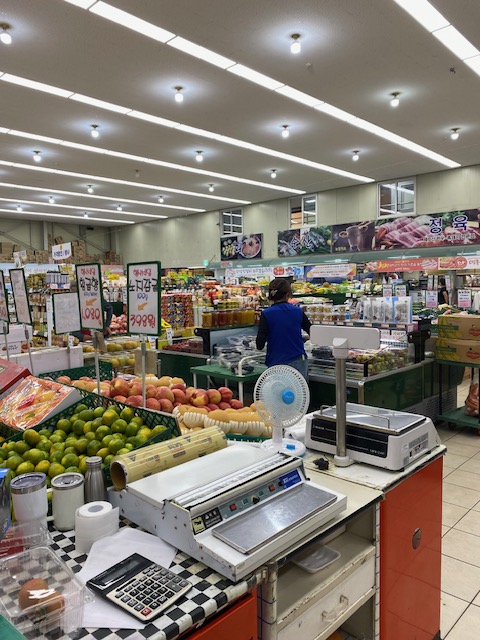
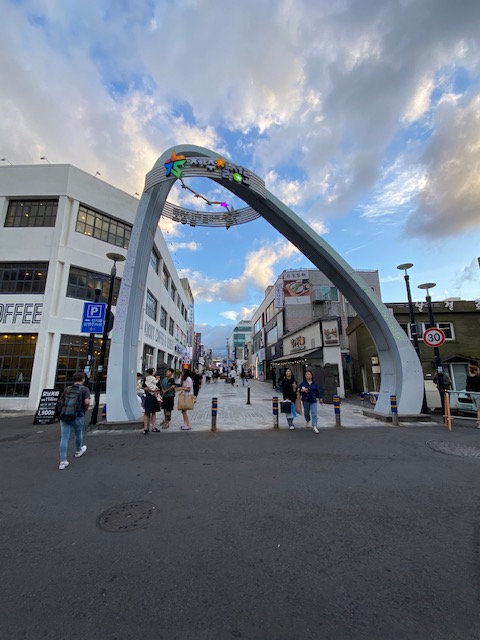
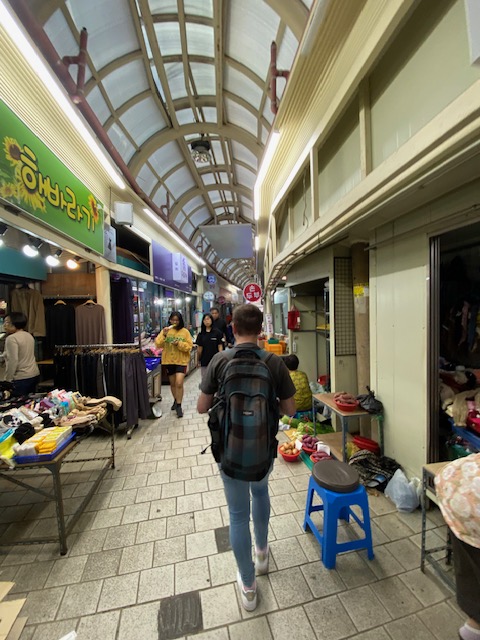
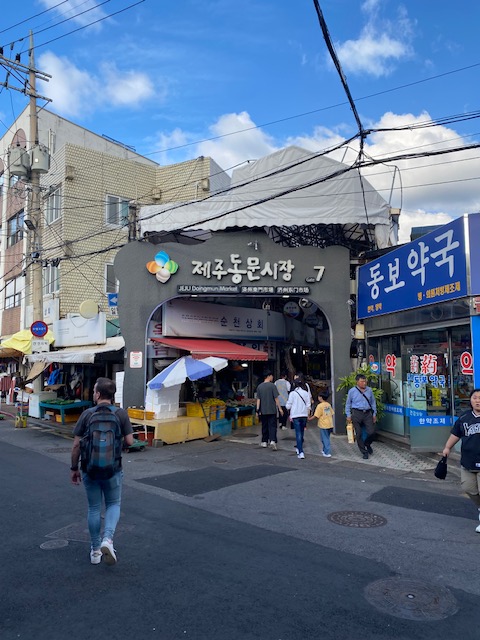
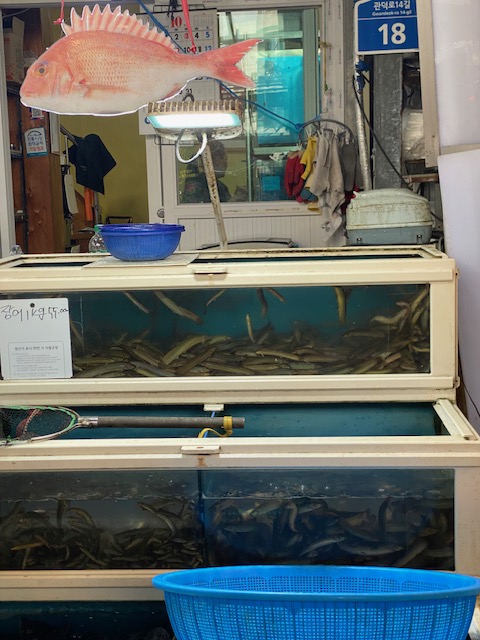
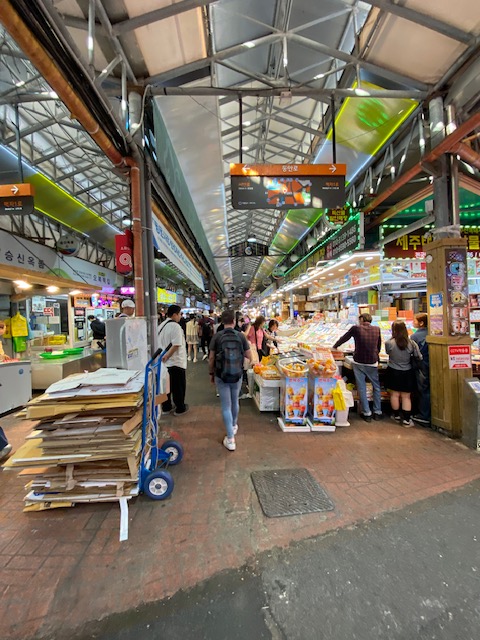
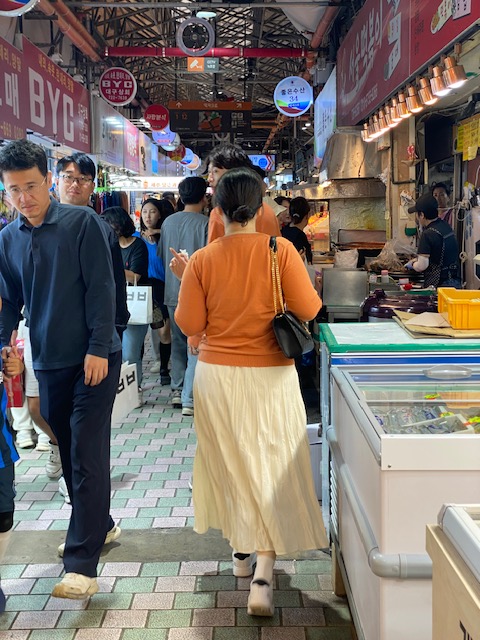
We started our exploration of Jeju City by walking to and inside Jeju Dongmun Market, clearly a thing to do in town.
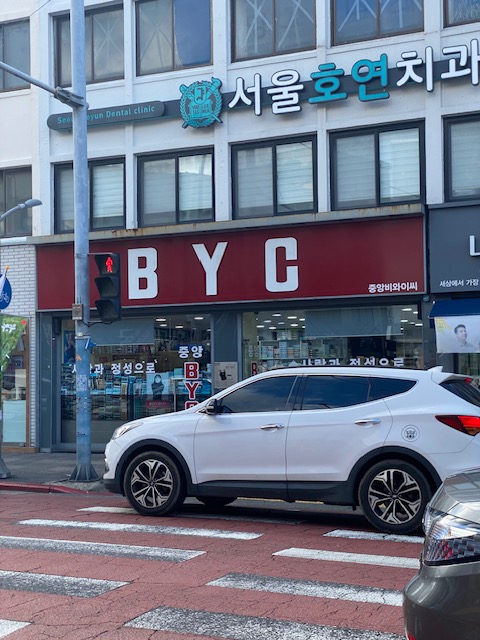
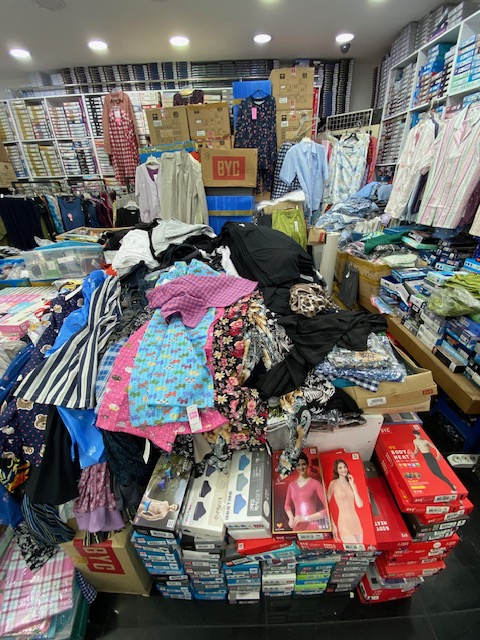
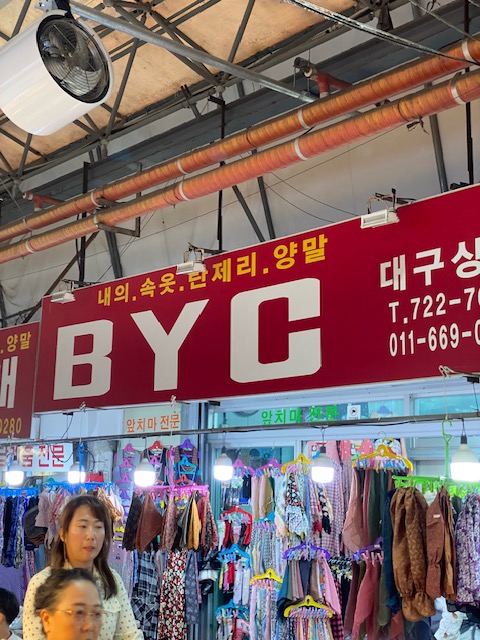
Just outside the market we found a BYC store. Finally, I found some Korean underwear. If you read the previous posts on this Korea trip, you’ll know it was a quest of mine. But there it was: a BYC store. The shop was chaotic and the vendor had to show everything.
As I’m more used to a ‘self service’, ‘self explore’ way of shopping, I found this quite invasive. Certainly when the item you want to buy is underwear. But by now I was not surprised anymore how directive, borderline invasive Koreans can be. I just wanted to look and then maybe buy something. I didn’t want to be pressured. Spoiler alert: I did buy underwear.
Jeju Dongmun Traditional Market
Jeju Dongmun Traditional Market (제주동문재래시장) was established in 1945. The market has a long history of serving locals and visitors, providing a wide range of fresh produce, seafood, local delicacies, and handmade goods.
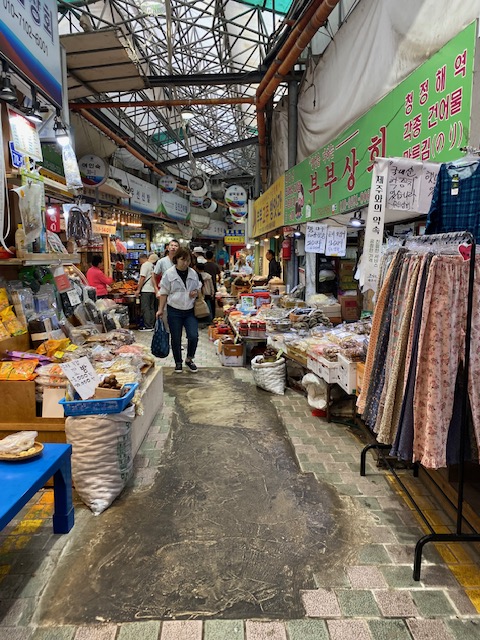
It operates as a vibrant marketplace where farmers, fishermen, and artisans from across the island come to sell their products. Over the years, Dongmun Market has grown from a small local marketplace to a bustling destination that attracts both residents and tourists, eager to explore Jeju’s unique culinary and cultural offerings.
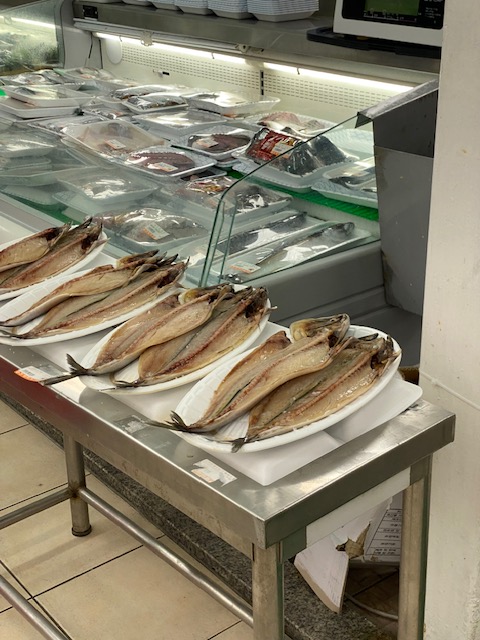
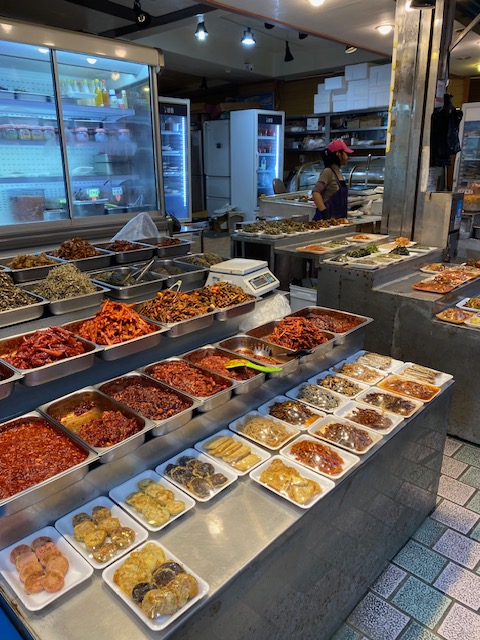
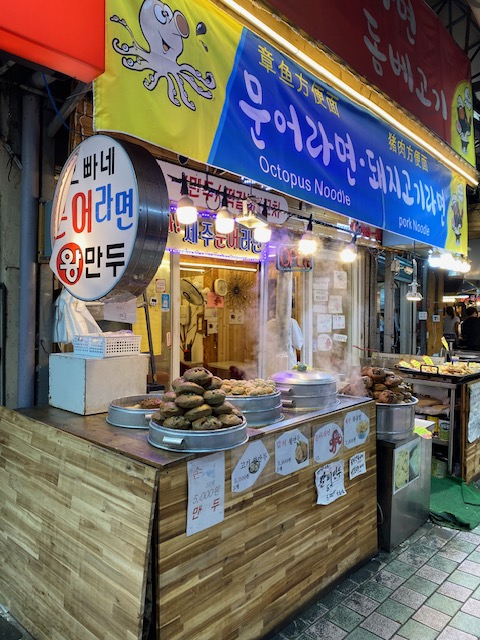
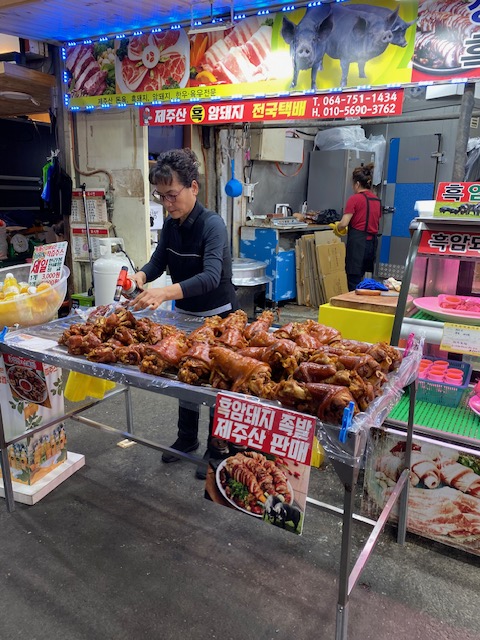
The market is particularly famous for its fresh seafood, including Jeju specialties like abalone, octopus, and cuttlefish, as well as dried fish and seaweed. Visitors can also find Jeju’s renowned black pork, a local breed with a distinctive flavor, often served grilled at nearby eateries.
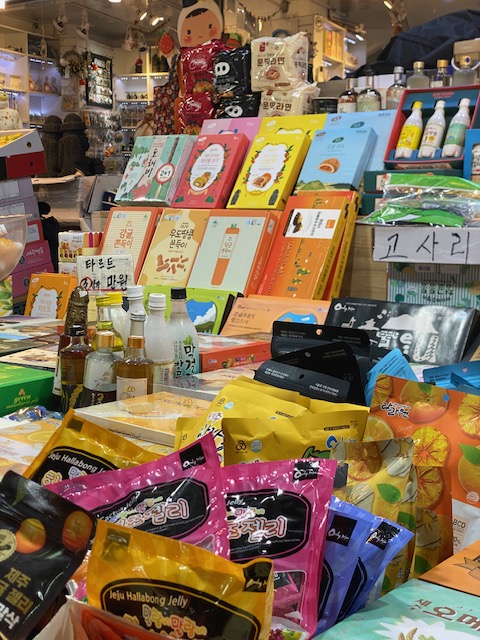
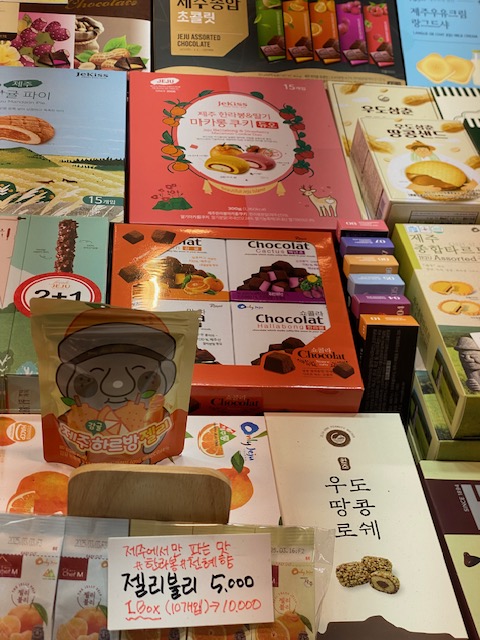
Another highlight is the array of seasonal fruits available at Dongmun Market, especially Jeju’s signature citrus fruits like Hallabong oranges and tangerines, which are widely popular as gifts and souvenirs. Street food stalls at the market offer an array of traditional Korean snacks and Jeju-specific items, such as seafood pancakes, gimbap (rice rolls), and the island’s beloved peanut ice cream.
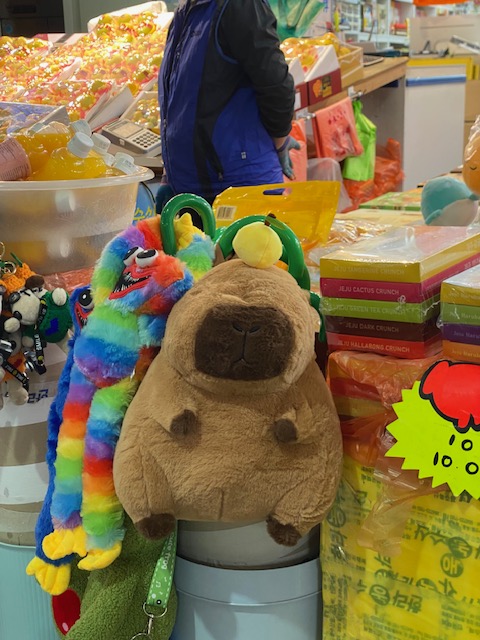
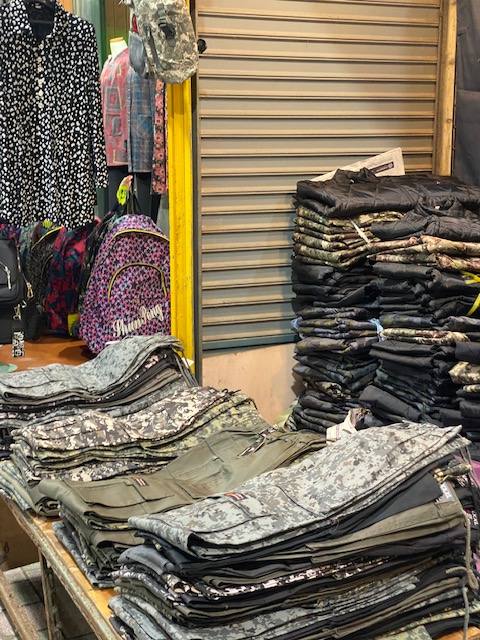
Dongmun Market is divided into sections, with areas dedicated to fresh produce, seafood, meats, dried goods, and general merchandise. In addition to food, visitors can find handmade crafts, clothing, and souvenirs unique to Jeju, such as Dol Hareubang figurines (traditional stone statues) and items made from volcanic basalt, a material commonly found on the island. The market operates day and night, with a lively night market that features local musicians and performers, enhancing the vibrant atmosphere.
As one of Jeju’s cultural landmarks, Dongmun Market offers a taste of local life, where the island’s culinary heritage and agricultural traditions are on full display. It has become a must-visit spot for tourists looking to experience authentic Jeju flavors and immerse themselves in the island’s bustling market culture.










Jeju black pig and pork
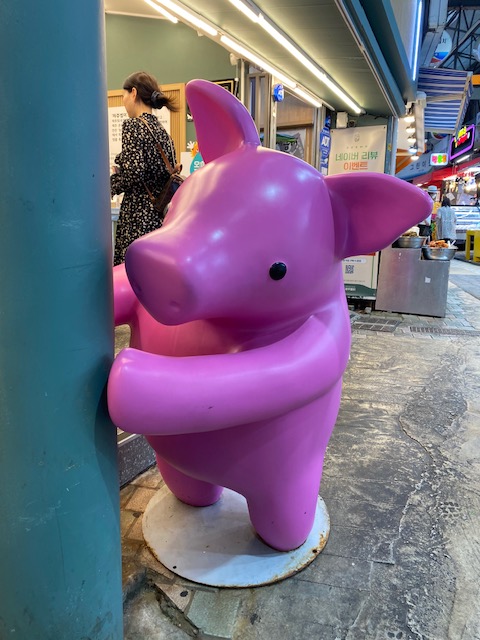
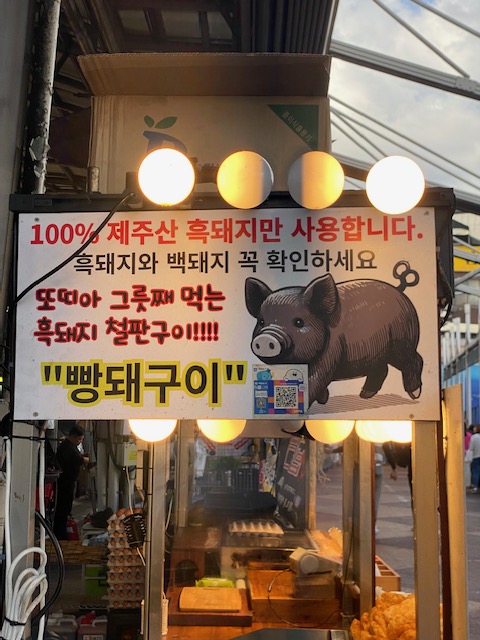
One of the specialities of Jeju Island is its Jeju black pig and thus Jeju black pork.
This breed of pig, distinct to Jeju, is characterized by its black skin and smaller, stockier build compared to mainland pig breeds. Jeju black pigs have traditionally been raised in free-range conditions, often eating a natural diet of vegetables, grains, and sometimes food waste, which many locals believe contributes to their unique taste.
The meat of Jeju black pig is celebrated for its slightly gamier flavor, firm texture, and high fat content, which helps keep it tender when cooked. It has a distinctive flavor profile that sets it apart from regular pork, often described as both nutty and savory, with a denser mouthfeel that enhances its appeal.
Unlike conventional pork, the skin of Jeju black pig is often kept on while cooking to provide additional texture and flavor, with a slight crispiness after grilling.
As a culinary staple on Jeju Island, Jeju black pig is most commonly served as samgyeopsal (grilled pork belly) in barbecue restaurants, where diners grill the meat tableside over charcoal. The high fat content of the meat renders well on the grill, producing a rich, smoky flavor.
Grilled black pork is typically eaten wrapped in lettuce or perilla leaves, accompanied by garlic, chili paste, and other condiments, allowing for a mix of textures and flavors. Black pig can also be prepared as bossam (steamed pork) or in local soups and stews.
Jeju black pig has become one of Jeju Island’s iconic foods, drawing food enthusiasts from around the world who seek out authentic local flavors. The high demand has led to the careful management and protection of the breed to preserve its unique qualities and ensure sustainable production, cementing its place as a key part of Jeju’s culinary heritage.


Tamna Culture Festival
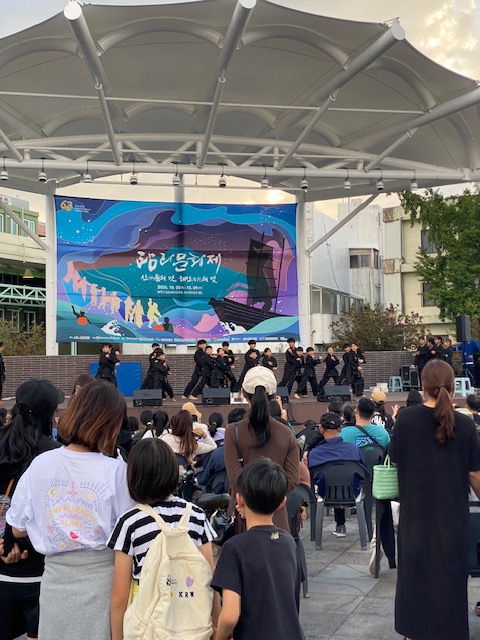
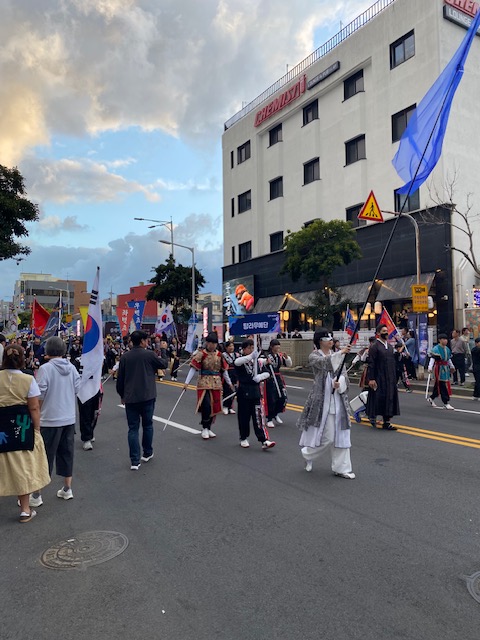
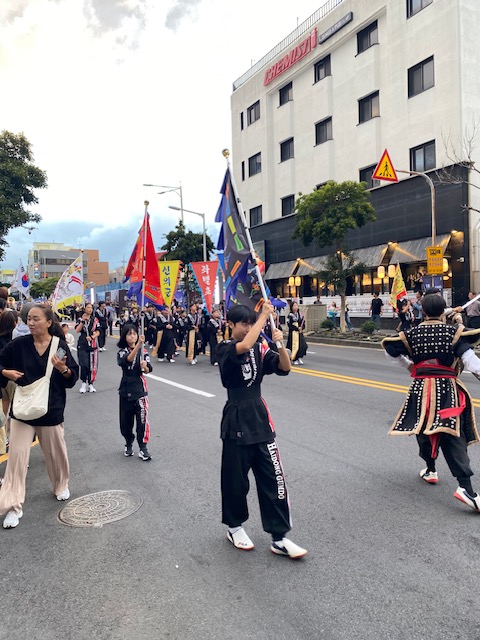
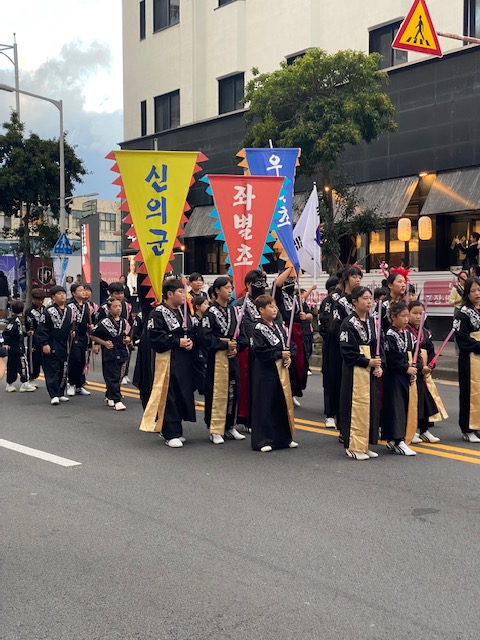
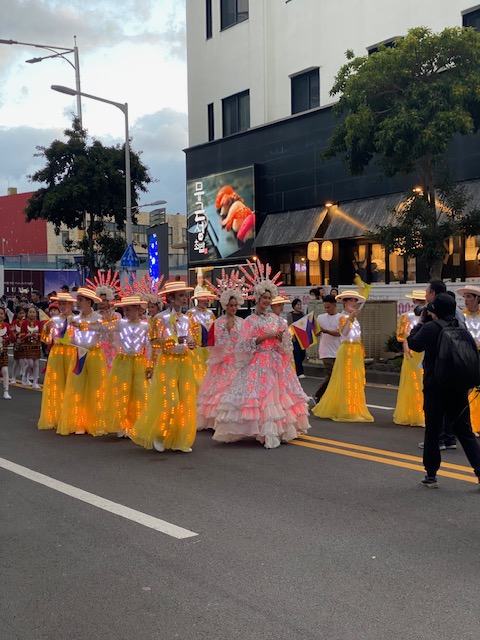
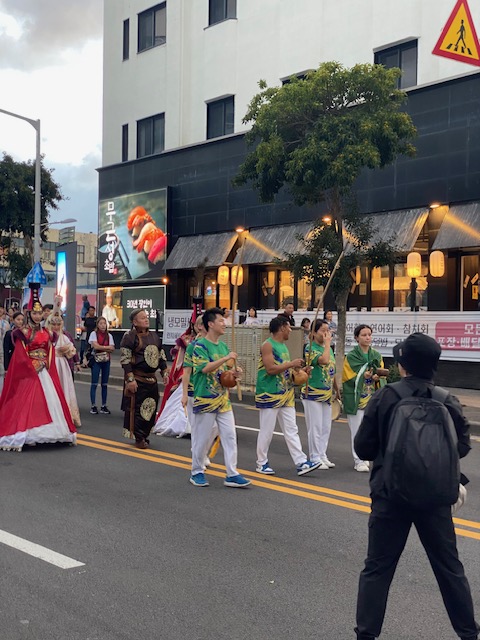
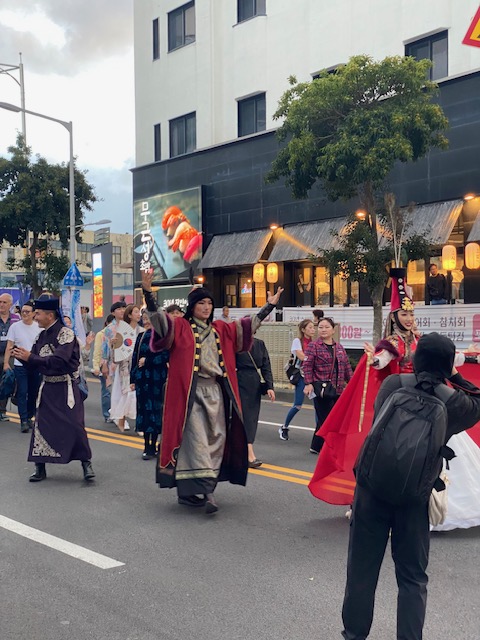
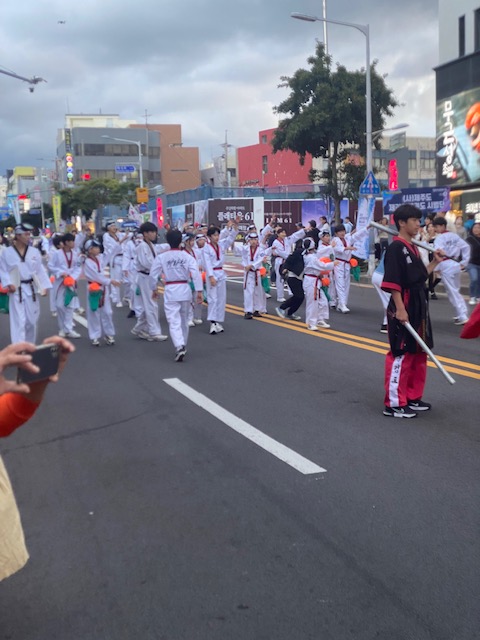
After exiting the market, we stumbled upon a some culture market and taekwondo performances. A bit further, we heard a lot of noise. It was the Tamna Parade. Without knowing in advance, we were in Jeju during the Tamna Culture Festival (탐라문화제).
The lonf, very long Tamna parade featured delegations from Jeju Island, but also from the military, from the Philippines, from Mongolia, from Brazil, from Thailand and probably from other places as well.


What is Tamna?
Tamna (탐라) was the ancient name of the independent kingdom that once existed on Jeju Island, with origins dating back over two thousand years. This early polity developed independently from mainland Korea and had its own unique cultural and political identity.
The people of Tamna are believed to have established themselves on Jeju Island due to its rich natural resources, fertile land, and access to the sea, which facilitated a seafaring economy. The island’s isolation from the Korean Peninsula contributed to Tamna’s distinct cultural practices, language, and traditions.
According to legend, Tamna was founded by three demigods or founding figures – Yang Eul-na (양을나; 良乙那), Go Eul-na (고을나;高乙那) and Bu Eul-na (부을나; 夫乙那) – who are said to have emerged from the ground on Mount Halla, Jeju’s central volcanic mountain, to establish the island’s society.
Tamna’s rulers later established a hierarchical structure and engaged in trade with neighboring states, including the early Korean kingdoms of Baekje, Silla, and Gaya, as well as with China and Japan. These interactions brought prosperity to Tamna and introduced foreign influences to the island, although Tamna maintained its autonomy for much of its early history.
In terms of governance, Tamna had a semi-autonomous political structure and was ruled by its own monarch. The kingdom was recognized by neighboring Korean kingdoms and paid tribute in exchange for protection and trade rights. However, by the 12th century, Tamna’s autonomy started to wane.
The Goryeo Dynasty (918–1392) in mainland Korea gradually incorporated Tamna into its territory, marking the beginning of Jeju’s integration into the Korean state. By the time of the Joseon Dynasty (1392–1910), Tamna had fully become part of Korea, although Jeju continued to retain a distinctive local culture shaped by its unique history and geography.
Today, remnants of Tamna’s legacy can still be seen in Jeju’s cultural artifacts, folklore, and heritage sites. Several historical locations, such as the Samseonghyeol Shrine in Jeju City, are dedicated to the legendary founders of Tamna and serve as cultural landmarks.
Tamna’s legacy also lives on in the island’s unique dialect, customs, and crafts, which continue to differentiate Jeju from the rest of South Korea, honoring the memory of a once-independent kingdom with a rich cultural history.
So?
We had festive and successful first encounter with Jeju.
South Korea 2024
- QUESTION | Should you be scared of travelling to South Korea?.
- REVIEW | Qatar Airways – economy – Boeing 787-8 Dreamliner – Brussels to Doha.
- QATAR | Hamad International Airport (DOH) in Doha.
- REVIEW | Qatar Airways – economy – Airbus A350 – Doha to Seoul / Incheon.
- SOUTH KOREA | Landing at Incheon, retrieving the Wowpass and taking the AREX to Seoul Station.
- REVIEW | Fraser Place Namdaemun Seoul near City Hall.
- SEOUL | Deoksugung Palace by day.
- SEOUL | Admiral Yi Sun-sin – King Sejong the Great – Gyeongbokgung Palace – National Folk Museum SEOUL | Admiral Yi Sun-sin – King Sejong the Great – Gyeongbokgung Palace – National Folk Museum.
- SEOUL | Bukchon Hanok Village – Insadong Culture Street – Jogyesa Temple – Gwangjang Market – Cheonggyecheon Stream.
- SEOUL 2024 | Dongdaemun Design Plaza.
- SHOPPING IN SEOUL | Myeongdong – Lotte Young Plaza – Avenuel – Lotte Department Store.
- SEOUL | Namsan Mountain Park and N Seoul Tower.
- SOUTH KOREA | Seoul Station.
- REVIEW | Korail KTX Seoul – Gyeongju – Busan.
- GYEONGJU | Daereungwong – Cheonmachong – Cheomseongdae Observatory – Banwolseong Fortress – Anapji Pond – Woljeonggyo Bridge – Gyo-dong.
- REVIEW | Hotel Palace in Gyeongju.
- GYEONGJU | Bulguksa Temple and Seokguram Grotto.
- GYEONGJU | Woljeonggyo Bridge – Gyeongju National Museum – Eupseong Fortress – Shopping.
- REVIEW | Korail KTX Gyeongju to Busan 1st class.
- BUSAN | Gamcheon Culture Village.
- BUSAN | Jagalchi Fish Market.
- REVIEW | Commodore Hotel Busan.
- KOREA | Haedong Yonggung Temple in Busan.
- BUSAN | Haedong Blue Line Park, Sky Capsules, Beach Train and Haeundae Green Railway.
- BUSAN | Shinsegae Centum City Department Store, Gwangalli Beach, Busan Tower.
- QUEER KOREA | Beomil-ro, Busan’s gay street.
- SOUTH KOREA | Jin Air from Busan to Jeju.
 Trip By Trip
Good post
LikeLiked by 2 people
Thank you ☺️
LikeLike