
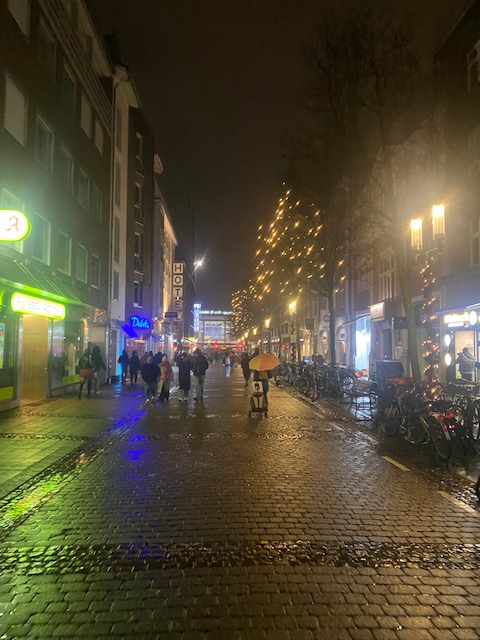
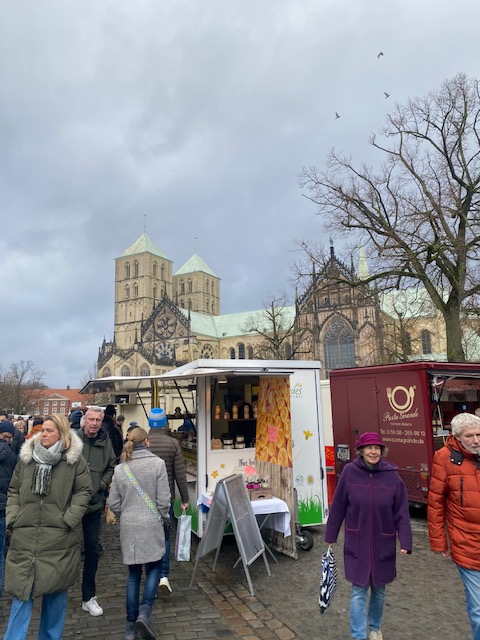
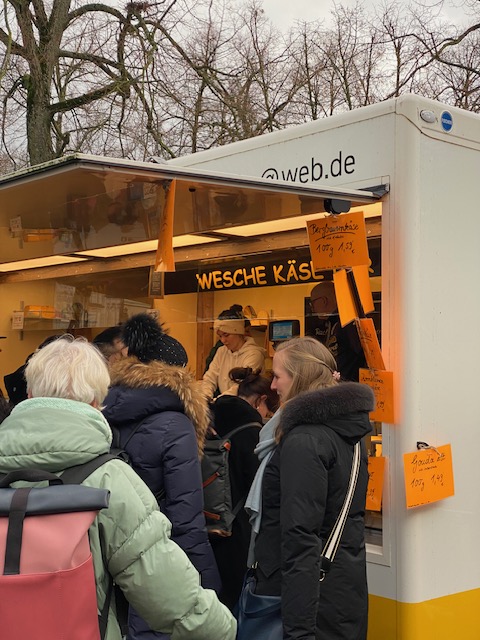
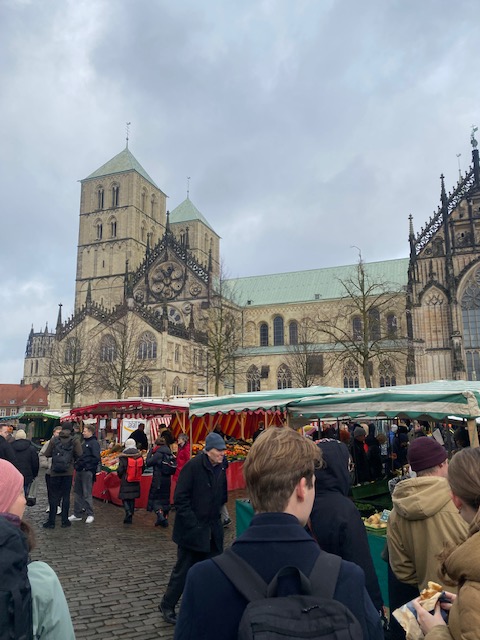
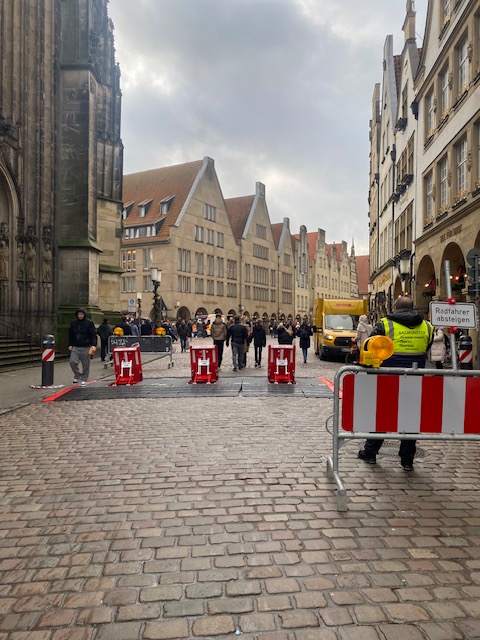
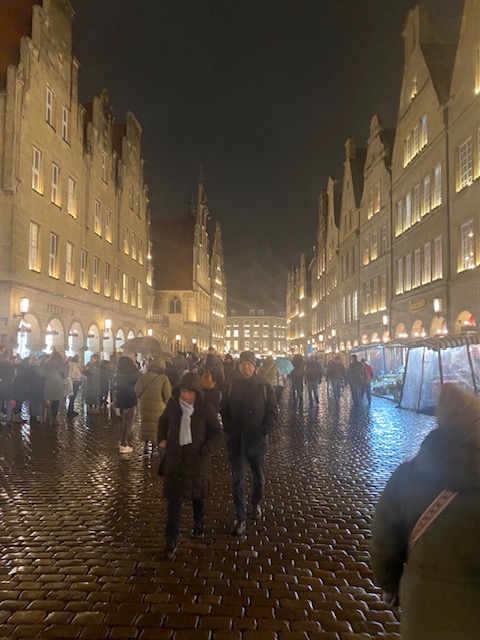
The weekend before Christmas 2024, Dennis and I went to Münster in North Rhine-Westphalia for the Weihnachtsmarkt, the Christmas market. Germany is a master in Christmas markets. And a successful excursion to Bonn in 2023 left us wanting a sequel. On our way to Germany on Friday night, we learned about the 2024 Magdeburg Christmas Market car attack. That was all over the news. Would we notice anything different in Münster?
Münster is an independent city or Kreisfreie Stadt in. Located in the northern part of the state of North Rhine-Westphalia, it is recognised as the cultural centre of the Westphalia region and serves as a state district capital. Historically significant, Münster was the site of the Anabaptist rebellion during the Protestant Reformation and played a key role in the signing of the Treaty of Westphalia in 1648, which ended the Thirty Years’ War. Today, it is often referred to as Germany’s bicycle capital.
Münster achieved the status of a Großstadt (major city) in 1915 when its population exceeded 100,000. By 2014, its population had grown to approximately 300,000, including about 61,500 students. However, not all students are counted in the official statistics, as many are registered elsewhere. The city is part of the international Euregio region, which encompasses over a million people across cities such as Enschede and Hengelo in the Netherlands and Gronau and Osnabrück in Germany.
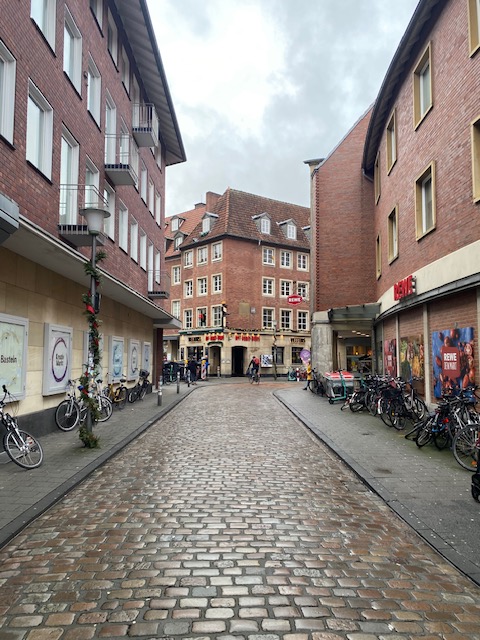

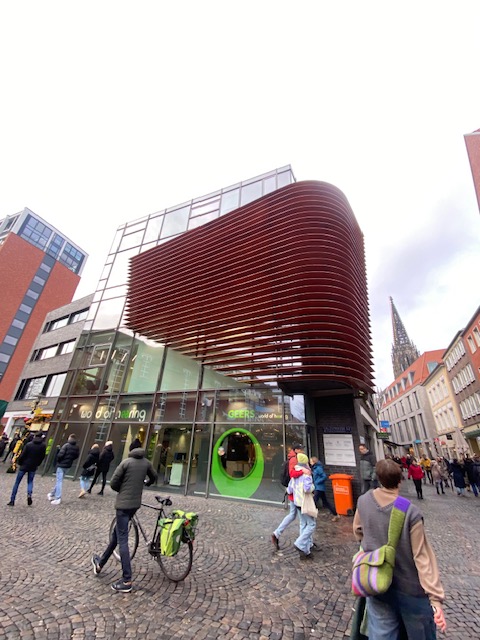
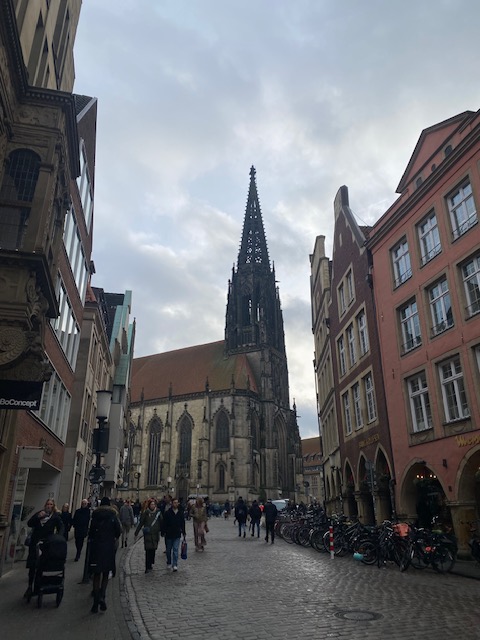
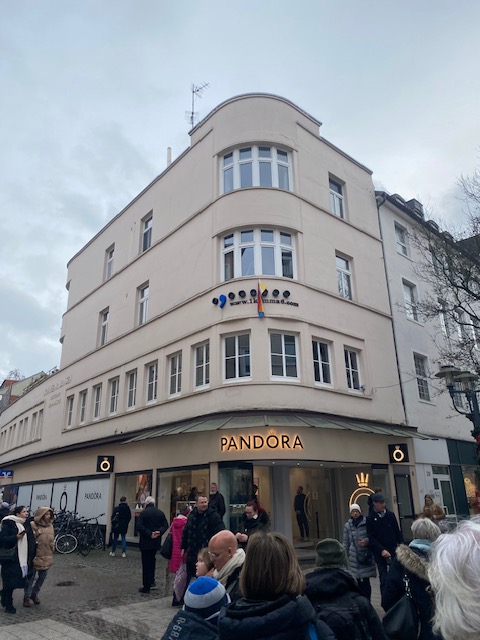


Early history
Münster’s origins date back to 793 when Charlemagne sent Ludger to evangelise the Münsterland. Ludger established a school in 797, which evolved into the Cathedral School, from which Gymnasium Paulinum traces its roots.
As Münster’s first bishop, Ludger oversaw the construction of its initial cathedral, completed around 850. The city’s development was marked by its strategic location at a ford and crossroads, making it an important centre of trade, governance, and education. In 1040, King Henry II or Heinrich II became the first German monarch to visit Münster.





Middle Ages and Early Modern Period
During the Middle Ages, Münster was a prominent member of the Hanseatic League. In 1534, it became the site of the Anabaptist rebellion, led by John of Leiden.
The sect declared Münster the ‘New Jerusalem‘, confiscated property, and destroyed all books except the Bible. The rebellion was ultimately quashed in 1535, with the Anabaptist leaders tortured and their remains displayed in iron cages on St Lambert’s Church, where they remain to this day.
Münster also played a role in the 1648 Treaty of Westphalia, which brought peace to Europe and cemented the city’s Roman Catholic identity.






18th, 19th, and Early 20th Centuries
Münster’s baroque palace, the Schloss Münster, designed by Johann Conrad Schlaun, highlights the city’s architectural heritage. The University of Münster was established in 1780 and has since become a leading European institution with diverse faculties and a large student population.
During the Napoleonic Wars, Münster experienced shifting control, falling under French rule before being restored to Prussia, where it became the capital of the Province of Westphalia. The city’s harbour began operations in 1899 following its connection to the Dortmund-Ems Canal.

World War II
Münster played a significant role during World War II, serving as the headquarters for the Wehrmacht’s 6th Military District and hosting numerous military divisions. Cardinal Clemens August Graf von Galen, the Bishop of Münster, became a prominent critic of the Nazi regime, drawing international attention.
The city was heavily bombed during the war, with over 60 per cent of its buildings, including 91 per cent of the Old City, destroyed. Münster was liberated in April 1945 following intense fighting by Allied forces.
Postwar and Modern Period
After the war, Münster underwent significant reconstruction, with efforts to restore the Old City to its historical appearance. From 1946 to 1998, it was home to a Latvian secondary school and one of the largest Latvian libraries in the West. The city later became a garrison for British forces in Germany.
In 2004, Münster was recognised as the world’s most liveable city in its population category, earning the LivCom Award. Known for its student life and exceptional bicycle infrastructure, Münster continues to be a dynamic city that blends historical significance with modern vibrancy.
Geography
Münster is located on the River Aa, approximately 15 kilometres (9 miles) south of where it joins the Ems, in the region known as the Westphalian Bight.

This landscape is characterised by scattered settlements and farms, collectively referred to as the Münsterland. The city lies atop Wolstonian sediments forming the Münsterländer Kiessandzug, a mountain ridge running from north to south.
Its highest point, the Mühlenberg, reaches 97 metres above sea level in the city’s northwest, while the lowest elevation, at 44 metres, is along the Ems. The city centre, measured at the Prinzipalmarkt in front of the historic city hall, stands at 60 metres above sea level.
Nearby cities include Enschede in the Netherlands, approximately 65 kilometres (40 miles) to the northwest, Osnabrück, 44 kilometres (27 miles) to the north, Dortmund, 61 kilometres (38 miles) to the south, and Bielefeld, 62 kilometres (39 miles) to the east.
More stats
Münster is one of Germany’s largest cities in terms of land area and is classified as one of the country’s 42 agglomeration areas. The city encompasses extensive rural districts, which were formerly separate local authorities until their amalgamation in 1975. Almost half of Münster’s area is agricultural, resulting in a low overall population density of about 900 inhabitants per square kilometre.
The city’s urban area spans 302.91 square kilometres (116.95 square miles), of which 57.54 square kilometres (22.22 square miles) are covered with buildings.
Approximately 25.73 square kilometres (9.93 square miles) are dedicated to traffic infrastructure, while 156.61 square kilometres (60.47 square miles) are used for agriculture and recreation. Water bodies cover 8.91 square kilometres (3.44 square miles), and 56.69 square kilometres (21.89 square miles) are forested.
The city’s perimeter stretches 107 kilometres (66 miles), with the urban area extending 24.4 kilometres (15.2 miles) from north to south and 20.6 kilometres (12.8 miles) from east to west.
The built-up areas of Münster include no skyscrapers and few high-rise buildings, with many detached houses and mansions instead. Population density peaks in the city centre at around 15,000 inhabitants per square kilometre, though the density across the inhabited urban area averages roughly 2,890 inhabitants per square kilometre.
Climate
Münster’s climate is often summarised by the local saying, “Entweder es regnet oder es läuten die Glocken. Und wenn beides zusammen fällt, dann ist Sonntag“. Either it rains, or the church bells ring. And if both occur, it must be Sunday”.
However, the city’s annual rainfall of approximately 758 millimetres (29.8 inches) is close to the national average. Münster’s reputation for frequent rain stems not from the total amount but from the high number of rainy days with light precipitation. The city experiences an average temperature of 9.4°C (48.9°F) and approximately 1,500 hours of sunshine annually, placing it in the bottom fifth of German cities for sunshine.
Winters in Münster are relatively mild, with snowfall being rare.
Summer temperatures align with the German average. On 28 July 2014, Münster recorded its highest daily rainfall, with one weather station reporting 122.2 litres per square metre (2.50 imperial gallons per square foot) and another registering 292 litres per square metre (6.0 imperial gallons per square foot) over seven hours. This unprecedented rainfall caused severe flooding in Münster and the nearby town of Greven.




Districts
Münster shares borders with several neighbouring cities and municipalities. Clockwise from the northwest, these include Altenberge and Greven in the District of Steinfurt; Telgte, Everswinkel, Sendenhorst, and Drensteinfurt in the District of Warendorf; and Ascheberg, Senden, and Havixbeck in the District of Coesfeld.
The city is organised into six administrative districts, known as Stadtbezirke: Mitte (Middle), Nord (North), Ost (East), West, Süd-Ost (South-East), and Hiltrup.
Each district is governed by a council consisting of 19 representatives elected in local elections. The council is led by a district mayor, or Bezirksvorsteher. These districts are further divided into residential quarters, officially termed Wohnbereiche.
However, this designation is rarely used in everyday language, where the term Stadtteil is more common, particularly when referring to formerly independent communities that have been incorporated into the city. Additionally, the city is divided into 45 statistical districts for administrative purposes.

Population
Münster has a population of approximately 320,000, making it the tenth largest city in North Rhine-Westphalia and the twentieth largest in Germany. With an area of 303.28 square kilometres (117.10 square miles), it is the seventh largest German city by land area and serves as the central hub of the Münster region, or Münsterland.
As one of Germany’s oldest cities, Münster has been considered a major urban centre since around 1000 AD. The population first surpassed 100,000 in 1948 and has grown steadily since the 1980s, largely driven by the increasing appeal of the local university. Renowned for its bicycle culture, the city is said to have more bicycles than residents. Münster’s population officially reached 300,000 in 2014.
Economy
The economy of Greater Münster is diverse, encompassing industries such as public administration, consulting, insurance, banking, computer centres, publishing, advertising, and design. The service sector has contributed significantly to job creation, while retail activity generates an annual turnover of approximately 1.9 billion euros. The city features a blend of traditional merchants’ townhouses and contemporary retail outlets, reflecting its commercial heritage and modern development.
Merchants
Münster’s prosperity has historically been linked to its affluent merchant families, including the Merfelders, Rüschkamps, and Berens. Berens Bank, established in Münster in 1630 by Hermann Berens, was one of the city’s prominent financial institutions, providing banking services to businesses and individuals. The Berens family resided in a large estate on Roggenmarkt, known as the Berenshof, and their business interests extended to textiles and grain.
The job market in Münster is considered relatively strong. Of approximately 130,000 employees subject to social insurance contributions, over 80% work in the tertiary sector, about 17% in the secondary sector, and just 1% in the primary sector.
Landmarks
Münster is home to numerous notable landmarks and cultural institutions that reflect its rich history and architectural diversity.
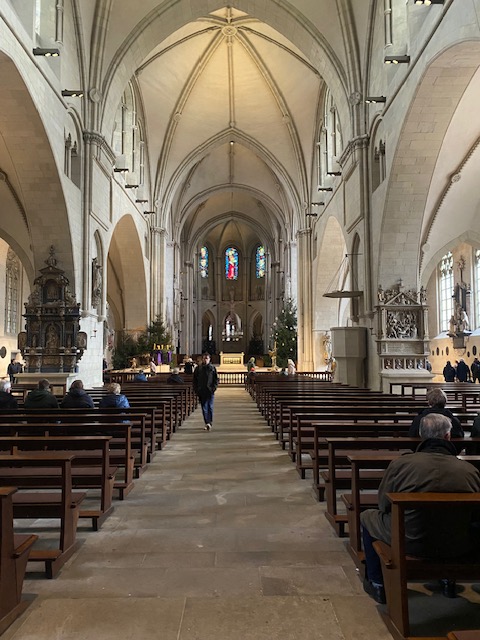
St. Paul’s Cathedral, constructed in the 13th century, combines late Romanesque and early Gothic styles. Fully restored after World War II, it features an astronomical clock from 1540, adorned with hand-painted zodiac symbols and tracking planetary movements, which plays a Glockenspiel melody every noon.
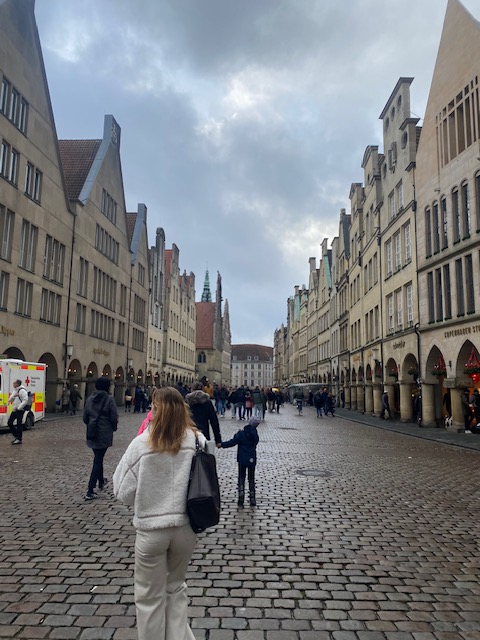
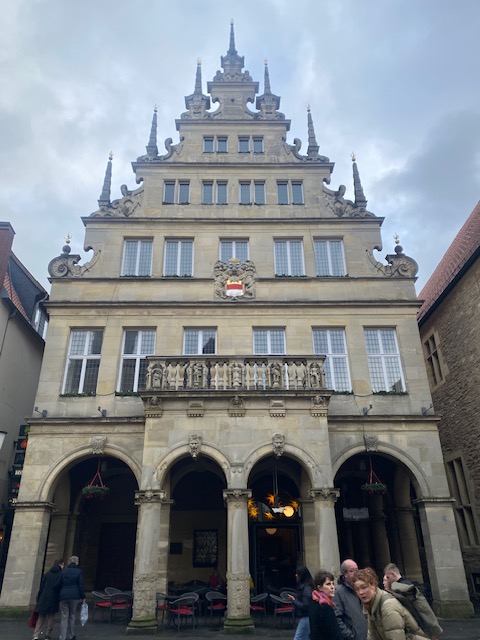
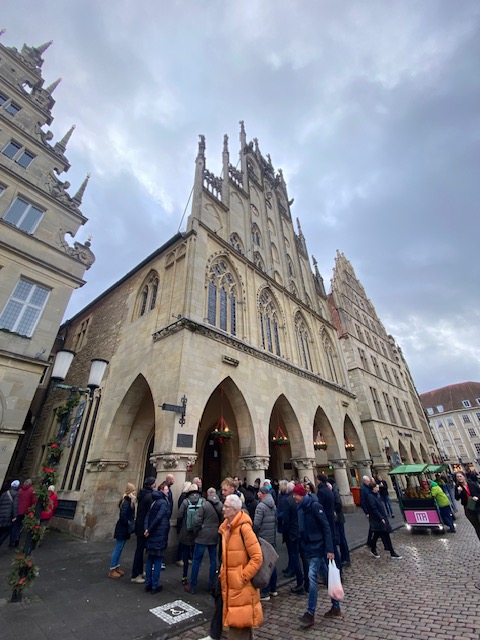
The Prinzipalmarkt, Münster’s main shopping street, is the site of the Gothic city hall, built in the 14th century, where the Peace of Westphalia treaty was signed in 1648. Nearby is St. Lambert’s Church, dating to 1375, whose tower famously holds three cages that displayed the bodies of Münster Rebellion leaders.
Other historic churches include Überwasserkirche, consecrated in 1340, and Clemenskirche, a Baroque masterpiece by Johann Conrad Schlaun built in the mid-18th century.
The Schloss, constructed between 1767 and 1787, served as the residence of Münster’s prince-bishops and now houses the University of Münster’s administrative offices.
The Botanischer Garten Münster, founded in 1803, complements the palace grounds. Other Baroque works by Johann Conrad Schlaun include the Erbdrostenhof, a noble family’s residence, and Haus Rüschhaus, his personal estate built between 1743 and 1749.
Several sites reveal Münster’s darker history. The Zwinger fortress, originally constructed in 1528, was later used as a prison and a site for Gestapo executions during World War II. The Krameramtshaus, a 1589 guild house, hosted the Dutch delegation during the Peace of Westphalia negotiations.
Modern landmarks
Modern landmarks include the Signal-Iduna Building, Münster’s first high-rise completed in 1961, and the LVM Building near the Aasee.
The city also boasts shopping venues like Münster Arkaden, which integrates contemporary retail with the historic Prinzipalmarkt.
Cultural attractions include the Pablo Picasso Museum of Graphic Art, the Westphalian State Museum of Art and Cultural History, the Museum of Lacquer Art, the Westphalian Museum for Natural History with its planetarium, and the Westphalian Horse Museum.
The Mühlenhof open-air museum depicts a traditional Westphalian village, while Pinkus Müller brewery preserves Münster’s brewing heritage.
Curiosities
Münster is also home to historical curiosities like the Buddenturm, a former city water tower dating back to around 1150, and the Tuckesburg, an unusual residence of the city’s former zoo founder.
The city museum offers an extensive exhibition on Münster’s political and cultural history. The Kiepenkerl Statue, located in Kiepenkerl Square, commemorates the traditional Westphalian travelling merchants, while ‘Cavete‘ Münster’s oldest academic pub, continues to serve as a social hub.
Schools and universities
Münster is a centre for education, hosting numerous institutions of higher learning, including the University of Münster and the University of Applied Sciences. In addition to higher education, the city has a robust primary and secondary education system, with 92 schools serving students at various levels.
During the 2015/16 academic year, Münster had a total of 61,441 students. The city also features both public and private vocational colleges offering specialised education and training.
Public vocational colleges in Münster include Adolph-Kolping-Berufskolleg, Anne Frank Vocational College, Hans-Böckler-Berufskolleg, Hansa-Berufskolleg, Ludwig-Erhard-Berufskolleg and Wilhelm-Emmanuel-von-Ketteler-Berufskolleg.
Private vocational colleges in the city include the Technical School for Agricultural Economics, the Cooperative Vocational College (GenoKolleg), the Hildegardisschule affiliated with the Diocese of Münster, and the Timmermeister-Berufskolleg. These institutions provide diverse educational opportunities to meet the needs of students pursuing academic, technical, or vocational pathways.
Transport
Transport in Münster is well-developed and supports various modes of travel.
Münster Osnabrück Airport serves the city, offering flights primarily to European destinations.


Cycling capital
Münster is often referred to as the bicycle capital of Germany. In 2007, the city reported that bicycle traffic (37.6%) surpassed vehicle traffic (36.4%). The city features an extensive cycling network, including the Promenade, a path encircling the city centre where motorised vehicles are prohibited, but pedestrians and cyclists are welcome.
Dedicated bicycle paths connect all districts to the city centre, and traffic lights are specifically designed for cyclists. Bicycle stations across Münster also provide rental services.
Train and public transport
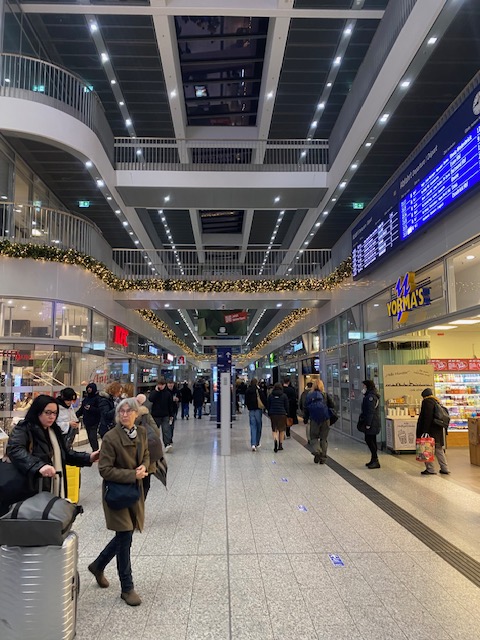
Train: Münster Main Station is located on the Wanne-Eickel–Hamburg railway, with Intercity train connections to major cities across Germany.
While Münster once had a tramway system, it was closed in 1954. The city’s public transport now includes express buses, sightseeing buses, waterbuses, Lime scooters, and bicycle rental services. Notably, Münster is the largest German city without an U-Bahn or S-Bahn system.
Sports
The city is home to Preußen Münster, a football club founded on 30 April 1906, which plays at Preußenstadion. Other notable sports teams include the USC Münster volleyball club and Uni Baskets Münster, the city’s professional basketball team, which plays home games at Sporthalle Berg Fidel.
British armed forces
After the Second World War, Münster became a key station within Osnabrück Garrison as part of British Forces Germany. Although the military presence has significantly decreased over the years, Münster remained a base for British forces until their departure on 4 July 2013.
One day visit
Effectively, we were in Münster one full day. And we were there for the Christmas market. Münster is a ‘one day city’ as so many others. Certainly how we travel, one fay is enough. We experienced this in Dessau, Weimar and Coburg in the autumn of 2024. Even Kassel could be a one day city. Our hometown Antwerp in Belgium is or can be a one day city. There’s nothing wrong with that.
I’m glad I visited Münster.
 Trip By Trip
Have a great Sunday !💛
LikeLiked by 2 people
Thank you! You too!
LikeLike