
I turned 44 in June. I have this tradition – when possible – of not being in Belgium for my birthday. From Sweden in 2013 to the Châteaux of the Loire Valley in 2014, Lake Orta in 2015, Rome in 2016, London in 2018, North Carolina and Virginia in 2019, England in 2022, and Rotterdam in 2023. In June 2025, I headed to Copenhagen in Denmark with Steve.
We didn’t really plan our time in Copenhagen ahead, except for some basic research and booking restaurants. Derek and Mike from Robetrotting thought us to book restaurants ahead.
But one of the activities we knew we wanted to do for sure, is visiting the Glyptotek. What is a glyptotheque? A glyptotheque is a collection of sculptures.
The designation glyptotheque was coined by the librarian of King Ludwig I of Bavaria, derived from the Ancient Greek verb glyphein (γλύφειν), meaning “cut into stone”.
It was an allusion to the word pinacotheca, from πίναξ (pinax) , “panel” or “painting”). Glypton (γλυπτόν) is the Greek word for a sculpture.
Thèkè, θήκη, is “box” or “chest” or a place where things are kept. Discotheque, bibliothèque in French etcetera.
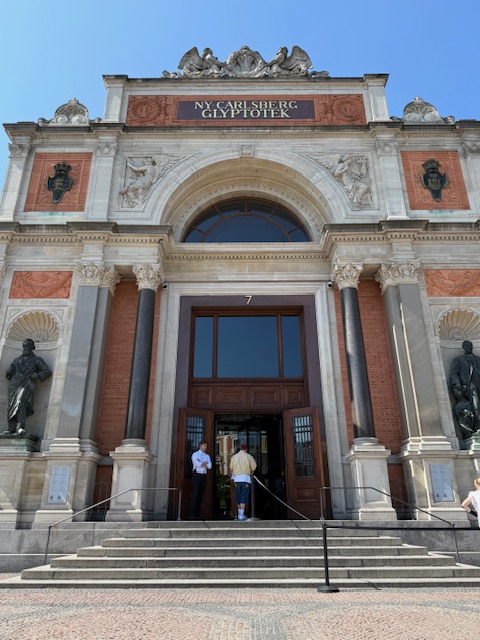


The New Carlsberg Glyptotheque
The Ny Carlsberg Glyptotek or New Carlsberg Glyptotheque, commonly referred to as Glyptoteket, i was founded in 1897 and is based on the private collection of Carl Jacobsen (1842–1914), son of the founder of Carlsberg Breweries.
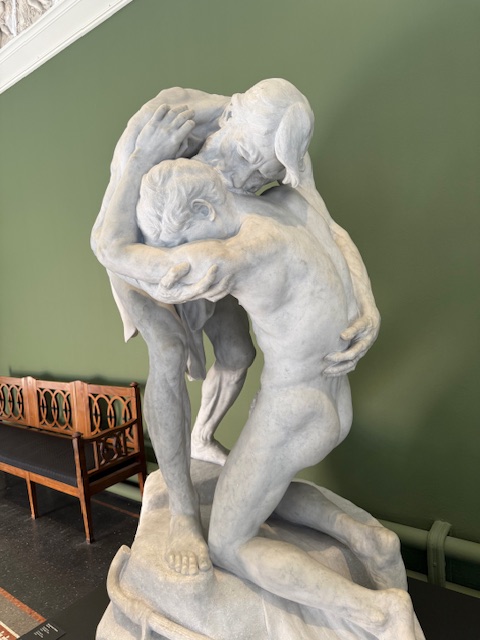
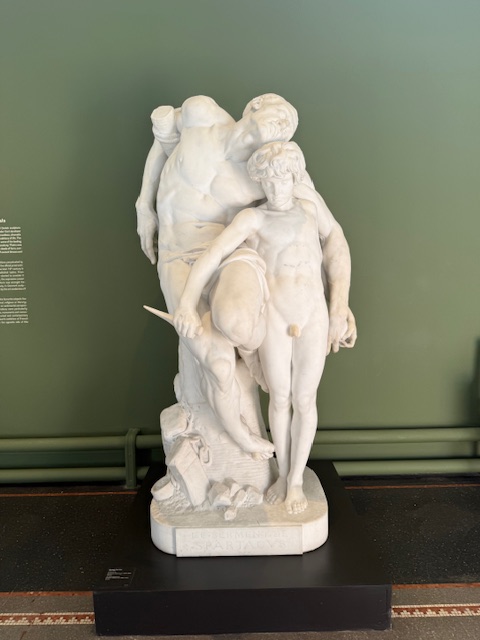
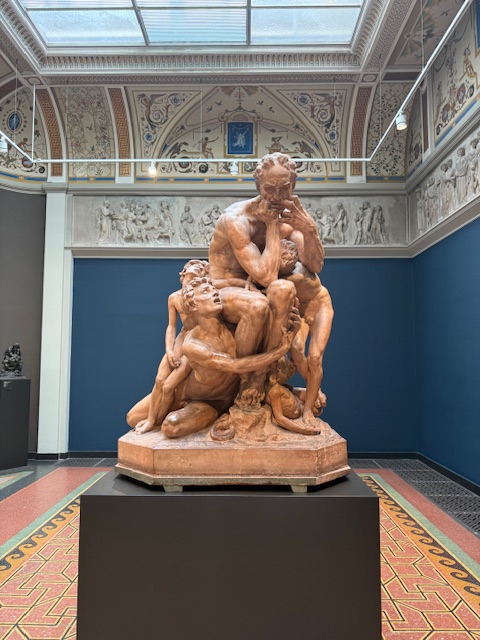
While best known as a sculpture museum, Glyptoteket also houses a significant collection of paintings. Its core holdings include antique sculptures from Egypt, Greece and Rome, alongside modern works such as a major collection of pieces by Auguste Rodin—considered one of the most important Rodin collections outside France.
Paintings by French Impressionists and Post-Impressionists, as well as works from the Danish Golden Age, complement the sculpture displays.
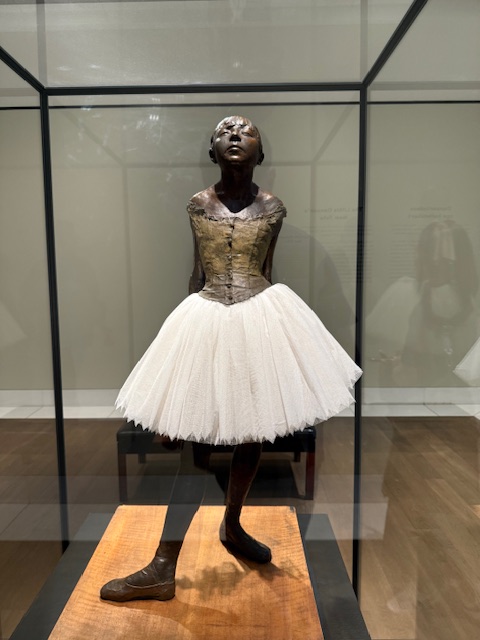
The French collection includes masterpieces by Jacques-Louis David, Monet, Pissarro, Renoir, Degas, and Cézanne, with additional works by Vincent van Gogh, Toulouse-Lautrec, and Bonnard. The museum also holds all of Degas’ bronze sculptures, including the famous ‘Little Dancer of Fourteen Years‘, and numerous works by Norwegian-Danish sculptor Stephan Sinding.
How it started
Carl Jacobsen began collecting antique art with a passion, and over time expanded his interests to include French and Danish sculpture.
By 1882, his private villa featured a winter garden so filled with sculpture that it soon eclipsed the plants. That same year, the collection was opened to the public.
As the collection grew, his ‘house museum’ eventually comprised 19 galleries, with the first 14 designed by Vilhelm Dahlerup and the remainder by Hack Kampmann.





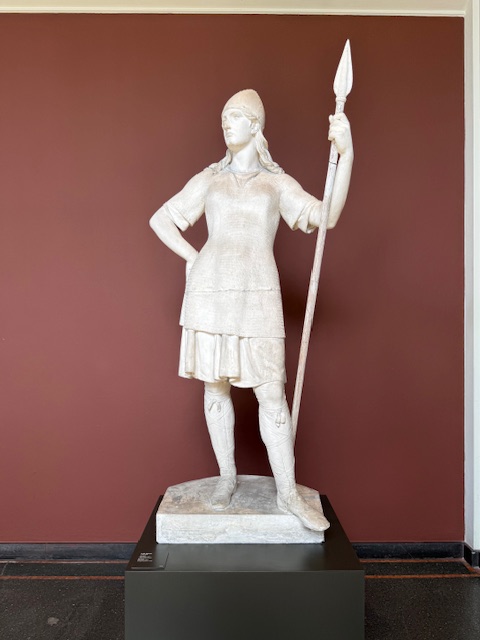
A proper museum
In 1888, Jacobsen donated his modern collection to the Danish State and the City of Copenhagen, on the condition that a proper museum building be constructed. A site just south of the Tivoli Gardens was chosen, despite Jacobsen’s preference for a more central location.
Inspired by Ludwig I’s Glyptothek in Munich, Jacobsen selected Dahlerup to design the new museum. It opened on 1 May 1897 and initially housed the modern French and Danish works.
In 1899, Jacobsen also donated his collection of antiquities, prompting the construction of a new wing by Hack Kampmann and a connecting winter garden by Dahlerup.
This expanded museum was inaugurated in 1906. A further extension, designed by Henning Larsen, was added in 1996 in the form of a minimalistic infill in one of the museum’s courtyards. An idea copied by the Royal Museum of Fine Arts of Antwerp (KMSKA)?
A major renovation followed in 2006, led by Danish architectural firms Dissing + Weitling and Bonde Ljungar Arkitekter MAA.
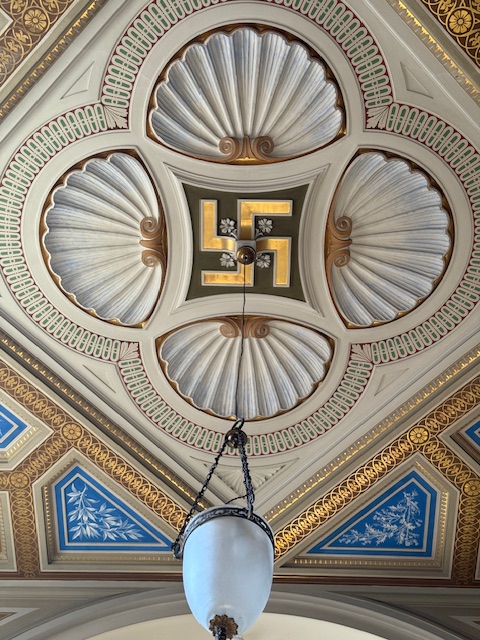
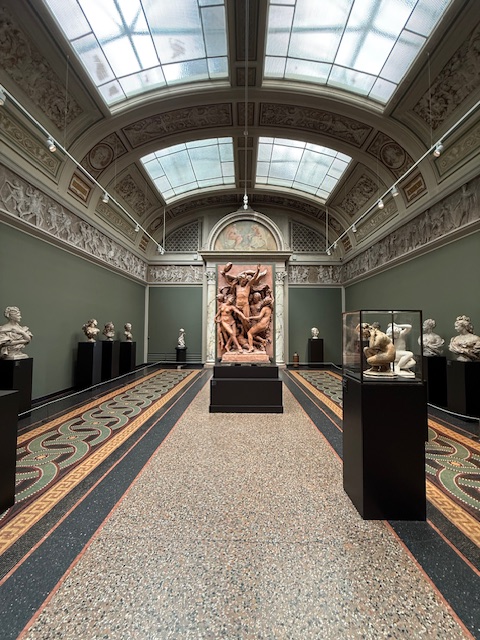
Architecturally, the museum blends multiple styles. The Dahlerup Wing features historicist design with red brick façades, granite columns and Venetian Renaissance influence. It houses the French and Danish collections.
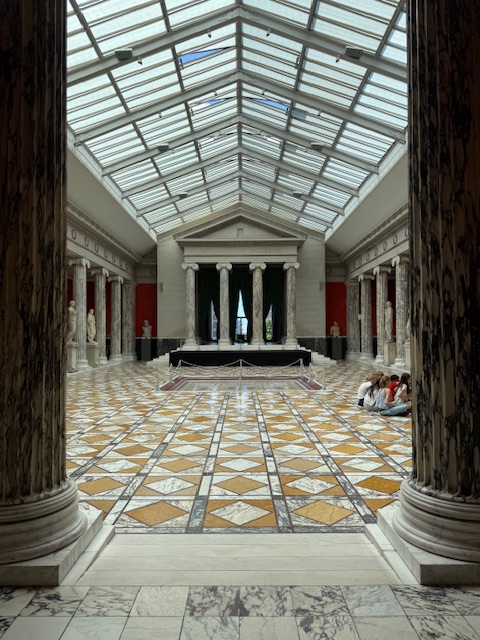
The Kampmann Wing is a neoclassical structure centred around an auditorium used for cultural events. These two sections are linked by a lush Winter Garden with mosaic floors, tall palms, a central fountain and a domed ceiling of copper and wrought iron.
The Henning Larsen Wing introduces a more contemporary minimalism and includes rooftop access. The museum has also hosted official events, such as the 2002 certification ceremony for a polio-free Europe.











Collection
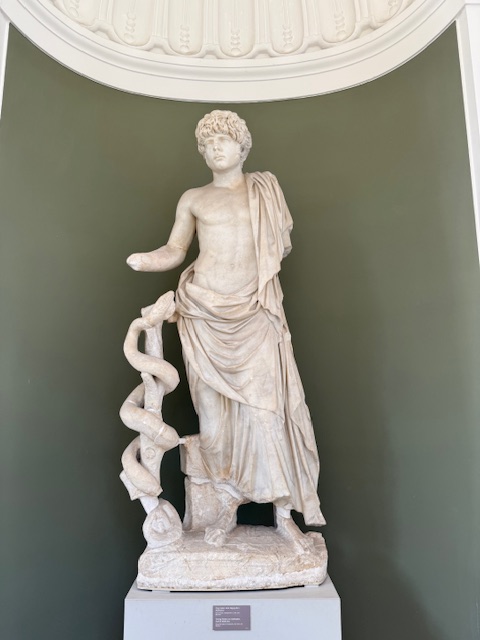
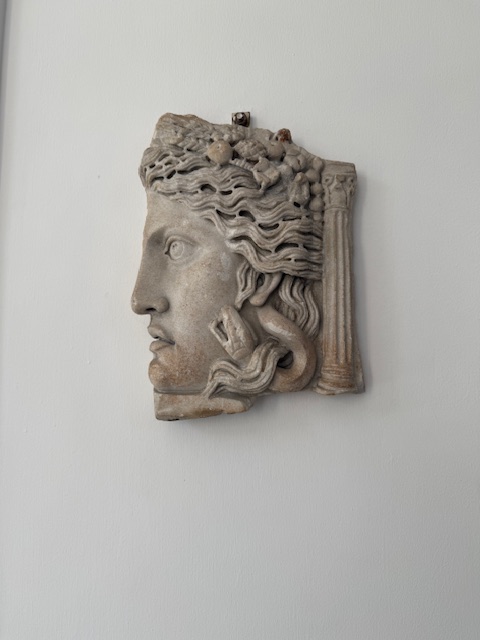
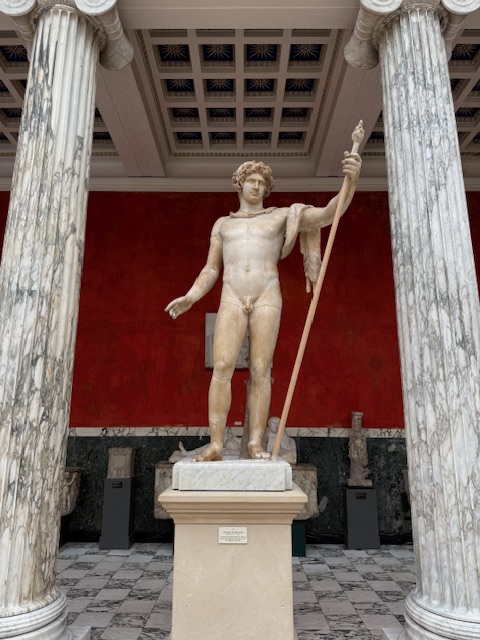
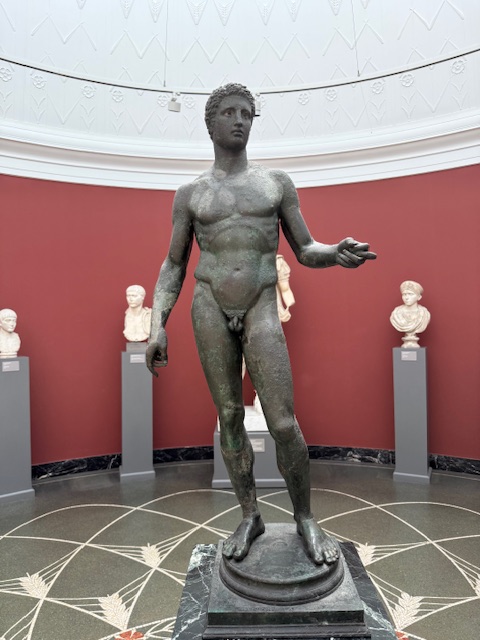
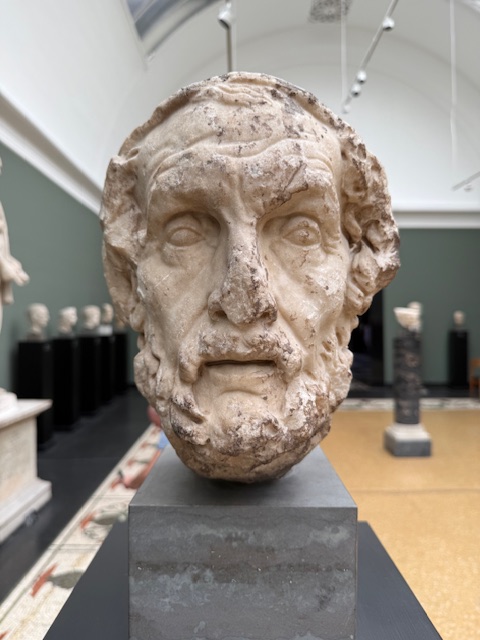
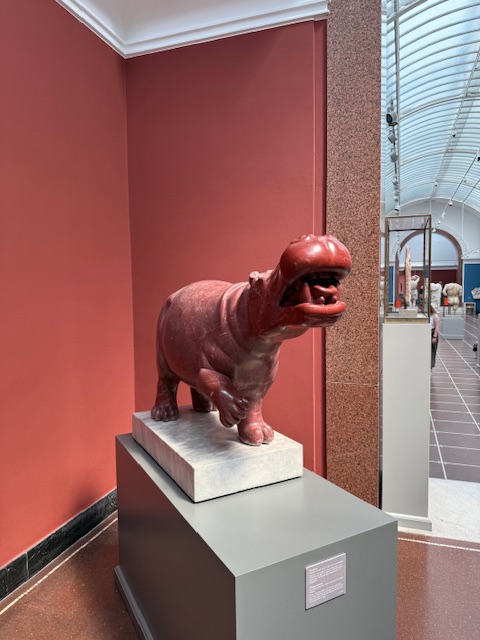
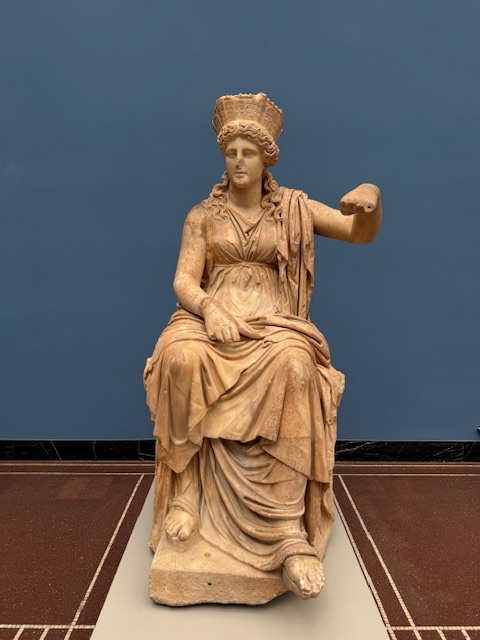
The museum’s collections total over 10,000 works. The Antique Collection includes over 950 Greek, Roman and Etruscan sculptures and artefacts, many acquired through German archaeologist Wolfgang Helbig.
The Egyptian Collection, founded in 1882 with a sarcophagus from the Egyptian Museum in Cairo, comprises more than 1,900 items dating from 3000 BC to the 1st century AD.
These holdings were significantly expanded through excavations led by British Egyptologist W. M. F. Petrie, supported by the Ny Carlsberg Foundation. The Near Eastern Collection spans over 7,000 years and includes artefacts from the Levant, Mesopotamia, Anatolia and Persia.

French Collection
The French Collection emphasises 19th-century painting and sculpture, with major works by David, Manet, Monet, Cézanne, Gauguin, and others. The Rodin collection is among the world’s largest.
Danish Collection
The Danish Collection highlights Golden Age artists such as Eckersberg, Købke and Lundbye, and includes the country’s most extensive collection of Danish Golden Age sculpture.
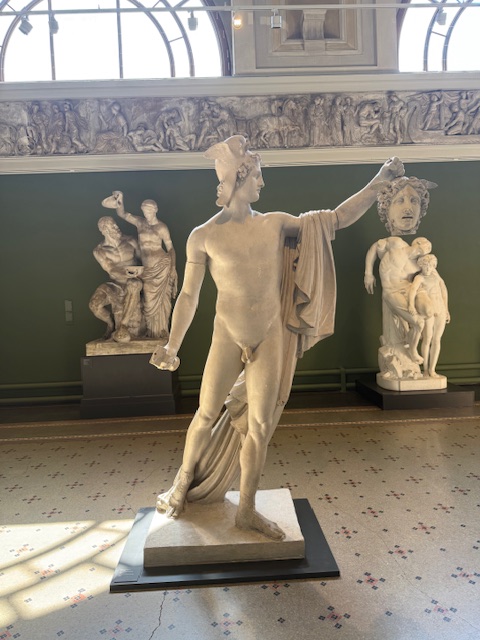
The European Collection spans from the 18th to the 20th century, featuring sculptors such as Canova, Flaxman and Giacometti, and painters like Arp, Ernst, Miró and Poliakoff.
Auditorium
The museum’s Auditorium is known for its excellent acoustics and serves as a venue for classical concerts, including the Helge Jacobsen series.
Performers have included the Hagen Quartet, Alina Ibragimova, Cédric Tiberghien and Jonas Kaufmann.
It also hosts other genres such as klezmer and frequently serves as a rehearsal and performance space for the early music ensemble Musica Ficta. Cultural events such as poetry readings, lectures and debates are also held here.


In film
The Glyptotek has appeared in several Danish films from the mid-20th century, including ‘Stjerneskud‘ (1947) and ‘Bruden fra Dragstrup‘ (1955).
Its architecture even inspired the set design for the ‘Valkyries’ Rock‘ in Kasper Holten’s 2006 production of Richard Wagner’s Ring Cycle at the Copenhagen Opera House.
Today, the Ny Carlsberg Glyptotek stands as one of Denmark’s foremost cultural institutions, notable not only for its exceptional collections but also for its architectural beauty and vibrant role in the city’s artistic life.
A visit
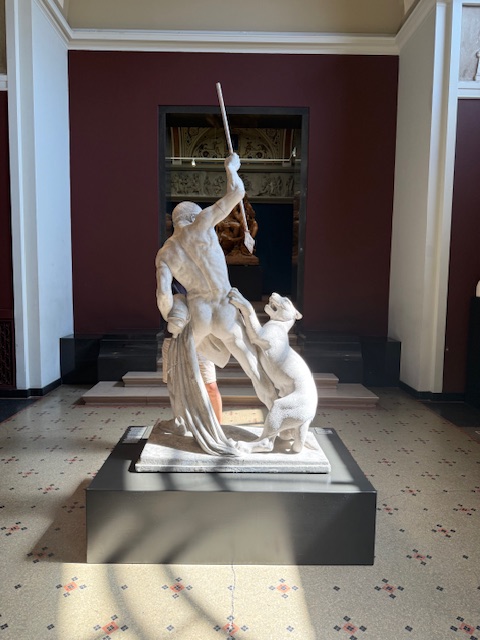
We took over two hours. And to be honest, we didn’t take our time. There’s plenty more to see than we did. We mostly skipped the more modern areas and focused on the antiquities.
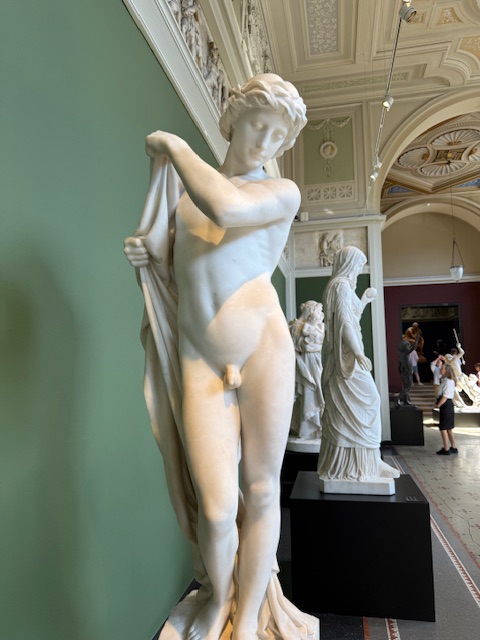
The building in itself is worth a visit, as much as the collection. I saw many culturally appropriate penises and bums, which always makes me happy.
Don’t forget the rooftop terrace.


You can buy tickets online. Spurred on by a poster in front the museum, we tried. It would give us 10% off. But it didn’t work so we just bought our tickets at the ticket office inside.
While at the museum, ate something at its café, Picnic.
 Trip By Trip
5 Comments Add yours