
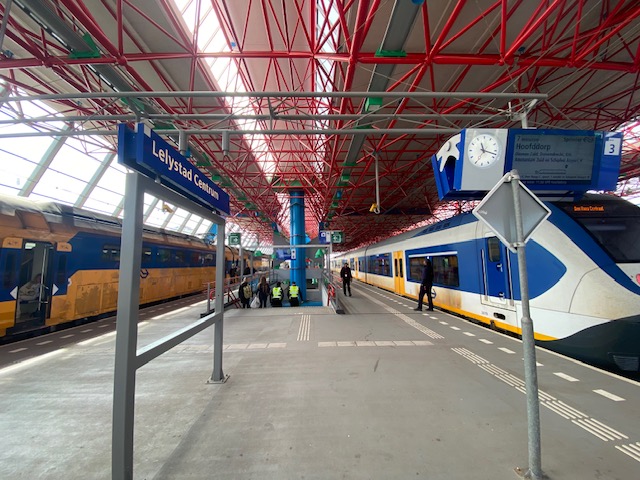
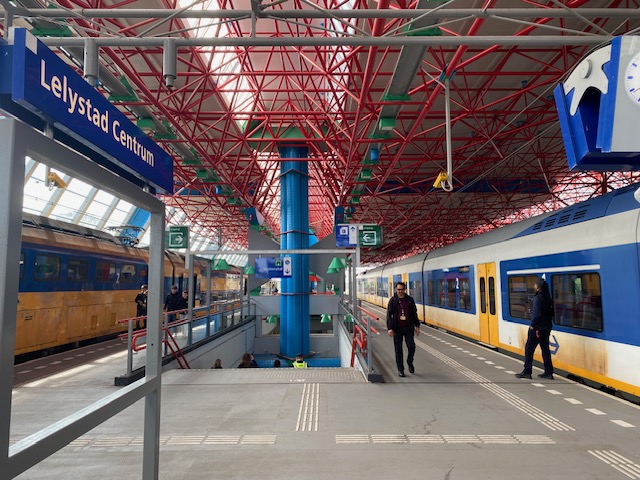
From December 2024, the Benelux train Brussels in Belgium to Amsterdam in the Netherlands will not terminate at Amsterdam Central Station, but at Amsterdam South (Zuid). There the Brusselaar or Amsterdammer will become a domestic train to Lelystad. An excuse for Danny and I to travel all the way to the province of Flevoland to explore the town and Nationaal Luchtvaart-Themapark Aviodrome.
Lelystad is a city built on reclaimed land and was founded on 1 January 1967. It was named after Cornelis Lely, who engineered the Afsluitdijk that made the reclamation possible. Lelystad is approximately 3 metres or 9.8 feet below sea level.




History
Lelystad is built on the seabed of the former Zuiderzee or Southern Sea. About 6,500 years ago, this wetland was above high tide level and inhabited. The Netherlands have steadily subsided since.
Near Lelystad at Swifterbant, the oldest human skeletons in Western Europe were discovered. Due to rising water levels and storms, the peatlands were washed away, and the Roman-era Lacus Flevo grew to be the Almere and became the Zuiderzee.
The Zuiderzee was the main transport route from Amsterdam to the North Sea and the Hanseatic League cities. Due to the many shipwrecks in Flevoland, Lelystad now houses the National Centre for Maritime History, with a museum – Batavialand – and the shipyard that has built the Batavia replica.
After World War II the Zuiderzee Works continued, constructing the polder of Eastern Flevoland. In 1950 work commenced on several construction islands in the middle of the IJsselmeer. Lelystad-Haven was the largest island, and its wooden barracks housed a community of dyke-builders.
In 1955 they reached the mainland, which made it possible to drive to Lelystad by car.
Until 1967 the only inhabitants of Lelystad were technical engineers and laborers and superintendents, living on the former construction island.
Water
Lelystad is the largest municipality in the Netherlands in area, but a large part of that area is water: Markermeer and IJsselmeer. Another major area is the internationally famous nature park of Oostvaardersplassen, which arose naturally when the polder of South Flevoland was drained. Lelystad is also surrounded by a square of woodlands and parks and flat farmland.
The artificial islands of Marker Wadden lie immediately to the northwest of Lelystad. Construction started in 2016, and the first islands have already become important wildlife sites, with many species of birds coming to the islands during the breeding season.
Tourism
Lelystad has several tourist attractions, including:
- The replica of the 17th-century ship Batavia at the Batavia Shipyard.
- Batavia Stad Fashion Outlet.
- Hanzestad Compagnie, a fleet of historical sailing ships.
- Lelystad Nature Park.
- Aviodrome.
- Modern architecture, for example the Zilverparkkade and Agora Theatre.
Lelystad hosts many one-day events like the Lelystad Airshow, the Water Festival, the National Old Timer Day, Lelystad Speedway, Architecture Day and several sports events. On the Midland Circuit many motor, kart and stock car racing events and several autoclub meetings are held. On the coast there are several marinas.


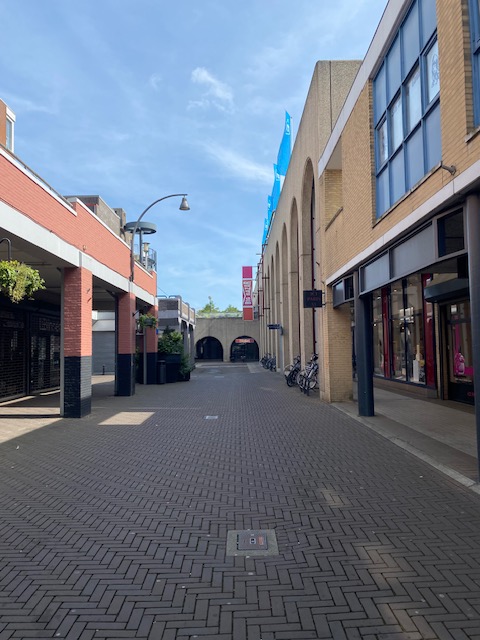


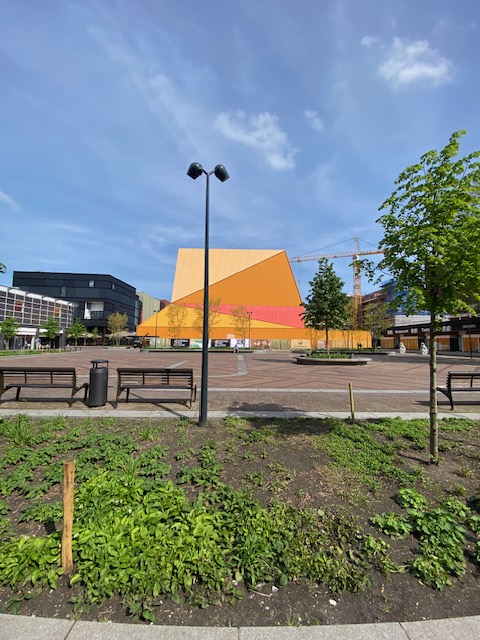

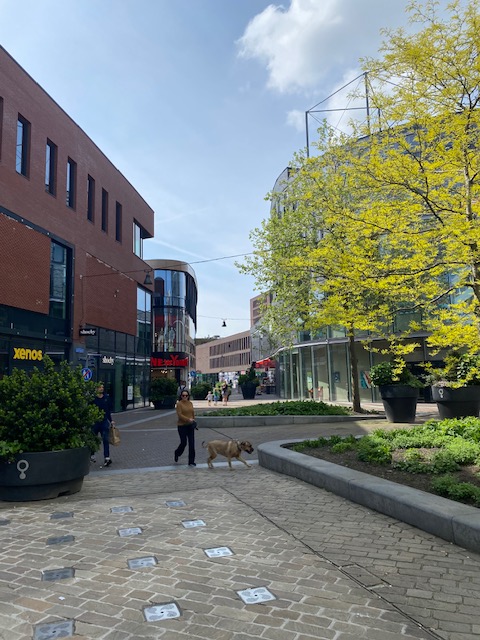


A walk around town
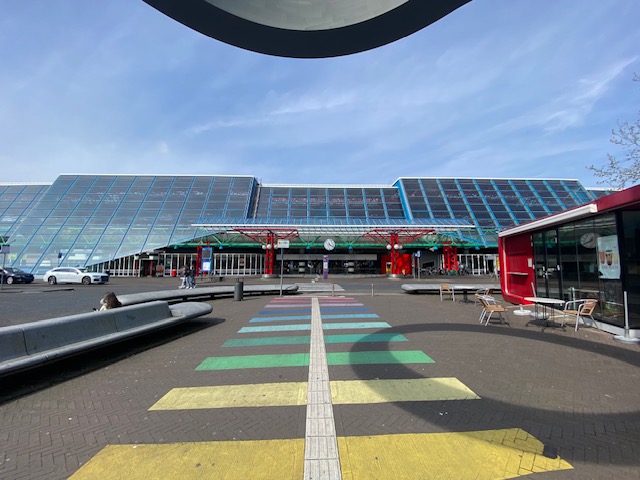
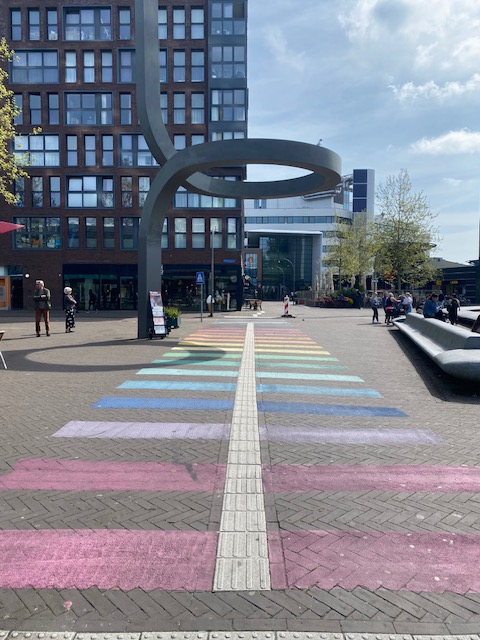
Before heading to Aviodrome, we had a walk around town. We were there on 6 May, Bevrijdingsdag or Liberation Day. But it was eerily quiet in Lelystad. The Kroonpassage shopping gallery was dead. Many shops inside and in town are closed on Monday(s).
The city centre is compact. Lelystad is a planned city and you can feel it. While planning, planners ticked off boxes: “We need a main square, and shopping streets, shops and entertainment.”
So, as in Louvain-la-Neuve in Belgium, Dubai in the United Arab Emirates or Whistler in Canada, you have this ‘Sim City in real life’ vibe.
More on Benelux trains
- REVIEW | On board the NS ICNGB on the Brussels – Antwerp – Rotterdam – Schiphol Airport – Amsterdam – Lelystad route.
- Benelux train Brussels – Amsterdam to become Brussels – Amsterdam – Lelystad in 2025 (with reservations?).
- Benelux train Brussels to Amsterdam with fewer stops, in 2 hours, from Monday 15 April 2024.
- New direct Benelux train links Amsterdam to Brussels in two hours from December 2024.
- Sampling NS’ new train and future Benelux rolling stock ICNG.
- Future Benelux ICNG trains complete test rides for Belgium.
- Brussels – Amsterdam ‘Benelux’ train service to be shortened by 40 minutes, skipping several stops in the Netherlands and Belgium.
- VIDEO | ICNG, the 2024 Benelux train from Amsterdam to Brussels.
- VIDEO | Brussels – Amsterdam with the Benelux-train (no reservations).
- Trying out the Benelux-intercity train from Antwerp to Breda.
- Benelux-intercity train from Brussels to Amsterdam changes route to Breda starting 9 April.
 Trip By Trip
2 Comments Add yours