
Six days. Five overnight stays in five cities in Spain. Lunch in Paris. Stopover in Barcelona. Then Córdoba, Seville, Granada and Málaga. An Andalusia Whirlwind Tour where we visit the Mezquita and the Alhambra. We’re touring Andalusia in October 2023 to follow the trend of travelling to hot spots outside summer, as we did with Italy in 2022.
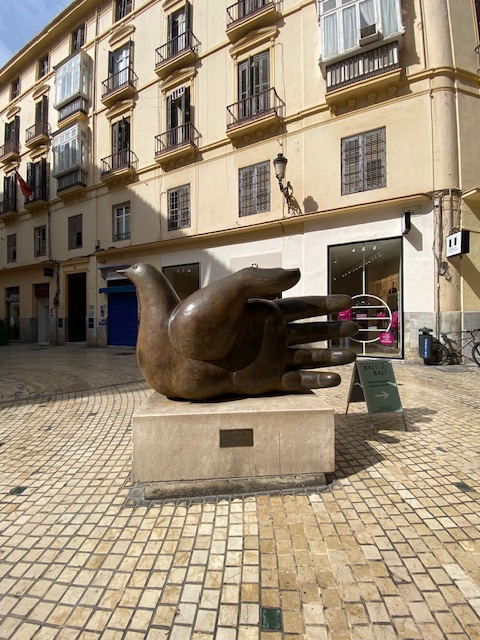


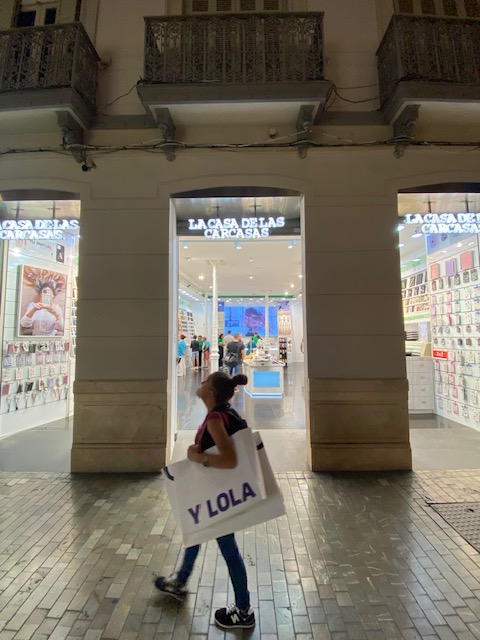


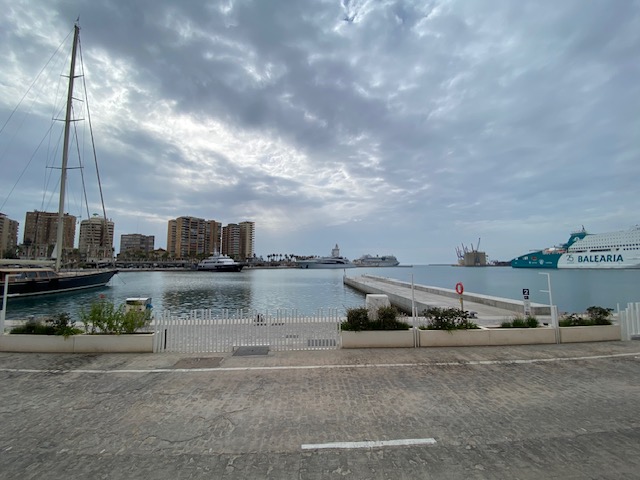


No, Málaga is not the most culturally, artistically or historically relevant city in Andalusia but it is a major tourist hub, a sea cruise port and has a large airport we would use to fly home to Deurne in Antwerp.
Once checked in at our hotel, Barceló Málaga, we explored the city.
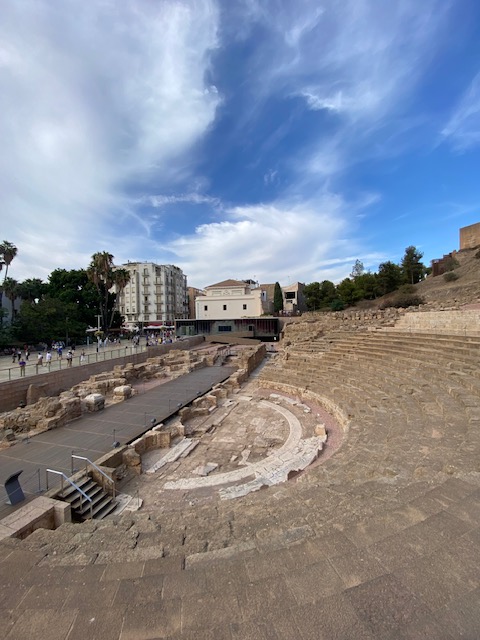
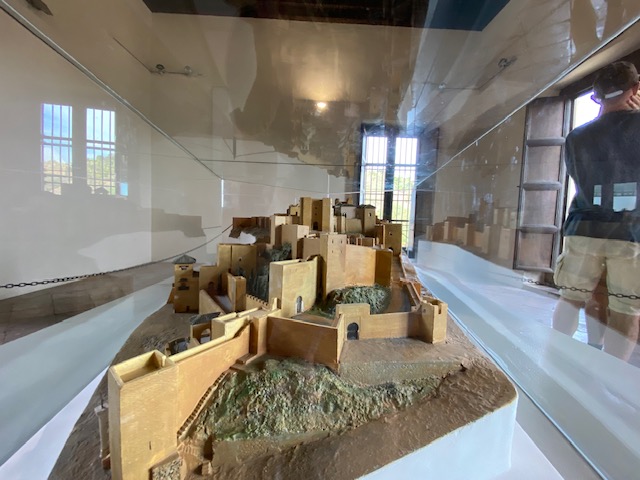
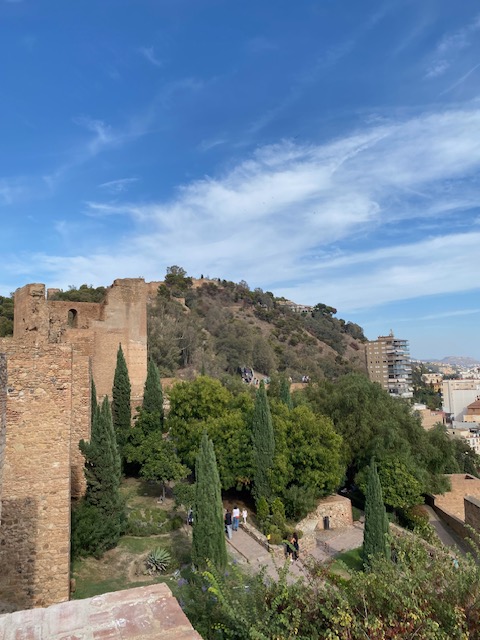
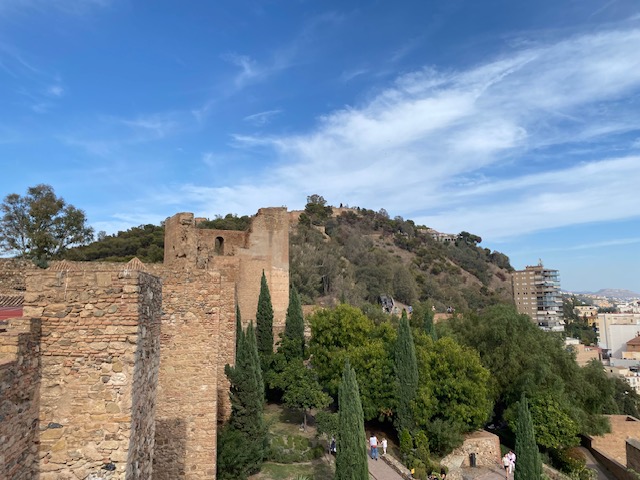
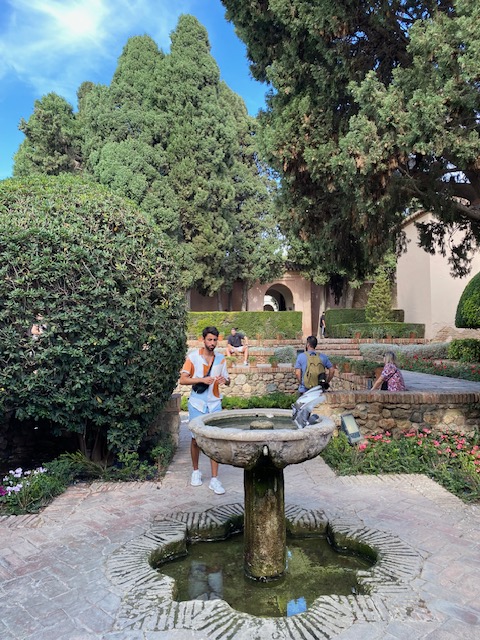
Alcazaba of Málaga
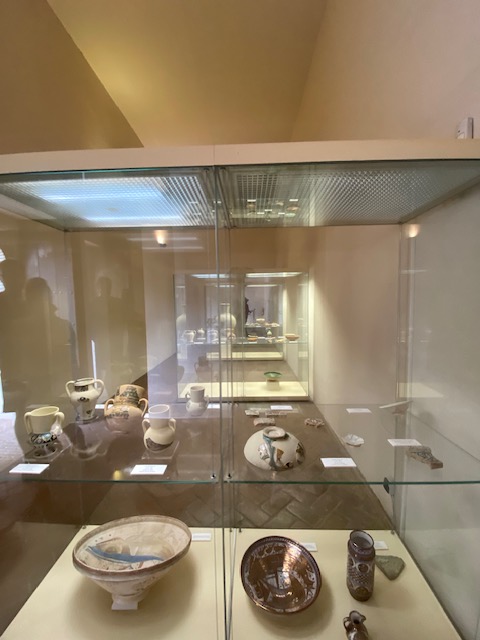
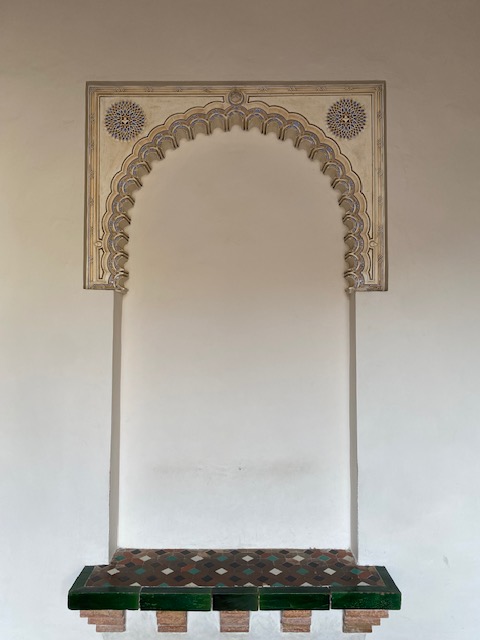
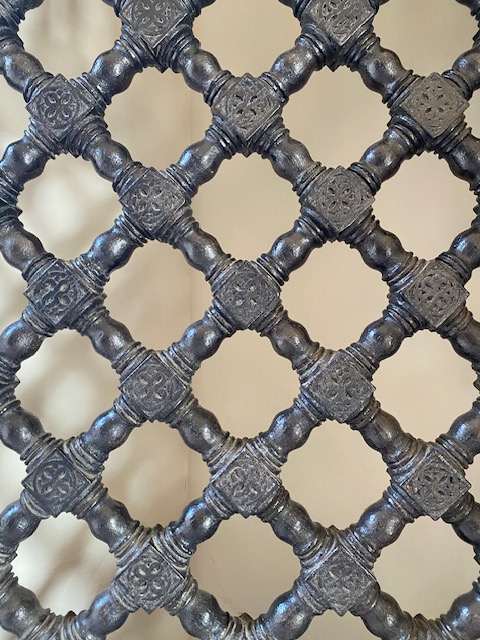
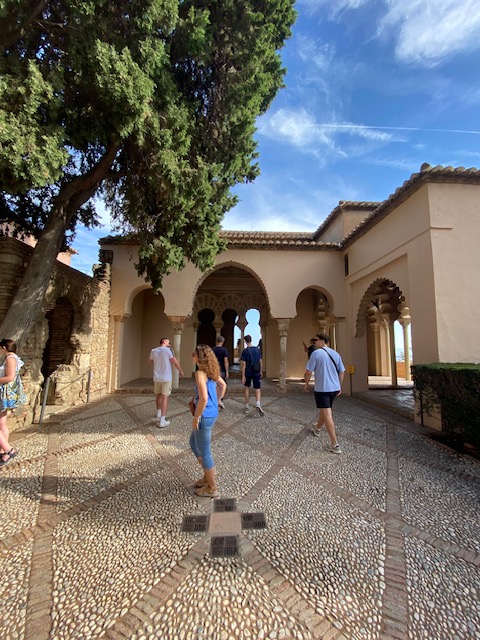
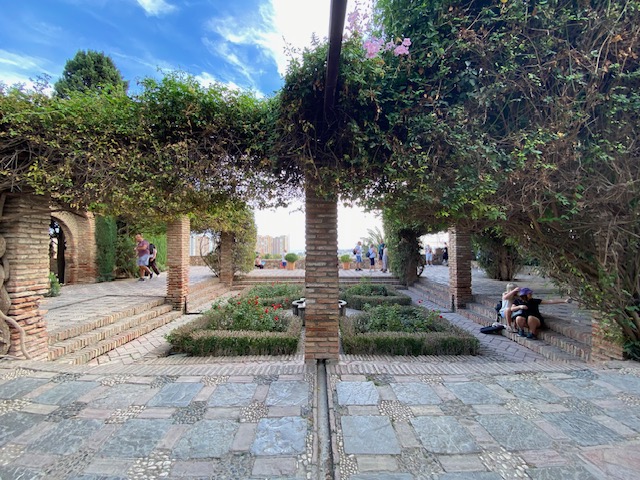
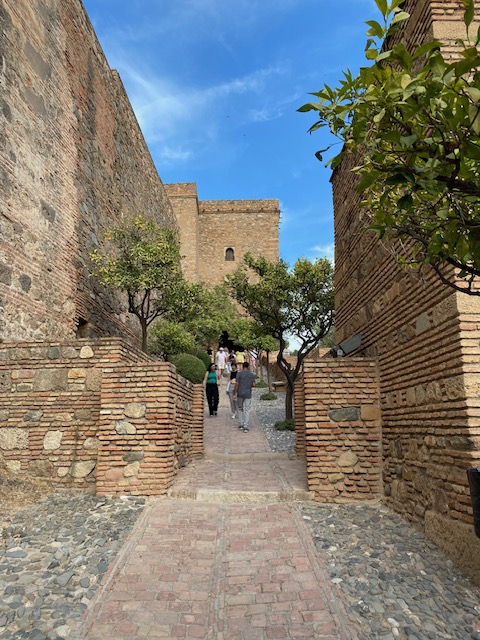
In the afternoon, we climbed up the Alcazaba, the citadel. The Alcazaba was built during the period of Muslim-ruled Al-Andalus. The current complex was begun in the 11th century and was modified or rebuilt multiple times up to the 14th century. The Alcazaba is also connected by a walled corridor to the higher Castle of Gibralfaro, and adjacent to the entrance of the Alcazaba are remnants of a Roman theatre dating to the 1st century AD.
Ferdinand II of Aragon and Isabella I of Castile captured Málaga from the Muslims during the Siege of Málaga in 1487.
Starting in the 18th century, the Alcazaba’s military function ceased. It was occupied by civilian residents and became a marginal neighbourhood of the city.
Starting in 1933, under the direction of Leopoldo Torres Balbás, the residents were evacuated and restorations of the Alcazaba began, along with archaeological investigations.
The Alcabaza of Málaga looks ‘pale’ in contrast to the Alhambra. But many tourists who reside on the Costa del Sol will find the Alcabaza interesting. Admission is cheap and it’s a nice outing.
The Alcabaza and the Gibralfaro also offer pretty views on the city, the harbour and the sea.




The Cathedral
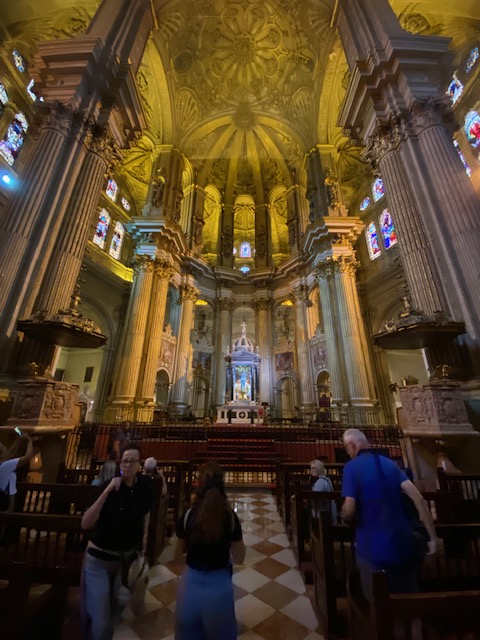
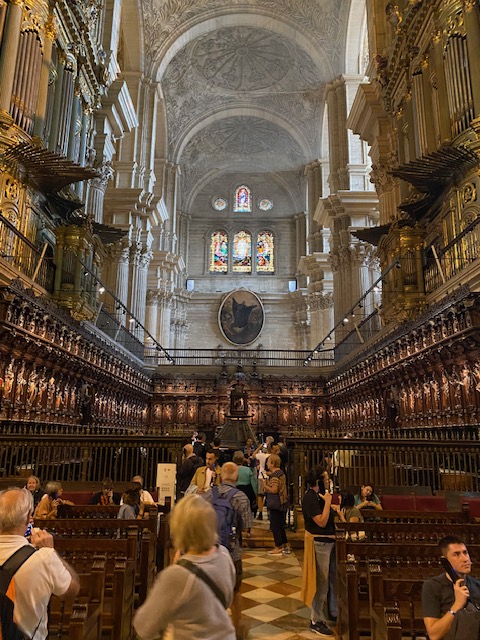
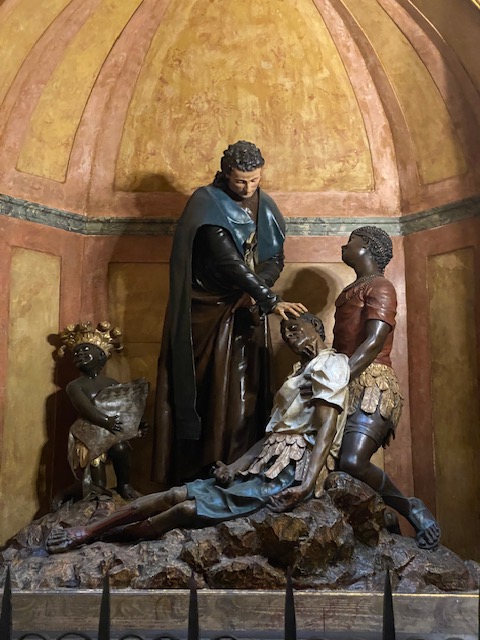
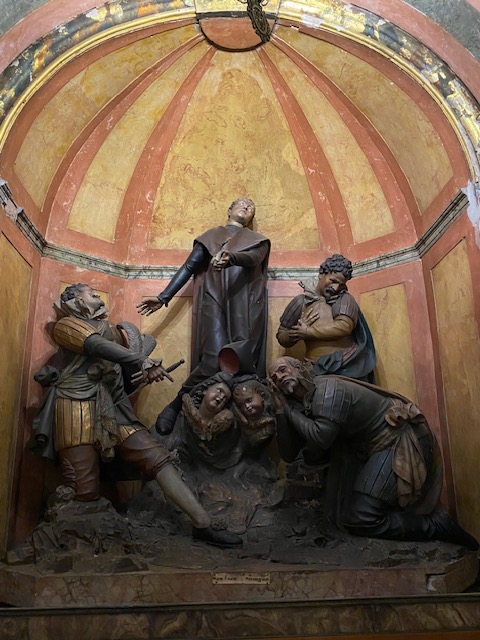
The next day we visited the Cathedral of Málaga. The Santa Iglesia Catedral Basílica de la Encarnación is a Roman Catholic church in the Renaissance architectural tradition. The cathedral is located within the limits defined by a now missing portion of the medieval Moorish walls, the remains of which surround the nearby Alcazaba and the Castle of Gibralfaro. It was constructed between 1528 and 1782, following the plans drawn by Diego de Siloe, its interior is also in Renaissance style.
The cathedral, built on a rectangular plan, is composed of a nave and two aisles, the former being wider, though having the same height as the aisles. The choir stalls are the work of Pedro de Mena.
The façade, unlike the rest of the building, is in Baroque style and is divided into two levels; on the lower level are three arches, inside of which are portals separated by marble columns. Above the doors are medallions carved in stone; those of the lateral doors represent the patron saints of Málaga, Saint Cyriacus and Saint Paula, while that over the centre represents the Annunciation.
The north tower is 84 metres (276 ft) high, making this building the second-highest cathedral in Andalusia, after the Giralda of Seville.

The south tower remains unfinished. To defray the enormous expenses of the work, the Crown, after the War of Succession, imposed an excise duty or tax on the ships that called in Málaga, demanding an amount for each arroba of weight that they embarked.
In this way, throughout the entire 18th century and especially since 1776, when trade with America began to be liberated the work progressed rapidly. At the end of the century the budgets to finish the work ran out.
This unfinished state has led to the cathedral being called ‘La Manquita‘ (‘The One-Armed Lady’).







So?
The Alcabaza and the Cathedral are the two main sites in Málaga. Other points of interests include Museo Picasso Málaga.
But the city is also an important centre for tourists with a shopping are, the port, a cruise terminal, many hotels, restaurants and such.
2023 Andalusia Whirlwind Tour
- PRELUDE | Visiting Gibraltar in 2013.
- REVIEW | Eurostar Amsterdam – Antwerp – Brussels – Paris in 2023.
- PARIS | Restaurant Le Train Bleu at the Gare de Lyon.
- REVIEW | SNCF TGV inOui from Paris-Gare-de-Lyon to Barcelona-Sants.
- REVIEW | Hotel Barcelo Sants.
- INTERMEZZO | Spain saw a surge of Belgians visiting in the first quarter of 2024.
- SPAIN | Renfe Sala Club or Club Lounge at Adif stations.
- REVIEW | Renfe AVE in Premium from Barcelona-Sants to Córdoba.
- SPAIN | The Mezquita or Mosque-Cathedral of Córdoba.
- CÓRDOBA | The Alcázar de los Reyes Cristianos or Castle of the Christian Monarchs.
- REVIEW | Hotel Eurostars Palace Córdoba.
- ANDALUSIA | Half a day in Córdoba.
- TRAINS IN SPAIN | Iryo in Infinita class from Córdoba to Seville.
- ANDALUSIA | Real Alcázar of Seville.
- ANDALUSIA | Seville Cathedral or Catedral de Santa María de la Sede de Sevilla.
- REVIEW | Hotel Posada del Lucero in Seville.
- ANDALUSIA | Half a day in Seville ft. Plaza de España and Las Setas or Metropol Parasol.
- TRAINS IN SPAIN | Renfe Avant regional ‘local’ train on high speed lines.
- GRANADA | The Alhambra and the Generalife.
- REVIEW | Hotel Catalonia Granada.
- ANDALUSIA | Granada on Día de la Hispanidad.
- INTERMEZZO | Spain demands your personal data before you travel there.
 Trip By Trip
I honorary member Real Madrid supporters group of the alcazaba in Malaga !! Thanks for the memories !! Cheers
LikeLike