
In September 2024, Antwerp will take over from Ostend. Antwerp will pay tribute to the Belgian artist James Ensor with four diverse world-class exhibitions. They will show in detail how he is still a source of inspiration for contemporary artists. Visitors can delve into Ensor’s creative mind from Saturday 28 September. In addition, a range of extra activities are on the programme during the festive opening weekend.
Antwerp celebrates the versatile artist that Ensor was. Four top exhibitions at the Royal Museum of Fine Arts of Antwerp (Koninklijk Museum voor Schone Kunsten Antwerpen, KMSKA), Museum Plantin-Moretus, the Antwerp photography museum FOMU and the Antwerp Fashion Museum (ModeMuseum, MoMu) will cast a surprising glance at his timeless works, which often ended up in Antwerp during his lifetime. They will show how they are still a source of inspiration for contemporary photography, fashion and make-up.
Antwerp Alderman for Culture Nabilla Ait Daoud (N-VA): “James Ensor was a groundbreaking artist. He was far ahead of his time. Ensor’s unstoppable urge to experiment and innovate drove him ever further in his artistic quest. He was determined to push boundaries and compete with the great artists of his time – he didn’t just want to participate, he wanted to excel and be the best. We share that courage, that ambition with the artist. Today, the Antwerp museums – KMSKA, Museum Plantin-Moretus, FOMU and MoMu – are showing you four world-class exhibitions. With this unique project, Antwerp dares to claim its place among the great art cities. We are showing Ensor’s mastery, we are showing his lasting impact on art, fashion and photography today. Ensor 2024 is an absolute must-see in our city!”
Jan Janbon (N-VA), Flemish Minister-President and Minister of Culture in Flanders: “Today, Ostend passes the torch of the Ensor Year to Antwerp. In four museums you will discover the intimacy of the artistic process and the persuasive power of the art of this Flemish master. A surprising look at the life, work and lasting significance of James Ensor.”
Ensor’s Wildest Dreams. Beyond Impressionism. KMSKA 28.09.24 – 19.01.25.
The KMSKA shows how Ensor broke the rules of art and then radically rewrote them. French Impressionism was not his thing. Everything that was creepy or grotesque, whimsical and funny was all the more so. That is where his and our ‘wildest dreams’ begin.
You will discover Ensor’s own masterpieces from all over the world alongside those of the international artists with whom he wants to compete. Because above all, Ensor always wants to be the best. Even if his competitors are called Edouard Manet or Edvard Munch.
The museum has the largest and most diverse Ensor collection in the world. Moreover, the Ensor Research Project is also housed here, the knowledge centre for the modern master. This makes the KMSKA the perfect place for the total picture that Ensor’s wildest dreams offers.
“Ensor’s imaginative mind takes you on a journey through his wonderful universe of wild visions, carnival and nonsense. In Ensor’s footsteps you follow how he develops his creativity, to grow into a rebellious game changer. Who determines the rules of art himself. In doing so, he resolutely steps away from the classical European ideal of beauty, and the impressionism that initially fascinated him. To ultimately influence others with his dream images or expressive colour choices, such as Emil Nolde. ‘Ensor’s Wildest Dreams. Beyond Impressionism‘ shows this artistic evolution via the major milestones that determined Ensor’s career. For the first time side by side with Claude Monet and Auguste Renoir, from whom he copies the light effects, even though he finds the content of their work too tame.”

Ensor’s states of imagination. Museum Plantin-Moretus 28.09.24 – 19.01.25.
Museum Plantin-Moretus presents a remarkable graphic adventure with ‘Ensor’s States of Imagination‘. The young Ensor experiments exuberantly with etching techniques for several years. With predecessors such as Rembrandt in mind, Ensor takes a completely unique path. His studio becomes a test lab for experiments in which chance sometimes plays a role.
“How did Ensor make prints? Which techniques did he use? In what way did he experiment with this medium and which old masters inspired him? You will find out in this exhibition.”

Cindy Sherman. FOMU 28.09.24 – 02.02.25.
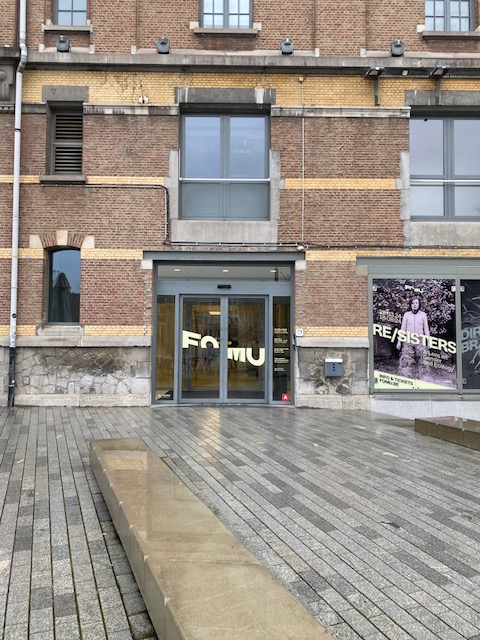
FOMU presents the first major solo exhibition of the American artist Cindy Sherman in Belgium. With over 100 works from the 1970s to the present, the exhibition provides a comprehensive overview of her work as a leading contemporary artist. Like Ensor, Sherman is known for her critical commentary on social conventions through masquerades.
Masquerade, make-up & Ensor. ModeMuseum 28.09.24 – 02.02.25.
MoMu celebrates the painters of fashion: the artistic power of make-up and hair artists in a multimedia exhibition in which light, colour, art, fashion and make-up meet. ‘Masquerade, make-up & Ensor‘ examines how closely make-up is interwoven with many aspects of our humanity.
“From September 2024, you can feel Ensor’s influence in various Antwerp museums. In MoMu, Ensor’s ideas about masquerade, (false) coquetry, seduction.”

Opening weekend
During the weekend of 28 and 29 September, everyone is welcome to festively kick off the Ensor year in Antwerp.
Guided tours, lectures, demonstrations, children’s activities and workshops both indoors and outdoors are supplemented with many performances, brass bands, theatre, dancers and musicians. All of this forms the dazzling start of the Ensor year in Antwerp.
Most activities are free (indoors with a valid museum ticket).
Click here for an overview of all activities during the opening weekend.
Surprising walking route
Antwerp illustrators were also inspired by the life and work of James Ensor and got to work with his legacy. Their idiosyncratic creations form the common thread of a surprising walking route along 22 display cases that connect the four exhibitions.
Who was James Ensor?
Born in Ostend on 13 April 1860, James Ensor is widely considered one of the most influential figures in the development of Expressionism. His work, characterized by its bold colors, grotesque imagery, and satirical commentary on society, challenged traditional artistic conventions and paved the way for future generations of artists.
Ensor’s early years were marked by a deep connection to his hometown of Ostend. Growing up in a family of glassmakers, he was exposed to the vibrant colours and textures of their craft, which would later inform his own artistic style.
He studied at the Royal Academy of Fine Arts in Brussels, where he was influenced by the teachings of the Belgian Realist painters. However, Ensor’s artistic vision soon diverged from the prevailing academic style, as he began to experiment with more expressive and unconventional approaches.
Ensor’s breakthrough came in the early 1880s with a series of paintings that explored themes of carnival and masquerade. Inspired by the festive atmosphere of the annual Ostend Carnival, Ensor created works that were filled with colourful costumes, masks, and grotesque figures. These paintings often conveyed a sense of underlying anxiety and social critique, as Ensor used the carnival as a metaphor for the hypocrisy and superficiality of human nature.
One of Ensor’s most famous works from this period is ‘The Entry of Christ into Brussels‘ (1888), a large-scale painting that depicts a satirical scene of Jesus Christ entering the city amidst a crowd of grotesque and caricatured figures. The painting’s bold colors and exaggerated forms reflect Ensor’s desire to challenge traditional religious iconography and confront the hypocrisy of contemporary society.
In the 1890s, Ensor’s work became increasingly introspective and symbolic. He began to explore themes of death, decay, and the human condition, often using masks and skeletons as recurring motifs.
‘The Skeletons Feasting‘ (1897) is a particularly haunting example of this period, depicting a macabre scene of skeletons feasting on a banquet table. The painting’s dark palette and grotesque imagery evoke a sense of existential despair and the inevitability of death.
Ensor’s artistic style continued to evolve throughout his career. In the early 20th century, he began to experiment with new techniques, such as collage and printmaking. He also became increasingly interested in political and social issues, using his art to criticize the injustices of his time. His later works often incorporated elements of Surrealism and Abstract Expressionism, reflecting his ongoing exploration of new artistic possibilities.
Ensor’s influence on subsequent generations of artists is undeniable. His bold colors, expressive brushwork, and willingness to confront taboo subjects have inspired countless artists, from Edvard Munch to Willem de Kooning.
Today, Ensor is recognized as one of the most important figures in the history of modern art. His work continues to captivate and challenge viewers, offering a unique and powerful commentary on the human condition.
Ensor died on 19 November 1949, aged 89.
Art and museums in Antwerp
- ANTWERP | Rubens House opens Rubens Experience, renovated garden and library.
- ANTWERP | ‘To the Antarctic. The polar pioneers of the Belgica’ exhibition at Museum Aan de Stroom (MAS).
- RED STAR LINE MUSEUM | ‘A wanted refugee: Einstein and Red Star Line’ exhibition until Sunday 8 September 2024.
- Antwerp will have a new Museum of Contemporary Art Antwerp M HKA.
- ANTWERP | Innovations in the Middelheim Museum provide a completely new visitor experience.
- FOMU 2024 | Antwerp photography museum ft. Dirk Braeckman, ‘RE/SISTERS’ and Nick Geboers.
- A visit of the Flemish Tram and Bus Museum – Vlaams Tram- en Autobusmuseum (VlaTAM) in Antwerp.
- ANTWERP | Discovering queer(ed) art with the Queer Tour at the KMSKA fine arts museum.
- REVIEW | Illusion Antwerpen, an active and photogenic museum.
- Antwerp museums and sports facilities team up with European Disability Card for accessible leisure activities.
- Museum Mayer van den Bergh.
- 2024 at Royal Museum of Fine Arts of Antwerp (KMSKA): Rubens, James Ensor, Jules Schmalzigaug and many more.
- 2024 at the museums of Antwerp ft. Ensor Year.
- ANTWERP | Inside Rubens House.
- Museum Plantin-Moretus in Antwerp.
- ANTWERP | Museum Vleeshuis up for restoration.
- BOOK | ‘Antwerp. An Archaeological View on the Origin of the City’ by Tim Bellens.
- Red Star Line Museum.
- Paleis op de Meir.
- DIVA, Antwerp Home of Diamonds.
- ANTWERP | Red Star Line Museum of (e)migration.
 Trip By Trip
7 Comments Add yours