
September 2025. A few days before our Journey Across Japan, Sam, Danny, and I went an a day excursion to Maubeuge and Lille in France, just across the border with Belgium. Some proper #CrossBorderRail. From Charleroi-Central Railway Station in Wallonia, there is an S63 suburban train (while the scenery is very green and nut urban at all) to Maubeuge. The other hour, the S63 terminates at Erquelinnes.


Maubeuge is a town whose identity has been shaped by centuries of strategic importance, destruction, and renewal. It is not the most obvious destination for travellers, yet for those willing to explore, it offers a layered story of resilience, architectural ambition, and cultural curiosity.
Maubeuge is a French commune located in the Nord or North department, in the Hauts-de-France (Upper France) region. Before the 2016 reform, it was part of the Nord-Pas-de-Calais (North-Calais Passage) region. Its inhabitants are called Maubeugeois.
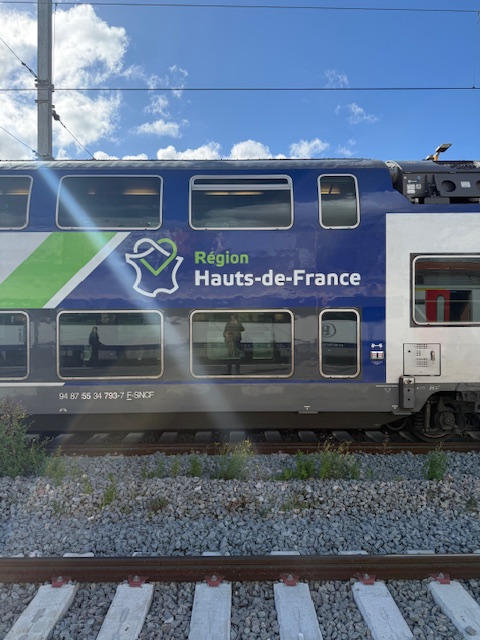


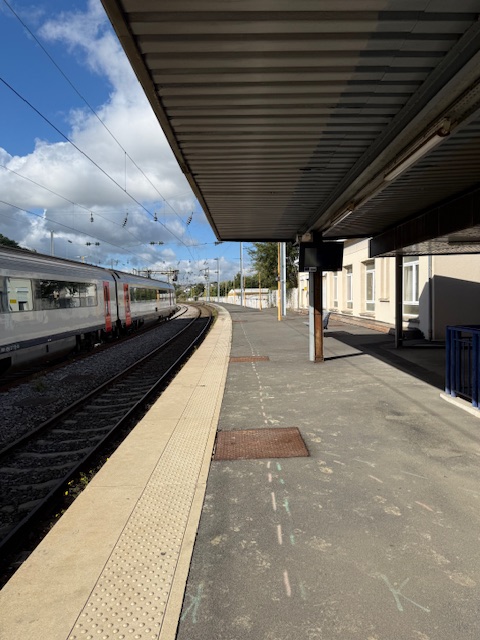


With 28,879 inhabitants (2022 census), Maubeuge is the largest town in the Avesnois area and the 11th largest in the department. Together with Arras and the towns of the former Nord–Pas-de-Calais coal basin to the northwest, it lies directly under the influence of the Lille metropolitan area, a conurbation of nearly 3.8 million people.
Maubeuge is situated in Hainaut, in the south-east of the Nord department, about 33 km east of Valenciennes, 55 km from Cambrai, 70 km north-east of Saint-Quentin, 75 km south-east of Lille and 200 km north-east of Paris as the crow flies.
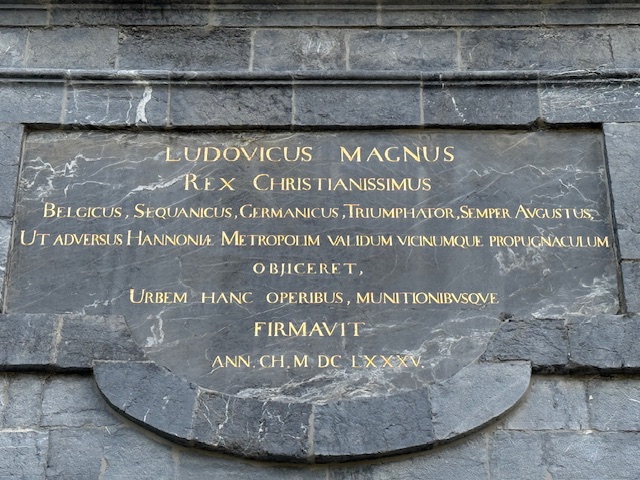
Maubeuge’s origins are rooted in the early Middle Ages. The town grew around a convent founded by Saint Aldegonde (or Aldegund) in the 7th century, whose legacy still permeates local traditions and legends. In later centuries, its location on the River Sambre made it a coveted stronghold. The military engineer Sébastien Le Prestre, Marquis of Vauban, working under Louis XIV in the seventeenth century, transformed Maubeuge into a fortified town, girded with bastions and ramparts that remain among its most striking historic features. These defences did not always guarantee safety, and Maubeuge’s history is punctuated by wars and sieges. World War II brought its greatest devastation, when over ninety per cent of the town centre was reduced to rubble in 1944.

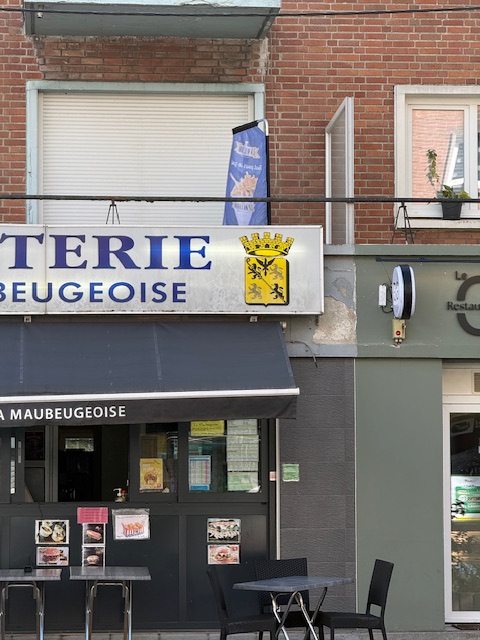

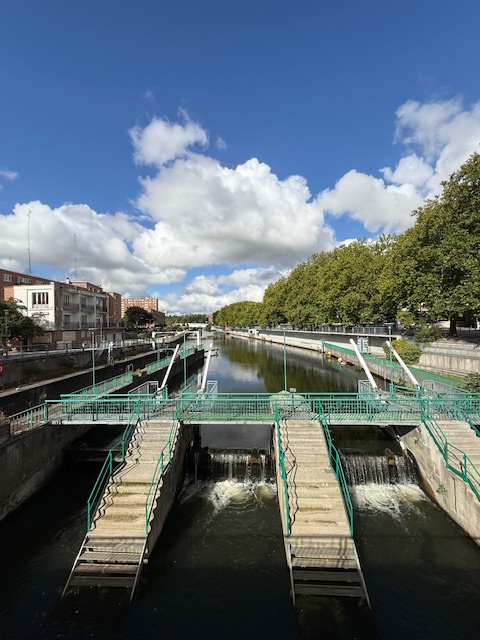

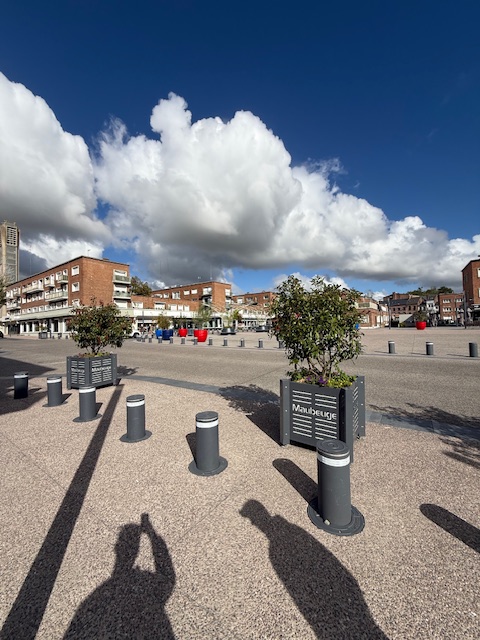



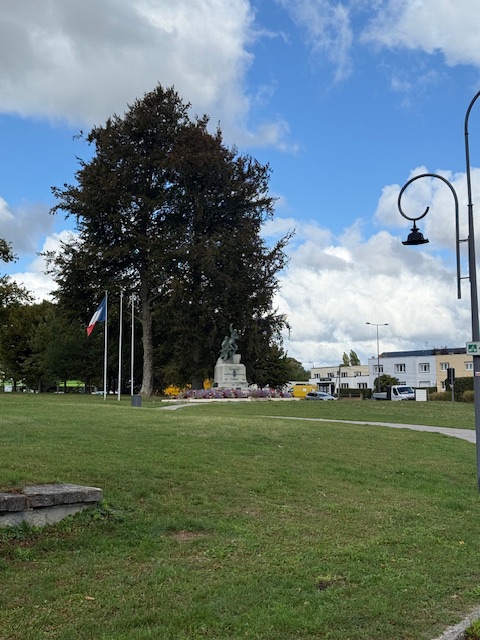


It was out of these ruins that Maubeuge acquired the character it presents today. The French architect André Lurçat was entrusted with its reconstruction, creating what was then one of the largest urban design projects in post-war France.
He envisioned a “modern, clear, green, airy and sunlit” town, conceived as a kind of garden city. The result was an ambitious plan of wide avenues, uniform housing blocks, new schools, shops, and public buildings, most of them designed in a rational and functional style typical of mid-twentieth-century reconstruction. Lurçat’s vision still defines Maubeuge’s appearance, giving the town a distinctive atmosphere for anyone interested in architecture and urban planning.
Yet Maubeuge is not solely about post-war concrete. Its older heritage, though scarred, remains visible. The ramparts built by Vauban encircle the town and are now integrated into green spaces, offering shaded walks with views over the Sambre and the Étang Monier. Within these fortifications lies one of Maubeuge’s most unexpected attractions: its zoo.
Established in 1955, it occupies seven hectares inside the historic defences and is home to over three hundred animals, from zebras and pelicans to white tigers. It is a striking example of how the town has repurposed its military past into leisure and cultural space.
Art in many forms adds another dimension. Statues commemorating figures such as the painter Jean Mabuse and the heroes of the Battle of Wattignies stand in public squares, while works by contemporary sculptors and street artists bring colour and variety to everyday corners of the town.
Local artists such as Gregory Anatchkov and Nicolas Guiet have left their mark with sculptures and installations, while graffiti by younger talents brighten abandoned façades. There are mosaics by Catherine Anne Lurçat, niece of the architect, and a vibrant tradition of festivals in which the town’s folkloric giants—towering effigies paraded through the streets—continue to play a central role.
For those who enjoy exploring traditions, Maubeuge has its share of unusual customs and legends. The annual Saint-Joseph fair once featured “souillettes”—saws under which visitors would pass, supposedly to rid themselves of metaphorical horns.
At the chapel of Sainte Aldegonde, local belief held that children learning to walk would benefit from being carried three times around its glacis after a candle had been lit. The town is also a stage on the Via Gallia Belgica, one of the French routes to Santiago de Compostela, with scallop shell markers still embedded in its streets.


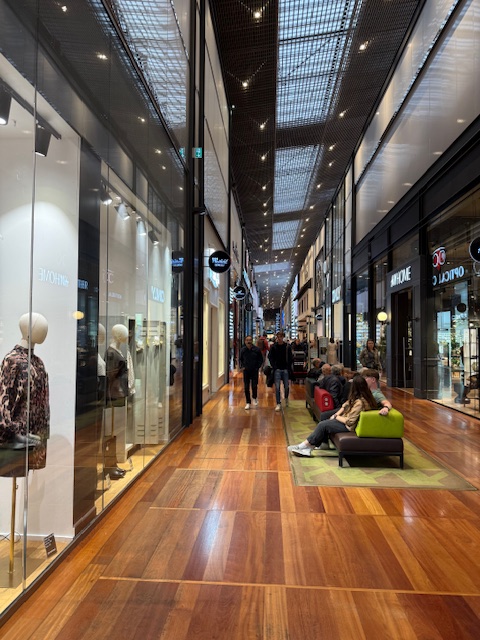

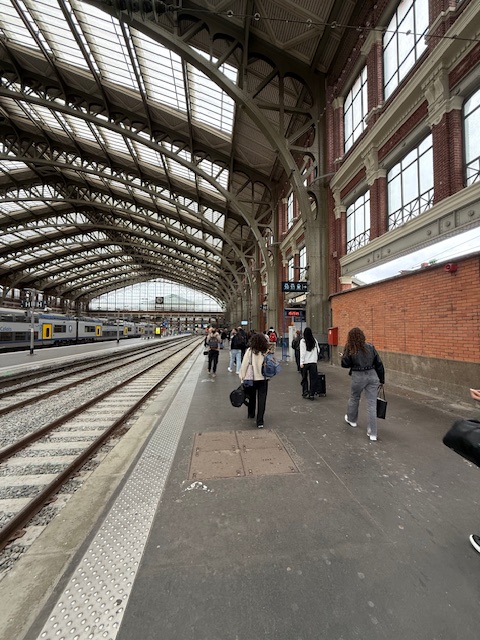
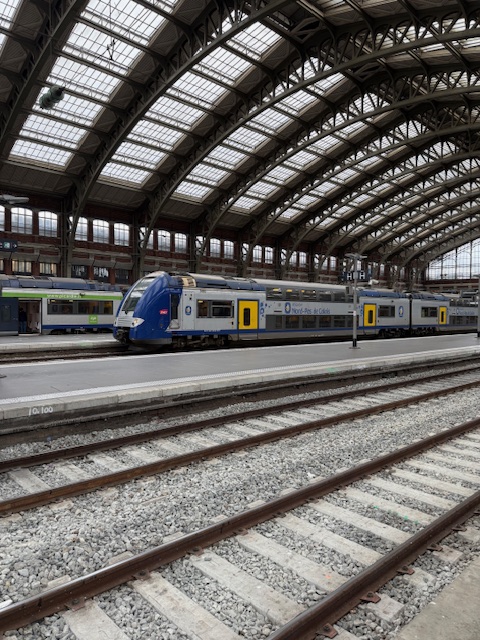

A visit
No, Maubeuge isn’t the pearl of the North. It’s not really worth a detour tourism-wise. The North has a bad reputation in France, being an outcast, economically challenged and a hotbed for far right politics. We did not experience this.
Sure there were some beggars, but we have them in Antwerp too.
Going home via Lille
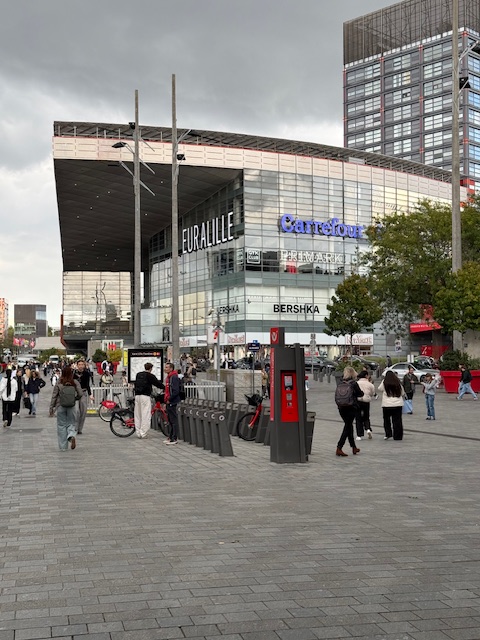
After a little walk in Maubeuge, lunch at Au Bureau (near the cinema complex), we took an SNCF TER regional train to Lille-Flandres (Rijsel-Vlaanderen). In Lille (Rijsel) we did some shopping. We then took the NMBS / SNCB train to Kortrijk (Courtrai), which becomes the train to Antwerp-Central Railway Station.
I’ll introduce Lille another time, after I visit it properly.
 Trip By Trip
Great memorable moments in Maubeuge have family older brother living near and visit on several occasions. Nice post on off the beaten path town of my France Cheers
LikeLiked by 1 person
I know or knew Maubeuge from Le gendarme de Saint-Tropez, where it’s named as a place for exile 😜
LikeLiked by 1 person
The extremes!! De Maubeuge to Saint Tropez !
LikeLiked by 1 person