
Iceland in November and December? Really? I saw an Icelandair promotion on Instagram which I couldn’t resist. The catch? It had to be late November to the start of December 2022. But I could – easily – enthuse Oriol to come along for a road trip in the South and West of Iceland.
We started Day 5 at Þingvellir or Thingvellir National Park.
Þingvellir was the site of the Alþing (Althing), the annual parliament of Iceland from the year 930 until the last session held at Þingvellir in 1798. Since 1881, the parliament has been located within Alþingishúsið in Reykjavík.
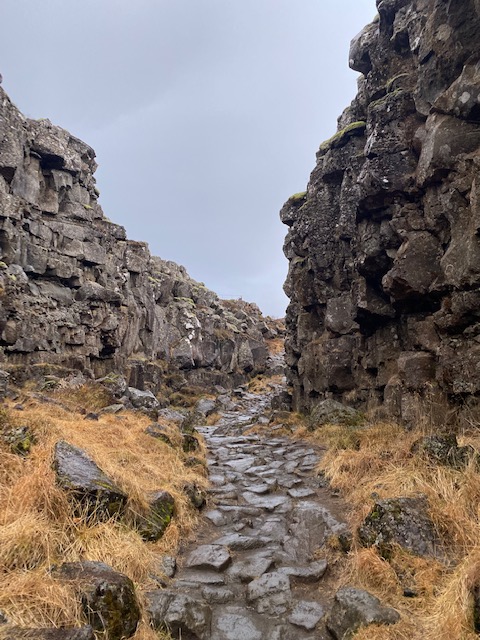
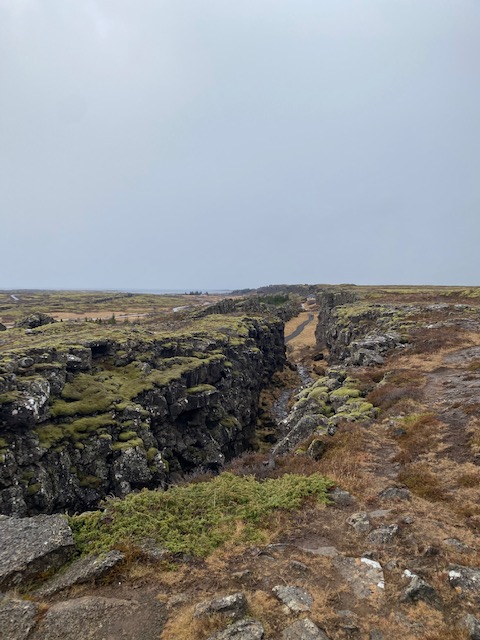
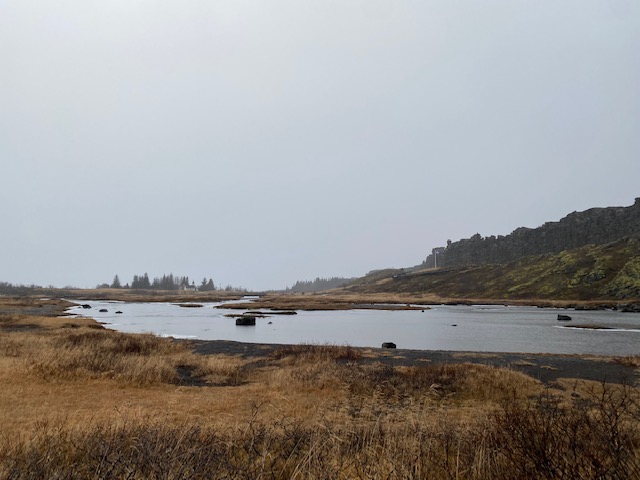
Þingvellir is now a national park in the municipality of Bláskógabyggð about 40 km (25 miles) northeast of Reykjavík. Þingvellir is a site of historical, cultural, and geological significance, and is one of the most popular tourist destinations in Iceland. The park lies in a rift valley that marks the crest of the Mid-Atlantic Ridge and the boundary between the North American and Eurasian tectonic plates. To its south lies Þingvallavatn, the largest natural lake in Iceland.
Þingvellir National Park (þjóðgarðurinn á Þingvöllum) was founded in 1930, marking the 1000th anniversary of the Alþing. The park was later expanded to protect the diverse and natural phenomena in the surrounding area, and was designated as a UNESCO World Heritage Site in 2004.
Þingvellir became a national park as a result of legislation passed in 1928 to protect the remains of the parliament site, thus creating the first national park in Iceland. The park was decreed “a protected national shrine for all Icelanders, the perpetual property of the Icelandic nation under the preservation of parliament, never to be sold or mortgaged”.

Early history
According to the Book of Settlements (Landnámabók), the settlement of Iceland began in 874, when the Norwegian chieftain Ingólfr Arnarson became the first permanent settler from Norway on the island.
Over the next centuries, people of Norse and Celtic origin settled in Iceland. Early on, district assemblies were formed, but as the population grew, there was a need for a general assembly. The descendants of Ingólfur who dominated the region of southwest Iceland had become the most powerful family in the country, and other chieftains felt a need for a general assembly to limit their power.
Grímur Geitskör was allotted the role of rallying support and finding a suitable location for the assembly. At about the same time, the owner of Bláskógar, the contemporary name for the Þingvellir region, was found guilty of murder. His land was declared public, and then obligated to be used for assembly proceedings, and the building of temporary dwellings, and the forest to be used for kindling and the grazing of horses.
The Þingvellir area was chosen for this reason and for its accessibility to the most populous regions of the north, south and west. The longest journey a goði (chieftain) had to travel was 17 days, from the easternmost part of the country where mountains and glacial rivers proved bothersome obstacles.


Origin story
The foundation of the Icelandic parliament is said to be the founding of the nation of Iceland, and the first parliamentary proceedings in the summer of 930 laid the ground for a common cultural heritage and national identity.
Þingvellir played a central role in the history of the country, and its history runs almost parallel with the history of the Icelandic Commonwealth (also called Icelandic Free State).
From commonwealth to foreign rule
The Alþingi (assembly) at Þingvellir was Iceland’s supreme legislative and judicial authority from its establishment in 930 until 1271. The Lögberg or Law Rock was the focal point of the Alþingi and a natural platform for holding speeches.
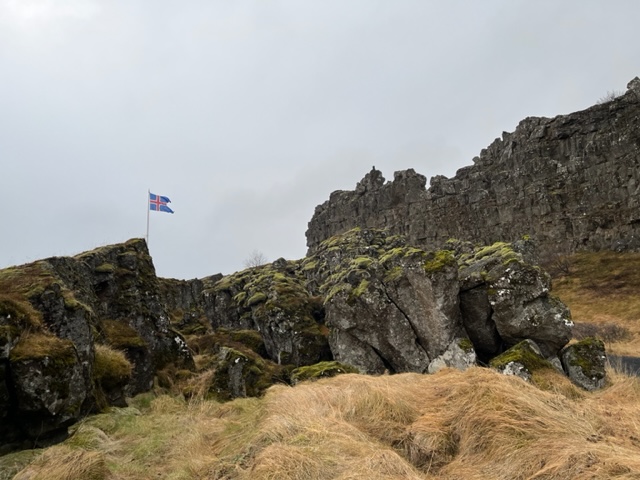
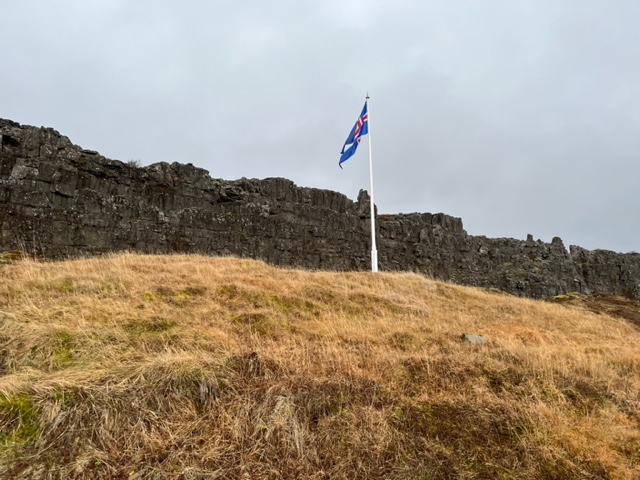
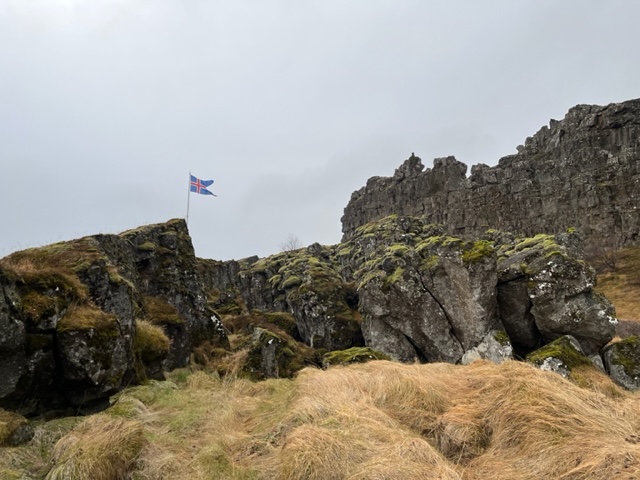
The Lawspeaker, elected for three years at a time, presided over the assembly and recited the law of the land. Before the law was written down, he was expected to recite it from memory on the Lögberg over the course of three summers along with the complete assembly procedures every summer.
Inauguration and dissolution of the assembly took place at the Lögberg, where rulings made by the Law Council were announced, the calendar was confirmed, legal actions were brought and other announcements made which concerned the entire nation. Anyone attending the assembly was entitled to present his case on important issues from the Lögberg.
The Law Council served as both parliament and supreme court. Laws were passed and approved there, and rulings made on points of law. The Law Council appointed members of the Fifth Court (a kind of appellate court) and the Lawspeaker, and took part in the election of the bishop.
Unlike the Alþingi, the Law Council was a closed body in which only certain people enjoyed full rights: chieftains who held the office of goði, their Þingmen and later also bishops. However, everyone at the assembly was entitled to watch and listen to the Law Council at work.
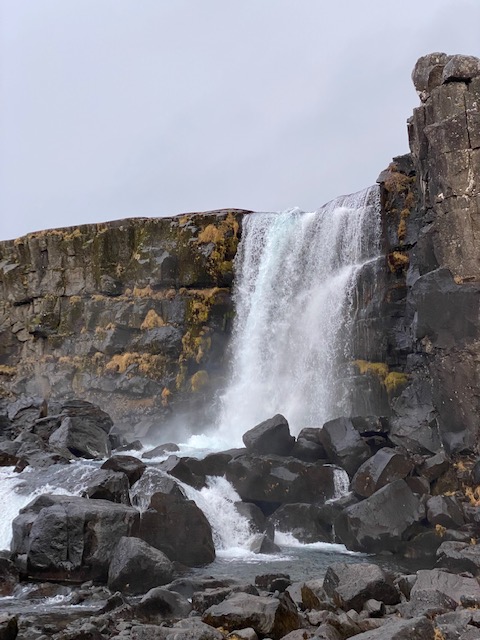
From the earliest times until the 15th century, the Law Council met at Neðri-Vellir on the east bank of Öxará, but when the river changed its course around 1500, the council was moved to an islet in the river. In 1594, the Law Council was relocated to the foot of the ancient Law Rock, where it remained until the Alþingi was finally transferred from it in 1798.
The Alþingi was Iceland’s legislative and chief judicial authority for the duration of the Commonwealth, until 1271. Executive power was in the hands of the chieftains and parties to individual cases. This proved to be quite an adequate arrangement for as long as the balance of power remained, but flaws emerged when it was disrupted.
In the final decades of the Commonwealth, there were clashes between chieftain families, which resulted in Iceland coming under the Norwegian crown. Executive power was strengthened under this new order, while legislative and judicial authority at first remained in the hands of the Alþingi, but was gradually transferred to the Norwegian and later the Danish rulers, until in 1662 when the King of Denmark became the absolute monarch of Iceland.
Culture
Þingvellir was the centre of Icelandic culture. Every year during the Commonwealth period, people would flock to Þingvellir from all over the country, sometimes numbering in the thousands.
They set up temporary dwellings (búð, plural búðir) with walls of turf and rock and temporary roofing of homespun cloth, and stayed in them for the two weeks of the assembly. There were no permanent buildings on Þingvellir apart from a farm and, later, two churches.
Although the duties of the assembly were the main reason for going there, ordinary people gathered at Þingvellir for a wide variety of reasons. Þingvellir was a meeting place for everyone in Iceland, laying the foundation for the language and literature that have been a prominent part of people’s lives right up to the present day.

Nationalist symbol
During the 19th century, Þingvellir emerged as a nationalist symbol.
On 17 June 1944, Iceland became a republic after the Kingdom of Iceland had been in personal union with the King of Denmark, Christian X. Regent Sveinn Björnsson signed the official act and became the first president.
A visit
At a first visitor centre, a cure twink gave us a map and direction where to go for interesting walks. At the second, larger visitor centre, another handsome man gave us more elaborate explanations and a better map.
The interesting part of Þingvellir is quite accessible, at least to other hikes we did. But some paths can be muddy and thus slippery. But there are paths and stairs and many signs with explanations.
Although not a huge walk, we still spent some two hours at Þingvellir. For its cultural significance, it is certainly worth a visit. Also, you can walk from America to Europe there.
Hvalfjörður
Hvalfjörður (“Whale Fjord”) is situated in the west of Iceland between Mosfellsbær and Akranes. The fjord is approximately 30 km long and 5 km wide.
The origin of the name Hvalfjörður is uncertain. Certainly today there is no presence of whales in the fjord; while there is a whaling station in the fjord, whaling is conducted in the open ocean outside the fjord.
The only whaling station in Iceland is still located in this fjord. In the past the fjord also contained many herring fisheries.
During World War II, a naval base of the British and American navies could be found in this fjord. The British base, HMS Baldur, was at Hvitanes, on a small point of land jutting into the fjord.
One of the piers built by the United States Navy is today used by the Hvalur whaling company for the processing of fin whales, partially for the domestic market, and mostly for export to Japan.
We drove past the fjord, but there was bad visibility.


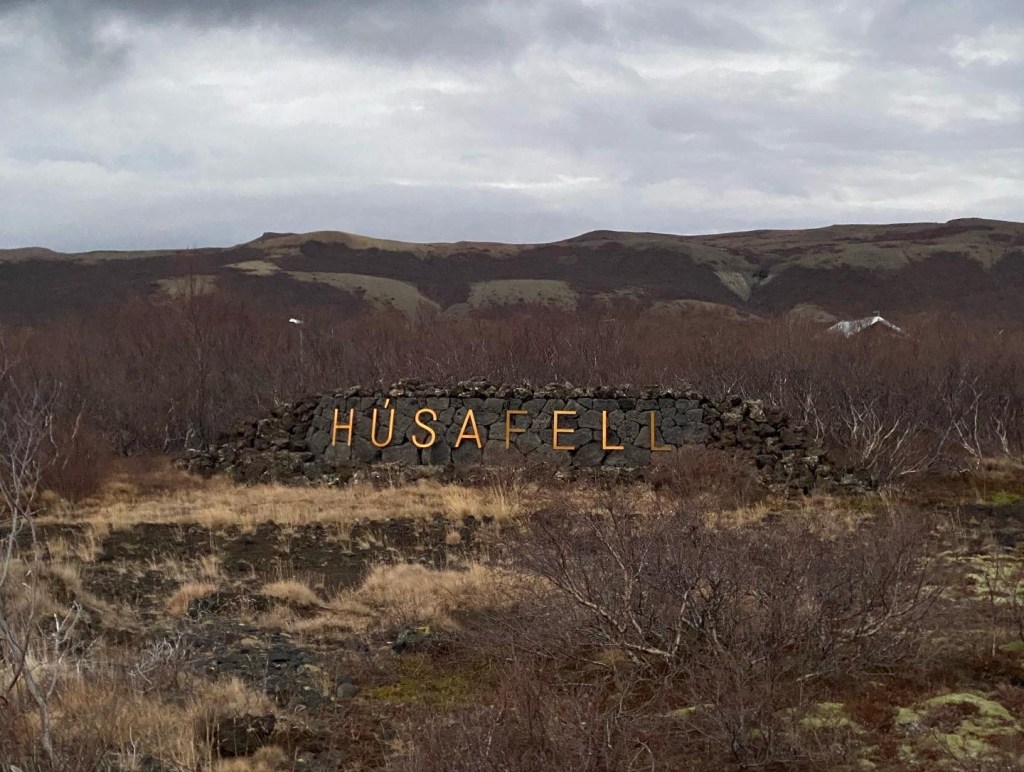
Húsafell
After Þingvellir we drove to Húsafell.
Húsafell is a sprawling farm and church estate and the former site of a rectory. It is the innermost farm in Borgarfjörður in the west county of Iceland, not far from Reykholt and Reykholtsdalur.
Húsafell farm now serves as a hub of service for various types of tourists visiting and residing in its surrounding area. The Húsafell surrounding area thus includes a wide array of second homes, tent sites, holiday housing and short term lodgings. Among its amenities are a swimming pool and a golf course. The wider Borgarfjörður region is also renowned for its multitude of lakes where there is trout to be had and salmon to be lured in the many rivers where it is possible to go fishing.
In the near vicinity of Húsafell are the natural attractions of Barnafoss and Hraunfossar waterfalls as well as the caves of Víðgelmir and Surtshellir. There are also many exciting hiking trails to be experienced in the area, as well as the more organized tours on offer to see the glaciers Eiríksjökull or Langjökull, and excursions across the Arnarvatnsheiði highland or all the south across the Kaldidalur highland.
Natural features in the area include the Hraunfossar, where water comes out from a lava field over a length of about 1 km. They are placed in a setting of birch wood. The trees here grow up to 4 m. The caves of another lava field, Hallmundarhraun are also not too far away.
A visit to Húsafell
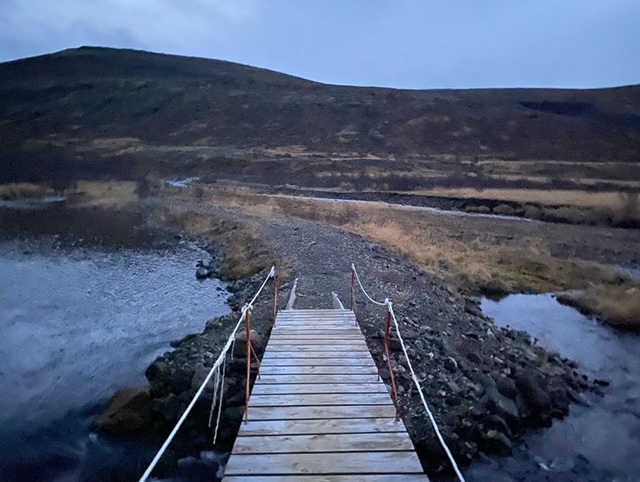
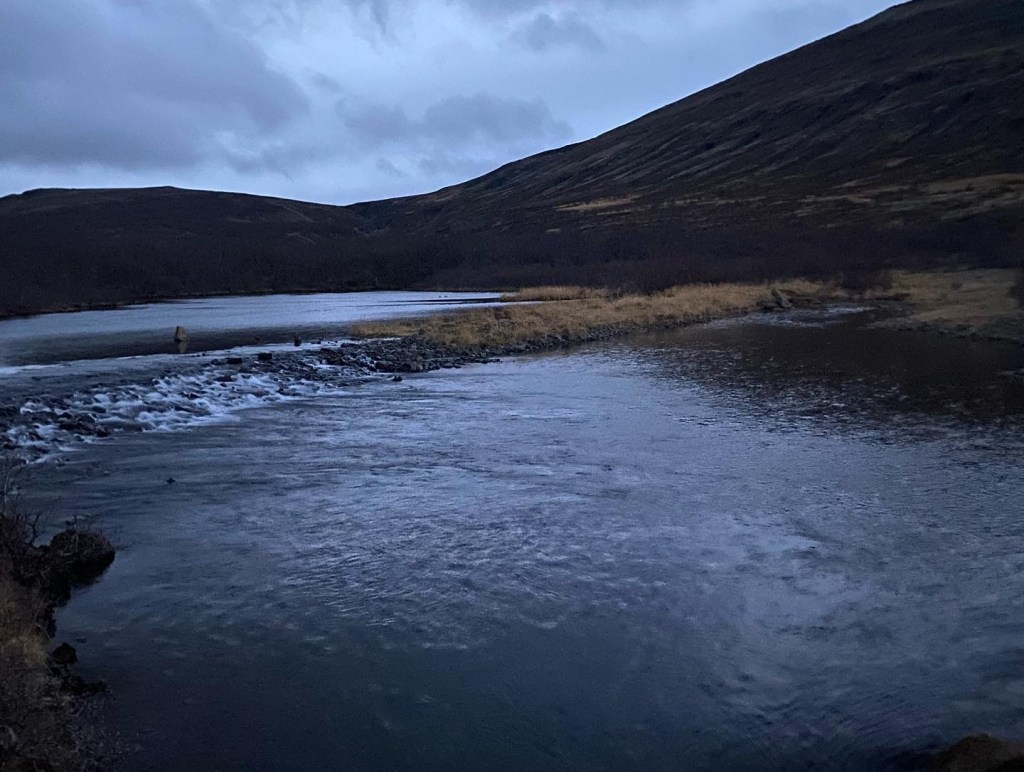
We drove all the way to Húsafell but it was too late in the day and it was getting dark quickly. We attempted a hike, but that wasn’t a great idea. We were looking for a hot spring for some skinny dipping, but there were too many obstacles.
Iceland, November & December 2022
- REVIEW | Icelandair Brussels Airport (Zaventem) to Reykjavík (Keflavík International Airport) on Boeing 737 MAX 8 in Economy.
- ICELAND | Kevlavík – Bridge Between Continents – Reykjanesviti Lighthouse – Reykjanestá – Gunnuhver Hot Springs – Grindavík – Reykjavík.
- REVIEW | Hotel Cabin in Reykjavík.
- ICELAND | Seljalandsfoss Waterfall – Skógafoss – Sólheimajökull – Dyrhólaeyjarviti – Reynisfjara – Vík.
- REVIEW | Hotel Katla in Vík.
- ICELAND | Skeiðará Bridge – Diamond Beach – Jökulsárlón – Skaftafellsjökull – Dverghamrar – Kirkjugólf – Fjaðrárgljúlfur – Skaftáreldahraun.
- ICELAND | Aurora Borealis or Northern Lights at Reynisfjara Black Sand Beach near Vík.
- ICELAND | Fjaðrárgljúlfur – DC-3 Plane Wreck at Sólheimasandur – Geysir – Gullfoss.
- ICELAND | Secret Lagoon in Flúðir.
- REVIEW | Guesthouse Flúðir.
 Trip By Trip
It’s probably not, but it looks like the most remote and rugged spot for a parliament. Maggie
LikeLiked by 2 people
Indeed! But Iceland as a whole is rugged so I guess the early Icelanders were though enough.
LikeLiked by 2 people