
September 2023. Oriol and I are flying to Toulouse for a road trip in Occitania and (French) Catalonia. We include the Principality of Andorra, which I can finally tick off the bucket list, and Llívia, Spain‘s exclave in France. Besides Toulouse we visit Mont-Louis, Villefranche-de-Conflent, Perpignan and Carcassonne.
The Palace of the Kings of Majorca, Palais des Rois de Majorque in French and Palau dels Reis de Mallorca in Catalan is probably the most famous landmark of Perpignan. Note the spelling with J. Both spellings are correct, but for the palace the spelling with J is most common.


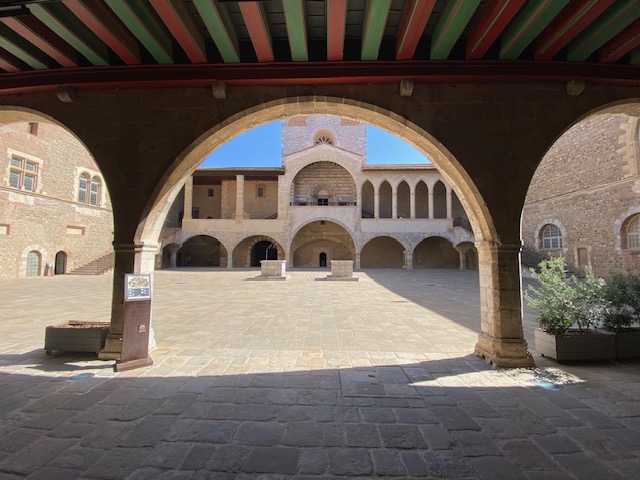
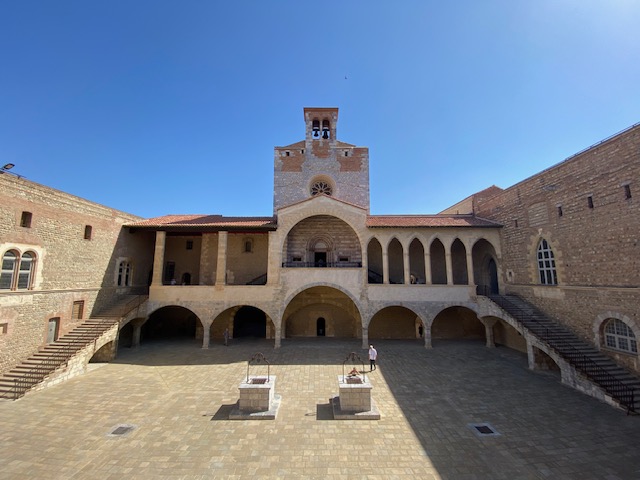
The palace was conceived and constructed under the patronage of King James II of Majorca. The Kingdom of Majorca (or Mallorca) which included parts of present-day Spain and France, was a significant player in the medieval Mediterranean world. The palace was intended to serve not only as a royal residence but also as a symbol of the kingdom’s prestige and authority.
Construction of the palace began in 1276 and continued for over three decades, with completion in 1309. It is important to note that during this era, Perpignan was a major center of the Kingdom of Majorca, and the palace was strategically positioned atop a hill, providing commanding views of the city and its surroundings. This location underscored the palace’s role as a symbol of power and a strategic stronghold.
Catalan Gothic style
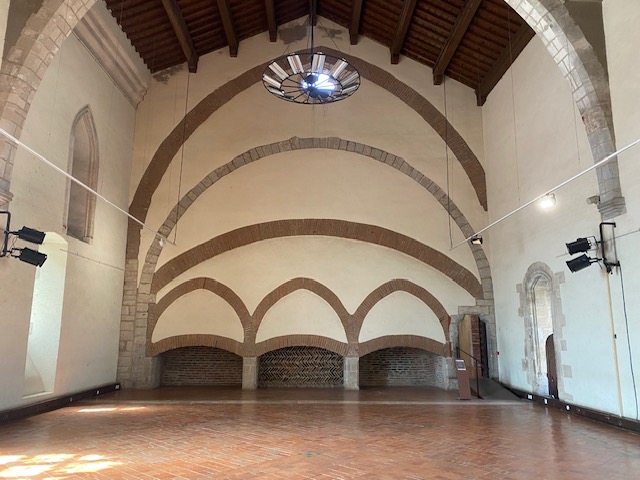
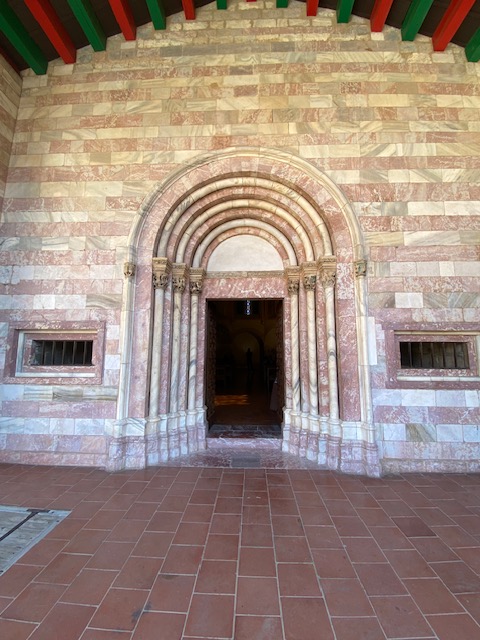
The Palace of the Kings of Majorca is a blend of architectural styles, with a predominant influence of Catalan Gothic design. Its most striking feature is its use of red brick, a material that gives the palace a warm and distinctive appearance. This choice of brick was not only aesthetic but also practical, as it allowed for faster construction and insulation against the Mediterranean climate.
The palace’s layout is organized around a central courtyard, a typical feature of Gothic architecture. This courtyard is adorned with graceful columns and a meticulously maintained garden, offering visitors a serene and contemplative space within the palace’s walls. The courtyard serves as a testament to the medieval appreciation for the interplay between nature and architecture.
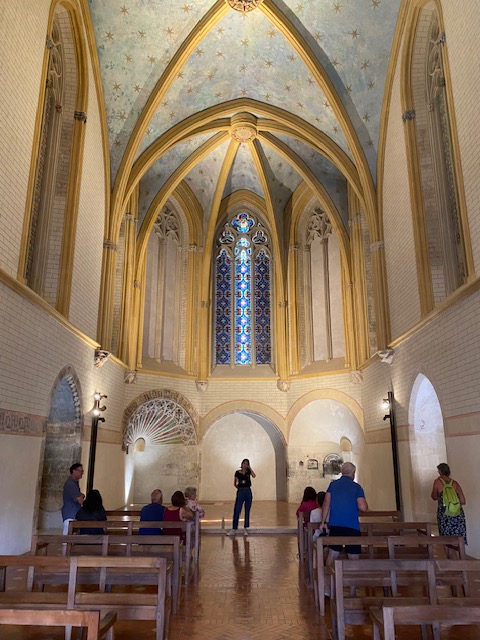
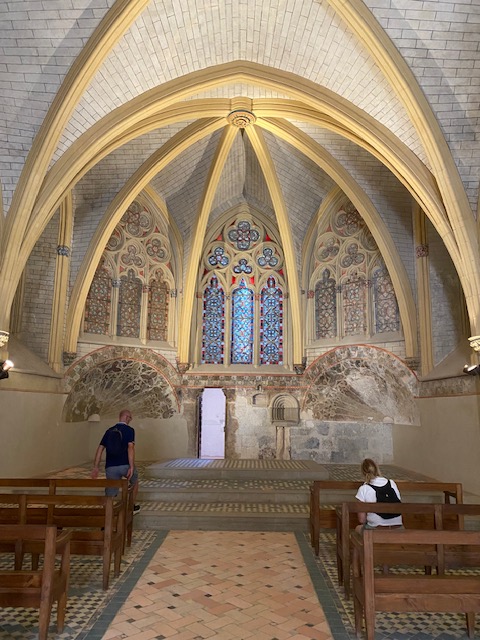
One of the most remarkable elements of the palace is its chapel, dedicated to Saint John the Baptist. The chapel is a testament to the intricate craftsmanship of the period, boasting exquisite stained glass windows that filter sunlight to create a mesmerizing play of colors within. Its Gothic design, with pointed arches and ribbed vaults, is a showcase of the architectural sophistication of the time.





The palace’s role in history
The Palace of the Kings of Majorca played a crucial role in the history of the Kingdom of Majorca and the broader medieval Mediterranean world. It was not only a royal residence but also the administrative heart of the kingdom. From the palace, King James II and his successors governed their realm, making decisions that influenced the political and cultural landscape of the region.
One of the most significant historical events associated with the palace was the Treaty of Corbeil in 1258. This treaty, which predates the construction of the palace, marked a pivotal moment in the relations between the Kingdom of Majorca and the Kingdom of Aragon. The treaty effectively recognized the sovereignty of James I of Aragon over the Kingdom of Majorca, setting the stage for the consolidation of Aragon’s power in the Mediterranean.
During its heyday, the palace was a hub of cultural and intellectual activity. It attracted scholars, poets, and artists from across the Mediterranean world, contributing to the flourishing of Catalan culture during the 13th and 14th centuries. The palace’s proximity to the University of Perpignan, one of the oldest in Europe, further enhanced its status as a center of learning and culture.


A view of Perpignan
Perched atop a hill, the palace offers panoramic vistas of the city of Perpignan, the surrounding countryside, and the majestic Pyrenees mountains in the distance. The strategic location of the palace not only provided a defensive advantage but also allowed rulers to surveil their domain with a commanding view.
Visitors to the palace today can climb its towers and ramparts to enjoy these breathtaking views.

The palace’s evolution through time
After the Kingdom of Majorca was incorporated into the Kingdom of Aragon, the palace lost its political significance. Subsequent rulers, including the French monarchs, maintained and modified the palace to suit their needs.
One significant alteration was carried out by Louis XI of France in the 15th century, during which the palace was transformed into a royal citadel and military stronghold. The fortress-like walls and battlements that surround the palace today bear the marks of this period of adaptation.
In the 20th century, the palace was designated as a national monument, and efforts were made to restore and preserve its historical and architectural value. Today, it stands as a well-maintained testament to its storied past and continues to welcome visitors from around the world.
Cultural significance and tourism
The Palace of the Kings of Majorca serves as a cultural and heritage centre that houses a museum that showcases artifacts, documents, and exhibits related to its history and the medieval period. It is a place where visitors can immerse themselves in the vibrant tapestry of the past.
The palace also serves as a venue for concerts, exhibitions, and events that celebrate the region’s heritage and artistic achievements. These cultural offerings not only contribute to the vitality of the city but also ensure that the palace remains a living institution that resonates with contemporary audiences.
The Palace of the Kings of Majorca is one of Perpignan’s most visited attractions.

A visit
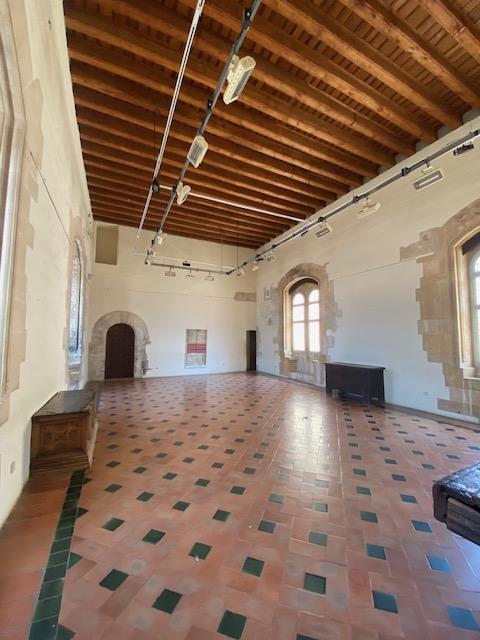
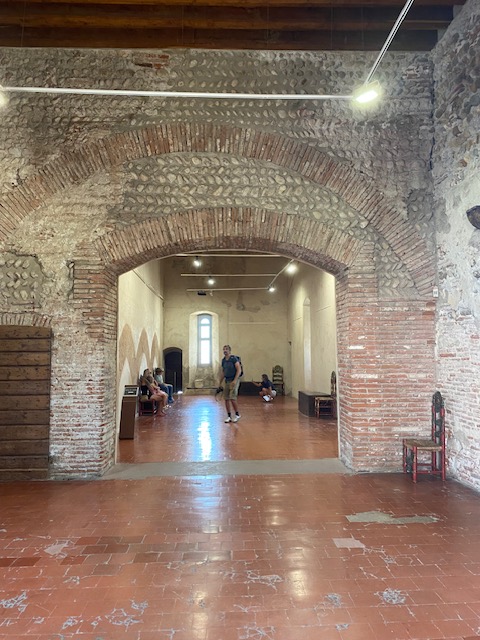
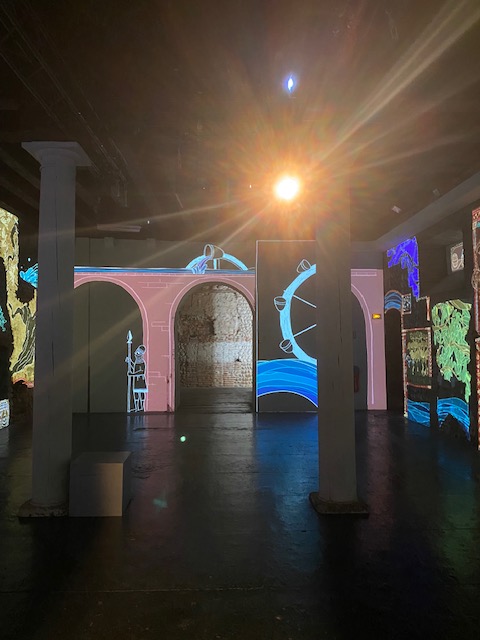
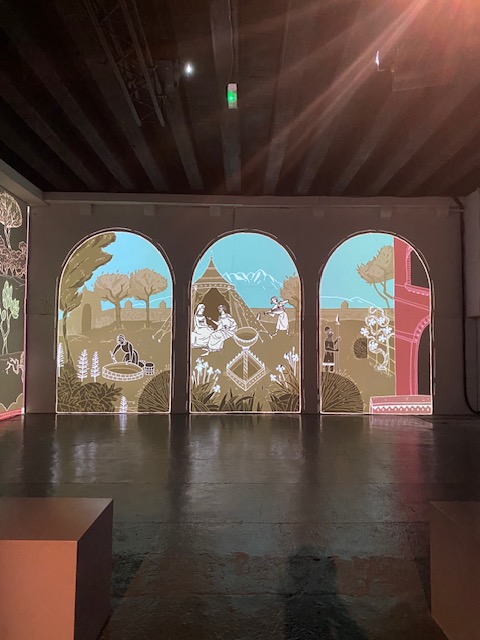
As medieval palaces go, the Palace of the Kings of Majorca is an impressive specimen. It’s not childish or disneyfied. There are barely pieces of furniture so a visit is not a long affair. One room has a multimedia presentation.
The Palace of the Kings of Majorca is absolutely thé landmark of Perpignan and totally worth a visit. But no, it’s not Versailles.
2023 Occitania – Andorra – Catalonia Road Trip
- TOULOUSE-BLAGNAC AIRPORT | Arrival, ID check, car rental and unusually strict security at departure.
- REVIEW | Novotel Toulouse Purpan Aéroport.
- Circuit Andorra.
- HOTEL REVIEW | Eurostars Andorra.
- REVIEW | Caldea hot spring spa and treatments in Andorra la Vella.
- Andorra la Vella & Escaldes–Engordany.
- QUEER ANDORRA | Entre Nous, the only gay bar in the village.
- ANDORRA PARLIAMENT HOUSE | Casa de la Vall.
- Andorra.
- Llívia, Spain’s exclave in France.
- LE TRAIN JAUNE TERRITORY | Mont-Louis and Villefranche-de-Conflent.
- REVIEW | Dali Hôtel Perpignan.
- Perpignan during the Visa pour l’image international photo journalism festival.
 Trip By Trip
So beautiful place, awesome Timothy.
Gracias. Great day.
LikeLiked by 2 people
Definitely worth a visit. Have a lovely day, Elvira.
LikeLiked by 1 person
Thank you Timothy.
You as well.
LikeLike