
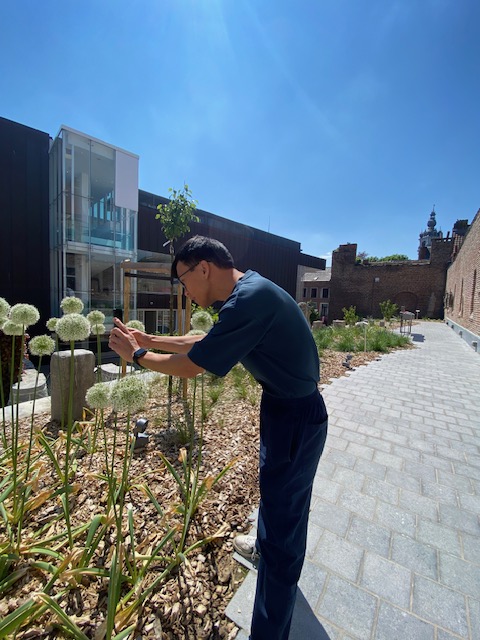
Until 18 August 2024, the Beaux-Arts Mons museum or Museum of Fine Arts of Mons is hosting an exhibition on French sculptor François Auguste René Rodin. The exhibition brings together famous and lesser-known work by the artist. Thanh and I visited in May.



“The exhibition explores the narrative of his artistic career in which Belgium – this fertile ground that allowed his art to flourish – is the centerpiece”, Visit Mons says.
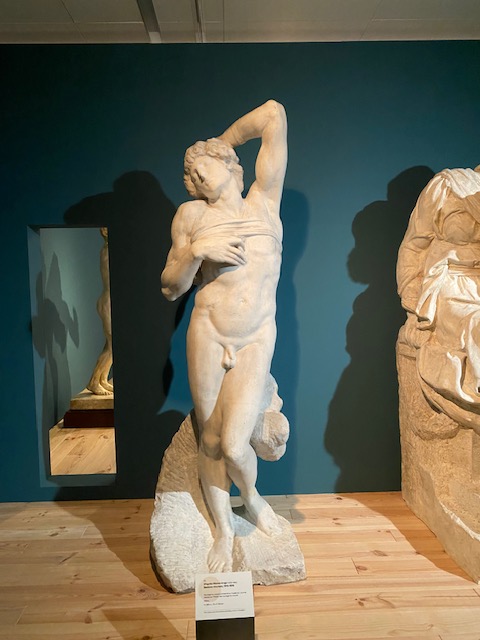
“Thanks to numerous discoveries and comparisons with Rodin’s sources of inspiration such as Michelangelo, Andreas Vesalius, Jan Mabuse, and Peter Paul Rubens, it will also reveal Rodin’s interest in the artistic innovations of the Renaissance, which have scarcely been taken into account until now.”
“In this respect, the exhibition will allow visitors to take a new look at the priceless heritage of Mons, with a selection of works from the Puissant collection, but also works by Jacques du Broeucq, the teacher of Giambologna, belonging to the treasury of Saint Waltrude Collegiate Church.”
Finally, thanks to the exceptional collaboration of Belgian artist Berlinde De Bruyckere, Rodin is still relevant, almost paradoxically, as an essential milestone on the road to contemporary art.”
The exhibition feature nearly two hundred sculptures – some of them monumental – drawings, engravings and paintings from the Rodin Museum in Paris, international institutions and private collections.




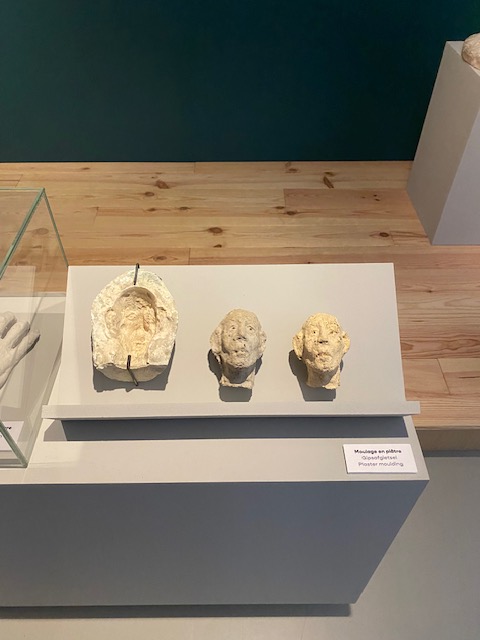
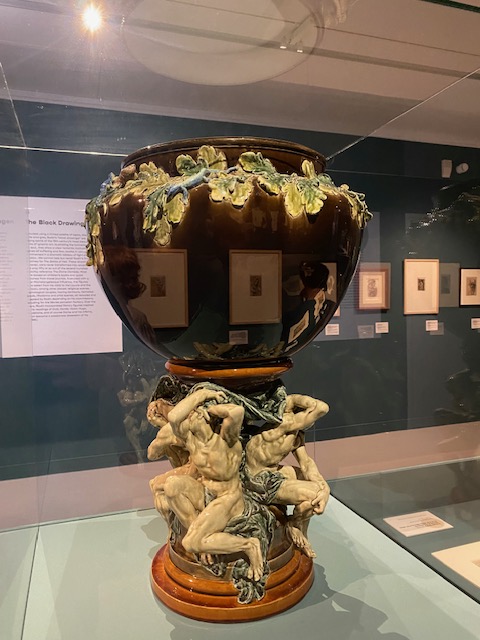


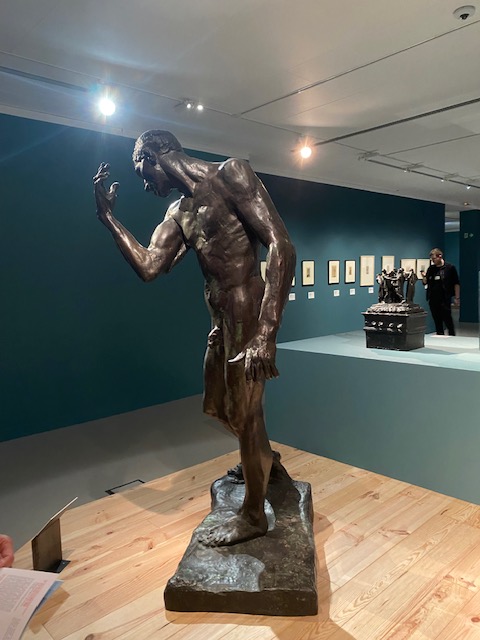


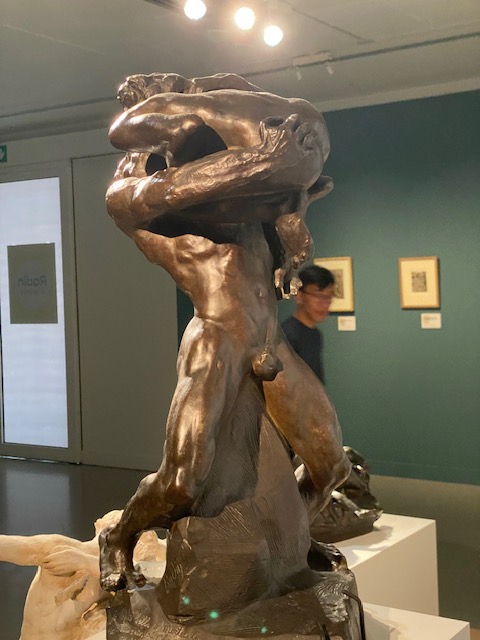


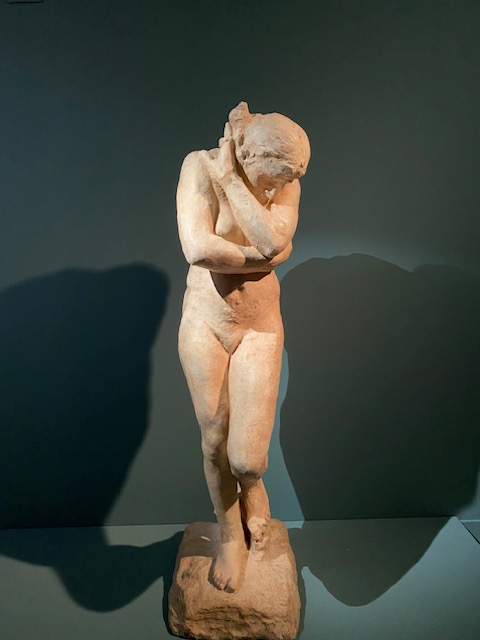
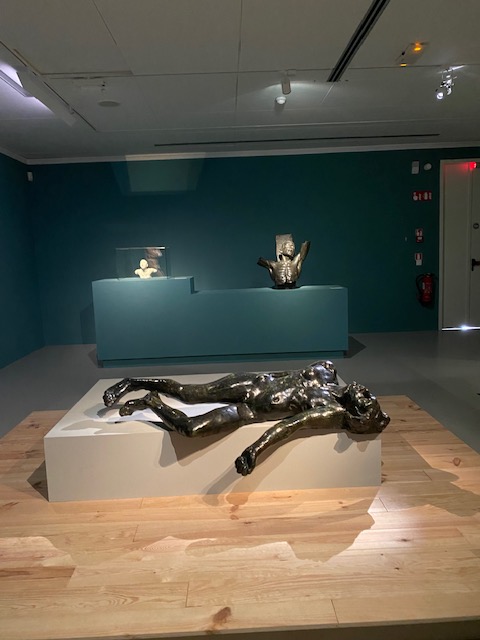
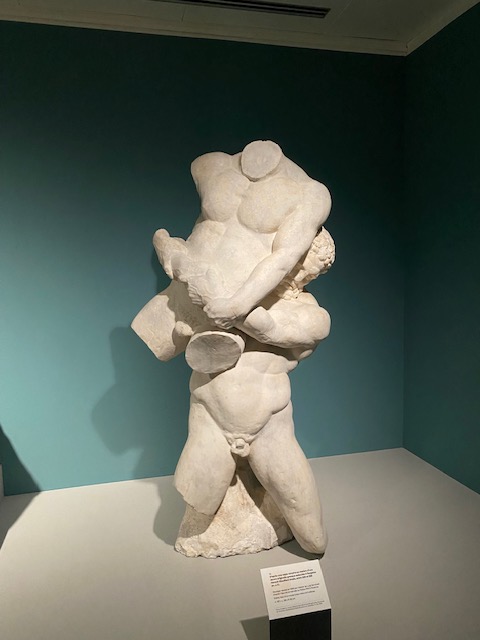

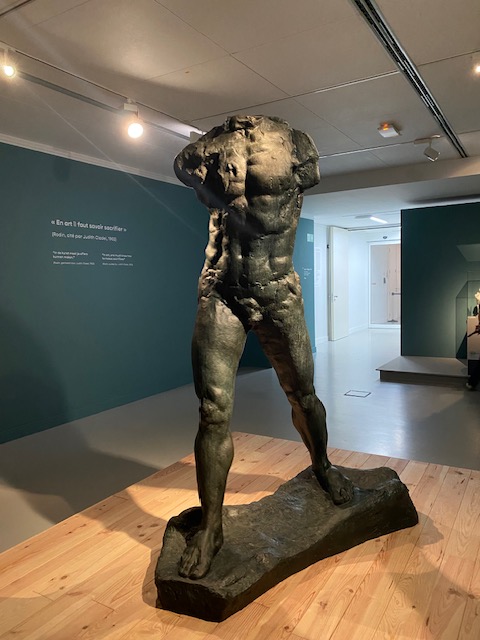
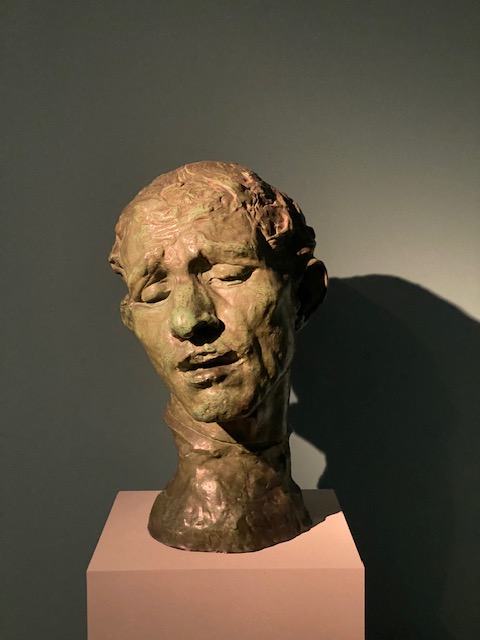
Thinking of a kiss?
What works do you associate with Rodin? Most likely ‘The Thinker‘ (‘Le Penseur‘), ‘The Kiss‘ (‘Le Baiser‘) perhaps. ‘The Burghers of Calais‘ (‘Les Bourgeois de Calais‘) or the ‘The Gate to Hell‘ (‘La Porte de l’Enfer‘)

But the exhibition in Mons – Bergen in Dutch – offers more. It’s a broad exhibition, a complete picture of Rodin with sculptures, but also drawings and engravings.
The artworks come from national and international museums, such as the Louvre in Paris or the Victoria and Albert Museum in London. Many drawings have been loaned out by smaller museums and private collections.
Crucial years in Belgium
Auguste Rodin lived in Belgium for six years from 1871, a period that was extremely important to him. 1871 marks the fall of the Second Empire in France, the Paris Commune and Unification of Germany with the crowning of Emperor William I at Versailles.
Rodin worked on decorating the Brussels Stock Exchange with clittle angels and made ‘figures’ to order. He gradually developed his own visual language.
“Here he underwent an artistic transformation. He changed from a craftsman to an artist,” curator Christina Buley-Uribe to VRT NWS.
“Belgium is a country that I love as much as my open-air studio”, Rodin said himself. And also: “I spent six years in Belgium and had the time to get to know Rubens.”
A famous image is ‘L’Âge d’Airain‘ or ‘The Bronze Age‘. The young man raising his arms and touching his head is Auguste Neyt, a soldier from Ghent who posed for Rodin. The statue was exhibited in Brussels in 1877. It was also in Brussels, in 1899, that Rodin had his first solo exhibition.


In dialogue
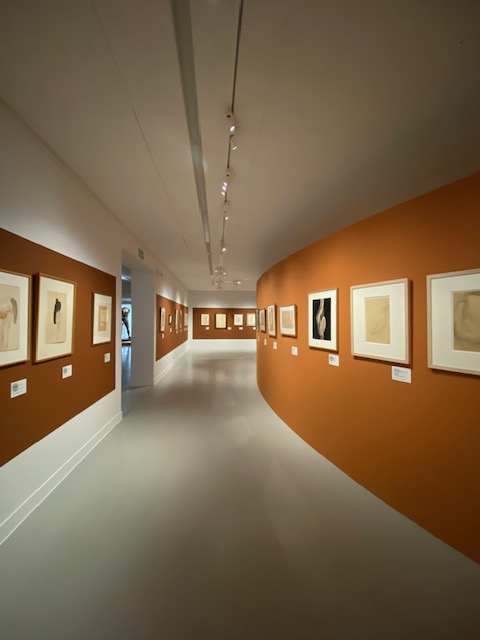
There are also several drawings and paintings by the contemporary artist Berlinde De Bruyckere among the Rodins.
“It is not a double exhibition. It is a Rodin exhibition with a few precise moments in which De Bruyckere’s work enters into dialogue, adds something and activates you as a spectator. Such a contemporary voice wakes you up, sharpens you and makes you act differently looking at Rodin,” curator Pierre Muylle says to VRT NWS.
Inserting modern artists into exhibitions on the past is very ‘now’. I’ve experienced it as recently as my visit to the Gallo-Roman Museum in Tongeren in Limburg.
For Thanh, this serves a double purpose: it allows modern artists exposure and it provides extra content for the exhibition.
The collaboration produces catchy combinations. ‘Into one another‘, a lying, twisted, wax body by De Bruyckere shares space with ‘Martyr‘ by Rodin and ‘The Tortured‘ by Constantin Meunier.



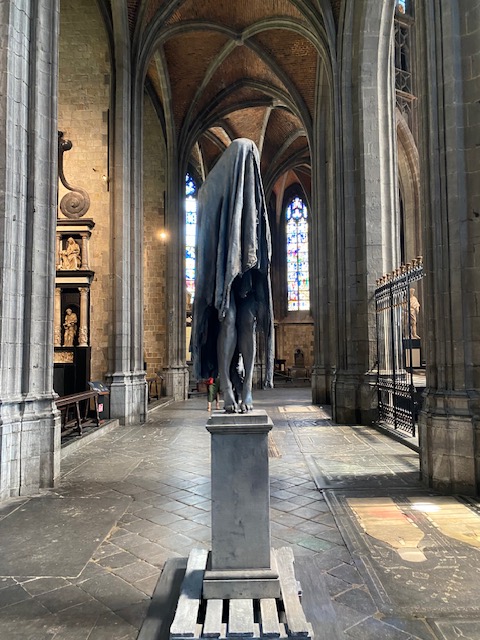

Berlinde De Bruyckere
And then there are the ‘Arcangelos‘, archangels of whom only their legs are recognizable. The rest of their bodies are covered by cloths. The museum houses an impressive version in wax and animal skin.
In the main church of Mons, three angels made of lead and bronze have found a place in a beautiful location, in the choir. They look very heavy, but they balance on the tips of their toes, between heaven and earth.
At a third location in Mons, in the Jardin du Mayeur (Mayor’s Garden) behind the City Hall, you’ll ind the famous sculpture group ‘The Burghers of Calais’. And here too there is a link with Belgium.
There are twelve copies of the ‘Burghers’, spread all over the world. But this group from 1905 was ordered from Rodin himself by the Belgian businessman Raoul Warocqué. The work ended up in his castle in Mariemont and is now somewhat hidden in the park of the Mariemont museum.


Auguste Rodin
François Auguste René Rodin (12 November 1840 – 17 November 1917) was a generally considered the founder of modern sculpture. He was schooled traditionally and took a craftsman-like approach to his work. Rodin possessed a unique ability to model a complex, turbulent, and deeply pocketed surface in clay.
Many of Rodin’s most notable sculptures were criticized, as they clashed with predominant figurative sculpture traditions in which works were decorative, formulaic, or highly thematic.
Rodin’s most original work departed from traditional themes of mythology and allegory. He modeled the human body with naturalism, and his sculptures celebrate individual character and physicality. Although Rodin was sensitive to the controversy surrounding his work, he refused to change his style, and his continued output brought increasing favor from the government and the artistic community.
From the unexpected naturalism of Rodin’s first major figure – inspired by his 1875 trip to Italy – to the unconventional memorials whose commissions he later sought, his reputation grew, and Rodin became the preeminent French sculptor of his time.
By 1900, he was a world-renowned artist. Wealthy private clients sought Rodin’s work after his World’s Fair exhibit, and he kept company with a variety of high-profile intellectuals and artists. His student, Camille Claudel, became his associate, lover, and creative rival.
He married his lifelong companion, Rose Beuret, in the last year of both their lives. His sculptures suffered a decline in popularity after his death in 1917, but within a few decades his legacy solidified. Rodin remains one of the few sculptors widely known outside the visual arts community.
A visit
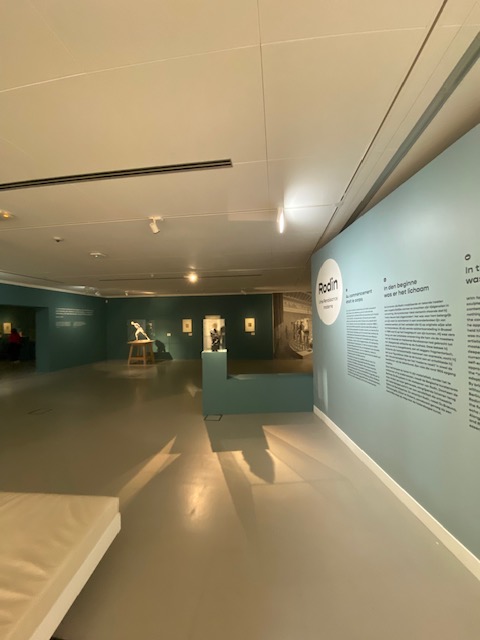
The Rodin exhibition has three locations, with the bulk of the artworks at the Beaux-Arts Museum (BAM), which is now part of CAP, Culture-Art-Patrimoine. Culture, art and heritage.
Accessing the exhibition felt a bit odd. Someone was constantly closing the entry off with a rope and then opening a gap to let people through. Why?
Most visitors came from Flanders, we heard from all the Dutch being spoken. The attendant at the ticket office picked we spoke Dutch and are from Antwerp and immediately switched to a very fluent Dutch. Are people in Hainaut and Wallonia not interested?
Anyway. The exhibtion covers two floors. There’s no audioguide. There’s text on the walls and there’s a brochure. Allow some two hours, including the rest of the museum.
The rest of the museum
It seems the museum works only with temporary exhibitions, the other one being ‘Il restera toujours les montagnes‘ (‘Mountains Will Always Remain‘) by Raphaël Decoster. Mons or Bergen literally means ‘Mountains‘.


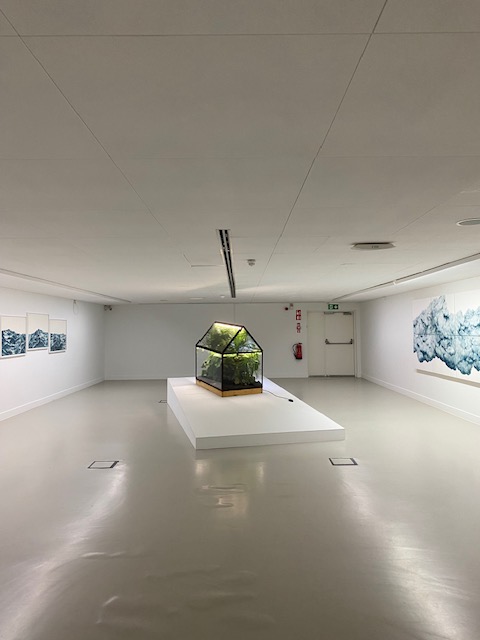
 Trip By Trip
Wow! A wonderful experience, my favorite is the kiss.
Many years ago saw it in person, thank’s for share Timothy.
Have a lovely weekend!
LikeLiked by 1 person
The Kiss is indeed an impressive work. Have a great weekend, Elvira.
LikeLiked by 1 person
Agree with you Timothy is awesome,
made with passion, Have a great weekend as well. Thank’s.
LikeLiked by 1 person