
July 2024. Steve and I are cruising on the Norwegian Getaway, a Breakaway class ship by Norwegian Cruise Line or NCL. Interestingly, our stay on board happened shortly after the Getaway paid a visit to the dry dock for some refurbishments. The route? Piraeus, which is the port of Athens in Greece; followed by Mykonos; two days in Istanbul in Turkey or Türkiye; then Kusadasi or Kuşadası for Ephesus; Rhodes; Santorini (Thira or Thera) and back to Piraeus. Oddly enough, the itinerary offered no sea days.

Our cruise started on Sunday 14 July in Piraeus (Πειραιάς in contemporary Greek, Πειραιεύς in Ancient Greek). So we flew a day earlier and went straight from Athens International Airport Eleftherios Venizelos (ATH) by metro as the regular train was massively delayed. Luckily Metroline 3 connects the airport to Piraeus directly. It takes an hour, but you don’t need to change. Double luck, Piraeus Metro Station and Piraeus Railway Station are very close to our hotel for the night, Athenarum Portus Life & Style Hotel.
After checking in, we decided to explore a bit of the city, to gauge if the distance between the hotel and our pier, E12, was doable on foot and to look for a restaurant.
Piraeus?
Piraeus is a port city within the Athens-Piraeus urban area, in the Attica region of Greece. It is located 8 kilometres or 5 miles southwest of Athens along the east coast of the Saronic Gulf.
The municipality of Piraeus and four other suburban municipalities form the regional unit of Piraeus, sometimes called the Greater Piraeus area, with a total population of some 450,000 inhabitants. Piraeus itself has a population of some 170,000 people, making it the fifth largest municipality in Greece.


History
Once a modest fishing village, Piraeus’ destiny changed dramatically in the 5th century BC when the visionary Athenian statesman, Themistocles, recognized its strategic potential.
With the Persian threat looming large, he transformed it into a fortified naval base, complete with shipyards, arsenals, and a bustling commercial center. This audacious project laid the foundation for Athens’ naval supremacy, enabling it to dominate the Aegean Sea and usher in its Golden Age.
The city’s fortunes, however, were as capricious as the sea. During the classical period, the naval base in Piraeus had 372 trireme shipsheds. Beginning in the 3rd century B.C.
Following the Peloponnesian War, Piraeus suffered a decline, only to rise again under Macedonian and (Western) Roman rule.
Byzantine times saw a resurgence in its commercial activities, but the city’s true revival began in the 19th century with Greece’s independence. Piraeus rapidly emerged as the nation’s primary port, handling the bulk of the country’s trade.
The early 20th century brought a mix of challenges and opportunities. The city expanded rapidly, absorbing nearby villages and industrializing at a feverish pace.
World War II inflicted severe damage, but the postwar period witnessed a phoenix-like rise. Piraeus rebuilt itself, becoming a vital economic engine and a magnet for migration from the Greek countryside.
The city hosted events in both the 1896 and 2004 Summer Olympic Games held in Athens.


Today
Today, Piraeus is now a hub for cruise tourism, with millions of visitors passing through its gates annually. The port authority, Piraeus Port Authority (PPA), has ambitious expansion plans, aiming to transform Piraeus into a major maritime center in the Mediterranean Sea.
The port of Piraeus is the chief port in Greece, the 5th largest passenger port in Europe and the 24th largest passenger port in the world serving about 4.37 million passengers annually in 2020.

To live and to visit
Beyond commerce, Piraeus is a cultural and educational hub. The University of Piraeus, founded in 1939, is one of Greece’s leading institutions of higher education. The city also boasts a thriving arts scene, with theaters, music venues, and art galleries catering to a diverse audience.
For tourists, Piraeus offers a unique blend of history, culture, and leisure. A stroll along the waterfront promenade, lined with cafes, restaurants, and shops, is a delightful way to soak up the atmosphere. The Piraeus Archaeological Museum houses an impressive collection of artifacts that chronicle the city’s past.
For those seeking relaxation, the nearby beaches of Mikrolimano and Pasalimani provide idyllic escapes. The Waterfront Promenade provides for a leisurely stroll along the seafront.
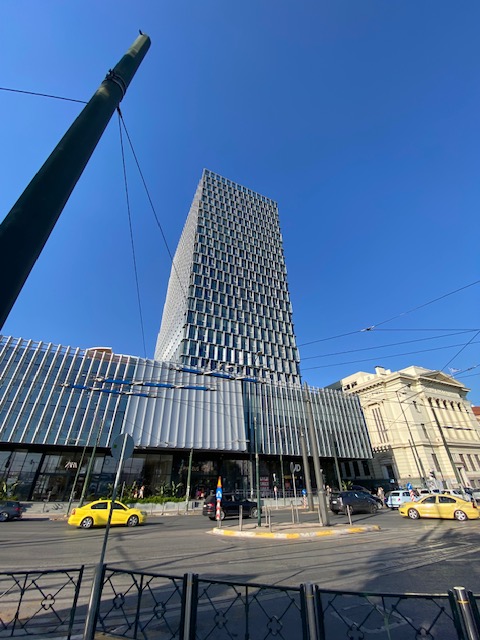
Piraeus also offers a variety of shopping opportunities, from modern malls to traditional markets. We saw a big JD Sports and an H&M.
The city’s strategic location is also a gateway to the Greek Islands. Ferries depart daily from Piraeus to popular destinations such as Aegina, Hydra, and Poros, making it an ideal base for island hopping.

Challenges
Challenges remain, of course. Traffic congestion, pollution, and the pressure of rapid urbanization are issues that the city must address. Yet, Piraeus’ resilience and dynamism are evident. It has weathered storms before and emerged stronger. As Athens continues to evolve, Piraeus will undoubtedly play a pivotal role in shaping the future of Greece.
Whether you’re a history enthusiast, a beach lover, or simply seeking an authentic Greek experience, Piraeus has something to offer. It’s a city where the past and present coexist harmoniously, creating a vibrant and unforgettable destination.
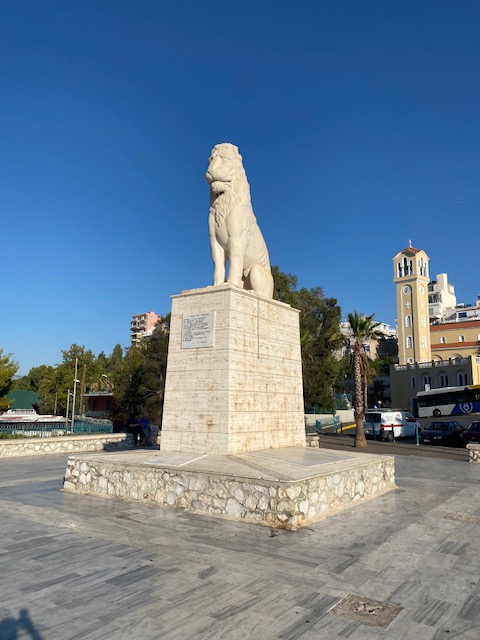
A modest exploration
So, after checking in at the hotel, we decided to walk to cruise pier E12, where we we would embark on the Norwegian Getaway. Is the walk doable on foot, with luggage? It turned out yes.
Having walked passed many ferry piers, having seen churches and cathedrals, we decided to look for a restaurant. We did omit the old port of Piraeus and stayed on the more industrious side. It was becoming late, it was hot.
On Tripadvisor we found Aposperitis Maereio Piraeus or Αποσπερίτης Μαερειό. A very local Greek restaurant where we ate too many local dishes.
On our way back, walked through the station and drinks at Vibo, our hotel’s on-site bar and restaurant.

So?
As a destination, Piraeus probably has more on offer than we’ve seen. But I don’t think we’ll rush back.
 Trip By Trip
17 Comments Add yours