
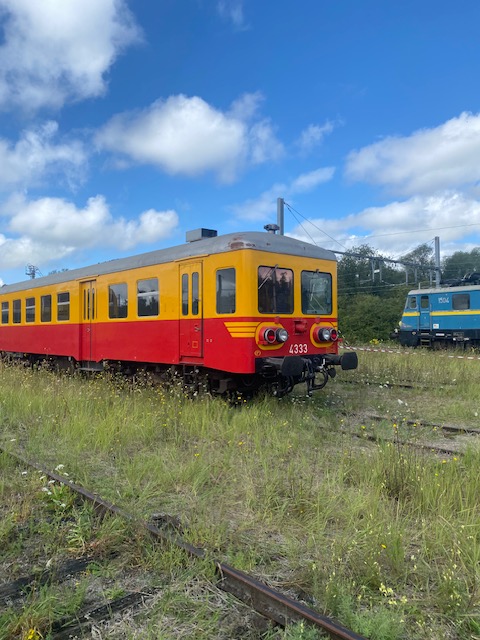
August 2024. Two weekends in a row, we experienced some Belgian railway heritage. On the 11th, we went to Baasrode-Noord for the Dendermonde – Puurs Steam Railway or Stoomtrein Dendermonde-Puurs over line 52. On the 17th, we travelled all the way to Saint-Ghislain for a special ride over freight railway line 100, organised by Le Chemin de Fer du Bocq, while its own railway line is being renovated.
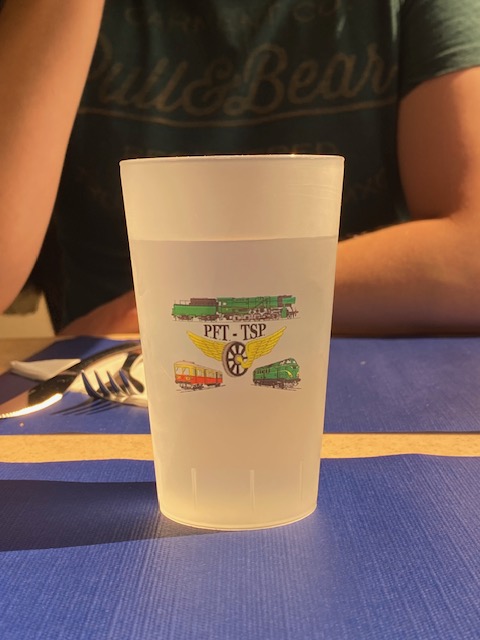
The Fête du Rail or Spoorfestival or Rail Festival is an annual rail and train heritage event organised by Patrimoine Ferroviaire et Tourisme (PFT) or Toerisme en SpoorPatrimonium (TSP) or Turism and Rail Heritage if you want. Usually it operates heritage rides with diesel unites or hauled steam trains at the Chemin de Fer du Bocq between Spontin and Purnode in the province of Namur.
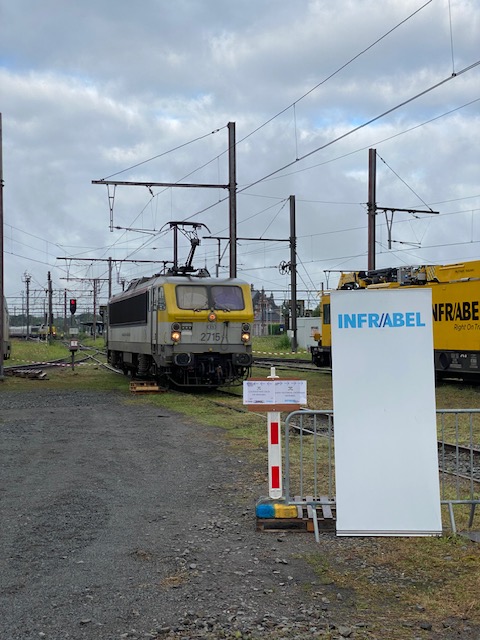
But as there are engineering works on that heritage line, the Rail Festival was moved to the PFT-TSP’s other site, Rétrorail near Saint-Ghislain Railway Station. To sweeten the deal, PFT-TSP organised diesel hauled rides on line 100, Belgium‘s last active purpose-built industrial line. PFT-TSP received support from both rail infrastructure manager Infrabel and national train operator NMBS / SNCB.

So, what are the ingredients for the 2024 Rail Festival?


PFT-TSP
PFT-TSP started in 1988 with a publication in the Belgian Official Gazette (Belgisch Staatsblad, Moniteur Belge). Its objective is to acquire, preserve and restore old, disused rolling stock from the Belgian Railways. This rolling stock is the property of the association or of the members who entrust it to the association. It mainly concerns motorised rolling stock, but other witnesses of the past, such as signal boxes, level crossings and typical railway objects are also preserved. The restoration is carried out entirely by volunteers in their free time. The already restored rolling stock is currently kept in the railway museum in Saint-Ghislain.
While it is mostly known for its operations at Le Chemin de Fer du Bocq, previously line 128, it also organises heritage rides on Infrabel tracks.
On 15 June 2025, PFT-TSP organised a ride with the recently restored siesel locomotive 5519. It ran between Schaerbeek / Schaarbeek (Train World), Antwerp-Berchem, Lier, Herentals, Mol, Tongeren, Liège-Guillemins, Namur, Auvelais, Fleurus, Ottignies, Leuven and back to Schaerbeek.





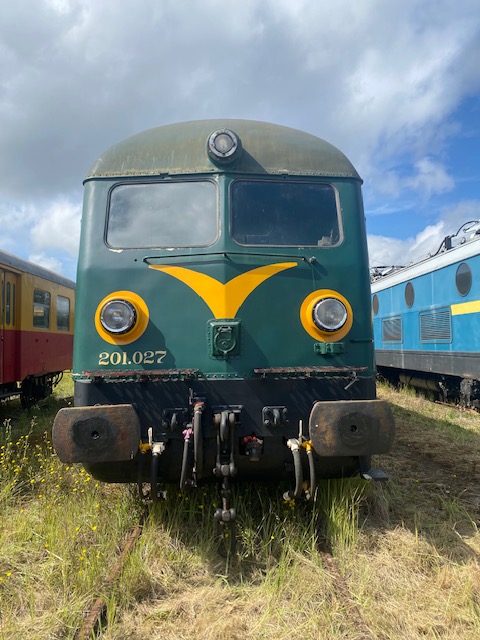
Rétrotrain
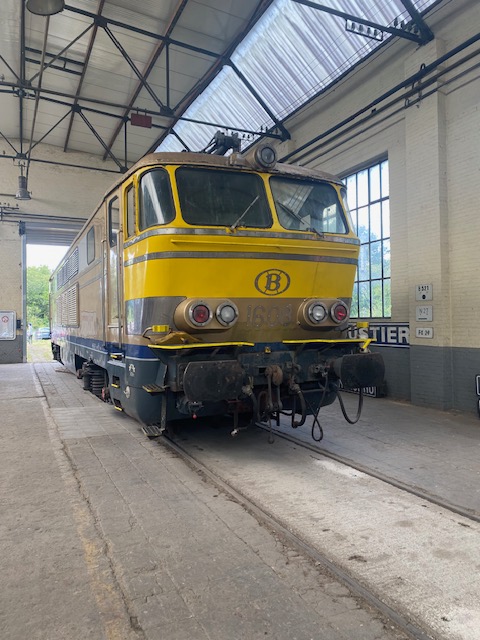
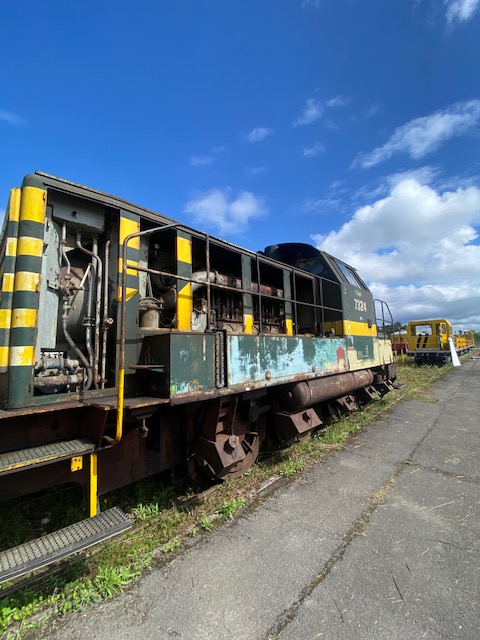
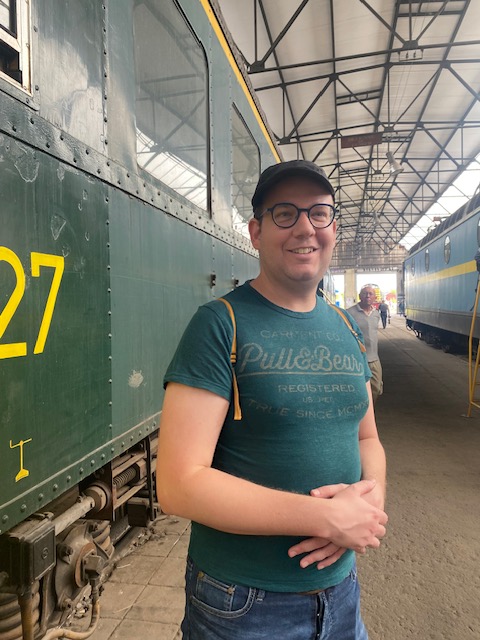
The former NMBS / SNCB repair workshop near Saint-Ghislain Railway Station now allows the conservation of the majority of its rolling stock collection, in particular electric, diesel and steam locomotives that are not necessary for the operation of the museum line.
The association is gradually renovating this building, such asreplacing the roof, active and passive anti-intrusion security, maintaining the masonry and the track bundle, with the aim of creating a reserve that can be visited.
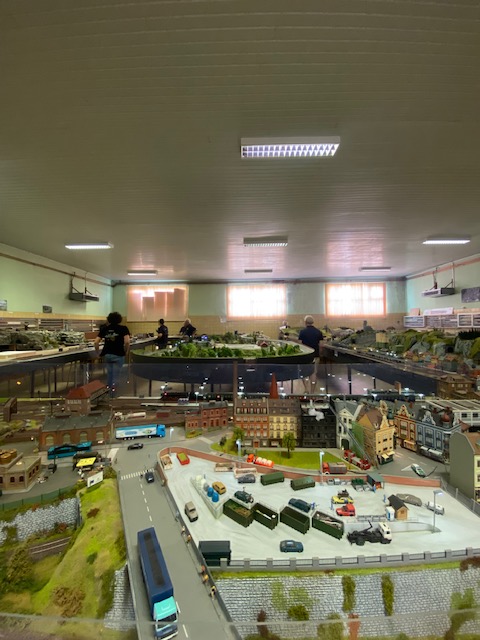
A model-making section has been created there and occupies the premises previously reserved for staff upstairs with offices, toilets, changing rooms and refectory.
Several networks are under construction or are being continuously extended there.
PFT-TSP also organises large scale model exchanges three times a year in the workshop’s main hall. The aim is also to perpetuate the steam engine maintenance workshop there. Saint-Ghislain maintenance workshop
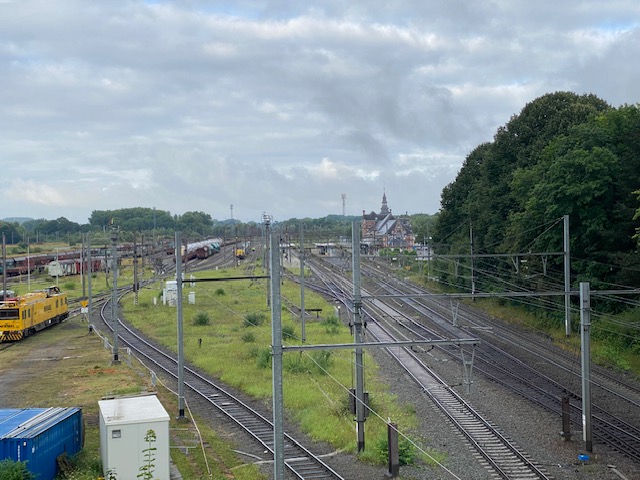
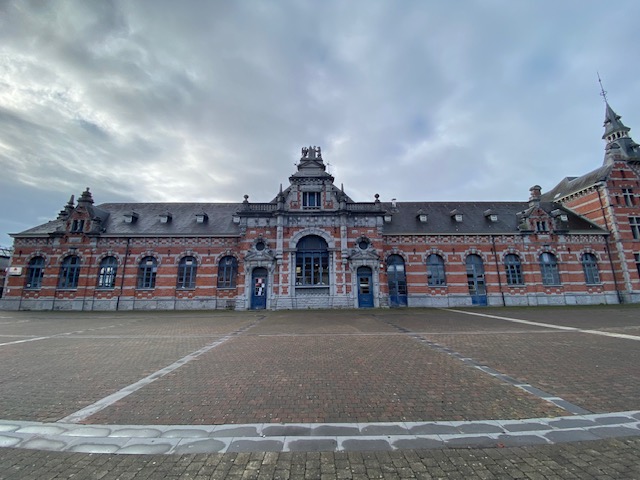
Near the former workshop is the old Saint-Ghislain traction yard. The station was historically the hub of the Borinage rail network where the NMBS/ SNCB had concentrated its facilities.
Built in 1966 to replace a building adapted for the maintenance of steam engines, this six-track workshop initially intended for diesel engines is located at the eastern end of the railway complex.
The track was electrified in the early 1980s, but the deindustrialization of the region caused the workshop to close in 2000, while the marshalling yard maintained a reduced activity for the remaining customers.
The building was partially used for a few years for the small maintenance of the latter’s wagons.
PFT-TSP uses the premises since 2011. After restoring and securing the building, which was regularly the victim of acts of vandalism, a team of around ten volunteers is busy restoring the rolling stock and mechanical signalling equipment, including the Siemens frame at Tertre Railway Station, intended for the tourist operation of line 128 of the Bocq railway between Ciney, Spontin and Bauche.
The distribution of the lower priority sections of the NMBS / SNCB historical collection in 2013 and the association’s departure from the Schaerbeek workshop in 2018 lead to a maximum use of this new storage and maintenance capacity.
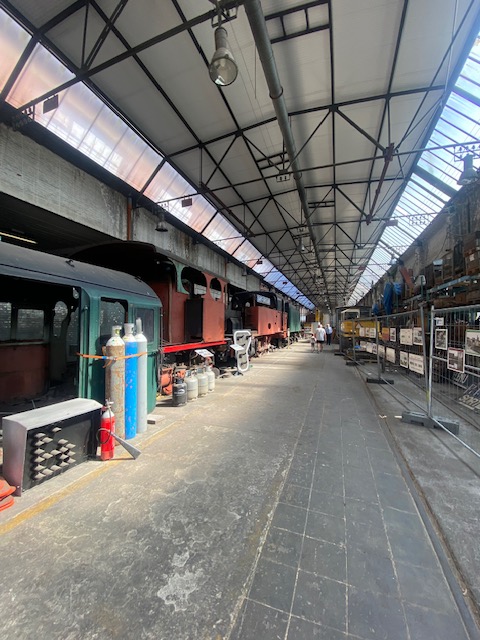
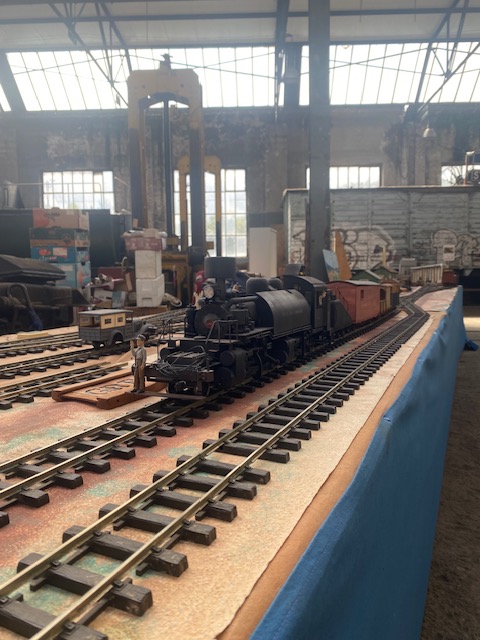

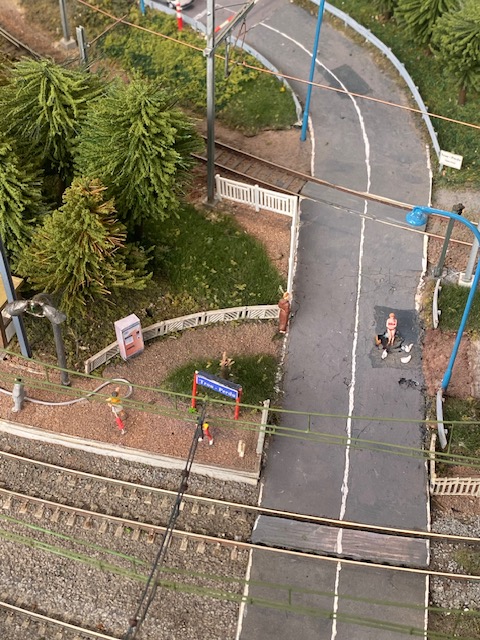

Timeline of the premises
- From 1876 to 1898. Situated along the railway line from Brussels to Paris, it housed coke ovens.
- From 1907 to World War I. From 1907, the glass factory of Jumet, near Charleroi, invested in the building but it suffered major damage during the war.
- From 1923 to 1944. The railway company État Belge bought the former glass factory and it became a carriage workshop. The latter was incorporated into the station facilities. That is why it is connected by four tracks on the Mons side. A carpentry workshop was also built at the front of the building, on the Saint-Ghislain side.
- On 1 May 1944, the city of Saint-Ghislain was heavily bombed and the carriage workshop was not spared either, which meant that it was practically completely destroyed.
- From 1948 to 1996. Since the Borinage had many industrial railway lines, it was obvious that there was a carriage workshop on site for the maintenance and repair of carriages. A new carriage workshop was built in 1948. On the Mons side, six tracks connected to the tracks in the building, which continued outside on the other side (Saint-Ghislain side). They ended on a roller bed. A seventh track, starting from this roller bed, was used to move carriages inside the warehouse.
- From 1998 to the present. In 1998, it was taken over by our association and we finally had a home for our equipment. Initially, the name was Rail Museum. After a school competition near Saint-Ghislain, it was later given a second name: Espace Train (Rail Space). In 2014, the current name Rétrotrain was chosen.


Saint-Ghislain
Saint-Ghislain is a city and municipality in the province of Hainaut. As of 2018, it had a population of approximately 23,335 residents spread across an area of 70.18 square kilometers. The city comprises several districts: Baudour, Hautrage, Neufmaison, Saint-Ghislain itself, Sirault, Tertre, and Villerot.
Historically, the town owes its name to Saint Ghislain, a religious figure who established a presence there in the 7th century. The town’s significance grew around the subsequent abbey.
In terms of modern economy, Saint-Ghislain has attracted notable investment. In 2007, Google selected the city as the location for a major European data center.


Line 100
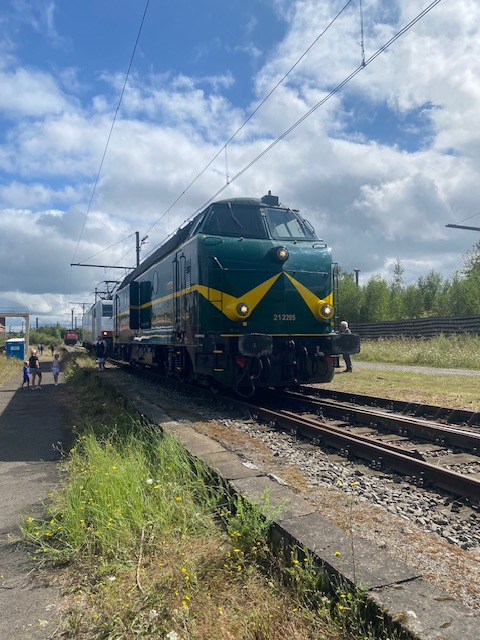
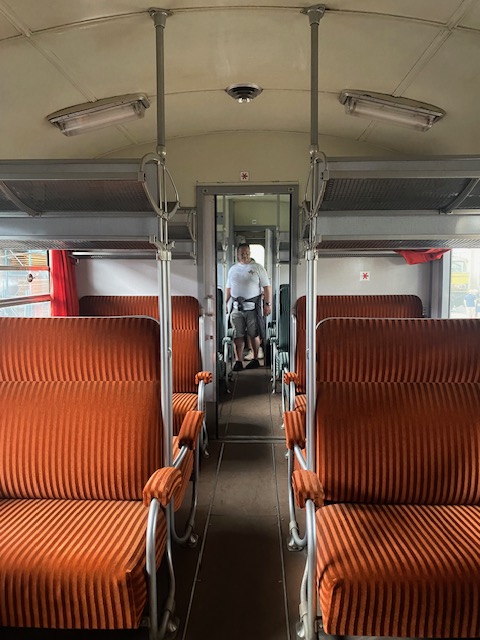
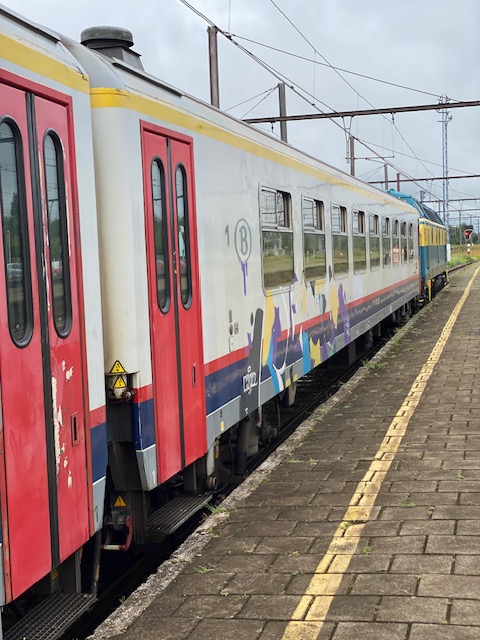
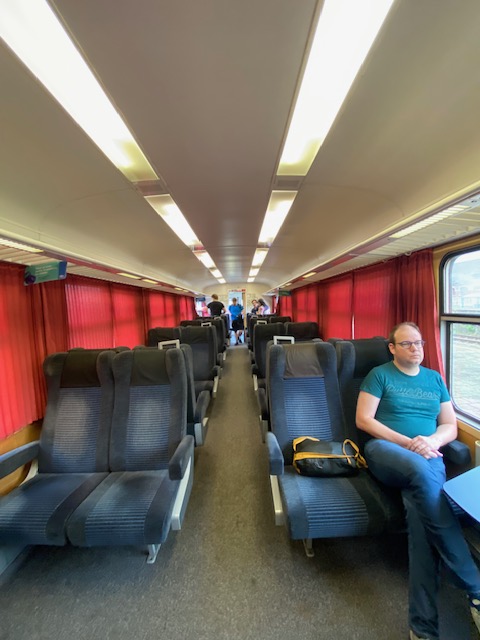
On the Assumption of Mary weekend, this year on 15, (16), 17 and 18 August, PFT-TSP organised rides in line 100. A 77 series diesel locomotive, a not-in-use 21 series electric locomotive, three 1st class M4 carriages and diesel locomotive 5519 ferried enthusiasts over line 100. For loco-hauled trains, four ‘dead weight’ vehicles are a mandatory minimum.
Line 100 was a Belgian railway line linking Saint-Ghislain and Maffle, initially spanning 20.6 kilometers. This length was extended by 3.6 kilometers following a route alteration to branching at Criquelion.
Inaugurated in September 1879, the line originally connected Maffle with Vaudignies. An extension to Saint-Ghislain followed a few months later. Passenger services ceased in 1962, with subsequent track removal in 1965.
Freight traffic, however, persisted on the remaining Saint-Ghislain to Tertre segment.
Until 1970, this section also accommodated limited, unscheduled passenger services for miners. Notably, the line once featured Belgium’s final semaphore signals, which were replaced by light signals in 2019 following the closure of Block 2 in Tertre.



Borinage
The region Borinage owes its name to its extensive coal mines, or ‘bores’. Its inhabitants are known as Borains. While the provincial capital, Mons, is nearby, a stark social divide existed between the city’s population and the rural Borains.
Coal mining was the economic backbone of the Borinage from the 18th century until the mid-19th century. Production soared, surpassing the combined output of France and Germany. The region exported coal primarily to France and Flanders. The area’s rich geological history is evidenced by the discovery of complete iguanodon skeletons in 1878, a find that, despite German wartime attempts, remains irreplaceable.
By 1957, coal mining employed a quarter of the Borinage workforce, a stark contrast to the national employment trend favoring the service sector. The subsequent decline of the coal industry in the 1960s devastated the region’s economy and identity.
The Borinage was a crucible of social unrest, epitomized by the Belgian general strikes. Vincent van Gogh‘s experiences among the region’s miners profoundly influenced his art, particularly his masterpiece ‘The Potato Eaters’. Henry Luyten, another artist, captured the harsh realities of the 1886 strike in his monumental triptych ‘The Strike’. The Borinage’s role in these labor upheavals cemented its reputation as a symbol of industrial struggle in Belgium.


On the day
We depart Antwerp-Central at 6.09 AM to be in Saint-Ghislain just before 9 AM. We travelled via Brussels and Tournai (Doornik). First we walked to the Rétrotrain site, thinking the train ride would depart there. But no.
So we returned to Saint-Ghislain Railway Station to hop on the first ride of the day. That would turn out to be a smart move. The train was quite filled, but not completely full. The second ride was much more crowded.
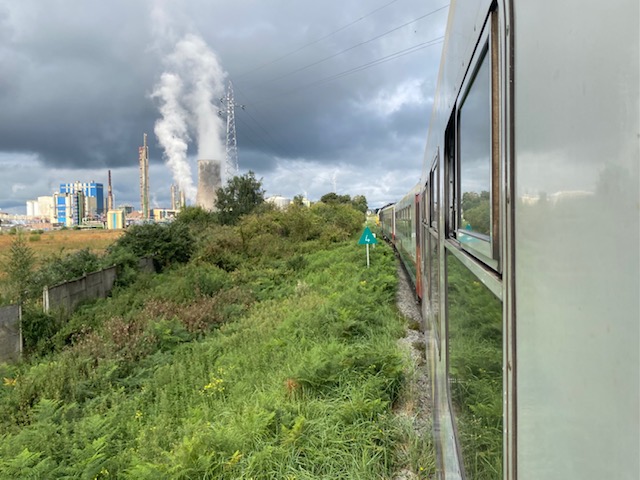
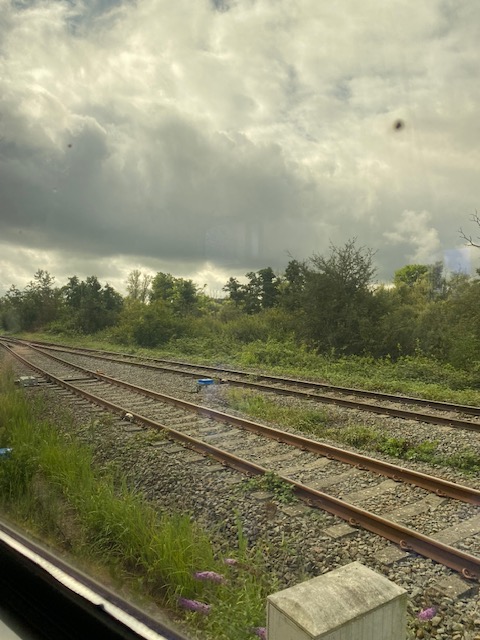
The ride itself wasn’t enormously spectacular or scenic, but nonetheless it was fun to ride on a railway line where otherwise wouldn’t come. The train guards entertained us with some facts and figures along the journey.


Back to Rétrotrain
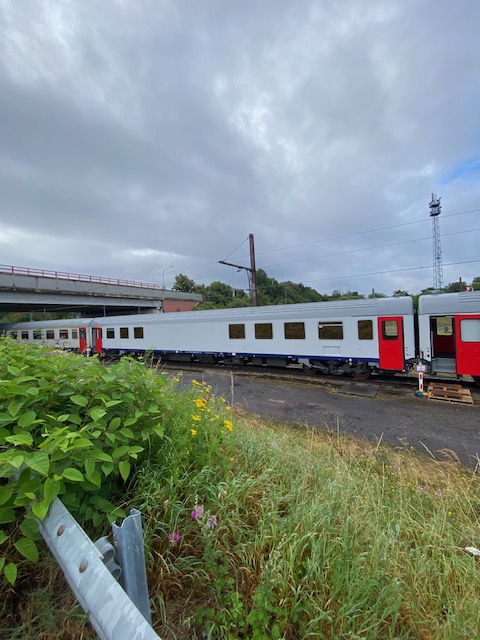
After the ride, we explored the Rétrotrain site. We were impressed with how much rolling stock is being kept there. Infrabel hosted a demo of laying tracks and other (freight) rail companies were present as well. Companies such DB Cargo were clearly present to enthuse potential workers.
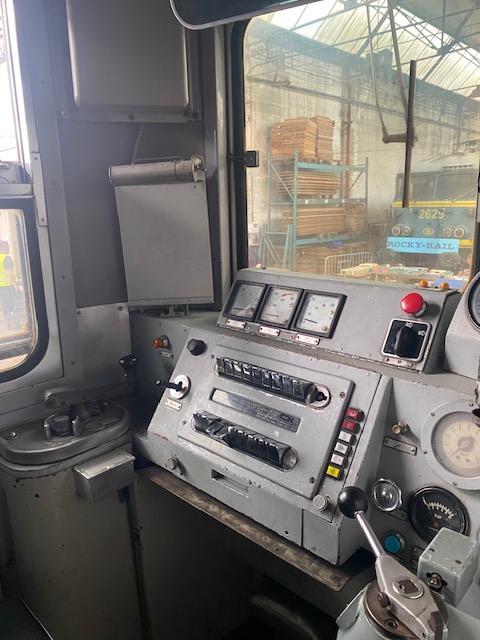
There was a cafeteria, train cab simulators, a lot of railway relate ‘stuff’, model trains…

Lunchtime
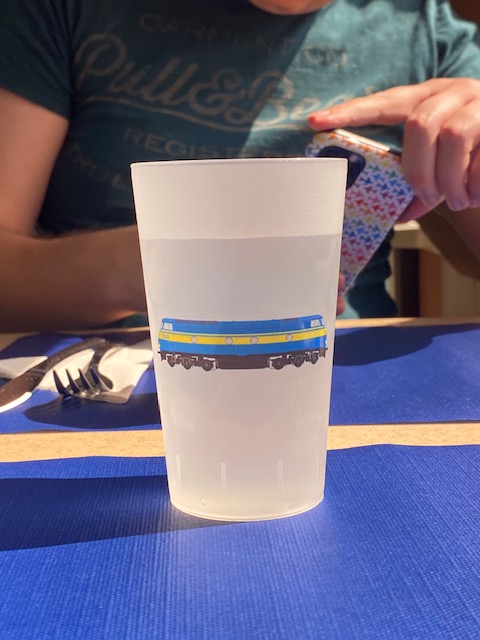
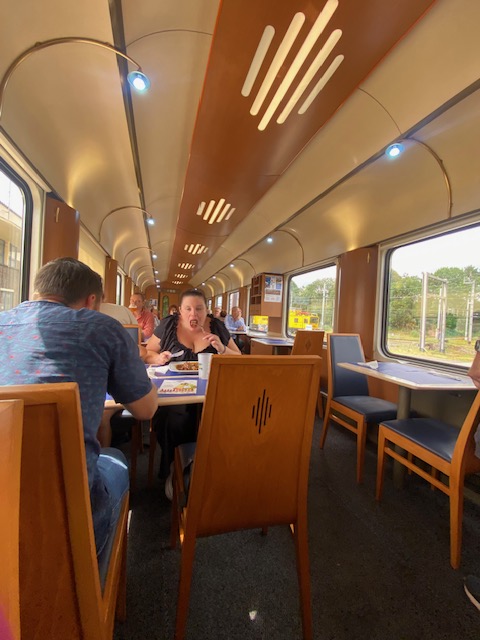
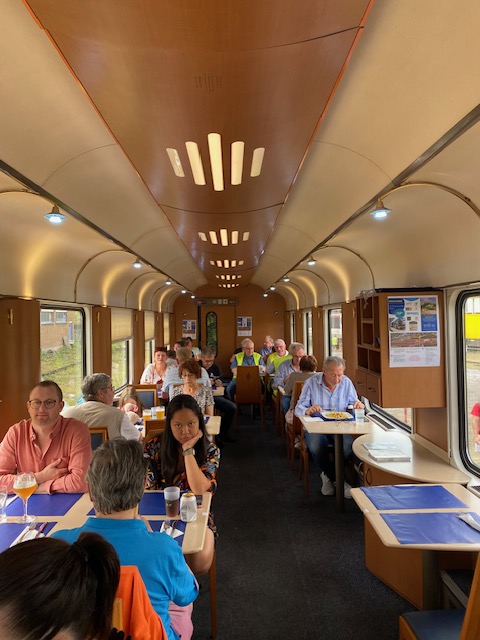
We had booked and prepaid a table in the NMBS / SNCB restaurant car. Indeed, the railway company had brought its only restaurant car and its only bar-disco car to the festival.

They were recently repainted in the contemporary grey-blue-red livery. They used to have a nicer, special livery. Now both have dull liveries. Even no stickers to make it stand out.

Anyway the lunch service was a bit chaotic but we enjoyed some boulet liégeois (meatballs with Liège syrup sauce) and tarte brésilienne.
Brazil pie is a sweet pastry that seems to have originated in Wallonia in the 1970s. It consists of a base of yeast dough with a generous layer of pastry cream, covered with whipped cream, all sprinkled with brésilienne, which is caramelized and crushed roasted hazelnuts and almonds. The pie quickly spread throughout Belgium. Since the 1980s, it has become one of the most popular tarts in Belgium along with the rice tart. It can be found in most pastry shops and supermarkets in the country.


So?
Basically, we had a lovely day out. The many volunteers do a great job organising the festival. Next year, we want to ride the Chemin de Fer du Bocq itself. Let’s hope we can make it happen.
Heritage and other special trams and trains in Belgium
- BELGIUM | Dendermonde – Puurs Steam Railway.
- PHOTOS | AM66 ‘Klassiekje’ / ‘Classique’ Farewell Ride at Antwerp-Central Railway Station.
- Farewell to the NMBS / SNCB AM66 ‘Klassiekje’ or ‘Classique’.
- Plans for a steam train heritage service between Brussels and Mechelen shelved.
- Train World to operate steam train between Brussels and Mechelen.
- RIDE & DINE | Orient Dining Express by Stoomtrein Maldegem-Eeklo.
- RIDE & DINE | Brussels Tram Experience.
- Riding the Kersttram or Christmas Tram in Antwerp.
 Trip By Trip
Merry Christmas !
LikeLiked by 1 person
Merry Christmas to you too!
LikeLike