
A new exhibition, opened in Brussels in June 2025, invites visitors to explore the mind and legacy of Jules Verne through a large-scale immersive experience. ‘Titled Jules Verne 200: The Immersive Journey‘, the exhibition marks a major production by IDEAL (Layers of Reality), combining immersive spaces, 360-degree projections, virtual reality, and metaverse elements.
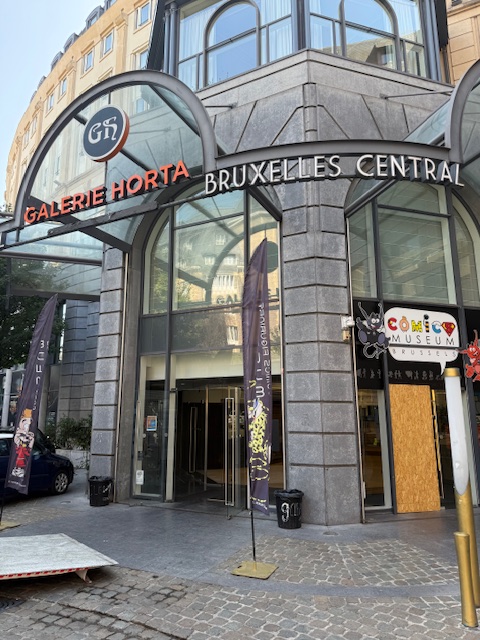
Hosted at the Horta Gallery on Rue du Marché Aux Herbes 116, the experience covers more than 1,000 square metres of screen space and includes a newly constructed dome to enhance the viewing of a specially created 3D film.
Visitors will be taken through the worlds of Verne’s most celebrated novels: ‘Journey to the Centre of the Earth‘, ‘20,000 Leagues Under the Sea‘, ‘Around the World in 80 Days‘, ‘Robur the Conqueror‘, and ‘From the Earth to the Moon‘.
Jules Verne, a 19th-century pioneer of science fiction, has had a lasting impact on popular culture, with his work continuing to influence cinema, comics, animation, and the visual arts.
The Brussels exhibition aims to deepen understanding of his legacy while providing an engaging experience suited to all ages. It blends scientific and artistic perspectives and includes traditional exhibition areas alongside high-tech immersive components.
The event is accessible to all, including wheelchair users, and is suitable for general audiences, though the virtual reality elements are recommended for those aged six and above. Visits will last approximately 60 to 90 minutes.
Opening hours are 9:30 AM to 6 PM on weekdays (except Tuesdays, when the exhibition is closed) and 9:30 AM to 7 PM on Fridays and Saturdays.
Tickets start at €13.90, with VIP and discounted options available. Ticket holders will also receive a code for a 50% discount on return train travel to Brussels-Central Railway Station.
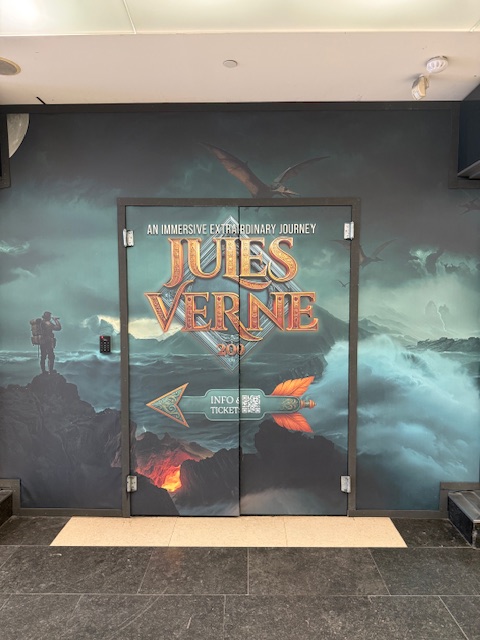

A visit
Sam, Danny and I went on a hot summer’s day in July. Sam only wanted to accompany of us if we booked the full-option ticket, which includes the virtual reality activity and an extra 3 euros meant we didn’t need a time slot.
Finding the entrance was quite an adventure. You need to go outside of Brussels-Central and look on your left. The entrance was hidden behind a truck.
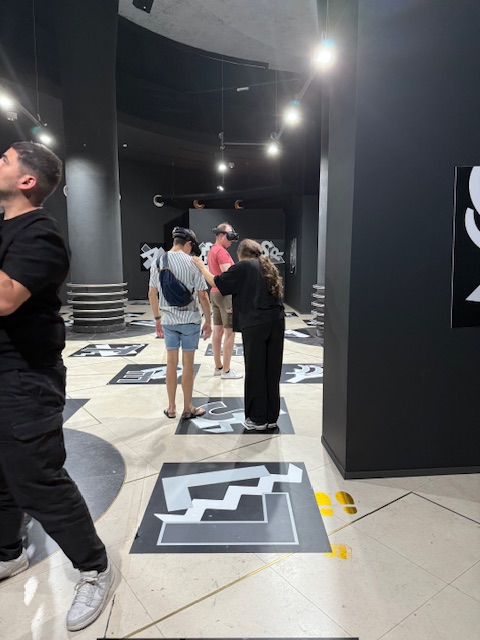
The exhibition starts with panels with his biography. Then there is a first ‘free’ or included virtual reality presentation.
Next up is the main hall with the 3D film. I found the film to be not so easy to follow. Where’s the text? And once found, it was already gone.
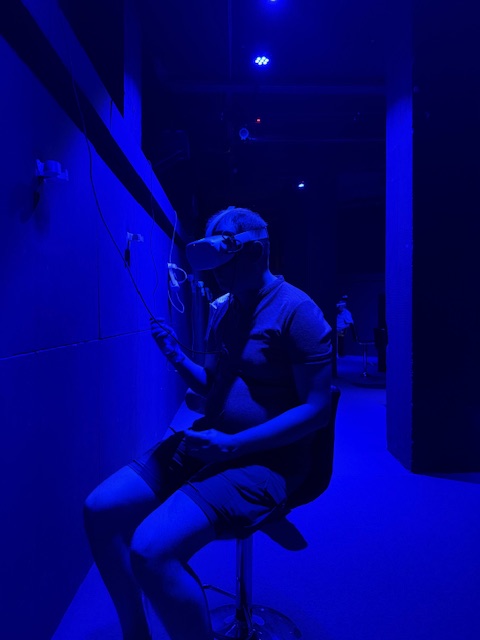
The extra-to-pay-for VR experience wás fun and a must, really. It takes you to the fictional places of Jules Verne’s books.
Honestly, without this extra, the Jules Verne 200 exhibition is not worth it.
After Gustav Klimt in Antwerp I wrote “I must confess, a priori I am not a fan if this immersive experiences. Partly because I can be snobbish about art, culture and history, partly the ones I did felt too basic (as in: basic information) and too expensive for what you get to see.”.
I must say Jules Verne hasn’t changed my mind.




Who was Jules Verne?
Jules Verne was a pioneering French writer, best known for his adventure novels that combined imaginative storytelling with emerging scientific ideas. Born on 8 February 1828 in the port city of Nantes, France, Verne was the eldest of five children in a bourgeois family.
His father was a successful lawyer, and it was initially expected that Verne would continue in the legal profession. He began law studies in Paris in the 1840s, but during this period, he became increasingly drawn to literature, particularly the theatre. He began writing plays and associating with literary circles, eventually deciding to abandon law and pursue writing full time, much to his father’s disappointment.
Verne’s early literary career was marked by financial difficulty, and he took various jobs to support himself while continuing to write.
In 1857, he married Honorine de Viane Morel, a young widow with two children, and began working as a stockbroker—a career he reportedly disliked but which gave him the financial stability to write. A turning point in Verne’s career came in 1862, when he submitted a manuscript titled ‘Cinq semaines en ballon‘ (‘Five Weeks in a Balloon‘) to the publisher Pierre-Jules Hetzel. Hetzel recognised Verne’s potential and offered him a long-term publishing contract.
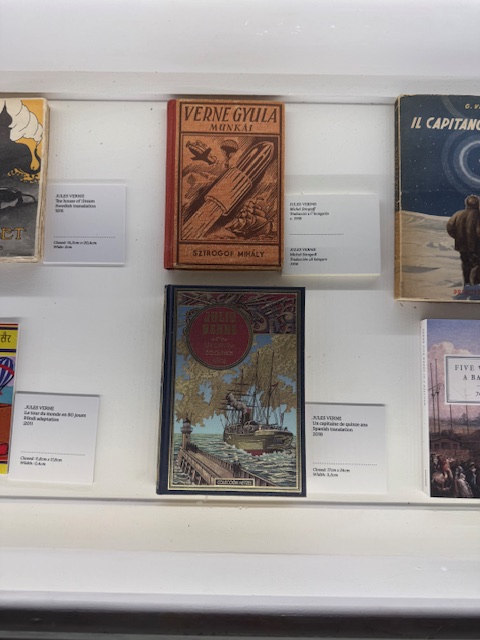
This led to the development of ‘Voyages Extraordinaires‘, a series of novels designed to provide both entertainment and education by depicting detailed explorations of the natural world, geography, and scientific developments.
Over the next four decades, Verne published more than fifty novels under the Voyages Extraordinaires banner. These works included some of the most celebrated adventure stories in world literature, such as ‘Journey to the Centre of the Earth’ (1864), ‘From the Earth to the Moon (1865)’, ‘Twenty Thousand Leagues Under the Seas’ (1870), ‘Around the World in Eighty Days’ (1872), and ‘The Mysterious Island‘ (1874).


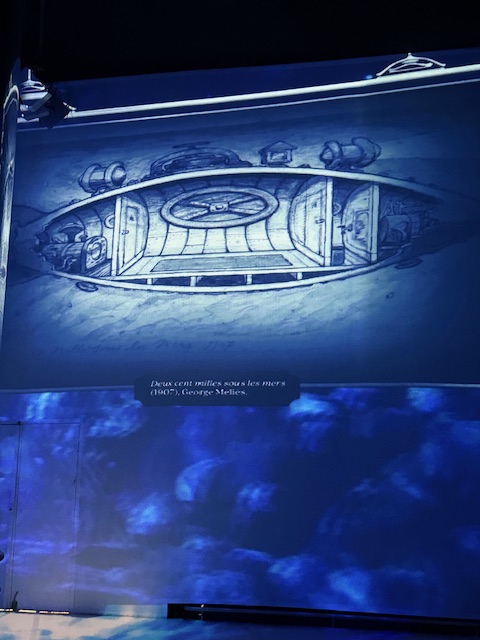


While often classified as science fiction, Verne himself preferred to describe his work as “scientific romance”, and his narratives were grounded in the scientific understanding of the time. He meticulously researched the technologies and locations featured in his books, lending them a sense of plausibility that appealed to both young and adult readers.
Verne’s writing was distinguished by his optimism about human progress and his fascination with invention and discovery. Many of the technologies he imagined—including submarines, spacecraft, helicopters, and skyscrapers—did not yet exist in his lifetime but would come to fruition decades later, contributing to his posthumous reputation as a visionary.
However, his later novels reveal a more complex view of science and society, reflecting anxieties about industrialisation, colonialism, and the ethical limits of technological advancement.
Verne’s global popularity grew steadily throughout the 19th century. His works were widely translated, most notably into English, and became particularly successful in the United Kingdom and the United States. However, early English translations often abridged or altered the texts significantly, leading to a distorted view of his literary style in the Anglophone world. Despite this, Verne became one of the most translated authors of all time and remains a towering figure in world literature.
In personal life, Verne settled in the northern French city of Amiens, where he served on the city council from 1888 to 1904 and became a respected local figure.
He continued to write until his death, though from 1886 onward he suffered from health problems, including diabetes. In the same year, he was shot in the leg by his mentally unstable nephew, Gaston, and walked with a limp for the rest of his life.
He died on 24 March 1905 at the age of 77 and was buried in Amiens’ La Madeleine Cemetery. His tomb features a sculpture of Verne breaking free from his grave, symbolising his enduring legacy.
After his death, several unpublished manuscripts were edited and published by his son, Michel Verne, though many of these posthumous works differ in tone and content from those Verne himself completed.


In the 20th century, literary critics began to reassess Verne’s contributions, recognising his influence not only as a popular storyteller but also as a foundational figure in the development of science fiction. His work has inspired countless adaptations in film, television, theatre, and comic books, and continues to influence writers, artists, and scientists around the world.
Jules Verne’s vision of exploration, innovation, and human curiosity helped define modern speculative fiction.
Though he lived in the 19th century, his imagination looked far beyond it. His blend of rigorous research and fantastic narrative foresight places him among the most significant literary figures in history, bridging the gap between Enlightenment rationalism and the technological age that was yet to come.
Exploring Brussels
- REVIEW | ‘A Century of Belgian Comics’ at the Comic(s) Art Museum Brussels by the Belgian Comic Strips Center.
- MUSEUM | House of European History in Brussels.
- Visiting the European Parliament in Brussels.
- RIDE & DINE | Brussels Tram Experience.
- REVIEW | M-Gallery Le Louise in Brussels.
- Inside the Royal Palace of Brussels.
- Brussels’ Atomium.
- REVIEW | Orient-Express exhibition at Train World, Brussels’ railway museum.
- The orange world of Design Museum Brussels.
- AfricaMuseum in Tervuren near Brussels.
- Brussels Planetarium.
- Brussels’ Gare Maritime.
- Brussels’ Pannenhuis Park and L28 Park.
- Brussels’ Senne Park.
- The Hotel. Brussels.
- REVIEW | ‘Royals & Trains’ exhibition at Train World in Brussels.
- Ducal and Imperial Palace of Coudenberg in Brussels.
- MIMA – Millennium Iconoclast Museum of Art in Brussels.
- Villa Empain in Brussels.
- Pullman Brussels Centre Midi.
- Autoworld automobile museum in Brussels.
- Royal Museum of the Armed Forces and Military History in Brussels, Belgium.
- Royal Military Museum, War Heritage Institute, Brussels, Belgium.
- PHOTOS | Train World railway museum in Brussels.
- Josaphat Park and residential Schaerbeek.
- BRUSSELS | BELvue Museum of Belgium.
 Trip By Trip
14 Comments Add yours