
April 2024 was cold and wet. For Antwerp Pride Magazine, I went to Regenbooghuis Limburg to interview the people of Roze Bink. But as I had to travel to Hasselt anyway, I thought it was a good I do to get there early and explore the capital of the Belgian province of Limburg.

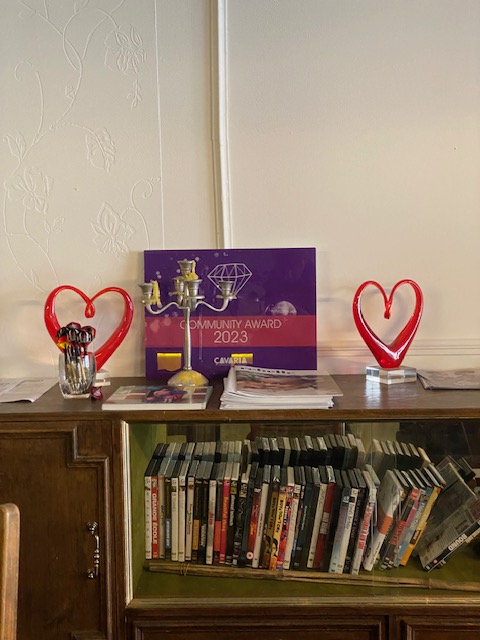

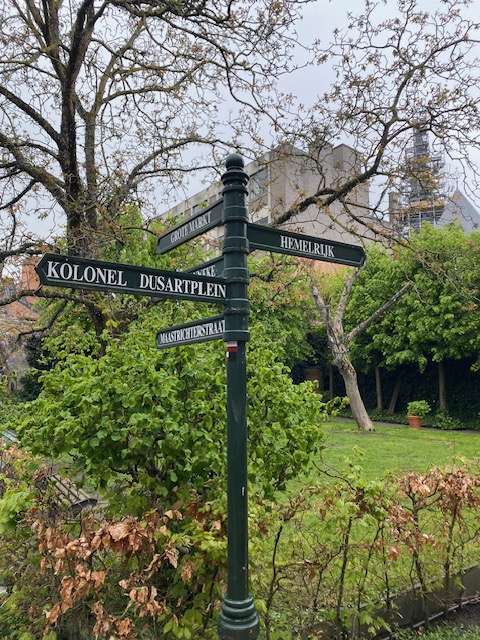
Hasselt will host the first ever Limburg Pride on Sunday 13 July 2025, so I was curious to see what Hasselt is like, especially the Kolonel Dusartplein where part of the pride festivities will take place.


Introducing Hasselt
Hasselt in Limburg, Flanders, Belgium is known for its former branding as the ‘Capital of Taste’, owing to its local distilleries of jenever, the Hasselt Jenever Festival, and Hasselt speculaas.
Hasselt has a population of some 81,000 people. The municipality consists of the following sub-municipalities: Hasselt proper, Kermt, Kuringen, Sint-Lambrechts-Herk, Spalbeek, Stevoort, Stokrooie, and Wimmertingen, as well as the hamlets and parishes of Kiewit, Godsheide and Rapertingen.
Hasselt is located in between the Campine (Kempen) region, north of the Demer river, and the Hesbaye (Haspengouw) region, to the south. On a larger scale, it is also situated in the Meuse-Rhine Euroregion. Both the Demer river and the Albert Canal run through the municipality.




A short history
Hasselt was founded in approximately the 7th century on the Helbeek, a tributary of the Demer river. During the Middle Ages it became one of the free cities of the county of Loon (which had borders approximately the same as the current province of Limburg). It was first named in a document in 1165. In 1232 Arnold IV, Count of Loon gave the city the freedoms like those enjoyed in Liège.
In 1366 the county of Loon came under the direct rule of the Prince-Bishopric of Liège and remained so until the annexation by France in 1794.
During the First French Empire, the city of Maastricht became the capital of the French Department of the Lower Meuse. This comprised not only the area of the modern province of Limburg in Belgium, but also what is now the province of Limburg in the Netherlands. After the defeat of Napoleon in 1815, all of what is now Belgium became part of the United Kingdom of the Netherlands. During this time, it was King William I who re-named the Lower Meuse department after the medieval Duchy of Limburg.
This Duchy was in fact named after Limbourg on the Vesdre river, now in the Liège province of Belgium, which had never encompassed Hasselt or Maastricht. Belgium split from the Netherlands in 1830, but the status of Limburg was only resolved nine years later in 1839, with the division of Limburg into Belgian and Dutch parts.

Town centre
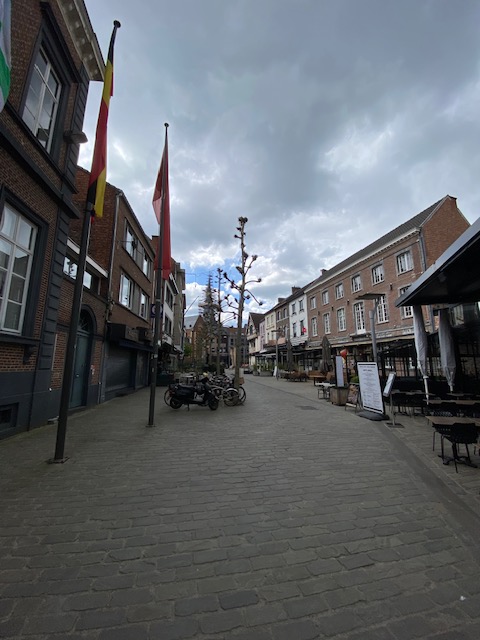
The centre is mostly car-free and contains a number of historical buildings. Among the oldest buildings in the town centre are the St. Quentin’s Cathedral (11th to 18th centuries) and the Refuge of Herkenrode Abbey, the city’s oldest civic building (1542). The Grote Markt (Grand Market) and the nearby streets are lined with restaurants brasseries, cafes and taverns.
The Demerstraat and the Koning Albertstraat are the most important shopping streets, while the Kapelstraat and Hoogstraat house upscale shops and brands.
Another major religious building besides the cathedral is the Virga Jesse Basilica. The churches must cede domination of the skyline of the city to the modern twin towers of the TT-wijk, however. In 2003, the renovation of this complex, now including a shopping mall and a hotel, gave the centre a new boost.




On a Monday
The interview was on a Monday, which is always a difficult day to visit a city. Many museums, (art) galeries and bars, restaurants and cafés close on Monday.


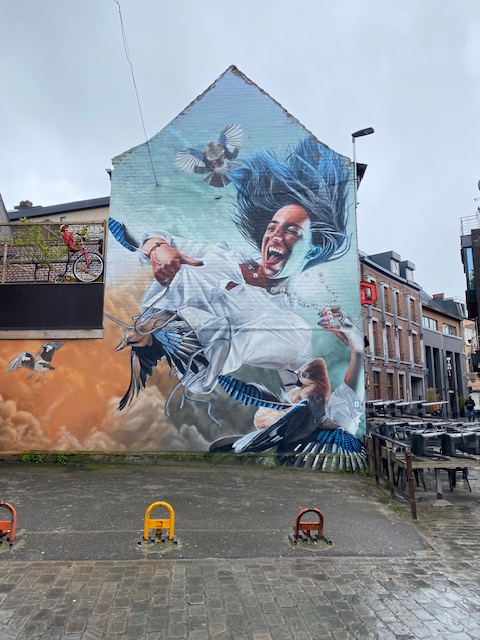
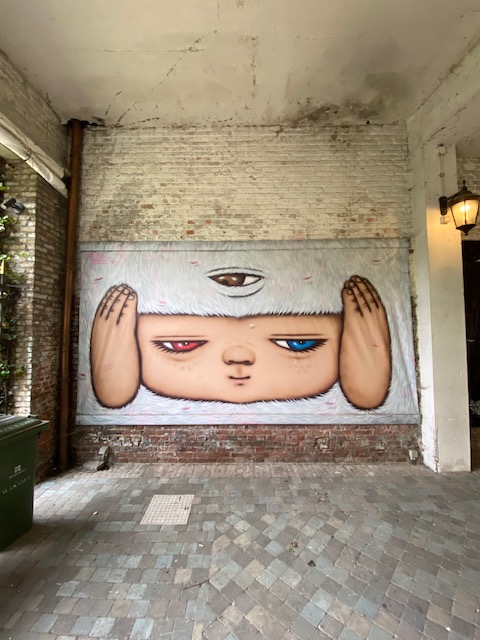
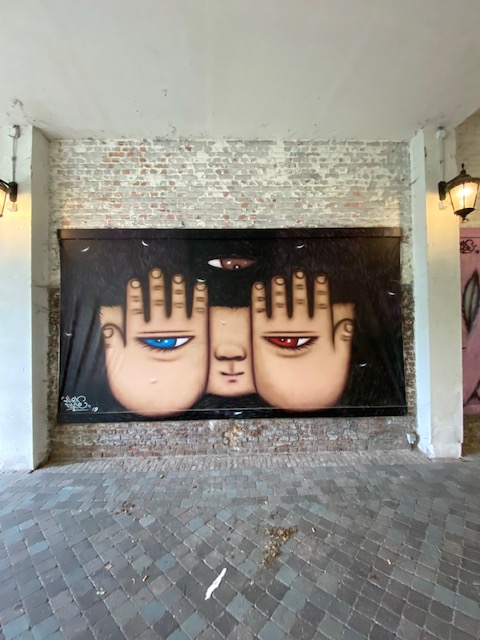


But I decided to follow a list I found on the website of Visit Hasselt. “10 must-sees in Hasselt.”
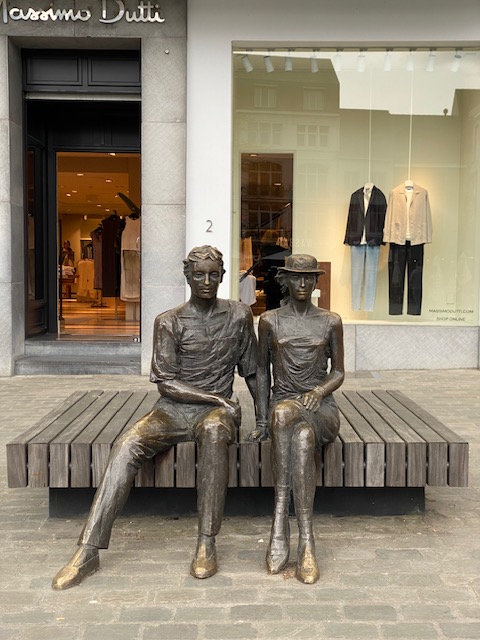
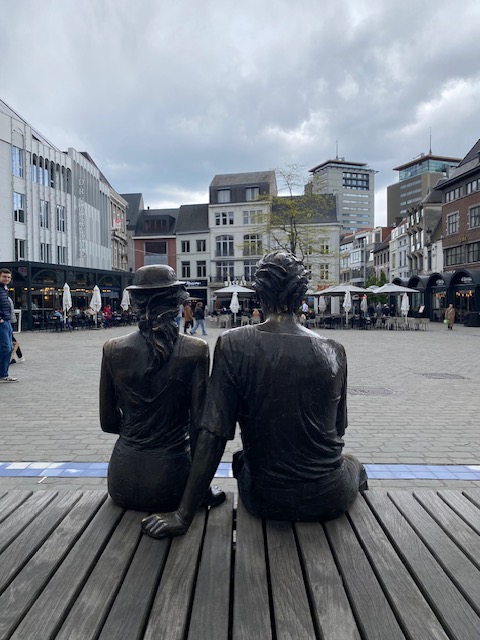
- The Grote Markt – with its famous statue ‘Hendrik & Katrien‘ – is not to be missed.
- Experience the fashion of both yesterday and today in the fashion museum Modemuseum Hasselt.
- You will find plenty of beautiful street art. Admire the work of Studio Giftig on the corner of Badderijstraat and Zuivelmarkt.
- Sip from a small, fine glass and become completely gin-savvy in the Jenever Museum.
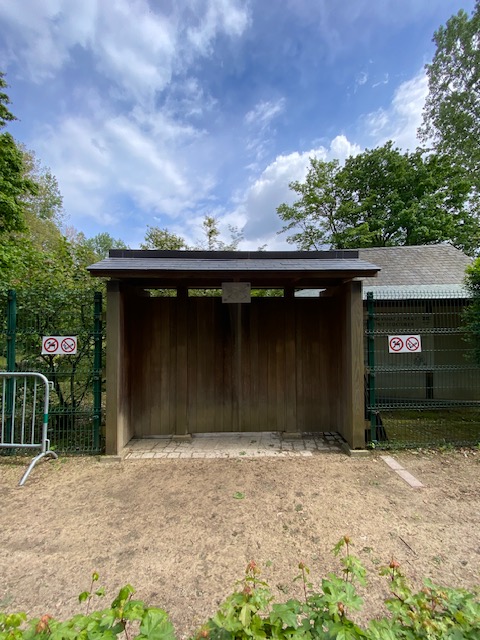
- You will become completely zen in the largest authentic Japanese Garden in Europe.
- Stroll and stroll in style along the water on the inspiring Blue Boulevard.
- Herkenrode Abbey: a monumental piece of heritage in an extraordinary green oasis.
- One of the most beautiful hidden spots in Hasselt is the unique Kadettensteegje.
- Discover Z33, a pearl of contemporary art, design and architecture, next to the beguinage.
- You can also enjoy the m’as-tu-vu atmosphere on the many terraces of the Zuivelmarkt.
Wikipedia has a longer list of points of interest, but I didn’t have time for that. Neither did I have time to go to Herkenrode.
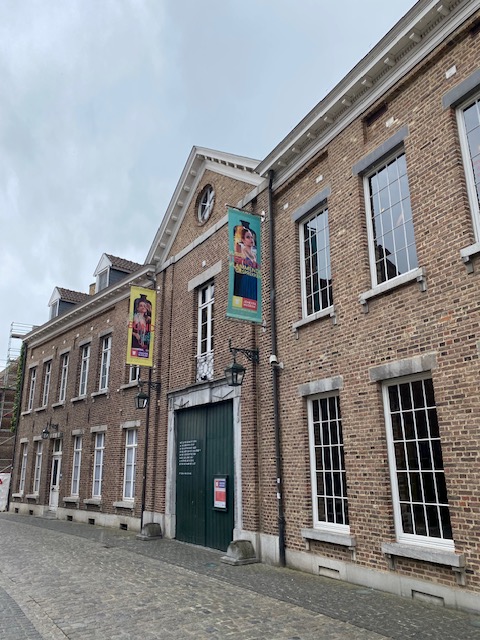

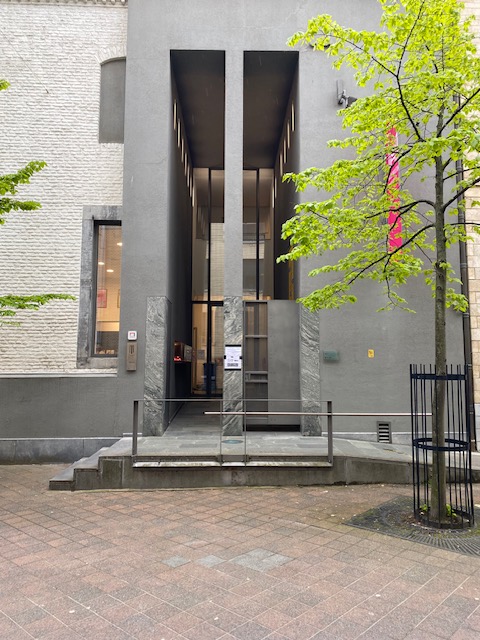
Vibes
Maybe because it was wet, cold and a Monday, there were few people on the streets of Hasselt.
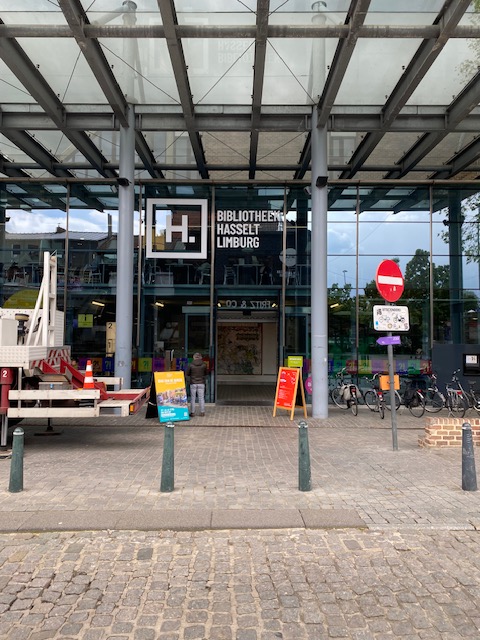
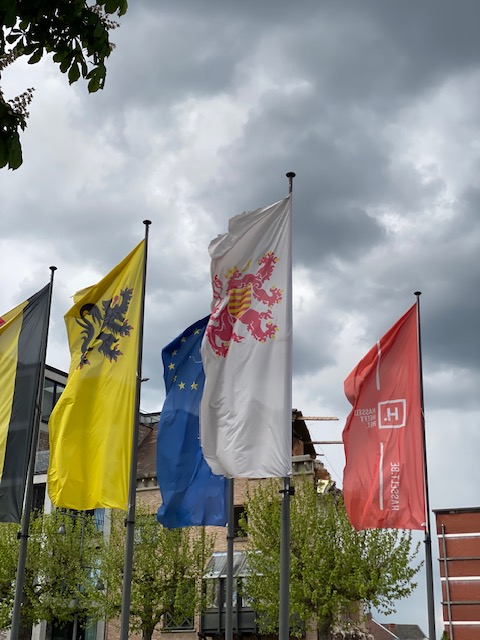
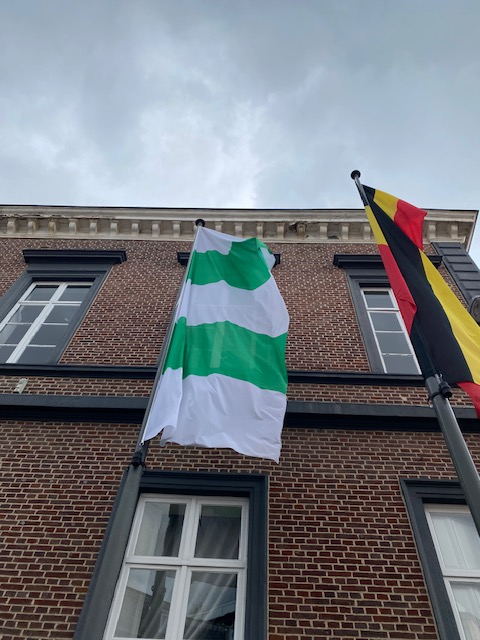
I did a big tour, looking for a good photo of the flag of Limburg. So I walked to Hasselt City Hall, to the Limburg Provincial Hall and the – closed – Japanese Garden. On my way back to the city centre I walked through the cosy Kapermolenpark and passed a few campuses of Hogeschool PXL (PXL University of Practical Education).
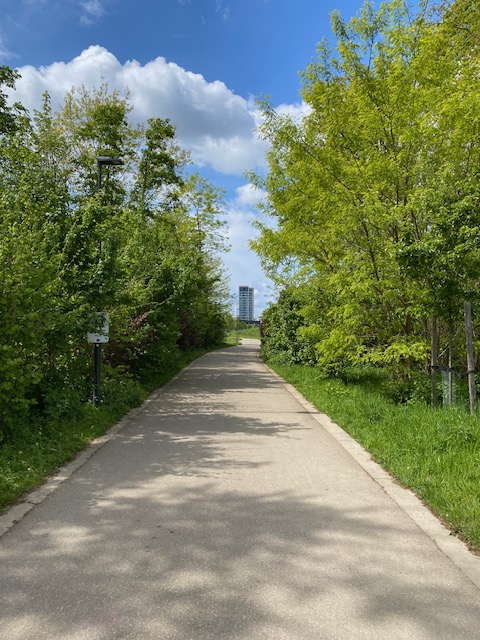

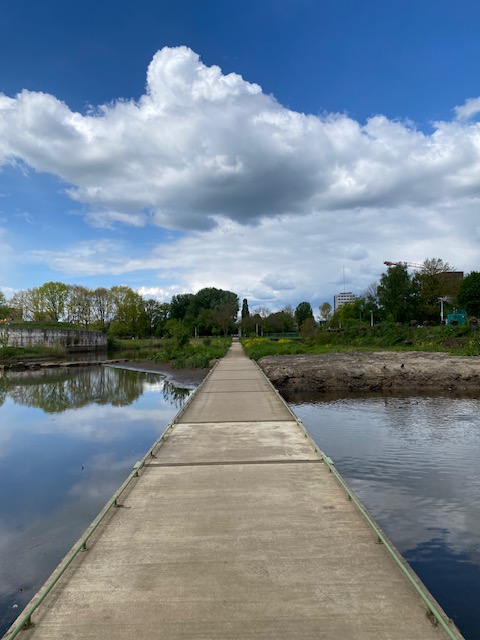

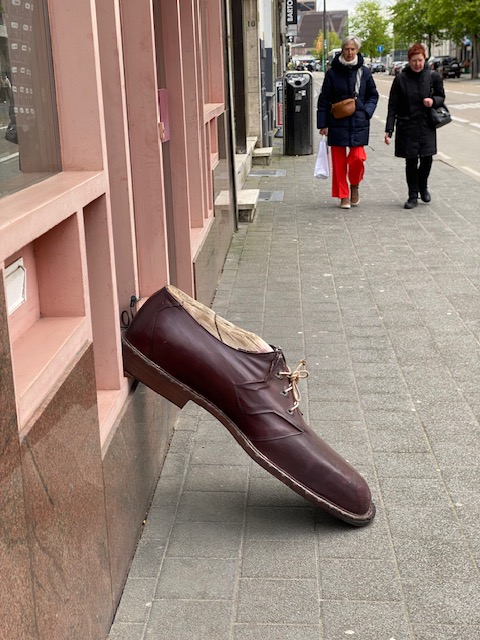
While there were relatively few people outside there were many murals and statues. Also: many bars, restaurants and cafés. Hasselt also loves flags, especially vertical ones. That’s very Germanic.

So?
Hasselt seemed slow, but in a good way. It’s a Limburg stereotype: Limburgians are slow, speak slowly and ‘lag behind’.
But I see myself returning on a day excursion.
 Trip By Trip
Looks worthy of a visit. Never been there.
LikeLiked by 1 person
It’s a nice day trip.
LikeLiked by 1 person
Especially on the train with a friendly conductor!
LikeLiked by 1 person
🫡🙋🏼♂️
LikeLiked by 1 person