
July 2024. Steve and I are cruising on the Norwegian Getaway, a Breakaway class ship by Norwegian Cruise Line or NCL. Interestingly, our stay on board happened shortly after the Getaway paid a visit to the dry dock for some refurbishments. The route? Piraeus, which is the port of Athens in Greece; followed by Mykonos; two days in Istanbul in Turkey or Türkiye; then Kusadasi or Kuşadası for Ephesus; Rhodes; Santorini (Thira or Thera) and back to Piraeus. Oddly enough, the itinerary offered no sea days.
With Istanbul, we arrived at one of the highlights of the ‘7-Day Greek Isles Round-trip Athens: Santorini, Rhodes & Istanbul‘ cruise. Before sailing, we booked two tours, one each day there. But once on board, we discovered a comprehensive ‘Exclusive Classical Istanbul Excursion‘.
A bridge between continents
Istanbul (İstanbul), a metropolis where East meets West, is a city steeped in history, culture, and unparalleled beauty. Straddling Europe and Asia, divided by the majestic Bosphorus Strait, it is a living testament to the passage of empires and civilizations.


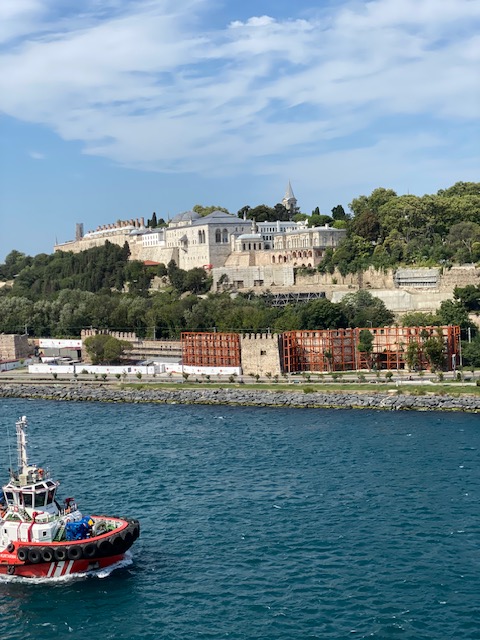
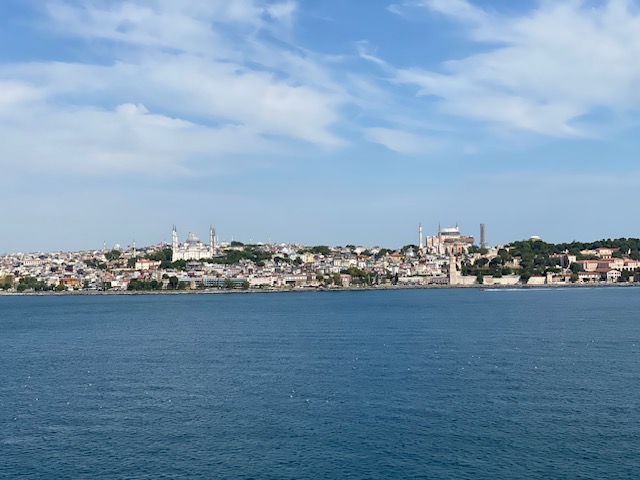
The city’s history is as rich and layered as its cityscape. Founded as Byzantium in the 7th century BC, it flourished as a Greek colony. In 330 AD, Roman Emperor Constantine the Great transformed it into Constantinople, the capital of the Roman Empire. For over a millennium, Constantinople was the heart of the Byzantine Empire (but the contemporaries just called it Roman Empire, a golden age of art, architecture, and scholarship.
The city’s destiny changed dramatically in 1453 when Ottoman Sultan Mehmet II conquered Constantinople, marking the end of the Byzantine Empire and the birth of the Ottoman Empire. The city was renamed Istanbul, and under Ottoman rule, it became a magnificent capital, a crossroads of cultures and religions. Grand mosques, palaces, and bazaars adorned the city, reflecting the empire’s opulence and power.
The 19th century witnessed the decline of the Ottoman Empire. Istanbul, though still the heart of the empire, felt the tremors of change. The city’s cosmopolitan character, a legacy of centuries of interaction with diverse cultures, became increasingly apparent. The Armenian, Greek, and Jewish communities, who had thrived for centuries, contributed significantly to the city’s intellectual and economic life.

The Ottoman Empire gradually declined, and in the early 20th century, the Ottoman capital was moved to Ankara. Istanbul, however, retained its allure and importance. With the founding of the Republic of Turkey in 1923, the city embarked on a new chapter. It underwent rapid modernization while preserving its historical heritage.
Today, Istanbul is a dynamic metropolis of over 15 million people (officially, but many more in reality), a blend of ancient and modern, East and West. Its skyline is a captivating juxtaposition of Byzantine domes, Ottoman minarets, and contemporary skyscrapers. The city’s economy is robust, driven by tourism, finance, and trade.
Today, Istanbul is a city of contrasts. The towering skyscrapers of the financial district stand in stark contrast to the ancient walls of the city. The call to prayer from the minarets echoes through the streets alongside the hum of traffic. The city’s population, a melting pot of cultures and religions, reflects its rich history.
The city’s culinary scene is a reflection of its diverse heritage. Ottoman cuisine, with its emphasis on fresh ingredients and intricate flavors, is celebrated alongside contemporary Turkish dishes.
A visit to Istanbul is a journey through time. The Sultanahmet district, the historical heart of the city, is a treasure trove of iconic landmarks. The Hagia Sophia, a masterpiece of Byzantine architecture, stands as a symbol of the city’s rich history. Its vast interior, adorned with stunning mosaics, is a breathtaking sight.

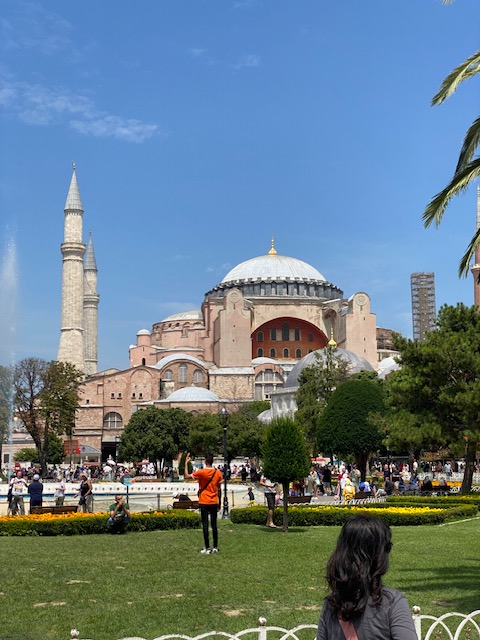

Just across from the Hagia Sophia, the Blue Mosque, with its six minarets and intricate Iznik tiles, is a testament to Ottoman architectural brilliance. The Topkapi or Topkapı Palace, once the residence of Ottoman sultans, offers a glimpse into the opulent lifestyle of the imperial court. Its treasury, filled with priceless jewels and artifacts, is a must-see.
The Grand Bazaar, a labyrinth of shops and stalls, is a shopper’s paradise. Here, one can find everything from exquisite carpets and ceramics to leather goods and spices. The Basilica Cistern, an underground water reservoir, is a hidden gem, with its rows of marble columns and mysterious atmosphere.
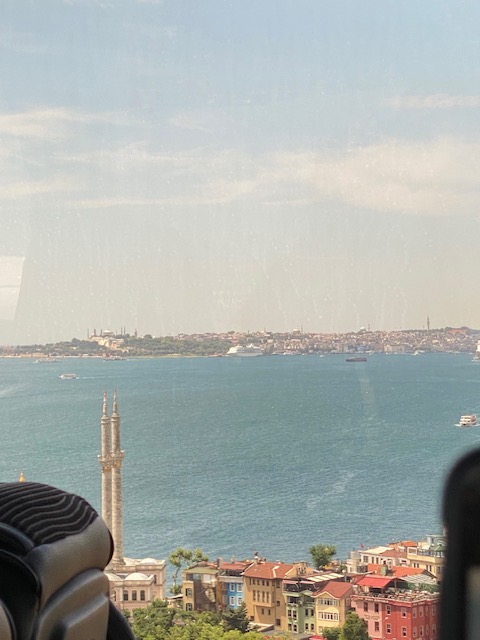
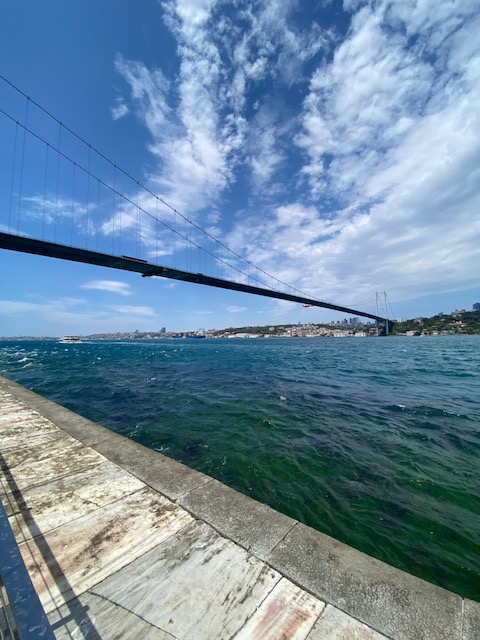
Beyond the historical center, Istanbul offers a diverse range of experiences. The bustling Taksim Square is the epicenter of modern life, with its shopping malls, hotels, and entertainment venues. The Bosphorus Strait, a natural wonder, divides the city into two continents. Boat tours offer stunning views of the city’s skyline and iconic landmarks.
The Asian side of Istanbul, often overlooked by tourists, is a world apart. It offers a more relaxed atmosphere and a glimpse into local life. Kadiköy, a vibrant district, is known for its lively markets, trendy cafes, and historical sites.
Istanbul is a city of contrasts and contradictions, where the old and the new coexist harmoniously. It is a city that captivates the senses, stirs the imagination, and leaves an indelible mark on the soul.

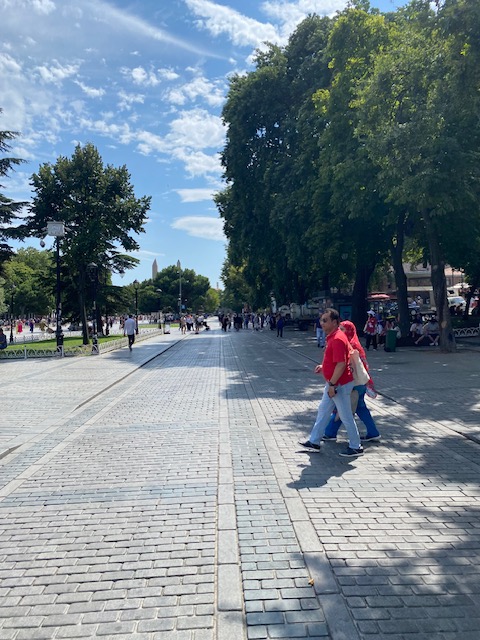
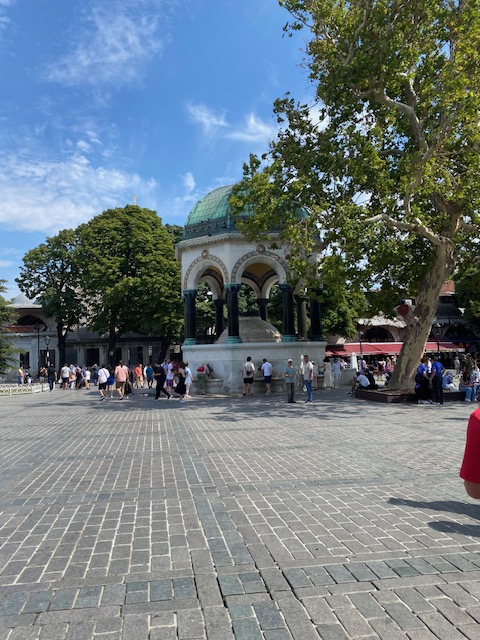
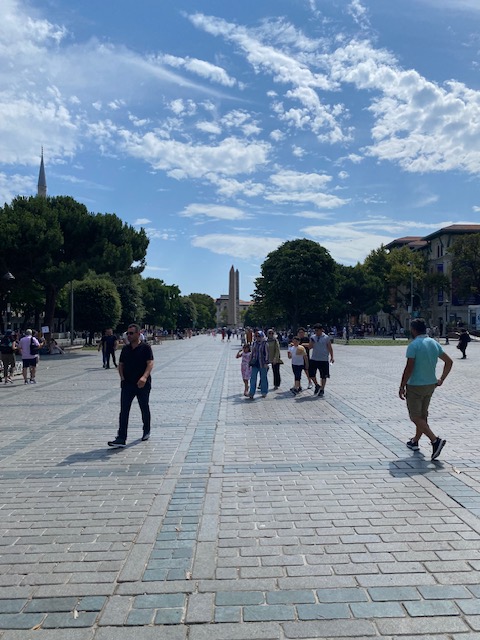

Exclusive Classical Istanbul Excursion: Beylerbeyi Palace
Day 1 in Istanbul was a Tuesday and that’s significant as on Tuesday, the famous Topkapi Palace is closed. As an alternative, the tour took us to the Beylerbeyi Palace.
Located on the Asian side of Istanbul, in the Üsküdar district, the Beylerbeyi Palace (Beylerbeyi Sarayı, literally meaning the ‘palace of the bey of beys’) is an imperial Ottoman summer residence. Built between 1861 and 1865 by Sultan Abdülaziz, it stands as a testament to the era’s opulence. Now situated north of the first Bosphorus Bridge, the palace served as the final residence of Sultan Abdulhamid II, who died there under house arrest in 1918.
Originally conceived as a summer retreat and a venue for hosting dignitaries, Beylerbeyi Palace welcomed illustrious guests such as Empress Eugénie of France and Naser al-Din Shah Qajar of Iran. The palace’s elegant design so captivated Empress Eugénie that she commissioned a replica of one of the palace’s windows for her private chambers in the Tuileries Palace.
Designed by Sarkis Balyan, the Beylerbeyi Palace exhibits a more restrained elegance compared to its opulent counterparts, Dolmabahçe and Küçüksu. Its true beauty is revealed from the Bosphorus, where its twin bathing pavilions – one for men (selamlık) and one for women (harem) – are prominently displayed. The palace interior features intricate carvings, marble, and French Baccarat chandeliers, while Egyptian reed matting covers the floors. The reception hall, with its refreshing pool and fountain, is a highlight.
Photos inside aren’t allowed, but at one point there were no guards. The palace interior oozes grandeur and has a high degree opulence. One might say it’s kitsch, but which 19th century palace isn’t?


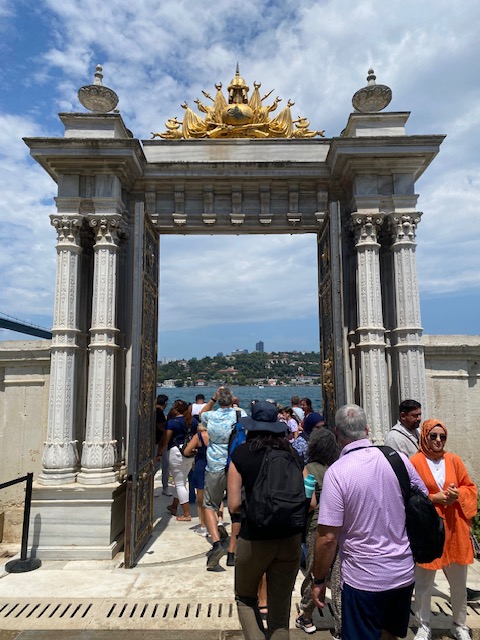
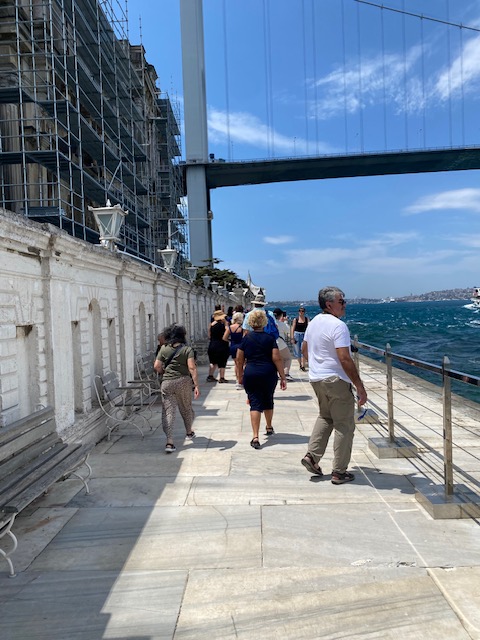

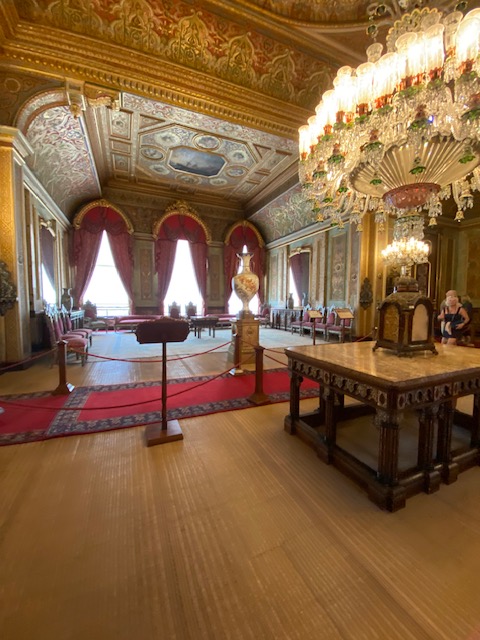
The Blue Mosque
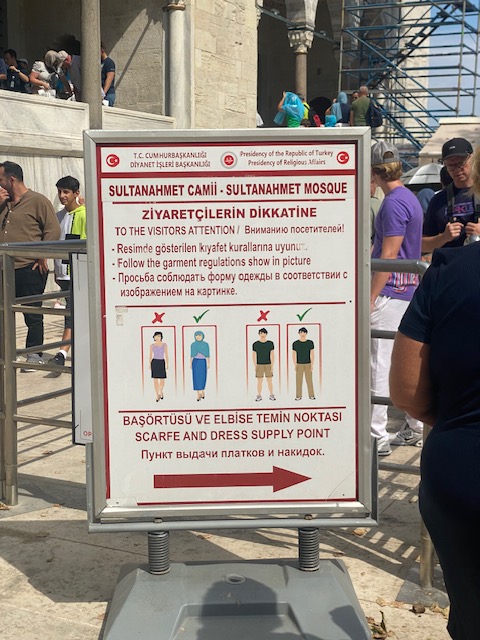
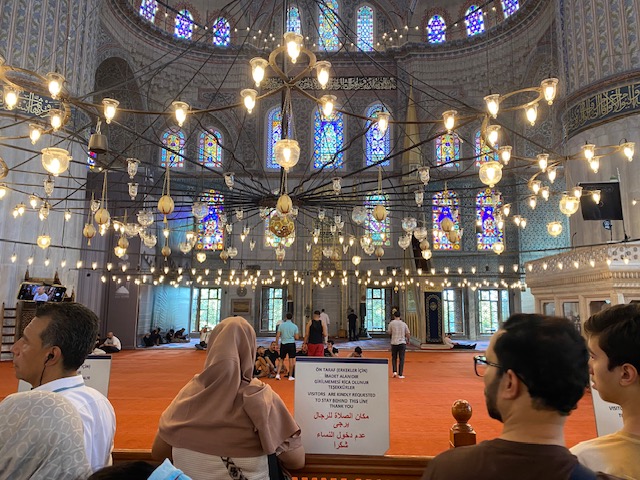
After lunch at a high-end restaurant in the historic heart, we visited the Blue Mosque.
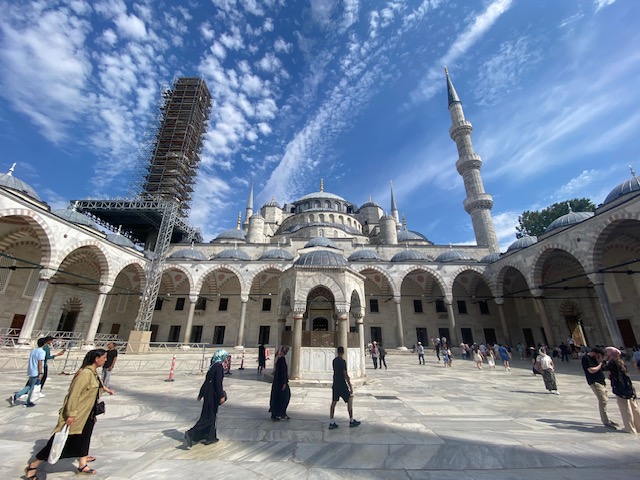
The Sultan Ahmed Mosque, more commonly known as the Blue Mosque, is an iconic landmark that dominates the Istanbul skyline. This magnificent structure, located in the heart of the city, is a testament to the architectural prowess and artistic splendor of the Ottoman Empire.
Constructed between 1609 and 1617, during the reign of Sultan Ahmed I, the mosque was designed to rival the grandeur of the nearby Hagia Sophia, a former Byzantine cathedral. The architect, Sedefkar Mehmed Agha, masterfully blended traditional Islamic architecture with Byzantine elements, creating a harmonious and awe-inspiring building. It’s six minarets became an example for other major mosques.
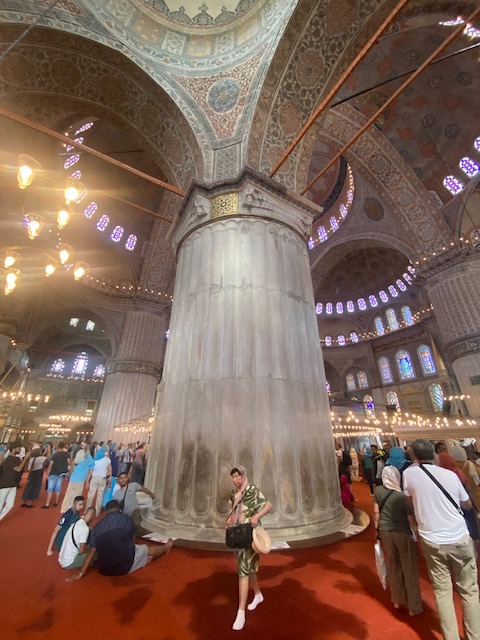
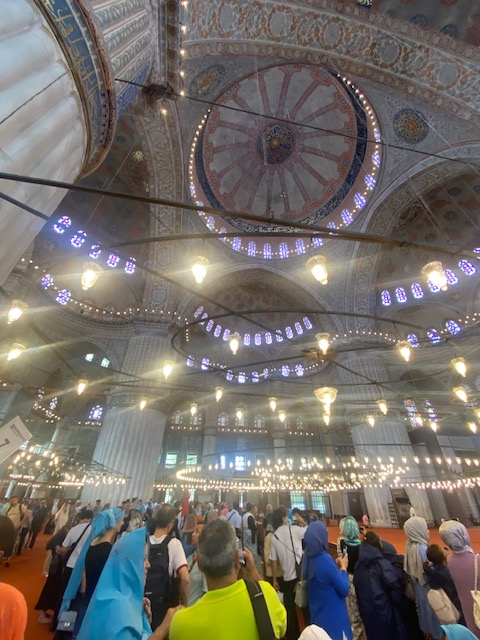
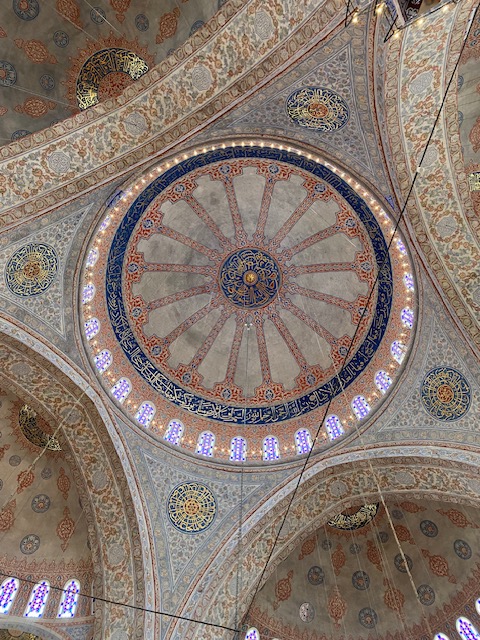
The mosque’s name, ‘Blue Mosque’ is derived from the exquisite Iznik tiles that adorn its interior walls. These hand-painted tiles, renowned for their vibrant blue hues and intricate patterns, create a mesmerizing and ethereal atmosphere within the prayer hall. It is estimated that over 20,000 tiles were used to decorate the mosque’s interior.
One of the most striking features of the Blue Mosque is its exterior, characterized by its five main domes and four minarets. However, an unusual feature for the time was the addition of a sixth minaret, a mistake that caused controversy. According to legend, Sultan Ahmed I was so upset by the error that he ordered the construction of a sixth minaret for the mosque in Mecca to rectify the mistake.
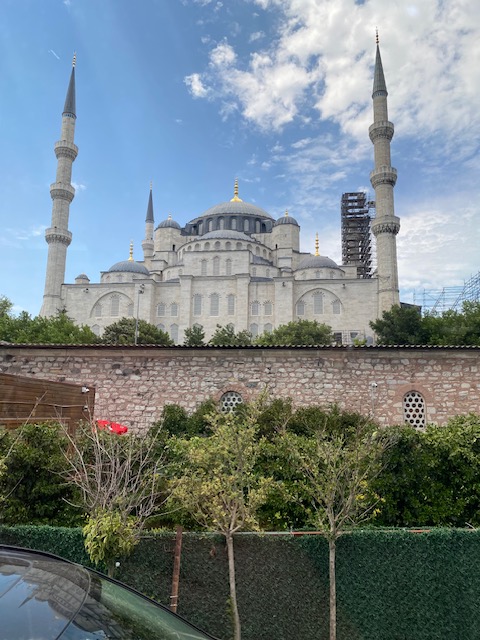


The interior of the mosque is equally impressive. The main prayer hall is vast and illuminated by 260 windows that flood the space with natural light. The central dome, with its intricate geometric patterns, rises to a height of 43 meters, creating a sense of grandeur and spirituality. The mihrab, the niche indicating the direction of Mecca, is adorned with exquisite marble and tile work.
The Blue Mosque is not only a place of worship but also a significant historical and cultural site. It is a popular tourist destination, attracting millions of visitors each year. Despite its status as a tourist attraction, the mosque remains an active place of worship, with daily prayers and religious services held regularly.
The Blue Mosque’s location, opposite the Hagia Sophia, symbolizes the transition from the Byzantine Empire to the Ottoman Empire. The two iconic structures stand as powerful reminders of Istanbul’s rich and complex history.
In addition to its architectural and religious significance, the Blue Mosque has played a role in various historical events. It has witnessed the rise and fall of empires, served as a refuge during times of conflict, and continues to be a symbol of Istanbul’s enduring spirit.
Today, the Blue Mosque remains one of the most visited and photographed landmarks in the world. Its timeless beauty and historical importance have secured its place as an iconic symbol of Istanbul and a testament to the enduring legacy of Ottoman architecture.





Grand Bazaar
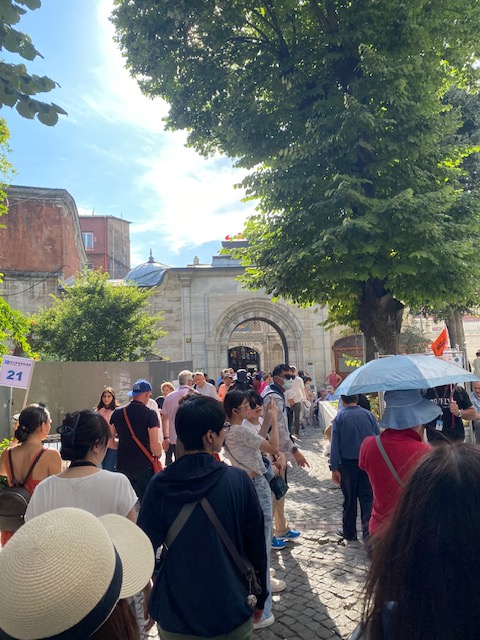
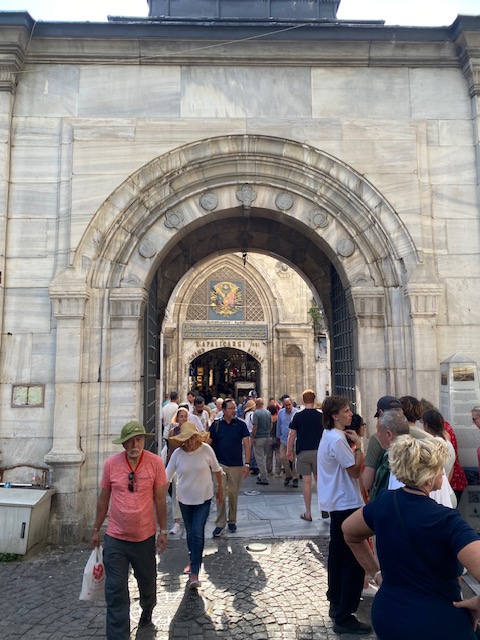
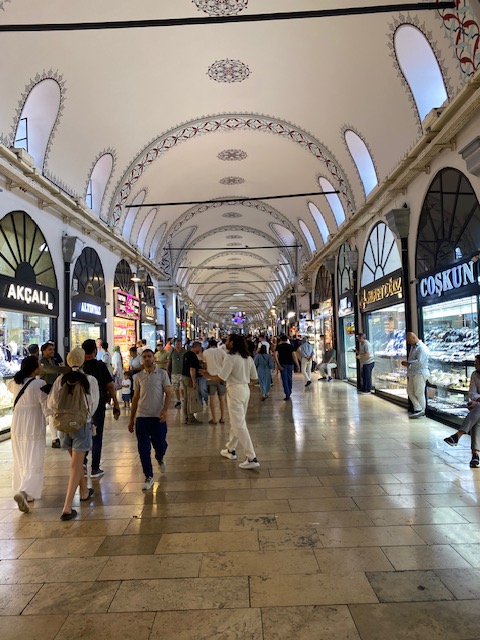
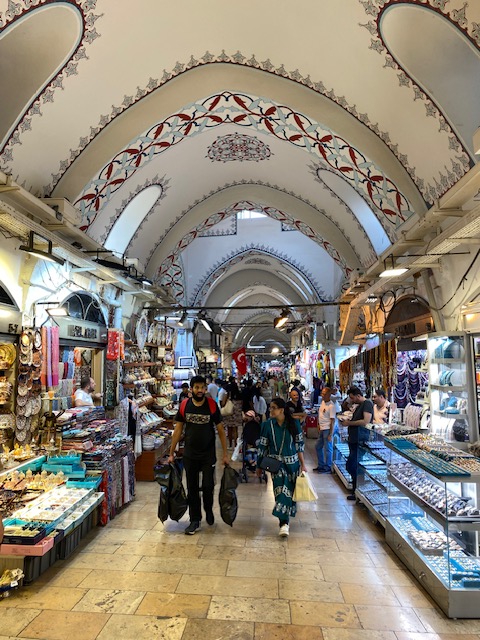
After enduring an obligatory stop at a rug shop, we were brought to the Grand Bazaar, the last stop on this tour.
The Grand Bazaar, or Kapalıçarşı in Turkish, is a sprawling marketplace in the heart of Istanbul. As one of the world’s oldest and largest covered shopping complexes, it has been a bustling hub of commerce for centuries. Its labyrinthine network of streets and shops offers an overwhelming sensory experience, enticing visitors with a dazzling array of goods and the vibrant atmosphere of a traditional bazaar.
Established in the 15th century during the reign of Sultan Mehmet II, the Grand Bazaar was initially a small silk market. However, it rapidly expanded to encompass a wide range of products, attracting merchants from across the Ottoman Empire and beyond. The bazaar’s strategic location, near the city’s main commercial and religious centers, contributed to its growth and prosperity.
Today, the Grand Bazaar covers an area of approximately 30,000 m² and houses over 4,000 shops. The bazaar is divided into various sections, each specializing in different types of goods. There are sections dedicated to jewelry, carpets, ceramics, textiles, spices, leather goods, and countless other products. Visitors can spend hours exploring the maze-like passages, discovering hidden treasures and haggling with shopkeepers.
The bazaar’s architecture is a fascinating blend of Ottoman and Byzantine styles. The covered market halls, with their vaulted ceilings and ornate decorations, create a unique atmosphere. The interplay of light and shadow, as sunlight filters through the skylights, adds to the bazaar’s enchanting ambiance.
Beyond its commercial function, the Grand Bazaar has played a vital role in Istanbul’s social and cultural life. It has been a meeting place for people from all walks of life, a center for trade and diplomacy, and a source of inspiration for artists and writers. The bazaar’s rich history is evident in its architecture, its merchandise, and the traditions that continue to shape its character.
While the Grand Bazaar has undergone significant changes over the centuries, it has managed to retain much of its original charm. Despite the challenges of modernization and globalization, the bazaar continues to thrive as a symbol of Istanbul’s vibrant culture and heritage.
Visiting the Grand Bazaar is an unforgettable experience. The overwhelming sensory stimulation, the haggling, the discovery of unique treasures, and the sheer energy of the place create a lasting impression. Whether you are a seasoned shopper or simply a curious traveler, the Grand Bazaar offers something for everyone.
However, it is essential to approach the bazaar with patience and respect for local customs. Haggling is expected, but it is important to be polite and fair. Visitors should also be aware of their surroundings and take precautions to protect their belongings.
The Grand Bazaar is more than just a marketplace; it is a living museum, a cultural icon, and a vibrant heart of Istanbul. It is a place where time seems to stand still, allowing visitors to immerse themselves in the rich tapestry of Ottoman history and culture.
We didn’t shop, we just had an apple tea there. By then, we were done by the heat and we’re not big shoppers.




So?
It was a comprehensive tour. Unfortunately, the Topkapi wasn’t included. So we missed out. Such tours always include clichés such as going to a shop.
But it was interesting and a practical way of seeing Istanbul and having a guide is informative.
2024 Athens – Mykonos – Istanbul – Kusadasi – Rhodes – Santorini – Athens Cruise on the Norwegian Getaway
- Flying Airbus A320neo with Aegean Airlines from Brussels to Athens return.
- REVIEW | Athenarum Portus Life & Style Hotel in Piraeus.
- GREECE | A modest exploration of Piraeus.
- NORWEGIAN CRUISE LINE | Before you sail, online check-in and Embarkation Day.
- GREECE | Mykonos ft Archaeological Museum, the Windmills and massive crowds.
- NORWEGIAN GETAWAY | Balcony Stateroom with included access to the Thermal Spa.
 Trip By Trip
Istanbul is an amazing city isn’t it? Did you go inside Hagia Sofia? We actually liked it a lot more than Blue Mosque.
LikeLiked by 1 person
We did, the next day. It’s such a special place.
LikeLike