
Coming weekend, the Antwerp Diamond Exchange is hosting the Jewelry Days, aimed at promoting the diamond and jewelry market in Antwerp.
“Discover the world of jewelry and diamonds during Jewelry Days in Antwerp
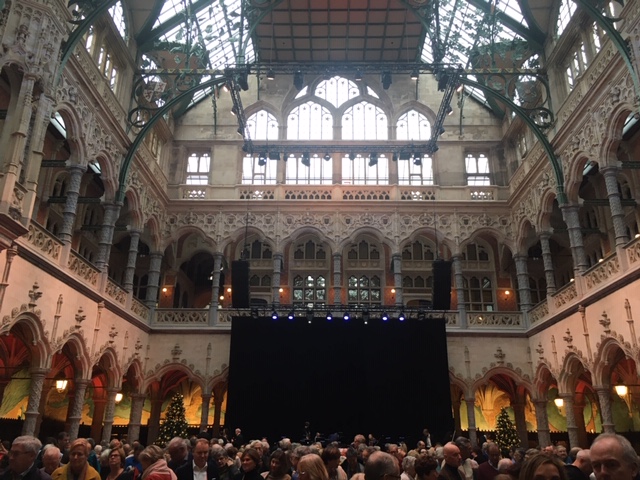
Lovers of beautiful jewelry can indulge themselves during the Jewelry Days in Antwerp on 30 November and 1 December. This unique event takes place in the historic Beurs voor Diamanthandel from 1904, an iconic location that is normally not accessible to the public”n, the press release says.
During the Jewelry Days, visitors can admire and purchase the magnificent collections of 17 jewelers with the prestigious Antwerp’s Most Brilliant label. This label guarantees that the jewelers meet strict criteria in the areas of sustainability, safety, ethics, transparency, service and business stability.
The participating jewelers are: Adin, Colman, Diamani Jewels, Gerda de Vrij, Geretti, Gerhild Kirchner, Joaillerie du Centre, Nico Taeymans, Oriane Diamonds, Orogem, Orsini Diamonds, Juwelen Henri Dom, Rembrandt Jordan, RÖELL Jewellery, Rudiam, Juwelier Slaets and Wouters & Hendrix.
In addition to the jewelry stands, there are many fascinating activities to experience. The basic principles of gemology and jewelry design are revealed in the Diamond Experience.
Visitors can participate in workshops, attend cutting demonstrations, and visit information stands with practical tips about jewelry and facts about the world of diamonds. A master cutter will demonstrate how he cuts diamonds to perfection, and visitors can have their antique jewelry appraised.
here will also be Diamond Walks, during which guides will show you the vibrant heart of Antwerp’s diamond district.
Peter Wouters (N-VA), Alderman for Diamonds: “It came as no surprise to me that the first edition of the Jewelry Days was so popular with the general public. To quote the legendary actress and jewelry collector Elizabeth Taylor: ‘jewelry has the power to be the little thing that makes you feel unique’. We will once again give visitors to these Jewelry Days that special feeling, including an unparalleled and dazzling range of wearable art from Antwerp’s Most Brilliant.”
“But we have much more in store to prove that Antwerp is still unparalleled when it comes to diamonds and jewelry. I therefore cordially invite everyone to come and discover and experience this wonderful world, in all its sparkling and fascinating facets.” Also get to know four schools that offer jewelry, watchmaking and goldsmithing courses: Technicum Antwerp, Sint-Lucas Antwerp, Royal Academy of Jewely Design and Kunstkaai. Explore their offer, see the students at work live and discover some showcases of the students.
About Antwerp’s Most Brilliant
All jewellers that participate in the Jewelry Days carry the Antwerp’s Most Brilliant quality label from the City of Antwerp and the Antwerp World Diamond Centre. To obtain this quality label, a jeweller must meet strict selection criteria.
The label ensures quality and reliability, so that consumers can buy a jewel with complete confidence. Every two years, the certified jewellers are subjected to a new inspection.
Today, 25 Antwerp jewelry stores may call themselves ‘Antwerp’s Most Brilliant’, of which no fewer than 15 were recertified this year. The quality label ‘Antwerp’s Most Brilliant’ is celebrating its 10th anniversary this year.
For more information about the Antwerp’s Most Brilliant label and the affiliated jewelers, the brochure, purchasing tips and the Jewelry Days: www.antwerpsmostbrilliant.be.
The Antwerp Jewelry Days are part of the Antwerp Diamond Week, which takes place from 26 November to 3 December.
During Antwerp Diamond Week, new collaborations and innovation in the diamond sector are stimulated through networking opportunities, inspiring talks and events for and by the Antwerp diamond sector.
Antwerp and diamonds
Antwerp’s association with diamonds dates back to the late 15th century when it emerged as a major centre for trade and commerce in Europe. By the 16th century, the city had become an important hub for diamond cutting and trading, benefiting from its strategic location along the Scheldt River, which provided access to the North Sea and major European markets.
The rise of Antwerp as a diamond capital was bolstered by Portuguese traders who brought diamonds from India, particularly from the famed Golconda mines, through Lisbon. These stones were then transported to Antwerp, which became a crucial marketplace for gem trading.
At the same time, Antwerp’s artisans developed advanced diamond-cutting techniques, such as the ‘Antwerp Rose‘ which enhanced the city’s reputation for craftsmanship.
The diamond industry faced challenges during the 17th century due to political instability, the closure of the Scheldt River by the Dutch, and the rise of Amsterdam as a competing diamond hub.
Despite this, Antwerp maintained a foothold in the industry. By the 19th century, the city’s diamond trade revived, thanks in part to Belgium‘s colonial activities in Africa, which provided access to new diamond sources, particularly in the Congo.
The establishment of the Antwerp Diamond Exchange in 1904 marked a significant milestone, consolidating Antwerp’s position as a global diamond trading centre.
Over the 20th century, Antwerp became the leading hub for both rough and polished diamonds, with its diamond district, known as the Diamantkwartier, hosting thousands of businesses involved in cutting, polishing, and trading.
Today, Antwerp remains one of the world’s most important diamond centres, handling a large percentage of the global trade in rough and polished diamonds. Its success is attributed to a combination of skilled craftsmanship, a robust trading infrastructure, and its historical ties to the diamond industry.
Challenged by the zeitgeist
The global diamond industry is in crisis, with leaders gathering in Antwerp at the Handelsbeurs for the Facets 2024 summit to seek solutions, Gazet van Antwerpen reports.
Falling demand for natural diamonds, driven by competition from synthetic alternatives, has deeply affected the sector.
In Antwerp, imports of rough diamonds dropped 37% this year compared to last. Other major centres like Mumbai in India and Dubai in the United Arab Emirates, along with diamond-producing nations like Botswana, are similarly struggling.
Botswana’s new president, Duma Gideon Boko, attended the summit, underscoring the crisis’s gravity.
The rise of synthetic diamonds, which are up to 90% cheaper and machine-produced, has severely undercut demand for mined stones.
Isi Mörsel, CEO of Dali Diamonds and chair of the Antwerp World Diamond Centre (AWDC), attributes his company’s recent losses to this competition and the Western boycott of diamonds from Russia, which other hubs like Dubai ignore. While Antwerp enforces strict ethical standards, Mörsel believes this commitment will soon become a competitive advantage as consumers increasingly value ethically sourced gems.
To revive the market, diamond centres are considering a global marketing campaign for natural diamonds, funded by a small import levy on rough stones. This effort would highlight the superior resale value and heirloom quality of natural diamonds over synthetic ones.

Bank policies
The sector also faces logistical and financial barriers. AWDC CEO Karen Rentmeesters criticises restrictive bank policies and lengthy visa delays for foreign clients. Despite these challenges, she remains optimistic, citing Antwerp’s leadership in transparency and ethical practices.
However, Rentmeesters warns that Belgium must improve its support for the industry to keep Antwerp competitive on the global stage.
 Trip By Trip
3 Comments Add yours