
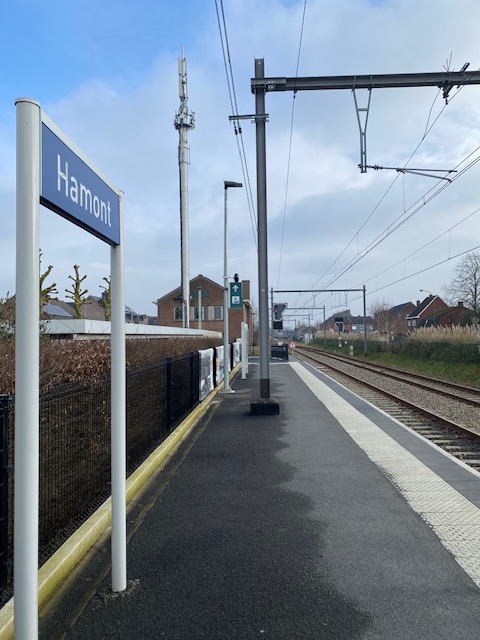
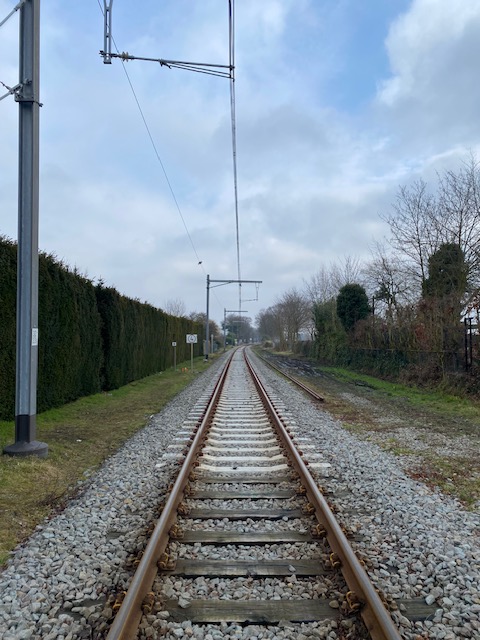
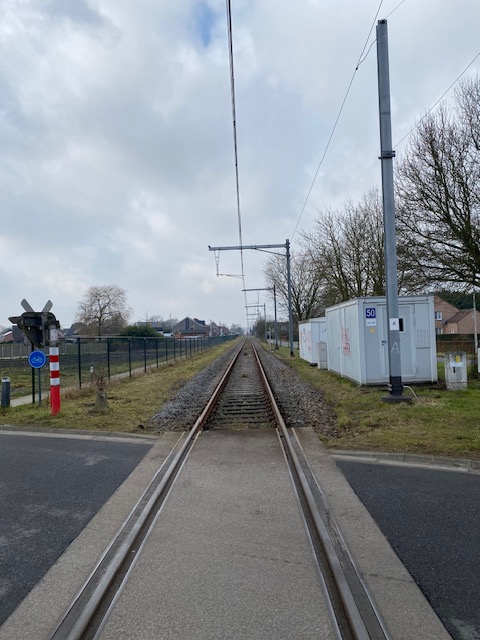
Dutch rail infrastructure manager ProRail counts the Weert – Hamont rail connection as one of the future links between the Netherlands and Belgium. But while there are tracks, there is still no (passenger) train connection. So I walked it it on a February 2025 Wednesday. Also, crossing a border on foot has a lot of romantic charm, as we experienced in Schengen in Luxemburg walking into Saarland.
In April 2021, Dutch train passengers association Rover reported on the ongoing delays in establishing a railway connection between Weert and Hamont. The proposed extension covers a distance of just eight kilometres and would create a new international rail link. The project had been discussed extensively, with support expressed on both sides of the border, yet progress remained stalled.
The existing Hamont–Weert freight railway line forms part of the Antwerp–Weert route, known as railway line 19. On the Belgian side, significant steps had already been taken to facilitate passenger transport. Hamont station reopened in 2014, and Belgian rail infrastructure manager Infrabel began electrifying the Mol–Hamont section in 2019. In the Netherlands, the inclusion of the Weert–Hamont connection in the 2017 coalition agreement had not led to concrete developments.
A third border brossing to Flanders
The proposed rail link aimed to strengthen economic integration between the Port of Antwerp-Bruges, the Belgian province of Limburg, and the southern Dutch provinces of Limburg and North Brabant. For Belgian passengers, the extension to Weert would provide access to intercity trains to Eindhoven and South Limburg.
A feasibility study conducted by the Vereniging Treinreizigers Vervoer (vTv) estimated that the Hamont–Weert connection could serve between 800 and 1,000 passengers per day.
If completed, it would become the second international rail link for Flanders. At the time, there were only three direct rail routes between the Netherlands and Belgium, via Maastricht, Breda, and Roosendaal. Rover argued that the costs of the project should not be an obstacle given its potential benefits.


Revised cost estimates
However, financial concerns appeared to be the main factor delaying the project. ProRail presented revised cost estimates for upgrading the Weert–Hamont route, ranging from 50 million to 150 million euros.
Rover suggested that this was being used as a reason to avoid proceeding with the project. Meanwhile, the Belgian National Railway Company NMBS / SNCB conducted its own feasibility study on the extension to Weert, but its findings had not yet been published. The Dutch Ministry of Infrastructure and Water Management had also commissioned a cost study, the results of which were similarly unavailable.
Belgium appeared less deterred by financial considerations. Infrabel had already taken action, beginning electrification of the Mol–Hamont line in 2018 and later extending this work to the Mol–Hasselt section. The electrification of Mol–Hamont cost €40 million. Additionally, platform extensions at Hamont station were planned for late 2021 and early 2022 to accommodate longer electric trains that NMBS /SNCB intended to operate. Anno 2025, line 19 has been electrified.




The Iron Rhine and freight transport concerns
NMBS / SNCB estimated that extending the Antwerp–Hamont service to Weert would require no additional rolling stock, as the existing turnaround time in Hamont allowed for a return journey to Weert without affecting scheduling. However, further work was required on the eight-kilometre border section before the extension could be realised.
Aside from financial concerns, another obstacle was the fear that reopening the Weert–Hamont line could lead to increased freight traffic from the port of Antwerp to the Ruhr area.
This raised concerns in the Netherlands about a potential revival of the long-debated Iron Rhine project. The proposed 3RX variant of the Iron Rhine route would run from Weert to Roermond and then via Venlo to Germany, potentially increasing competition with the Port of Rotterdam.


Rover Limburg’s efforts
Rover Limburg had been advocating for the Weert–Hamont railway link for years, engaging in lobbying efforts and maintaining contact with regional and national politicians. The organisation provided extensive information on its website about the project.
Chairman Kees Braam remained sceptical about the prospects for progress, commenting: “Dutch politics seems to be procrastinating on this issue. Unfortunately, Limburg is very far away from The Hague.”
At the time of Rover’s April 2021 report, a meeting had reportedly taken place between the Dutch Ministry of Infrastructure and Water Management, the Belgian government, NMBS / SNCB, and the Dutch Province of Limburg. Rover intended to follow up on the results and continue advocating for the completion of this railway connection.
December 2022: officials visit, but don’t commit
In December 2022, VRT NWS reported on the ongoing discussions regarding the long-debated railway connection between Weert and Hamont-Achel. Despite broad support for the project, financial concerns remained a key obstacle.
That afternoon, Dutch and Belgian ministers conducted a joint working visit to Weert station, where they reaffirmed the importance of a cross-border rail link. Then-mayor Theo Schuurmans (CD&V) of Hamont-Achel, a long-time proponent of the project, acknowledged both the benefits and the challenges involved. He emphasised that the necessary infrastructure largely existed, with only an eight-kilometre stretch of overhead electric lines required to extend the Antwerp train service to Weert.
Schuurmans argued that connecting Weert to the Belgian network would significantly improve regional mobility. He noted that Weert served as a larger transport hub than Hasselt, offering Belgian passengers better access to Dutch destinations while also facilitating travel from the Netherlands to Belgium and Antwerp.
The project had been discussed for years without any concrete progress. Schuurmans attributed the delays to an overly pessimistic cost assessment on the Dutch side.
He maintained that financial concerns had been exaggerated and welcomed the involvement of Then-Dutch State Secretary for Infrastructure Vivianne Heijnen.
Heijnen, who comes from the border region and understands the importance of cross-border connections, planned to visit Weert with stakeholders to evaluate the potential of the railway extension. However, she was waiting for the results of a new study before making any commitments. The findings were expected to be available in April 2023.
October 2023: money talks
In October 2023, Het Nieuwsblad reported that the only feasible option for establishing a direct railway connection between Antwerp, Hamont, and Weert would be to operate it entirely within the Belgian rail system. The estimated cost for the necessary infrastructure on the eight-kilometre stretch between Hamont and Weert ranged between 47 million and 88 million euros.
Vivianne Heijnen outlined this assessment in a letter to the Dutch House of Representatives or Tweede Kamer. Although the Dutch government had resigned, officials in Maastricht were keen to advance discussions on the cross-border rail project. However, any final decision would rest with the next Dutch administration.
The line in question was once part of the Iron Rhine, a historic freight route between Antwerp and the Ruhr area, but passenger services ceased in 1953.
Since 2018, Dutch authorities had been examining the costs of reactivating the Hamont-Weert line for passenger transport. Initial studies estimated costs between 50 million and 150 million euros, a figure deemed too high given that the NMBS /SNCB projected only 1,050 additional daily passengers.
Heijnen, however, found these estimates overly pessimistic and commissioned a new study to determine the essential requirements for safe passenger transport on the route.




Make Weert ‘Belgian’
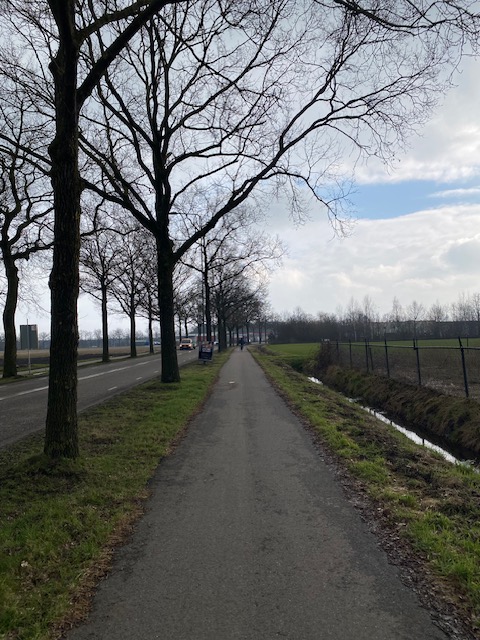
The latest analysis by Rebel determined that the most viable solution would involve integrating Weert station into the Belgian network. This approach would require a new platform and a railway bridge over the Zuid-Willemsvaart to ensure smooth train turnaround without disrupting other rail services.
The bridge was estimated to cost 17.28 million, while the platform would require an additional 5.8 million. However, by exclusively using Belgian rolling stock, savings could be made on the Dutch safety system, and a new platform tunnel in Weert would not be necessary.
The study did not yet account for potential environmental concerns related to the protected nature reserve in the area, which would need to be assessed in a future environmental impact study.
The revised cost estimates, adjusted for inflation and VAT, placed the total investment between 47 million and 88 million euros.
While Heijnen acknowledged that the project remained expensive, she expressed her determination to continue discussions with both the Dutch and Belgian governments. Any concrete decisions following these consultations would be left to the next Dutch government, to be elected on 22 November 2023.


February 2025: new governments, no news
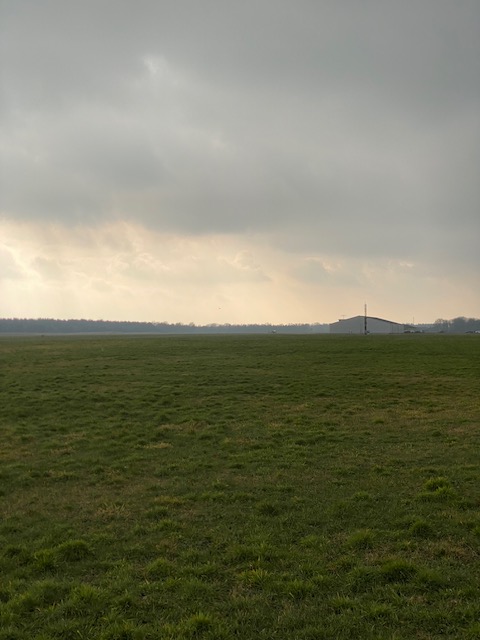
And in February 2025? Both the Netherlands and Belgium have new governments (cabinets, administrations) and nothing has been decided for the Hamont-Weert link.
So, at the moment, it seems nothing will happen in the foreseeable future.
March 2025: political will in Flanders?
Flemish Minister of Mobility and Public Works Annick De Ridder (N-VA) plans to revive the rail connection between the Port of Antwerp and Germany’s Ruhr region. She intends to restart discussions with the Netherlands and Germany once a new German government is in place. The Iron Rhine, a railway linking Antwerp to the Ruhr through Dutch Limburg, has been inactive since 1991. Belgium has pushed for its reopening, arguing that the alternative route through Wallonia is longer, slower, and congested.
The Netherlands has opposed past proposals due to environmental concerns and costs. In 2018, the Rhein-Ruhr-Rail Connection (3RX) was suggested as a compromise to bypass De Meinweg National Park, but Dutch authorities remain hesitant. The renewed push coincides with Ciner Glass’s plan to reopen a transfer station along the Iron Rhine route in Lommel, Belgian Limburg. De Ridder will raise the issue at a Flemish-Dutch summit on 1 April, stressing the need for a unified Belgian stance before negotiations with the Netherlands and Germany resume.
The last freight train ran on the Iron Rhine in 1991, and the railway lost importance after World War II. Belgium attempted to reactivate it in the late 1990s to ease congestion on Antwerp’s roads, but Dutch opposition and environmental concerns stalled progress. The 3RX proposal in 2018 faced Dutch scepticism due to high costs and limited benefits.
Railway expert Herman Welter is doubtful about its revival. He argues that despite studies, little progress has been made, and the Netherlands has yet to electrify the Hamont-Weert section. Belgium has electrified the Mol-Hamont stretch but must still double-track parts of the route. Additional obstacles include €675 million in budget cuts to Belgian Railways, permit challenges, and declining rail freight transport. Welter believes Flanders should prioritise a second rail access route to the Port of Antwerp instead.


Introducing Hamont
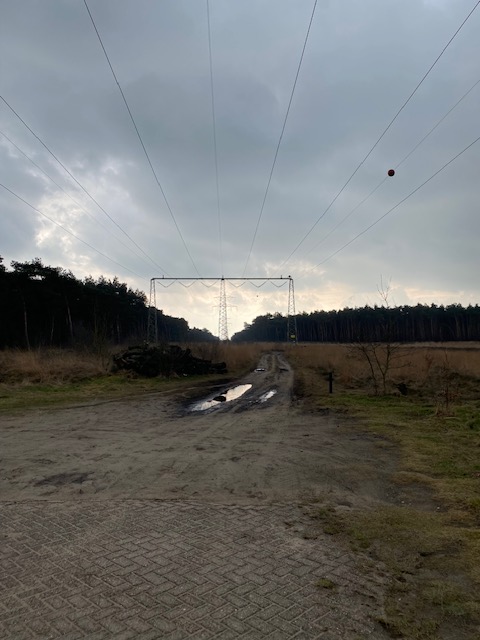
Hamont is a city in the municipality of Hamont-Achel, situated in the northern part of the Belgian province of Limburg. Until 1977, it was an independent municipality before merging with neighbouring Achel to form the current municipality. The city’s name, first recorded in 1257, may originate from ‘Haag-Mont‘, meaning enclosed wooded slope, or ‘Hameide‘, meaning enclosed place. Some 9,000 people live in Hamont.
Archaeological evidence points to early human activity in Hamont, with Bronze Age burial mounds and Roman-era discoveries, including a hoard of coins.
In the early Middle Ages, the area was under the control of the chapter of the Sint-Servaas church in Maastricht, as documented in 1139. By 1275, the lords of Boxtel exerted increasing influence, leading to the creation of the free lordship of Grevenbroek, where Hamont held a special status. The town had urban characteristics as early as the 14th century, attracting Lombard traders in 1307. However, in 1347, the Battle of Hamont saw the Duchy of Brabant and Duchy of Guelders suffer a crushing defeat against the rebellious people of Liège. By the late 14th century, fortifications, including a rampart and two city gates, were constructed, along with a small brick castle whose foundations were rediscovered in 1994.
Hamont’s medieval history was marked by armed conflicts. In 1401, the Prince-Bishopric of Liège asserted control, abolishing Hamont’s special status. The city suffered a devastating fire in 1493, and later, in 1585, the Prince-Bishopric absorbed the remaining rights of the lordship, effectively dissolving Grevenbroek.
War, epidemics, and further fires weakened the city’s prosperity. In 1595, a tragic witch burning occurred, with a woman named Griet and her daughter executed.
Spanish troops ravaged the city in 1599 and 1600, followed by Hessian troops in 1642. Hamont’s location on the border became significant in 1648, leading to the construction of a customs post in 1662, which remains a historical landmark.
Despite these setbacks, Hamont experienced a revival in the 18th century due to the peddler trade. Wealth from this trade led to the construction of stately homes, some of which survive today.
A major fire in 1756 reshaped the city’s architecture, with houses rebuilt with their ends facing the market square. In 1782, the city erected a platform that served as a water pump and pillory, later destroyed by British soldiers in 1944 and reconstructed in 1989. Hamont lost its city rights in 1796 under French rule.
During the Belgian Revolution of 1830, Hamont suffered damage but later benefited from economic improvements. The Kempen Canal (Campine Canal) was dug in 1844, and the construction of the Iron Rhine railway began in 1869, leading to a railway station in 1879.
Religious communities played a role in education and healthcare, with the Ursulines arriving in 1836 and the Augustinians, or Black Sisters, in 1889. Industry flourished, particularly in brickmaking, cigar manufacturing, and tanning. In 1853, a bleaching plant developed into the Spaas candle factory, a business that still exists today, employing 220 people.
World War I brought hardship, with the infamous ‘Wire of Death‘, an electrified border barrier, cutting off Hamont from Belgium in 1915. A major explosion in 1918, known as the Hamont Disaster, resulted in the deaths or severe injuries of around 1,000 German soldiers when an ammunition train caught fire. Despite the extensive destruction, there were no civilian casualties.
In 1977, Hamont merged with Achel, and in 1985, the municipality was granted city status once more.
Hamont’s historical and architectural landmarks reflect its rich past. The Sint-Laurentius Church, a neo-Gothic structure designed by Jos Cuypers and Jan Stuyt in 1903-1904, features late Gothic statues, stained glass windows by Gustave Ladon and Osterrath, and an 18th-century pulpit.
The churchyard contains rare bluestone gravestones, the oldest dating back to 1620, as well as the grave monument of Antonius Mathijsen, the inventor of the plaster cast.
The Ursuline Convent, built in 1913-1914 by Pierre Cuypers, stands out for its unique design, with a chapel located on the first floor and supported by galleries on the ground floor. Today, the complex houses schools and a library. The Convent of the Black Sisters, established in 1889, originally provided healthcare and now primarily serves as a residence for the elderly.
The pump platform, originally built in 1782, was a distinctive hard stone pump that also functioned as a pillory. It was destroyed during the World War II and reconstructed in 1989.
Farm De Wal, dating from 1878, now serves as an artistic hub. The Napoleonsmolen, a towering windmill from 1804, stands as a testament to the city’s rural heritage. The Wire of Death, a reconstructed high-voltage border barrier, commemorates the First World War.
Kasteel Beverbeek, a Tudor-style country house built in 1889 by Peter Slegers, is surrounded by a 3-hectare estate.
Hamont also boasts several historically significant residential buildings, including the 17th-century Huis Rijcken, the oldest surviving house in the city, and Huis Cuppens, formerly an inn known as The Prince of Liège.
Other notable residences include Huis Gijbels, known for its motto “Quid nocuisse juvat” (what’s the use of harming someone), and Huis Engelen, built by the Spaas family, famous for their candle-making enterprise.
The 18th-century Huis Feyen, now Villa Christina, and the 19th-century Huis Simons, once home to a coffee roastery, add to the city’s architectural charm.
Hamont preserves its rich past through its monuments, historical houses, and cultural heritage, offering a glimpse into a city shaped by war, trade, and industry.
Introducing Weert
Weert is a city in the Dutch province of Limburg, positioned at the border of North Brabant and Belgium. Known as ‘the gateway to Limburg,’ it occupies a higher elevation surrounded by the Peel, the Kempen-Broek, and the Meuse (Maas) valley. The Zuid-Willemsvaart canal runs through the city, which had a population of 44,875 as of 2021, making it the fourth-largest city in Limburg.
The name Weert originates from the term ‘waard,’ meaning land near or surrounded by water, reflecting its early geography of marshes and lakes. Evidence of human settlement dates back to prehistoric times, including Bronze Age burial mounds at Boshoverheide.
The city developed at a strategic road junction and was first mentioned in a 1062 charter. From 1306, it came under the rule of the Lords of Horne, who governed Weert as a fief of the Duchy of Guelders.
A period of prosperity between 1450 and 1550 saw the rise of the local cloth industry and the construction of the Sint-Martinuskerk. However, the city’s fortunes declined after the execution of Count Filips van Horne in 1568. Weert’s economy revived with the construction of the Zuid-Willemsvaart in 1825 and the Iron Rhine railway in 1879, followed by industrialisation in the 20th century.
Weert played a role in the Second World War as part of the Peel-Raamstelling defensive line, with strategic bridges along the Zuid-Willemsvaart being destroyed to slow German advances. A well-organised evacuation plan was implemented, although seven civilians lost their lives in the conflict.
Despite post-war urban redevelopment, Weert retains historical landmarks such as the Sint-Martinuskerk, ranked among the Netherlands’ most important monuments. Other sites include the remnants of Nijenborgh Castle, the Franciscan Monastery, and preserved windmills such as Wilhelmus-Hubertus and Sint-Anna. The Gemeentemuseum Weert houses religious art and historical artefacts.
Weert is known for its vibrant cultural life, featuring the Munttheater, the De Bosuil music venue, and numerous orchestras. It hosts one of the Netherlands’ largest funfairs, drawing over 100,000 visitors.
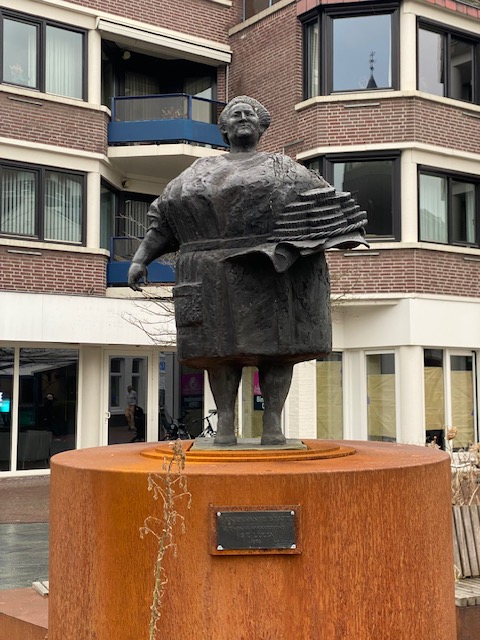
The city is also famous for its traditional pastry, Weerter vlaai, popularised by Antje van de Statie, a legendary pie vendor at the local train station. Shopping in Weert is enhanced by its pedestrian-friendly city centre and the Muntpassage shopping complex.
Carnival plays a central role in Weert’s identity, with the city taking on the name ‘Rogstaekersstad‘ during the festivities. Local traditions include the Gouwe Lambieck, which humorously recognises the year’s most amusing pranks. With a rich history and a lively cultural scene, Weert continues to balance its historical heritage with modern development.

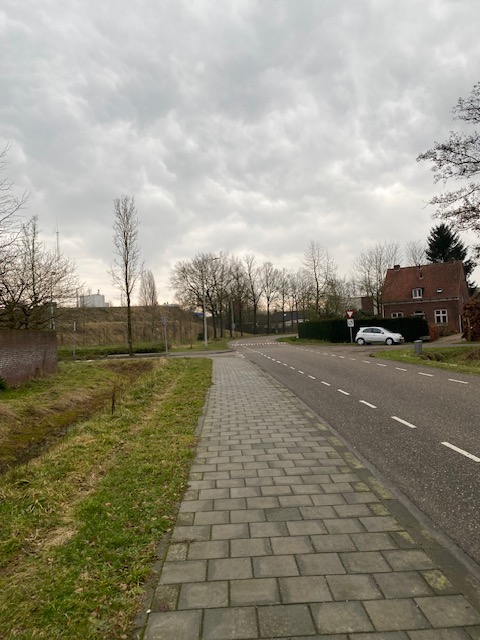
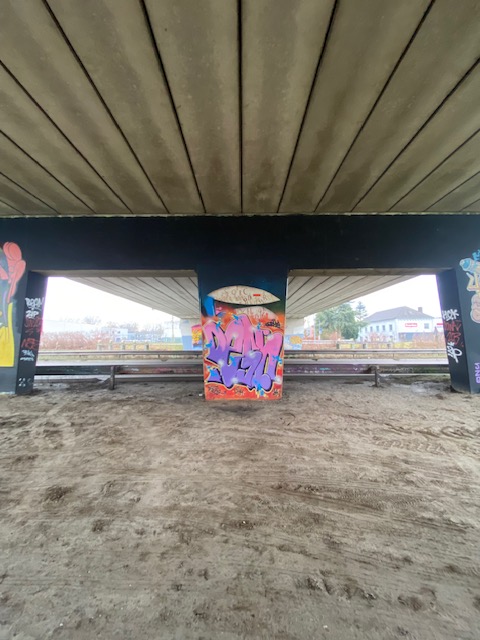
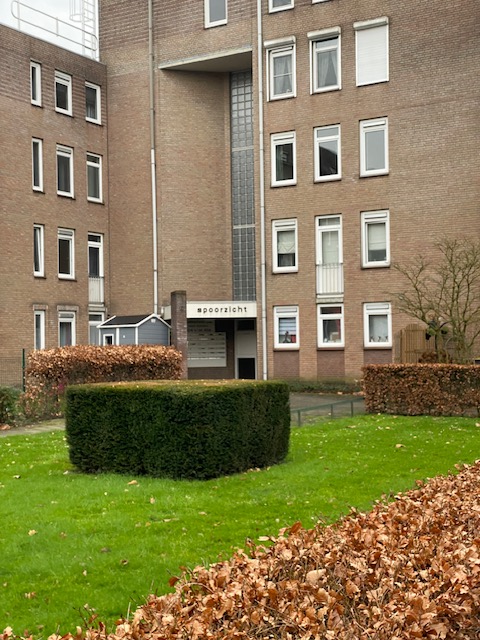


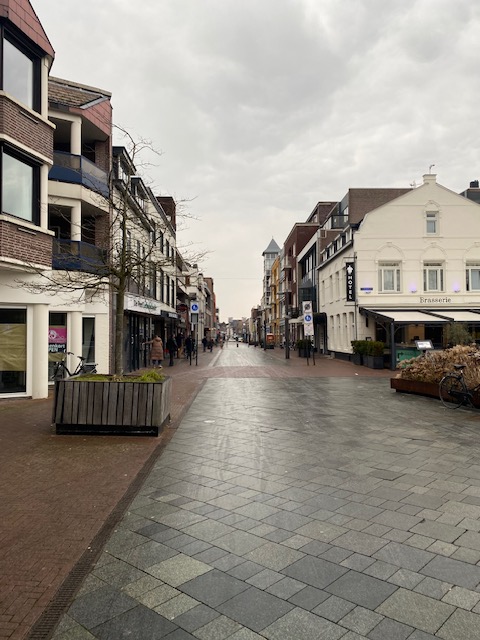



The hike
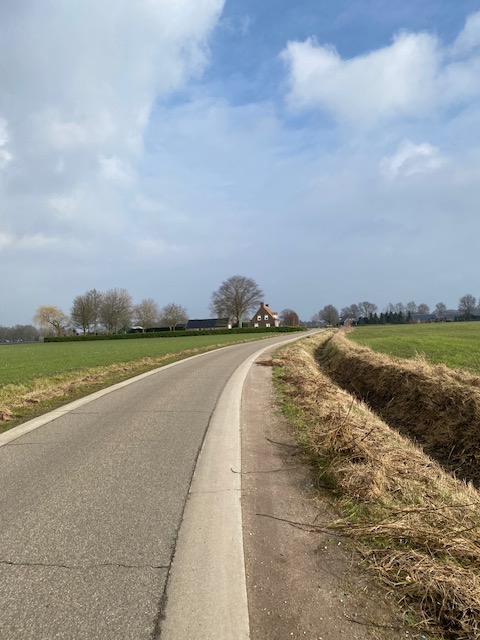
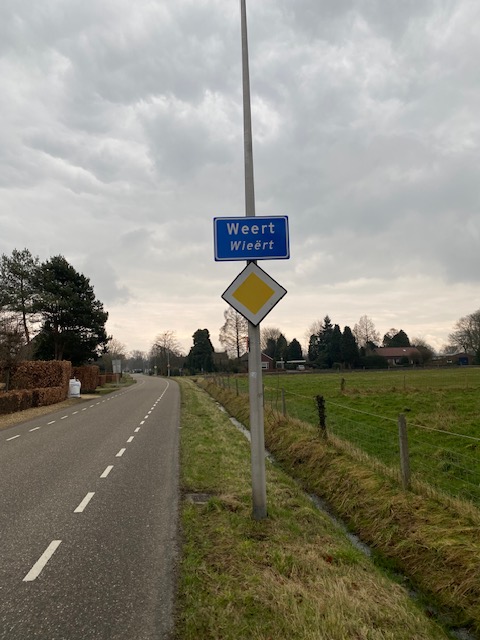
I wish I could write many nice things about the hike, but it as an itinerary, it’s quite unspectacular. You can’t follow the railway. So your 8 km journey becomes a 13 to 14 km journey.
There is nu blue European sign welcoming you to the Netherlands (or Belgium). There is an old school boarder marker though.
Perhaps noteworthy are the Kempen Airport and the Geuzendijk.
Kempen Airport
Kempen Airport, also known as Budel Airport (Vliegveld Kempen), is a general aviation airport in the southeast of the Netherlands.
The airport’s main runway, designated 03/21, is an asphalt runway measuring 1,199 meters (3,934 feet) in length. A secondary runway, intended for microlight aircraft, runs parallel to the main runway and is 600 meters (1,969 feet) long.
Established in 1970, the airport originally featured only a grass runway. In 1991, an asphalt runway was constructed with an initial length of 930 meters (3,051 feet) before later being extended to its current size.
The addition of approach and runway lighting made the airport suitable for instrument flight rules (IFR) operations. With approximately 80,000 aircraft movements per year, Kempen Airport is one of the busiest general aviation airports in the Netherlands. It accommodates international flights and is widely used by business aircraft, which account for 80% of total air traffic.
Geuzendijk
The Geuzendijk is an ancient road through the Dutch Kempen, fully paved since 1952, running from Weert to Budel. Historically, it served as a trade route, church path, postal road, and main thoroughfare. A monument at the North Brabant–Limburg border commemorates key events associated with the route.
The name Geuzendijk originates from the Protestants of Weert, known as Geuzen who were barred from religious services until the French period in the late 18th century.
As Weert was under Spanish and later Austrian rule, Protestant worship was restricted. However, Budel, part of the Dutch Republic, had a Protestant community, and Weert’s Protestants travelled 12 km along this road to attend services. The name eventually became official. Even after religious freedom was restored, Weert’s Protestants had no church until 1852, with services initially held in a private building before the Bethel Church was established in 1912.
The Geuzendijk was a treacherous route through heathlands and marshes, where travellers often got lost. A wayside cross, dating back to at least 1786, serves as a memorial to those who disappeared, including three men on their way to Budel’s market. Some traditions claim a cross was first erected in 1587 for earlier victims.
Trade routes through the Kempen emerged in the 13th century, linking Antwerp to the Rhineland. By 1378, Weert’s cloth guild used the Geuzendijk for trade with England and France.
Weert’s city status in 1414 boosted commercial use of the road. During the French occupation in 1795, Catholic clergy fled Weert via the Geuzendijk to Budel. By 1800, it became a postal route, with a border office and post house built in 1806. During the Belgian Revolution (1830–1839), the building served as a customs post, as Dutch Limburg was briefly under Belgian control.
 Trip By Trip
8 Comments Add yours