
We haven’t travelled to the Grand Duchy of Luxembourg since 2018 and 2019, but in January 2025 we returned to get a taste of the Alstom Coradia Stream HC which the Société Nationale des Chemins de Fer Luxembourgeois (CFL) runs under the name Série 2400. The Coradia Stream HC was a candidate to become NMBS /SNCB‘s AM30, until it was (all but) decided Construcciones y Auxiliar de Ferrocarriles (CAF) from Spain would adapt its CAF Civity Duo. Although that decision is being challenged. While in the grand duchy, we also visited Schengen and Diekirch. 2025 is big year for the country, as on 3 October, Grand Duke Henri (Henry) will abdicate in favour of his son, Guillaume, who will become Grand Duke Guillaume V (or William V).
Today, 23 June, is the Grand Duke’s Official Birthday. Grand Duke Henri has his birthday on 16 April and his son, His Royal Highness Prince Guillaume Jean Joseph Marie, Hereditary Grand Duke of Luxembourg, Hereditary Prince of Nassau, Prince of Bourbon-Parma, has his birthday on 11 November. But still.
Let us use this oppurtunity to intrduce the country.
23 June
The Groussherzogsgebuertsdag / Célébration publique de l’anniversaire du souverain, also known as Luxembourgish National Day is celebrated annually as Luxembourg’s national holiday. The celebration takes place on 23 June, although this date has never corresponded to the actual birthday of any Luxembourgish ruler. When Luxembourg’s monarch is female, it is referred to as the Grand Duchess’s Official Birthday.
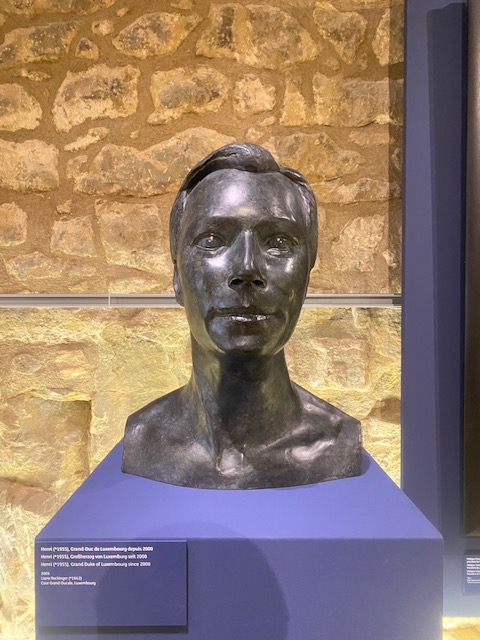
Historically, the monarch’s birthday has not always been observed on 23 June. Under William I (1815–1840), it was marked on 24 April, despite his actual birthday being 24 August. During William II‘s reign (1840–1849), the holiday was celebrated on 6 December, coinciding with his real birthday. In 1840, following William I’s abdication, the holiday was observed twice—once on 24 April and again on 6 December. Under William III (1849–1890), the date was initially set for 17 June but shifted to 19 February after 1859, two days after his actual birthday.
When the Dutch and Luxembourgish thrones separated in 1890, the Nassau-Weilburg monarchs began celebrating their official birthdays on their actual birth dates. In 1947, the celebration was formally declared a ‘national holiday’.
At that time, both reigning Grand Duchess Charlotte and her heir, Jean, were born in January, prompting concerns that their actual birthdays—and thus the national holiday—would be hindered by inclement winter weather. As a result, a Grand Ducal decree issued on 23 December 1961 officially moved the date to 23 June.
The Luxembourgish National Day festivities commence on the afternoon of 22 June. That evening, a torchlight parade takes place at dusk, followed by dancing and celebrations that continue late into the night. The following day, 23 June, is a public holiday, featuring processions that include the Grand Ducal Family of Luxembourg.
Introducing the Grand Duchy of Luxembourg
The Grand Duchy of Luxembourg, is a landlocked country situated in Western Europe. It shares borders with Belgium to the west and north, Germany to the east, and France to the south.
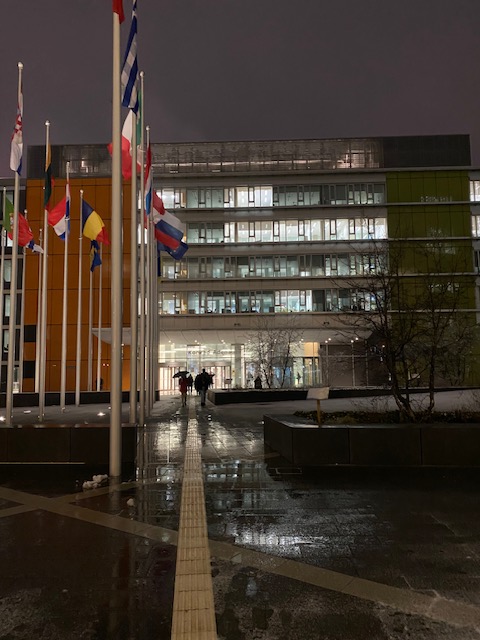
The capital and largest city, Luxembourg City, is one of the four institutional seats of the European Union, alongside Brussels, Frankfurt, and Strasbourg. It is home to several EU institutions, most notably the Court of Justice of the European Union, the highest judicial authority in the EU.
Luxembourg’s culture, people, and languages are deeply influenced by its larger neighbours, France and Germany. Luxembourgish, a Germanic language, is the sole national language of the Luxembourgish people and the Grand Duchy, while French serves as the language of legislation. Luxembourgish, German, and French are all used for administrative purposes.
Covering an area of 2,586 square kilometres (998 square miles), Luxembourg ranks as the seventh-smallest country in Europe. In 2024, its population was 672,050, making it one of Europe’s least-populated nations, though it boasts the continent’s highest population growth rate. Nearly half of its population consists of foreign nationals. Luxembourg is a representative democracy with a constitutional monarch, making it the world’s only remaining sovereign grand duchy.
Luxembourg is a highly developed country with an advanced economy and one of the world’s highest GDPs per capita when adjusted for purchasing power parity, according to the International Monetary Fund (IMF) and World Bank. It also ranks among the highest in Europe for human development.
In 1994, Luxembourg City and its fortifications were designated a UNESCO World Heritage Site due to their exceptional preservation. Luxembourg is a founding member of the European Union, the Organisation for Economic Co-operation and Development (OECD), the United Nations, NATO, and the Benelux Union. It served as a member of the United Nations Security Council for the first time in 2013 and 2014.

History of Luxembourg
The earliest signs of human settlement in the area now known as Luxembourg date back approximately 35,000 years to the Paleolithic Age. By the 2nd century BC, Celtic tribes had settled between the Rhine and Meuse rivers. Six centuries later, the Romans referred to these tribes collectively as the Treveri, with notable archaeological evidence of their presence including the Titelberg oppidum.
Between 58 and 51 BC, Julius Caesar’s conquest of Gaul brought Luxembourg under Roman control for the next 450 years. During this period, the region experienced relative peace under the Pax Romana. The Celtic inhabitants adopted Roman culture, language, and customs, forming what is now termed the Gallo-Roman civilisation. Artefacts from this era, such as the Dalheim Ricciacum and the Vichten mosaic, are preserved in the National Museum of History and Art in Luxembourg City.
In the 4th century, Germanic Franks began to infiltrate the region. By AD 406, the Romans abandoned the area, and it became part of the Kingdom of the Franks. The Salian Franks introduced their language, a precursor to modern Luxembourgish.
The Christianisation of the region is traced back to the late 7th century, with the missionary work of Saint Willibrord, who founded the Abbey of Echternach in 698. This abbey became a prominent religious and cultural centre, producing the 11th-century Codex Aureus of Echternach, a manuscript written entirely in gold ink.
A county and a duchy
Recorded history in Luxembourg begins in 963 with Count Siegfried of the Ardennes acquiring the fortress of Lucilinburhuc (now Luxembourg Castle). A town grew around the castle, forming the nucleus of what would become the County of Luxembourg. By 1083, Conrad I was the first to assume the title Count of Luxembourg.
By the mid-13th century, the counts expanded their territory significantly. Under Henry V, they controlled lands stretching from the Meuse to the Moselle. The Battle of Worringen in 1288, though a military defeat, enhanced the counts’ reputation for military prowess. The County’s influence peaked in 1312 when Henry VII became Holy Roman Emperor, marking the rise of the House of Luxembourg.
The ascension of Henry VII heralded the House of Luxembourg’s dominance in Central Europe. His son, John the Blind, became King of Bohemia and remains a legendary figure in Luxembourgish history. John founded the Schueberfouer fair and died heroically at the Battle of Crécy in 1346.
Three additional members of the House of Luxembourg—Charles IV, Wenceslaus IV, and Sigismund—ruled as Holy Roman Emperors during the 14th and 15th centuries.
In 1354, Charles IV elevated Luxembourg to a duchy. The duchy reached its largest territorial extent under Wenceslaus I, but internal conflicts and external rivalries with the House of Habsburg culminated in 1443 when the duchy was inherited by Philip the Good of Burgundy, ending the House of Luxembourg’s rule.
Habsburg rule and French invasions (1444–1794)
Luxembourg came under Habsburg control in 1482 and remained so for over three centuries. As part of the Spanish and later Austrian Netherlands, it became a focal point in European conflicts.
French invasions in 1542 and 1684 briefly annexed parts of the duchy, with fortifications enhanced during these periods. Notably, French engineer Sébastien Le Prestre, seigneur de Vauban fortified Luxembourg City, earning it the nickname ‘Gibraltar of the North‘.
French Revolution and Napoleon
During the Revolutionary Wars, France annexed Luxembourg, integrating it as the Département des Forêts. The French introduced reforms such as the Napoleonic Code, which persists in Luxembourgish law. Resistance to French rule was fierce, exemplified by the Klëppelkrich uprising in 1798. Despite this, some revolutionary ideals left lasting influences.
19th century nationalism
The Congress of Vienna in 1815 re-established Luxembourg as a Grand Duchy under the personal union of the Dutch king, with membership in the German Confederation. The Treaty of London in 1839 resolved territorial disputes by ceding the francophone west to Belgium and affirming Luxembourg’s independence.
The mid-19th century saw economic growth through the German Customs Union or Zollverein, while Luxembourg’s neutrality was reaffirmed following the 1867 Luxembourg Crisis. The gradual development of a national identity culminated in 1890, when Luxembourg gained a distinct monarchy under the Nassau-Weilburg dynasty, securing full independence.
German occupations and World Wars (1890–1945)
Luxembourg endured German occupations during both World Wars. In World War I, German forces occupied the country, and fears of annexation persisted.
During World War II, Nazi Germany annexed Luxembourg, suppressing its culture and imposing German rule. Resistance efforts and the exile government in London demonstrated Luxembourg’s commitment to the Allied cause. The war inflicted severe damage, with the Battle of the Bulge causing significant destruction.
After the wars
Luxembourg emerged as a founding member of the United Nations, NATO, and the European Communities. Economic development shifted from steel production to banking and technology in the late 20th and early 21st centuries.
Today, Luxembourg remains a key player in European politics and a symbol of resilience and adaptability.



Government and politics
Luxembourg is classified as a ‘full democracy’ and operates as a parliamentary democracy under a constitutional monarchy. Executive power is shared by the Grand Duke and the cabinet, which is headed by a Prime Minister and includes ministers, minister delegates, and secretaries of state.
The Constitution of Luxembourg, originally adopted on 17 October 1868, is the country’s supreme law and was most recently updated on 1 July 2023.
The Grand Duke holds the authority to dissolve the legislature, requiring new elections within three months. Since 1919, however, sovereignty has rested with the nation, exercised by the Grand Duke in accordance with constitutional law.
The legislature is the Chamber of Deputies, a unicameral body of 60 members directly elected for five-year terms from four constituencies. Additionally, the Council of State, comprising 21 citizens appointed by the Grand Duke, advises the Chamber of Deputies on legislative matters.
Luxembourg’s judiciary includes three lower tribunals in Esch-sur-Alzette, Luxembourg City, and Diekirch; two district tribunals in Luxembourg City and Diekirch; and a Superior Court of Justice in the capital, which encompasses the Court of Appeal and the Court of Cassation.
Administrative and constitutional disputes are handled by specialised courts, all based in Luxembourg City.
Administrative divisions
Luxembourg is divided into 12 cantons, further subdivided into 100 communes. Among these, 12 communes have city status, with Luxembourg City being the largest.
Historically, Luxembourg underwent three partitions between 1659 and 1839, reducing its territory from 10,700 km² to the current 2,586 km². The land ceded now forms parts of Belgium, France, and Germany.
Foreign relations
Luxembourg has consistently championed European integration. In 1921, it partnered with Belgium to form the Belgium–Luxembourg Economic Union (BLEU), introducing a shared currency regime and customs union.
A founding member of the European Economic Community (now the European Union), Luxembourg is part of the Schengen Group, named after the Luxembourg village where the agreements were signed.
As a staunch supporter of transatlantic relations, Luxembourg has pursued a pro-NATO and pro-US foreign policy. It hosts key EU institutions, including the Court of Justice of the European Union, the European Investment Bank, and the European Court of Auditors. The Secretariat of the European Parliament is also based in Luxembourg, although sessions typically take place in Brussels or Strasbourg.
The city is also home to the EFTA Court, which serves EFTA countries participating in the European Economic Area.




Military
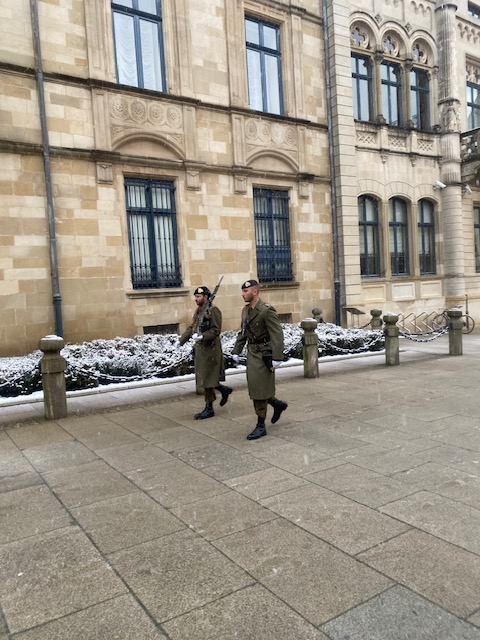
Luxembourg’s military, headquartered in Diekirch, is under civilian control, with the Grand Duke serving as Commander-in-Chief. The Defence Minister oversees operations, while the Chief of Defence holds the rank of general. Luxembourg has no navy, as it is landlocked, but 17 NATO AWACS aircraft are registered under its jurisdiction. Together with Belgium, Luxembourg has co-funded an A400M military cargo plane.
The nation has contributed troops to various international missions, including NATO operations in Bosnia and Herzegovina, and has participated in humanitarian missions.


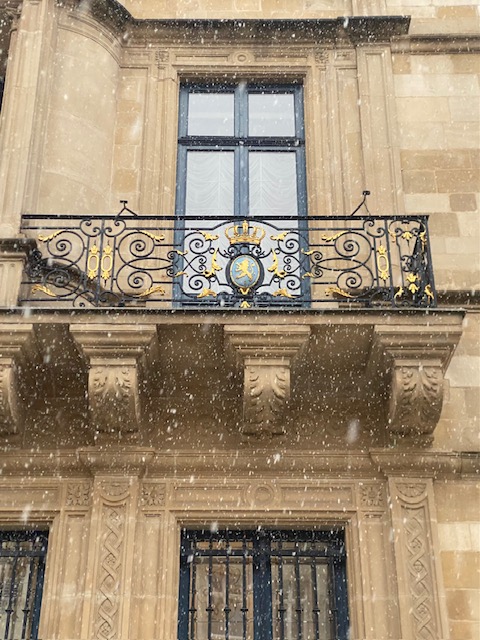

Geography
Luxembourg, one of Europe’s smallest countries, covers 2,586 km², stretching 82 km long and 57 km wide. It borders Germany to the east, France to the south, and Belgium to the west and north.
The northern region, known as the Éislek or Oesling, forms part of the Ardennes and is characterised by hills and low mountains. The highest point is the Kneiff at 560 metres. This sparsely populated area includes only one town, Wiltz, with more than 5,000 residents.
The southern region, called the Guttland, is more densely populated and diverse, featuring the Luxembourg plateau, Little Switzerland, the Moselle valley, and the industrial Red Lands. The Moselle, Sauer, and Our rivers define parts of Luxembourg’s borders with Germany.
Environment
Luxembourg consistently ranks high in environmental performance, achieving second place globally in 2024. It aims to cut greenhouse gas emissions by 55% within a decade and achieve net-zero emissions by 2050. The country also plans to expand organic farming fivefold.
Despite these achievements, Luxembourg’s 2019 Forest Landscape Integrity Index score was 1.12/10, placing it 164th globally.
Climate
Luxembourg experiences an oceanic climate with warm summers and cool winters. Rainfall is frequent, particularly in late summer.
Economy
Luxembourg, a member of the Schengen Area, the EU single market, and the eurozone, maintains a stable, high-income market economy characterised by moderate growth, low inflation, and significant innovation.
Although unemployment is traditionally low, it reached 6.1% in May 2012 following the Great Recession. In 2011, the IMF ranked Luxembourg as the world’s second-richest country, with a per capita GDP of $80,119 (PPP). In 2019, its GDP per capita in purchasing power standards stood at 261% of the EU average. The nation is ranked 13th in The Heritage Foundation’s Index of Economic Freedom, 26th in the UN’s Human Development Index, and fourth in the Economist Intelligence Unit‘s quality of life index. It placed 20th in the Global Innovation Index in 2024.
Historically reliant on steel, Luxembourg’s industrial sector has diversified since the 1960s to include chemicals and rubber. Its financial sector now dominates the economy, with services, particularly banking and finance, contributing the majority of output.
Luxembourg is the second-largest investment fund centre globally (after the United States), the eurozone’s leading private banking hub, and Europe’s top reinsurance market. Efforts to attract internet startups have drawn companies like Skype and Amazon, along with high-tech firms such as Artec 3D.
Luxembourg’s banking secrecy laws attracted scrutiny in 2009, resulting in the nation being placed on the G20‘s ‘grey list’ of questionable banking jurisdictions.
Following the adoption of OECD transparency standards, it was reclassified as compliant. Nevertheless, allegations of tax avoidance have persisted, with the 2014 Luxembourg Leaks highlighting corporate tax avoidance during Jean-Claude Juncker‘s tenure as Prime Minister.
Agriculture employs a small portion of the workforce, accounting for 2.1% in 2010, with 2,200 farms averaging 60 hectares each.
Luxembourg has close economic ties with Belgium and the Netherlands through the Benelux Union and benefits from the open European market as an EU member. In May 2015, the country ranked 11th in the world for holdings of US Treasury securities, although much of this was attributed to custodial accounts for non-residents.
Luxembourg’s labour market supports 445,000 jobs, with a significant proportion filled by cross-border commuters. While these workers pay taxes in Luxembourg, their education is funded by their countries of residence, a factor contributing to Luxembourg’s economic success but drawing criticism from neighbouring regions.
Transport
Luxembourg has a modern network of road, rail, and air transport. Its road infrastructure includes 165 km of motorways connecting the capital to neighbouring countries.
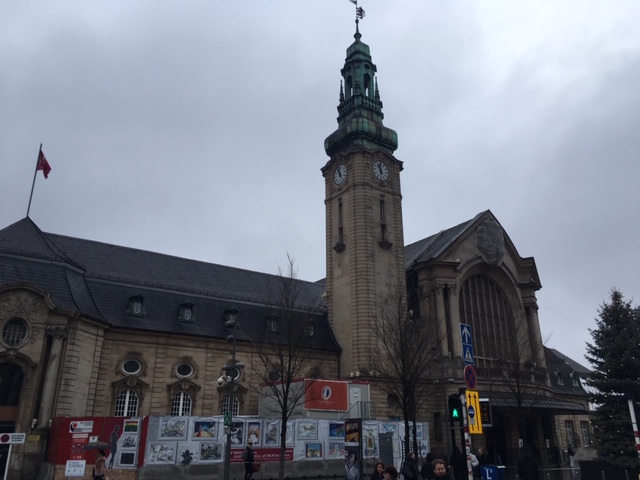
The high-speed TGV link to Paris has driven major renovations, including upgrades to Luxembourg City’s railway station and the 2008 opening of a new passenger terminal at Luxembourg Airport. Trams returned to Luxembourg City in December 2017, with plans for light rail extensions to surrounding areas.
The country has a high car ownership rate, with 681 vehicles per 1,000 residents, surpassing most other nations.
On 29 February 2020, Luxembourg became the first country to implement free public transportation, funded entirely through public taxation.


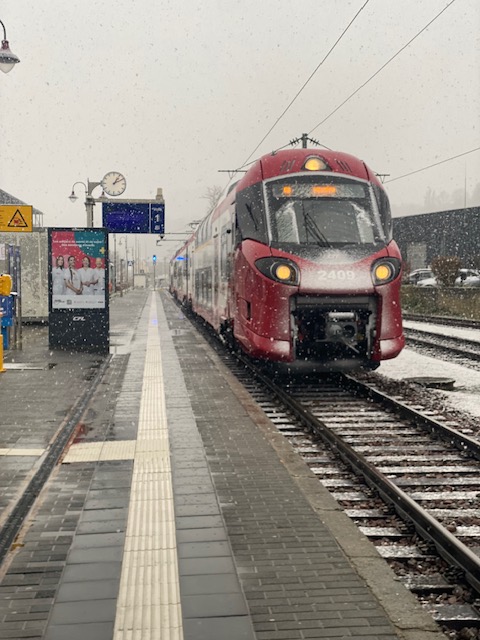



Communications
Luxembourg’s telecommunications industry is liberalised and supported by extensive optical fibre and cable networks. A 2011 government initiative aimed to position Luxembourg as a global leader in high-speed broadband, achieving 75% NGA coverage by that year and reaching gigabit coverage by 2020. In April 2013, Luxembourg ranked sixth globally for download speeds and second in Europe.
The nation ranks highly in IT development indices and broadband quality studies. Luxembourg connects to major European Internet Exchanges and global data hubs through redundant optical networks. It has also established itself as a leading European fintech hub, with government-backed initiatives such as the Luxembourg House of Financial Technology.
Demographics
Luxembourg’s population is diverse, reflecting a history of immigration throughout the 20th century. Immigrants from Belgium, France, Italy, Germany, and especially Portugal have shaped the country’s demographics, with Portuguese nationals forming the largest group.
I didn’t make photos of it, but I saw insurance agency offices sporting a Portuguese name. ‘Agence Luis Nunes‘ for instance.
In 2013, approximately 88,000 residents of Luxembourg held Portuguese citizenship. Out of a total population of 537,039 permanent residents in 2013, 44.5% were of foreign origin.
The largest foreign ethnic groups were Portuguese at 16.4%, followed by French at 6.6%, Italians at 3.4%, Belgians at 3.3%, and Germans at 2.3%. Additionally, 6.4% of the population came from other EU countries, and 6.1% were from non-EU nations, primarily other parts of Europe.
In more recent times, Luxembourg has welcomed immigrants from Bosnia and Herzegovina, Montenegro and Serbia, largely as a result of the Yugoslav wars. Annually, over 10,000 new immigrants, predominantly from EU countries and Eastern Europe, settle in Luxembourg. By 2000, immigrants comprised 37% of the total population, totalling 162,000 people. In 1999, it was estimated that around 5,000 individuals in Luxembourg were illegal immigrants.
Language
Luxembourg’s linguistic environment is multilingual, with Luxembourgish designated as the sole national language under the 1984 Language Regimen Act. Luxembourgish, part of the Moselle Franconian subgroup of West Central German dialects, is the mother tongue for most Luxembourgers. It includes over 5,000 words of French origin, reflecting historical linguistic influences. Proficiency in Luxembourgish is also a requirement for naturalisation.
In addition to Luxembourgish, French and German are used in administrative and judicial matters, making all three official languages in these contexts. Citizens are entitled to communicate with the administration in any of these languages, and responses are given in the language used for the query.
French is the most widely spoken language in Luxembourg, with 98% of residents proficient in it by 2021.
Many Luxembourgers are also fluent in German (78%) and English (80%). Luxembourgish remains the language of everyday interaction among Luxembourgers, while French dominates public communication, government documents, and legal matters. German is commonly used in the media and as the language of literacy acquisition in primary education.
Portuguese, spoken by the country’s significant Portuguese community, is prevalent but not widely used outside that group.
Despite the multilingualism, concerns have been raised about the potential decline of Luxembourgish and German in favour of French and English, which could lead to a more francophone or bilingual future.


Religion
Luxembourg is a secular state but recognises certain religions, including Catholicism, Judaism, Greek Orthodoxy, Anglicanism, Russian Orthodoxy, Lutheranism, Calvinism, Mennonitism, and Islam, as officially mandated. The government financially supports these recognised religions, contributing to clergy wages and operational costs.
Though government statistics on religion are not collected, estimates indicate that Luxembourg is predominantly Catholic. A 2000 estimate suggested 87% of Luxembourgers were Catholic, while a 2010 Pew Research study reported 70.4% identified as Christian, with 26.8% unaffiliated. A 2005 Eurobarometer poll showed varied beliefs: 44% believed in God, 28% in a spirit or life force, and 22% did not believe in any deity or spiritual force.
Education
Luxembourg’s education system operates in three languages: Luxembourgish in the early years of primary school, German in later primary education, and French in secondary school. Proficiency in all three languages is necessary to graduate.
English is also part of the compulsory curriculum, reflecting its growing importance, particularly in the financial sector. Portuguese is spoken by many, although primarily within the Portuguese community.
The University of Luxembourg is the country’s sole university. In addition, Luxembourg School of Business, established in 2014, offers graduate programmes, and Miami University of Ohio maintains a satellite campus in Differdange.
Health
Luxembourg has a robust healthcare system, with spending reaching $4.1 billion annually, or approximately $8,182 per capita. In 2010, healthcare expenditure accounted for nearly 7% of the country’s GDP, positioning Luxembourg among Europe’s highest spenders on health services relative to its population size and wealth.
Culture
Luxembourg’s culture is significantly shaped by its neighbours while maintaining its own unique traditions. Historically a rural nation, Luxembourg retains numerous folk traditions.
The country is home to several notable museums, primarily in the capital. Among these are the National Museum of History and Art (NMHA), the Lëtzebuerg City Museum and the Grand Duke Jean Museum of Modern Art (Mudam). The National Museum of Military History (MNHM) in Diekirch is renowned for its detailed representations of the Battle of the Bulge.
The historic city of Luxembourg, along with its fortifications, is listed as a UNESCO World Heritage Site due to its historical importance.
Luxembourg has produced internationally recognised artists, including painters Théo Kerg, Joseph Kutter, and Michel Majerus, as well as photographer Edward Steichen.
Steichen’s celebrated exhibition, ‘The Family of Man‘, has been inscribed in UNESCO’s Memory of the World register and is permanently displayed in Clervaux.
Hugo Gernsback, a Luxembourg-born editor and author, is credited with pioneering the concept of science fiction. Actress Loretta Young was of Luxembourgish descent.
Eurovision Song Contest
Luxembourg was a founding participant in the Eurovision Song Contest, competing annually from 1956 until 1993, apart from 1959.
After a long absence, it returned to the competition in 2024 with a renewed focus on promoting Luxembourgish music and artists. The country has won the contest five times—in 1961, 1965, 1972, 1973, and 1983—and hosted it in 1962, 1966, 1973, and 1984. Only nine of its 38 entries before 2024 were performed by Luxembourgish artists.
Cultural capital
The capital, Luxembourg City, was the first to be named European Capital of Culture twice, first in 1995. In 2007, this honour extended to a cross-border region including Luxembourg, parts of Germany, Belgium, and France.
This event aimed to promote cultural exchange and cross-border mobility through a range of artistic and emotional experiences.
World Exhibition
Luxembourg participated in the 2010 World Expo in Shanghai in China, with a pavilion designed to reflect its nickname, ‘Green Heart of Europe‘. The design, resembling a forest and fortress, was inspired by the transliteration of Luxembourg into Chinese, Lúsēnbǎo.
Sports
Luxembourg does not focus on a single national sport but supports a variety of both team and individual sports. Over 100,000 of its 660,000 residents are members of sports federations.
The Stade de Luxembourg in Gasperich serves as the national stadium, hosting football and rugby matches with a capacity of 9,386 for sports and 15,000 for concerts.
The largest indoor venue is d’Coque in Kirchberg, which seats 8,300 and hosts events like basketball, handball, gymnastics, and volleyball. The Hess Cycling Team represents Luxembourg in women’s road cycling.
Cyclist Charly Gaul, one of Luxembourg’s most celebrated athletes, won three Grand Tours during his career.
Cuisine
Luxembourg’s cuisine reflects its geographical and cultural position between France and Germany. Traditional dishes share roots with German folk cuisine but have been enriched by influences from Italian and Portuguese immigrants. A classic Luxembourgish dish is Judd mat Gaardebounen (smoked pork with broad beans), typically served with boiled potatoes and Diekirch beer.
While Luxembourg has the highest alcohol sales per capita in Europe, this is attributed to cross-border purchases rather than local consumption. Luxembourg ranks second globally in Michelin-starred restaurants per capita, following Japan and ahead of Switzerland.
Media
The primary languages used in Luxembourg’s media are French and German. The German-language daily Luxemburger Wort has the largest circulation.
Newspapers often publish articles in both French and German, without translation. There are also English and Portuguese media outlets, though accurate audience figures are limited, as national media surveys are conducted in French.
Luxembourg is prominent in European broadcasting through Radio Luxembourg and the RTL Group, and it is a hub for SES, which provides major satellite services. The film industry has grown since the implementation of a 1988 law offering tax incentives for audiovisual investment. Luxembourg has around 30 registered production companies. In 2014, the animated short ‘Mr Hublot‘, produced in Luxembourg, won an Academy Award.
Side note: the flag(s) of Luxembourg
The national flag of Luxembourg consists of three horizontal stripes coloured red, white, and light blue. It can appear in either a 1:2 or a 3:5 proportion. This design was first used between 1845 and 1848, though it was not officially adopted until 1993.
Luxembourg did not have an official flag before 1830, when citizens were encouraged to display the national colours. The design of the horizontal tricolour was defined in 1848 but gained formal recognition only in 1993. Although similar to the flag of the Netherlands, the Luxembourgish flag is distinguishable by its lighter shades of red and blue, as well as its slightly different proportions. The red, white, and light blue colours were inspired by the coat of arms of the House of Luxembourg.
The flag’s colours were first adopted around 1830 during the Belgian Revolution, likely derived from the coat of arms of the County and later Duchy of Luxembourg. This coat of arms combined the lion emblem of the Dukes of Limburg with the striped banner of the early Counts of Luxembourg. The three-coloured horizontal layout was finalised on 12 June 1845.
A law enacted in 1993 formally regulated Luxembourg’s flag and also defined the ensign and roundel for use on ships and aircraft. This law clarified that the blue in the flag is a bright shade, differentiating it further from the Dutch flag, which features a darker blue and a shorter, less elongated shape.
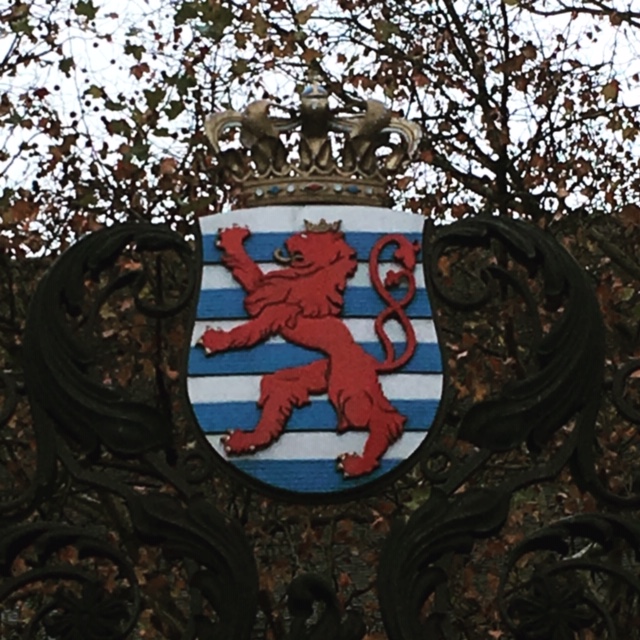
The red lion flag, or ‘Roude Léiw‘, is the official ensign for ships registered in Luxembourg. It is used for both river and maritime vessels, as well as in aviation. Derived from the Luxembourg coat of arms, this flag features ten alternating white and blue stripes with a red lion at its centre. The lion has a yellow tongue, claws, and crown and a forked tail (à la queue fourchée). The ensign’s proportions are specified as 5:7.
The colours of the ensign were standardised in the Règlement Grand-Ducal of 27 July 1993.


Debate over flag design
The resemblance between Luxembourg’s flag and the Dutch flag has sparked periodic debates about a potential redesign. In 2006, MP Michel Wolter proposed replacing the national flag with the ‘Roude Léiw‘, citing its historical and aesthetic value, as well as its popularity. Wolter argued that the red lion design was more distinctive and less likely to be confused with the Dutch flag.
Despite some public and political support, the initiative faced criticism, with opponents questioning its necessity and timing. A related grassroots movement, the Initiativ Roude Léiw, promoted the red lion flag through petitions, polls, and bumper stickers. During sports events like the Tour de France, supporters often display the ‘Roude Léiw‘ instead of the national tricolour.
In July 2015, a petition was submitted to Luxembourg’s Chamber of Deputies to replace the national flag with the ‘Roude Léiw‘, but it garnered fewer than 500 signatures.
On 6 July 2007, the Luxembourg Government acknowledged the ‘Roude Léiw‘ as a civil flag for use within the Grand Duchy, alongside the national flag. Both flags retain the same proportions, either 1:2 or 3:5, to prevent confusion with the civil ensign.
Tourism in Luxembourg
Tourism in Luxembourg contributes significantly to the nation’s economy, accounting for approximately 8.3% of GDP in 2009 and employing about 25,000 people, or 11.7% of the workforce.
Despite the global recession from 2008 to 2012, the Grand Duchy continued to attract over 900,000 visitors annually, with guests typically staying an average of 2.5 nights in hotels, hostels, or campsites.
Business travel is a major component, comprising 44% of overnight stays nationally and 60% in the capital. Between 2009 and 2010, business travel saw growth of 11% nationally and 25% in the capital.
The 2011 Travel and Tourism Competitiveness Report by the World Economic Forum ranked Luxembourg 15th globally, a notable rise from 23rd in 2009.
Popular destinations include the historic Luxembourg City, Vianden with its medieval castle, Echternach and its abbey, and the wine-producing Moselle Valley. Outdoor enthusiasts are drawn to the Mullerthal region, known for its rocky cliffs, and the Éislek area in the Ardennes, featuring mountainous terrain.
Luxembourg’s excellent road, rail, and air links with Europe make it an attractive destination for international meetings and weekend trips.
Visitors primarily come from neighbouring Belgium, the Netherlands, and Germany, followed by France, the United Kingdom, and the United States. Camping is particularly favoured, especially by Dutch tourists, who often stay longer than other visitors in areas like the Ardennes and the Mullerthal.

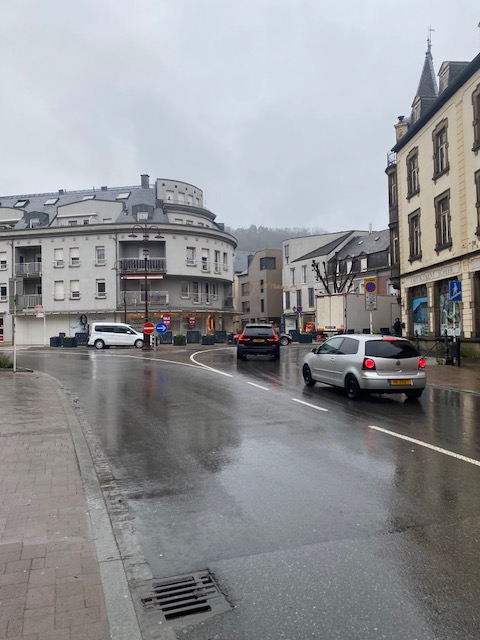


Tourism statistics
In 2009, Luxembourg offered 261 accommodation facilities, accommodating 14,709 guests. The central region, including Luxembourg City, accounted for 55% of total capacity, followed by the Ardennes region at 18%. The same year, 1,264,448 overnight stays were recorded in hotels, inns, and hostels, an 8% decline from 2007. Similarly, camping nights decreased by 8.4% to 739,208.
Luxembourg celebrates numerous festivals, including Buergbrennen, Emaischen, and the Echternach dancing procession. Its culinary offerings reflect its cultural diversity, combining French sophistication and German heartiness.
Sights
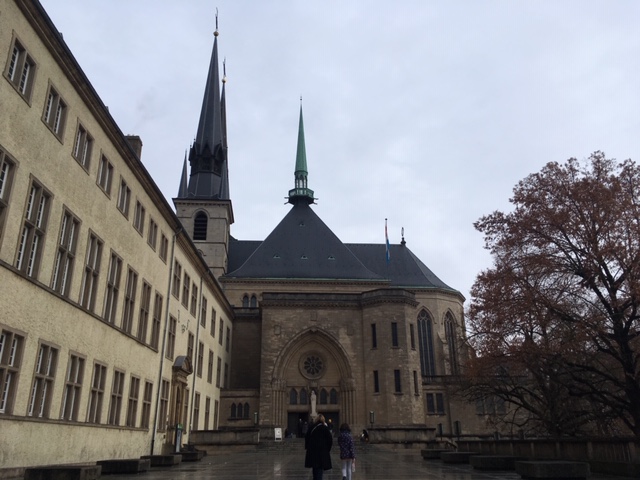
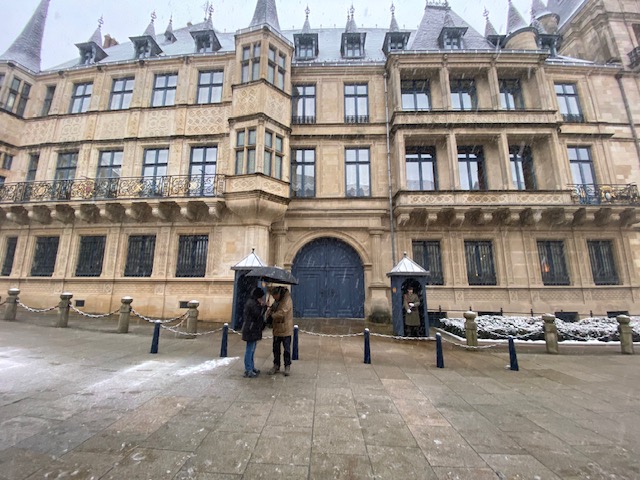
Luxembourg City, a UNESCO site, blends historical sites like its fortifications and casemates with its role as an EU and financial hub. Attractions such as the Grand Ducal Palace, Notre Dame Cathedral, and museums like the Lëtzebuerg City Museum showcase the city’s cultural richness.
Beyond the capital, Vianden, with its restored medieval castle and the Victor Hugo Museum, and Echternach, known for its abbey and the Mullerthal trails, attract numerous visitors.
The Moselle Valley offers picturesque villages and vineyards, while the Ardennes and Mullerthal regions provide opportunities for hiking, cycling, and exploration of historic castles and rock formations.
Other highlights include the National Museum of Military History in Diekirch, the Parc Merveilleux amusement park, and cultural sites like Mondorf-les-Bains with its spa facilities and Casino 2000. Historical attractions such as the Roman villa in Echternach and Dalheim Ricciacum also draw interest.
In 2016, Luxembourg hosted over one million foreign tourists, with the majority from Belgium, the Netherlands, and Germany. Visitors continue to be drawn to the Grand Duchy’s unique combination of cultural heritage, scenic landscapes, and modern amenities.
A left field destination
Luxembourg isn’t high on your to-do list? We don’t blame you. The Grand Duchy does not have the appeal or fame of let’s say Switzerland or the Black Forest. Luxembourg City is not a party capital such as Berlin or Cologne. Austria offers nicer mountains.
But it’s not that Luxembourg has nothing to offer. It has plenty, for two, three days. Obviously depending what you like to do when travelling and how you like to travel.
I like to see put it like this. If you’re an American or Asian tourist touring Europe for the first time, it’s improbable Luxembourg is on your itinerary. And you will problably not include the country on your second or third trip. But maybe it’s your fourth, and you want to do something original. Then come to Luxembourg.
Luxembourg 2018-2024
- REVIEW | LUXury in Luxembourg, a stay at the Sofitel Luxembourg Le Grand Ducal.
- The return of a Brussels – Luxembourg – Strasbourg – Basel train?.
- PHOTOS & VIDEOS | A Christmas walk in the city of Luxembourg.
- VIDEO | Train trip Antwerp – Arlon – Luxembourg – Liège – Antwerp.
Luxembourg 2025
- What is Schengen?.
- REVIEW | Lëtzebuerg City Museum or Luxembourg City History Museum.
- REVIEW | Sofitel Luxembourg Europe.
- REVIEW | Conservatoire National de Véhicules Historiques & Musée d’Histoire de la Brasserie de Diekirch car and beer museums in Diekirch, Luxembourg.
- LUXEMBOURG | Diekirch and the Musée d’Histoire[s] or Museum of History/ies.
- TRAINS IN LUXEMBOURG | CFL’s Alstom Coradia Stream HC ‘Série 2400’.
- LUXEMBOURG 2025 | Schengen – European quarter Kirchberg – City Museum – Diekirch – Alstom Coradia Stream HC.
 Trip By Trip
Great little country we love it , looking forward to be back eventually. Thanks for the memories Cheers
LikeLiked by 1 person
It ís a great little country 🇱🇺
LikeLiked by 1 person