
From December 2024, the Benelux train Brussels in Belgium to Amsterdam in the Netherlands will not terminate at Amsterdam Central Station, but at Amsterdam South (Zuid). There the Brusselaar or Amsterdammer will become a domestic train to Lelystad. An excuse for Danny and I to travel all the way to the province of Flevoland to explore the town and Nationaal Luchtvaart-Themapark Aviodrome.
To give our Lelystad excursion substance, we incorporated a visit to the Nationaal Luchtvaart-Themapark Aviodrome, also known as Luchtvaartmuseum Aviodrome (Aviation museum Aviodrome) or in short Aviodrome.



Presentation
Aviodrome is a large aerospace museum in the Netherlands that has been located on Lelystad Airport since 2003. Previously the museum was located at Schiphol Airport.
In 1955 several organisations, such as KLM and aircraft manufacturer Fokker, initiated a foundation called Stichting voor het Nationaal Luchtvaartmuseum (Foundation for an Aviation Museum) with the single goal of creating a national aviation museum.
The first installment of this aviation museum opened its doors in 1960 at Schiphol airport under the name Aeroplanorama and had only seven aircraft on display. It closed its doors in 1967 and a new museum called Aviodome was opened in 1971 at Schiphol.
The main building was a large aluminium geodesic dome designed by Buckminster Fuller, the largest in the world at the time, which housed most of the aircraft on display. Hence the ‘dome’ in the name Aviodome (without an r).
Over time, the location became too small for the growing aircraft collection and in 2003 the museum was moved to a new location on Lelystad Airport.
The building at Schiphol was demolished and the name was changed to Aviodrome.
On the current location, it has three buildings:
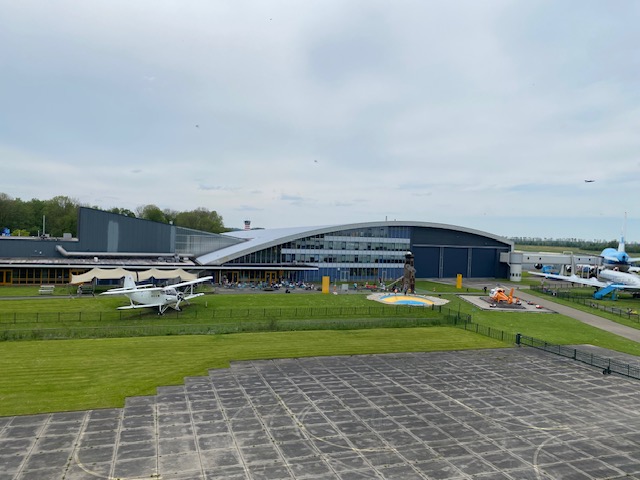
- the main building where most of the aircraft on display are located and where there’s a restaurant and a cinema;
- a replica of the old Schiphol terminal building from 1928;
- a hangar for aircraft storage with limited access for visitors.
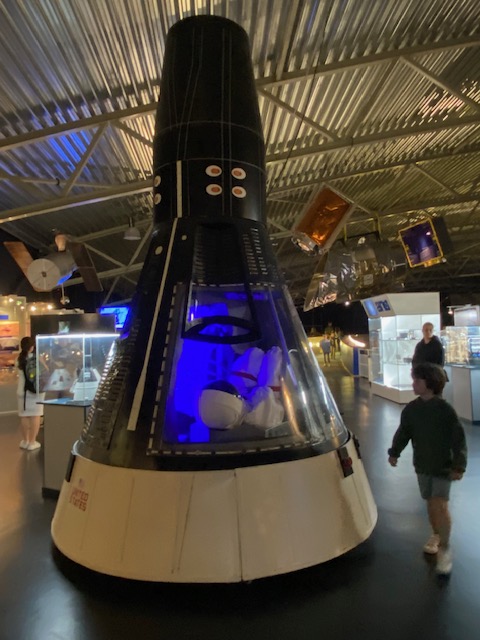
Added to the aviation theme were several artifacts from several Dutch space programs, such as the backup flight-article of Astronomical Netherlands Satellite (ANS), a mockup of IRAS and the high-speed windtunnel model of the Huygens probe. In doing so the aviation museum became an aerospace museum.
Due to bankruptcy, the museum closed on 25 December 2011, but it reopened on 28 April 2012 after a takeover by the Libéma Group.







Boeing 747 Jumbo Jet
In 2004 the last of KLM’s classic Boeing 747-200‘s named Louis Blériot was sold to the Aviodrome for the symbolic amount of 1 euro.
Though the aircraft could still fly, Lelystad Airport was too small to handle such a large aircraft so the aircraft was partially disassembled and moved over water on a barge with the wings, engines and empennage removed and stored alongside the fuselage so the aircraft could fit under bridges along the way.
After the journey over water the aircraft was lifted from the barge at Harderwijk and the last bit of the trip took place over land. At its final location the aircraft was re-assembled and opened to the public. The tail was fitted with a top beacon since, technically, the Boeing now is a building.


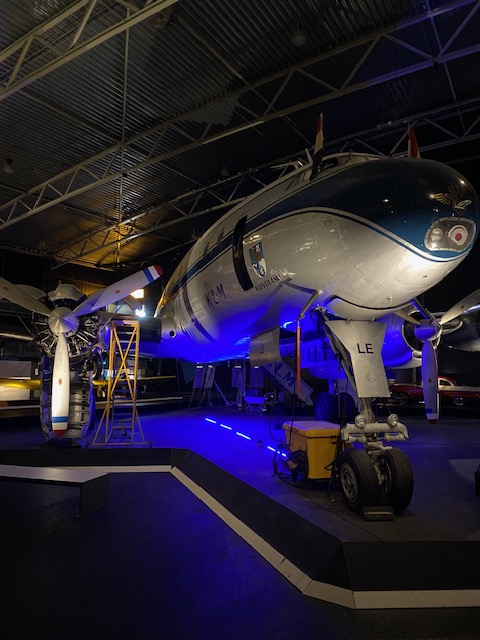
Lockheed L-749 Constellation
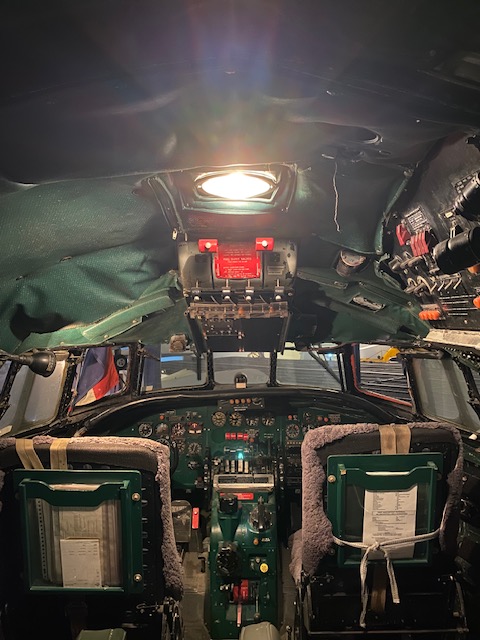
Perhaps one of the most spectacular pieces in the collection of the Aviodrome is the Lockheed L-749 Constellation.
After several years of restoration work it was flown over to the Netherlands in 2002 from the United States where it had been in storage. More work, including a new paint job, was done to the aircraft in the Netherlands but the aircraft suffered from engine problems in 2004.
To resolve this, two replacement engines coming from the Korean Air museum were fitted.
However, it hasn’t flown since 2004, performances by the aircraft being limited to engine runs only.
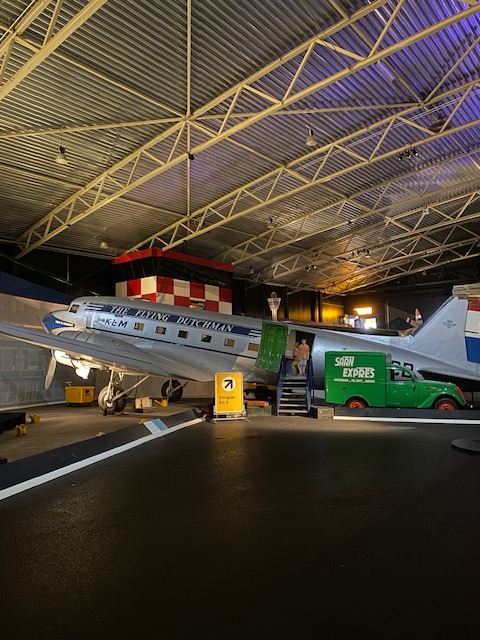
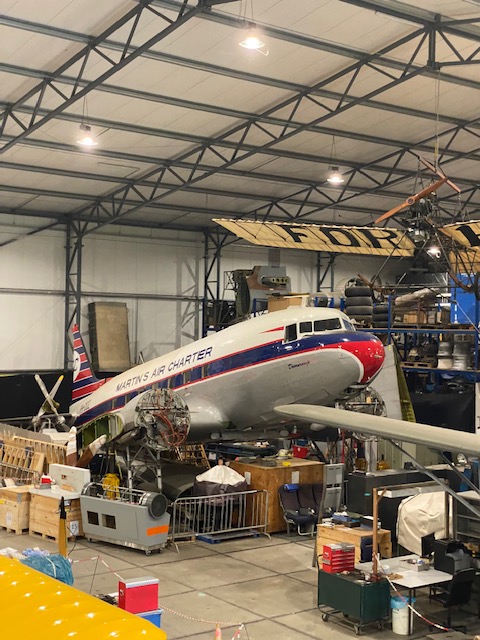
De Uiver
De Uiver was the name of a Douglas DC-2 that placed second in the 1934 MacRobertson Air Race, only being beaten by a purpose built De Havilland DH.88 racer Grosvenor House.
The real Uiver, which is an old Dutch word for stork, no longer exists. The Aviodrome owns one of the last still airworthy DC-2s in the world. This DC-2 is a former US Navy aircraft painted in the Uiver’s original KLM colors. After an unexpected gear collapse the aircraft suffered some minor damage, but after the needed funds were raised the aircraft was repaired.








Fokker Friendship
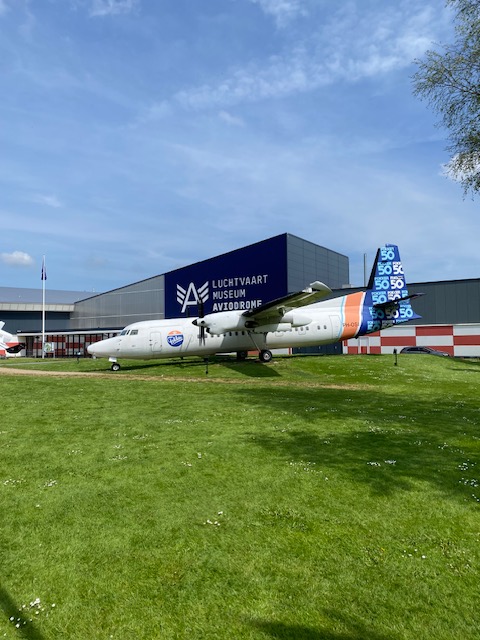
The Fokker F-27 Friendship was Fokker’s best selling aircraft model of all time. Production of this first post-war Fokker airliner started in 1955 and many of them are still in service today. The Aviodrome purchased the oldest still flying series produced F-27 from its Australian owner in 2004 and painted it in the colors of the no longer existing Nederlandse Luchtvaart Maatschappij (NLM).
Exactly fifty years after the first flight of the first F-27 on 24 November 1955 this aircraft made a memorial flight as a tribute to fifty years Fokker Friendship.




A visit
Uber rides are technically available in the area but no driver accepted the ride. So we took a bus to get there. Taking the bus was more straightforward than we feared.
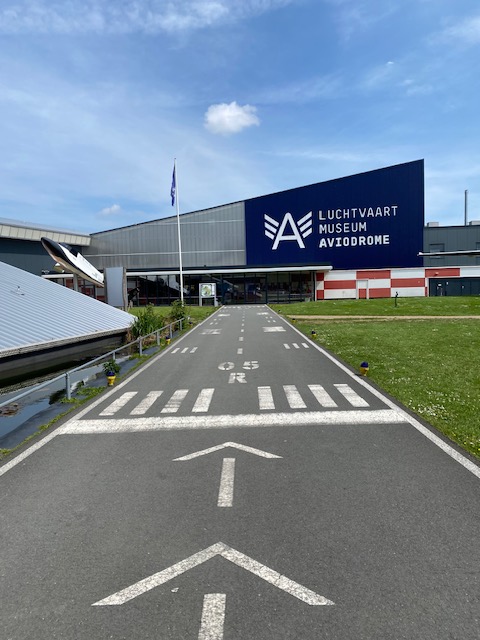
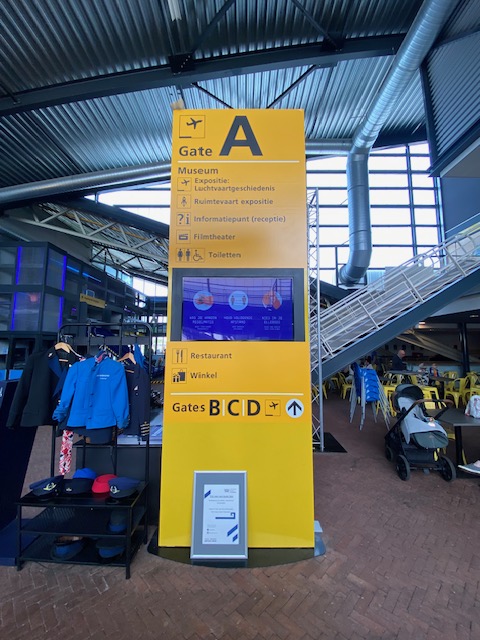
From the entrance, Aviodrome makes a big effort. The path to the door is painted as a runway. Signage is in Schiphol style. There’s a customs booth, a scanner and metal detectors. They’re not being used, don’t worry. But it does immediately pull you into a world of flight.
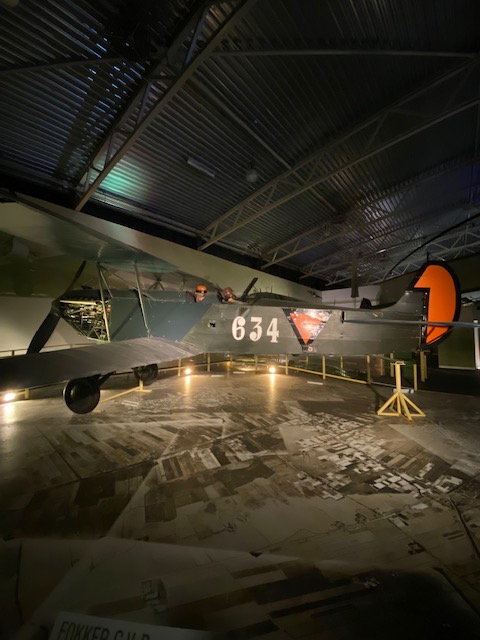
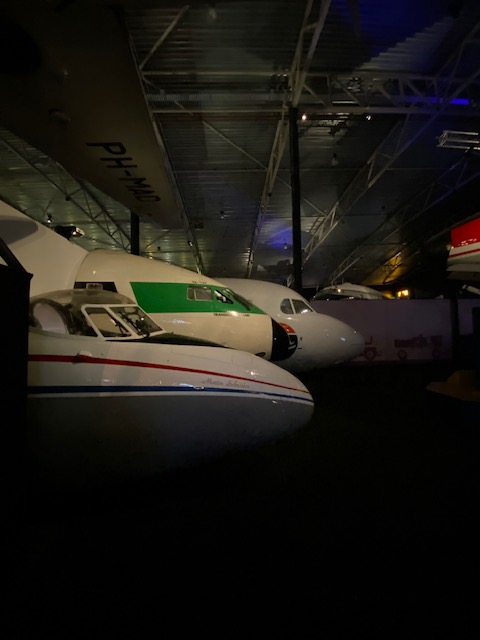
The museum proper has a large collection of aeroplanes. The exhibition is interesting and trilingual: Dutch, English and German. No audioguide, just good old text to read. We like that.
Kudos also for the museum layout. The available space is really well-used.
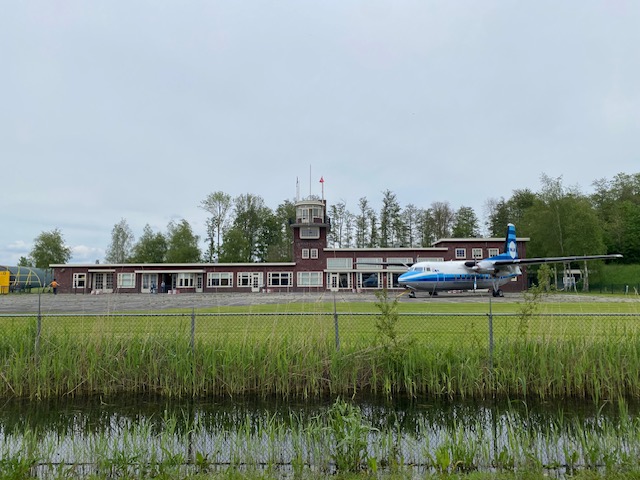
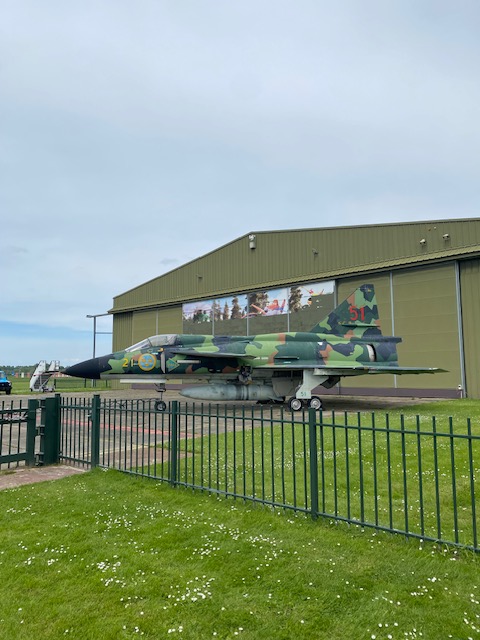
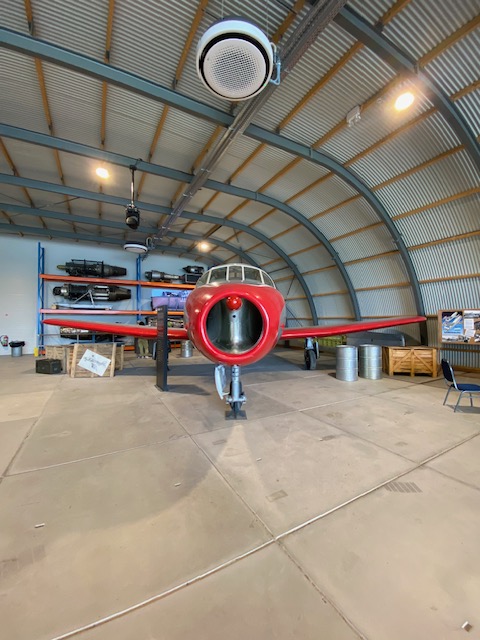
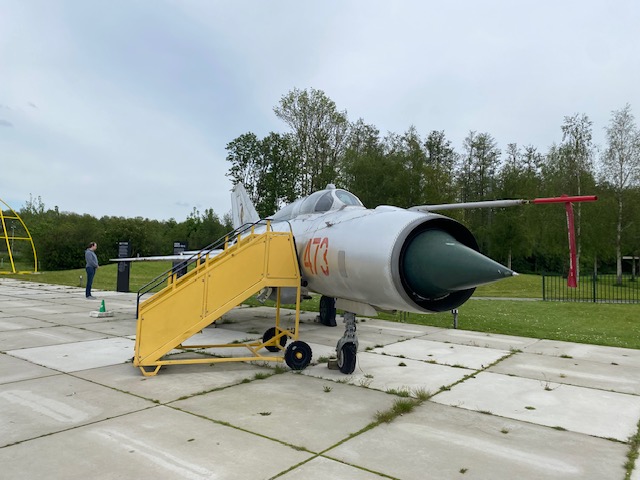
The other buildings are interesting as well. Hangar C is a workshop and next to it you have the Officers’ Mess and the jet plane exhibition with an audio and video tour-presentation-experience.
The Schiphol 1928 aerodrome replica is a nice throwback to an era where airport buildings were ‘air stations’. In French, it’s called aérogare. The old airport building was bombed in World War II. As the replica was built in 2003, this means the replica is older than the original.
We also had lunch on-site. De Galley restaurant doesn’t offer great, but okay food. What you can expect in the Netherlands and it offers matches the context of a museum.
So?
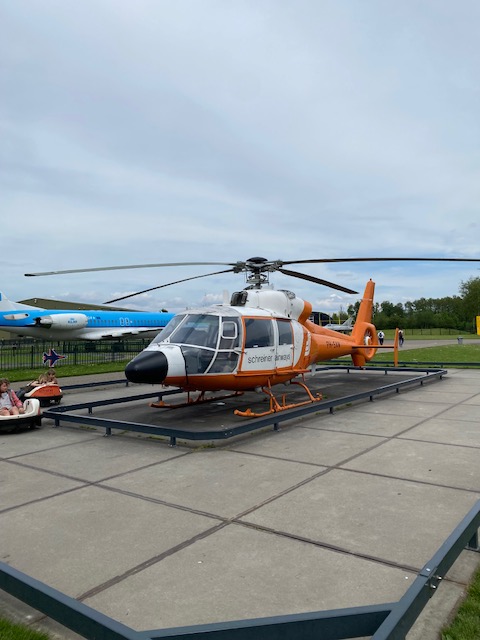
If you like aviation and other transport museums, Aviodrome is something for you. Be aware Aviodrome heavily caters to children with attractions just for them so you will have to cope with noise and children running around.
Railway and transport museums
- TOULOUSE | Aeroscopia aerospace ‘Airbus museum’.
- MONTREAL | Exporail – Canadian Railway Museum in Saint-Constant.
- REVIEW | Motion and emotion at the London Transport Museum.
- BAVARIA | Lokwelt – Locomotive World in Freilassing .
- TRAIN WORLD | ‘Royals & Trains’ exhibition from 10 May 2022 until 22 January 2023.
- REVIEW | Orient-Express exhibition at Train World, Brussels’ railway museum.
- REVIEW | Train World exhibition ‘From Peking to Hankow: a Belgian adventure in China’.
- PHOTOS | Train World railway museum in Brussels.
- Railway and transport museums (not) to visit.
- Nuremberg Transport Museum / DB Museum.
- Slovenian Railway Museum in Ljubljana.
- VIDEO | Mail Rail and The Postal Museum in London.
- Plans for a steam train heritage service between Brussels and Mechelen shelved.
- PHOTOS | Museo del Ferrocarril de Madrid Delicias railway museum.
- VIDEO | Museu del Ferrocarril de Catalunya – Catalonia Railway Museum in Vilanova.
- REVIEW | Romanian Railway Museum ‘Muzeul CFR’ and Bucharest.
- PHOTOS | UK’s National Railway Museum (NRM) in York.
- PHOTOS | Swiss Museum of Transport Verkehrshaus in Lucerne.
- PHOTOS | Het Spoorwegmuseum – Dutch Railway Museum in Utrecht.
- VIDEO | Return to Spoorwegmuseum Utrecht for the dining car exhibition ‘Tosti’s, truffels, treinen’.
- VIDEO | Stoomtram Hoorn – Medemblik steamtram light rail in Holland.
- Visiting Odense and the Danish Railway Museum.
- Deutsches Museum’s Verkehrszentrum or Transport Centre in Munich.
 Trip By Trip
5 Comments Add yours