
Until 26 January 2025, you can visit the ‘Klimt The Immersive Experience‘ – uhm – experience at DIVE, Digital & Interactive Venue in Antwerp. Yesterday, a wet and dreary January Sunday, Thanh and I went to experience Gustav Klimt.

I must confess, a priori I am not a fan if this immersive experiences. Partly because I can be snobbish about art, culture and history, partly the ones I did felt too basic (as in: basic information) and too expensive for what you get to see.
But fine. At 16.90 euros for an adult, the entry fee is reasonable.

The venue
“Located in the heart of Antwerp, DIVE invites you to Belgium’s first digital art and experience centre. A brand-new multiroom venue dedicated to connecting humanity through digital technology. From captivating immersive exhibitions inspired by old masters to phygital interactive events by modern time creatives, dare to dive into a dynamic hub where visions thrive.”
The former Cinema Majestic on Carnotstraat has been transformed into a unique venue for digital events that operates as an exhibition hall during the day and a club at night. DIVE opened in Antwerp on 21 June 2024, showcasing immersive exhibitions and parties that push the boundaries of digital technology. The venue introduced a world-first innovation with projections spanning from floor to ceiling, creating a fully immersive environment.
The opening exhibition ‘Klimt The Immersive Experience’ debuted in June 2024. This inaugural show was the result of a collaboration between Exhibition Hub, known for its immersive exhibitions worldwide, and Congé, an organisation that specialises in revitalising unused buildings. Congé had previously reimagined spaces such as Plein Publiek and Mercado in Antwerp.
The Cinema Majestic building, which dates back to 1924 and features a listed façade, provided the perfect canvas for this transformation.
Spanning 4,000 square metres and three platforms, the venue was equipped with forty Barco projectors capable of displaying an unprecedented number of digital pixels, replacing the 60,000 light bulbs that once illuminated its cinema screen. Its location near Antwerp-Central Railway Station has made it accessible to visitors from outside Antwerp.
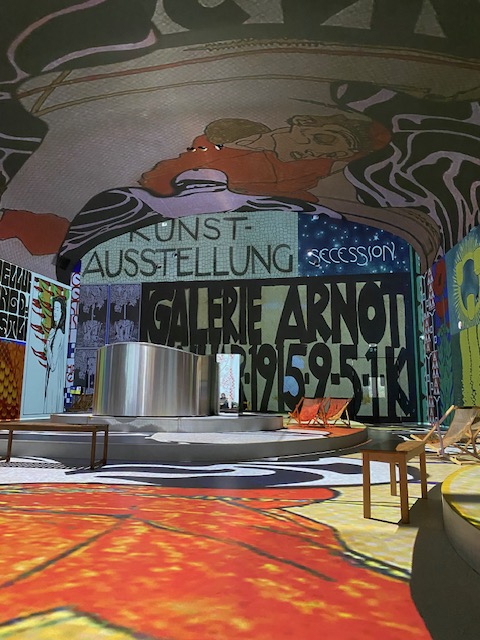
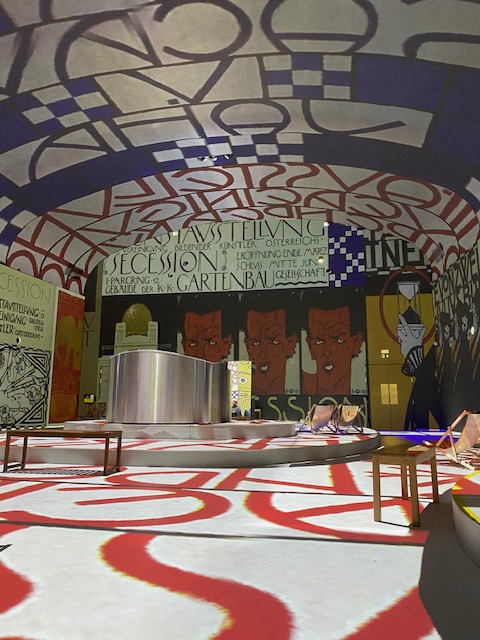
The venue’s high ceilings, reaching up to 10 metres, allowed for groundbreaking immersive experiences. Projections on the ceiling, along with the walls and floor, created a 360-degree environment that fully immersed visitors, making them feel as though they were standing within the artwork.


The exhibition
“Enter the colorful pallet of Gustav Klimt. Step into a wonderland of moving paintings and be amazed by the golden era of modernism.”
Miami, Los Angeles, London, Antwerp, Washington DC, Seattle, Philadelphia, New York, Houston, Dallas, Chicago, Boston, Atlanta. These are the cities where the exhibition is scheduled to come. Interestingly, Antwerp is the only hist city where English is not the main language.
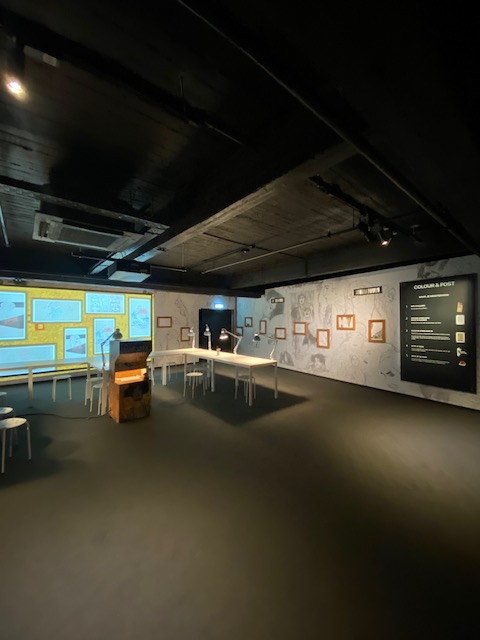
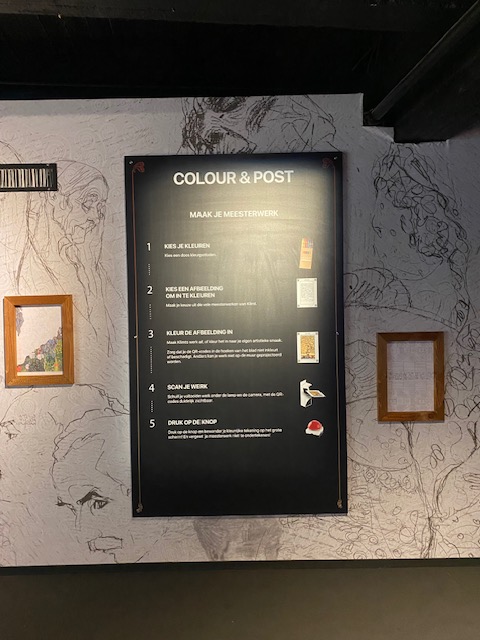
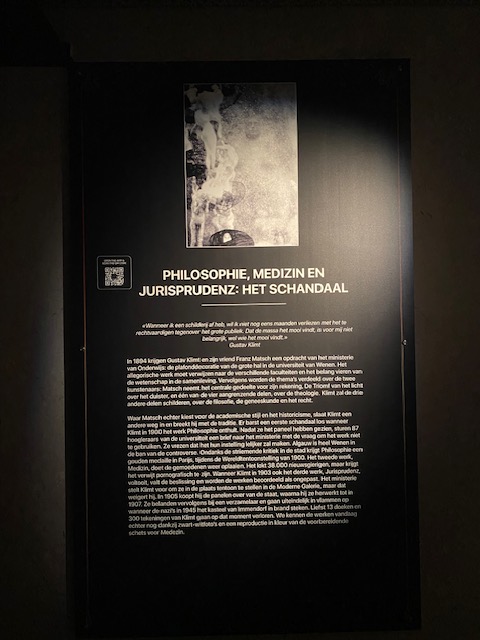
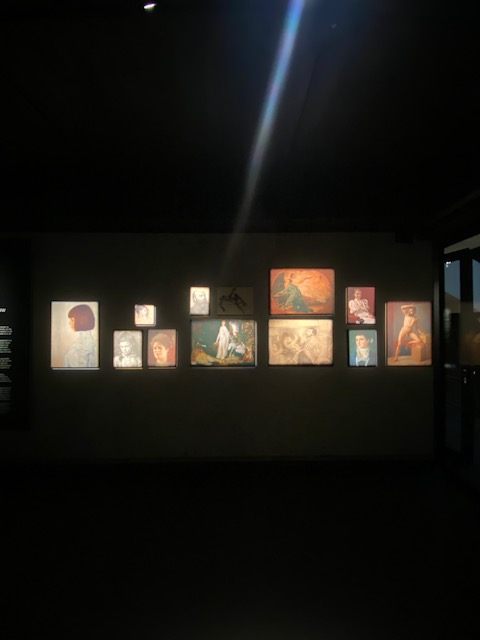
The experience or exhibition starts with a virtual reality activity. This comes at an extra cost and we didn’t feel like doing that. Then, an exhibition space contains panels with good old written and printed text on Klimt’s life and the world he lived in.
A lot of text, I must say. But I won’t complain. I feared not enough text.
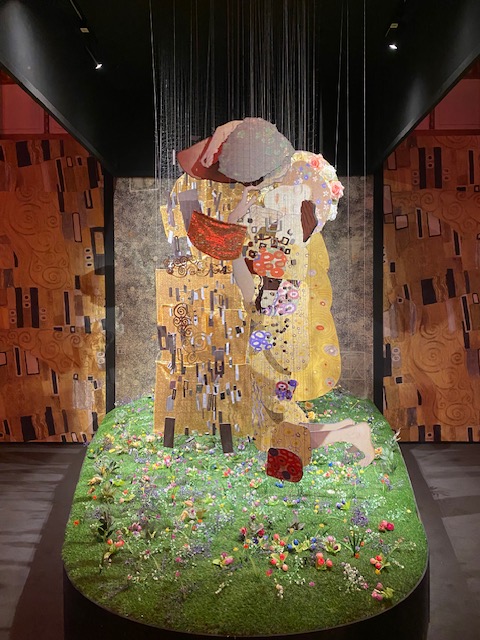
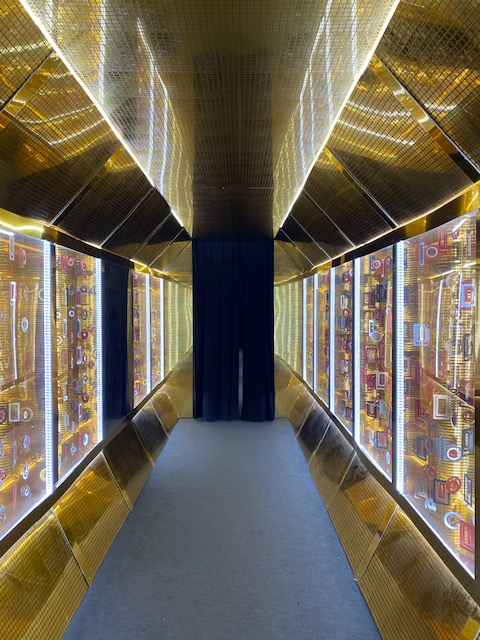
The second area is a golden corridor, emulating the artist’s love for gold leaf.
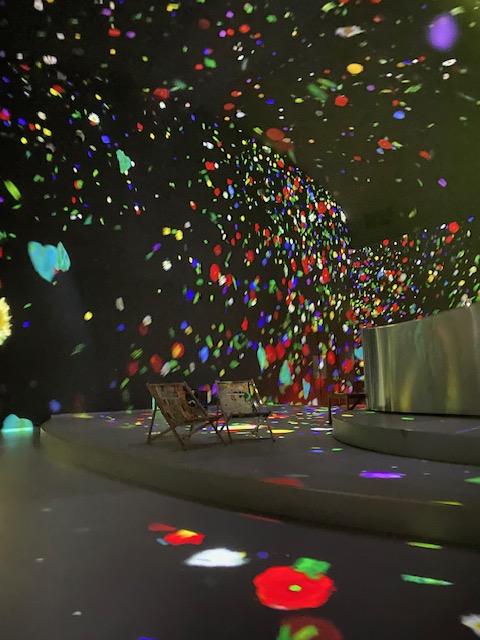
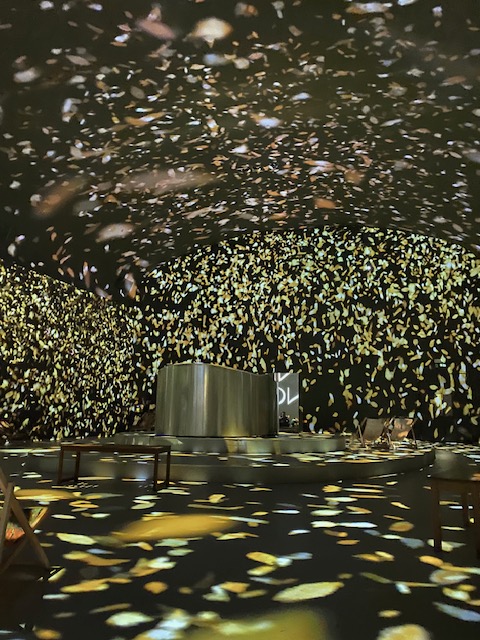
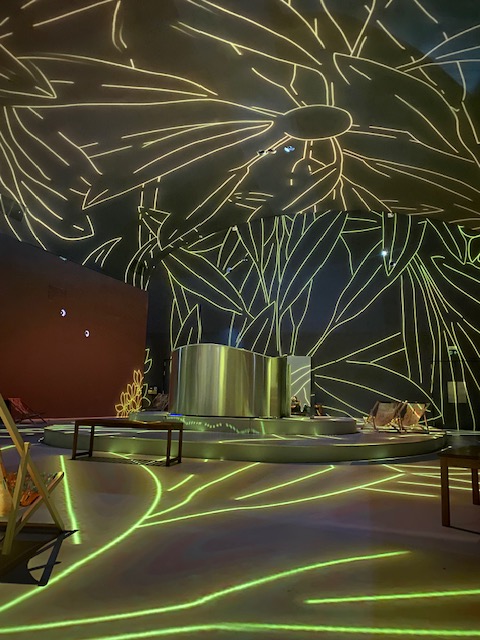
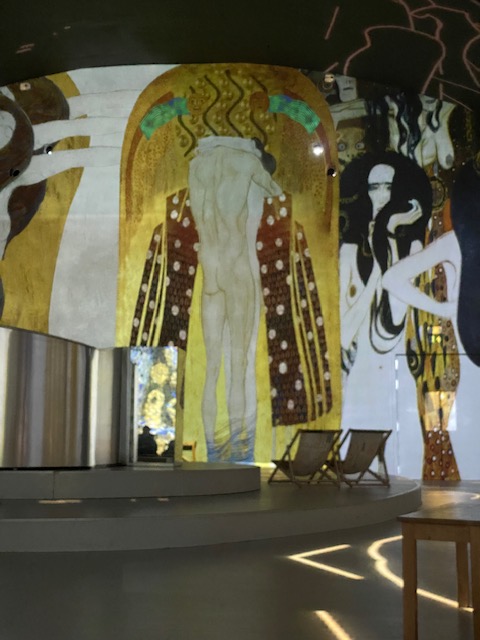
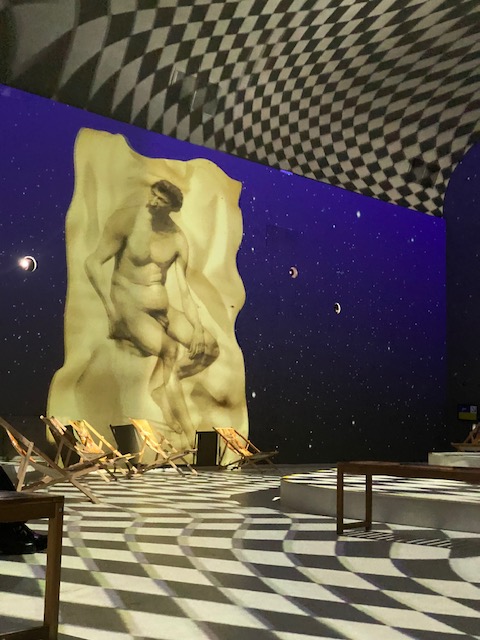
And the main course is the big hall with 360° projections.

A visit
The website says the visit lasts 60 to 75 minutes and indeed, we were an hour inside.
The projections are impressive and the moving images dance nicely with an accompanying soundtrack. The hall features deckchairs to get you comfortable while you watch the 35-minute long installation.
If you read the information panels well enough, the film (can you call it a film) illustrate what you learned before.
So actually, ‘Klimt The Immersive Experience’ is okay. Helped by the fact I knew little about Gustav Klimt, I found it an interesting outing.









Lockers
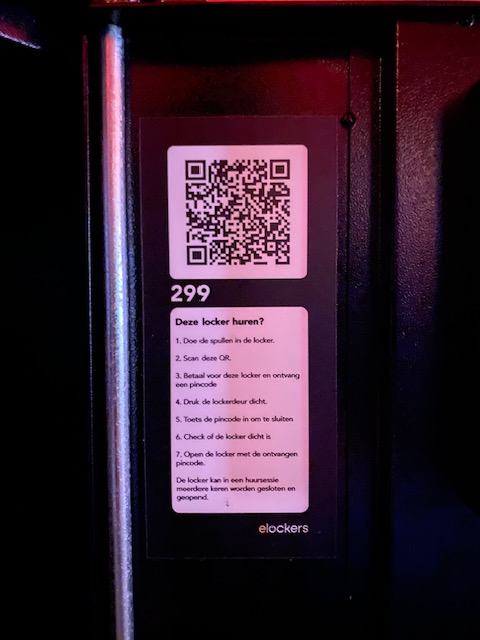
Unrelate to the exhibition but related to DIVE as venue.The lockers are tiny and you must scan a QR code and pay to use them. I’m slightly irritated it’s not free, but the scanning a QR code suggested having to create an account and whatnot and we didn’t fancy that.
Who was Gustav Klimt?
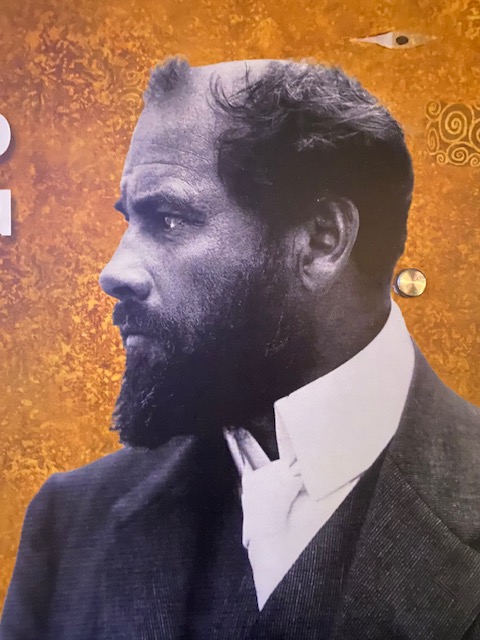
Gustav Klimt (1862–1918) was an Austrian symbolist painter and key figure of the Vienna Secession movement. Renowned for his paintings, murals, and sketches, his work prominently featured the female form with a distinctive eroticism.
Early in his career, Klimt gained success with conventional architectural decorations but later developed a personal style that sparked controversy, particularly with his ceiling paintings for the University of Vienna, criticised for their sexual themes. Following this backlash, he ceased public commissions and achieved acclaim during his “golden phase”, incorporating gold leaf into works like ‘The Kiss‘ and ‘Portrait of Adele Bloch-Bauer I‘.
Born in Baumgarten near Vienna in what was then Austria-Hungary, Klimt grew up in poverty and studied at the Vienna School of Arts and Crafts. Early collaborations with his brothers and other artists earned him commissions for murals in public buildings.
After personal tragedies, including the deaths of his father and brother, Klimt shifted to a more symbolic and avant-garde style. He co-founded the Vienna Secession in 1897 to promote progressive art but left the group in 1908 amid internal disputes.
Klimt’s art was heavily influenced by Japanese methods and Byzantine mosaics, evident in his intricate patterns and flattened compositions. His landscapes, often painted during summers at Lake Attersee, mirrored the decorative refinement of his portraits. While he maintained a private lifestyle, Klimt was known for his relationships with models and clients, primarily from Vienna’s Jewish bourgeoisie.
Posthumously, Klimt’s works have fetched record prices, such as ‘Adele Bloch-Bauer I’, sold for $135 million in 2006. His art, which symbolised themes of life, love, and death, continues to inspire contemporary artists and remains celebrated in exhibitions and cultural tributes. Klimt died in 1918 from a stroke and pneumonia during the Spanish flu pandemic, leaving numerous works unfinished.
Art and museums in Antwerp
- ANTWERP | Graphics Museum De Reede ft. Francisco Goya, Edvard Munch, Félicien Rops and Albrecht Dürer.
- REPORT | Ensor 2024 exhibitions in Antwerp: Plantin-Moretus, MoMu, FOMU and KMSKA fine arts museum.
- ANTWERP | Rubens Experience and Rubens Garden at Rubenshuis.
- Antwerp will have a new Museum of Contemporary Art Antwerp M HKA.
- ANTWERP | Innovations in the Middelheim Museum provide a completely new visitor experience.
- A visit of the Flemish Tram and Bus Museum – Vlaams Tram- en Autobusmuseum (VlaTAM) in Antwerp.
- ANTWERP | Discovering queer(ed) art with the Queer Tour at the KMSKA fine arts museum.
- REVIEW | Illusion Antwerpen, an active and photogenic museum.
- Antwerp museums and sports facilities team up with European Disability Card for accessible leisure activities.
- Museum Mayer van den Bergh.
- ANTWERP | Inside Rubens House.
- Museum Plantin-Moretus in Antwerp.
- ANTWERP | Museum Vleeshuis up for restoration.
- BOOK | ‘Antwerp. An Archaeological View on the Origin of the City’ by Tim Bellens.
- Red Star Line Museum.
- Paleis op de Meir.
- DIVA, Antwerp Home of Diamonds.
- ANTWERP | Red Star Line Museum of (e)migration.
 Trip By Trip
3 Comments Add yours