
Brussels Pride is now part of the Inventory of Intangible Cultural Heritage of the Brussels-Capital Region. This was announced in a press release by Ans Persoons (Vooruit), Secretary of State for Heritage of Brussels. Brussels now wants to submit the candidacy of pride as Intangible Cultural Heritage to UNESCO, together with other cities and countries.
Brussels Pride is a multifaceted, festive, but also activist event that takes place annually around 17 May, the International Day against Homophobia, Transphobia and Biphobia (IDAHOT).
The dossier was submitted by a network of associations under the umbrella of RainbowHouse Brussels, public institutions such as visit.brussels and Equal.brussels and the Brussels Rainbow Village. Brussels is thus the first Region in Belgium to recognise this event as intangible heritage. This is also an essential first step towards a future international application to UNESCO to have pride recognised as Intangible Cultural World Heritage.
“45 years after the very first parade in Belgium, we are recognising Brussels Pride as Brussels intangible cultural heritage. Pride is an annual festive and activist highlight for the LGBTQIA+ community in Brussels and throughout Belgium. Although we continue to fight for an inclusive and tolerant society every day, we are showing that Pride is part of our collective identity. Brussels is a proud queer capital and wants to be an international example of celebrating and protecting diversity. This recognition is also a tribute to everyone who has worked and is working towards a free, equal and inclusive society, Ans Persoons says.
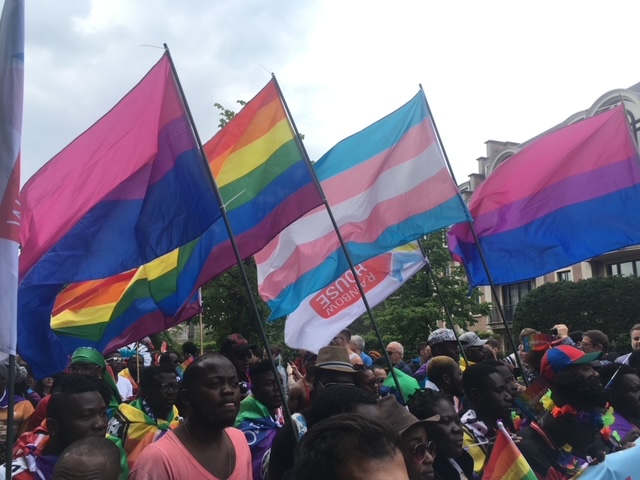
Evolution
“We have had favourable legislation in a very short time. In 1996, we asked for recognition of homosexual couples. In 2003, we obtained marriage for everyone. It all happened very quickly, but mentalities do not change as quickly as laws. We can get married, but most homosexuals do not dare to walk down the street hand in hand. A lot still needs to be done to change mentalities and that is why pride is still necessary”, Belgian Pride veteran Chille Deman says.
“Pride has also evolved from a mainly activist event to ‘Pride for everyone’. A pride organised by LGBTQIA+ people and where everyone who supports diversity is welcome. The fact that this pride has been recognised by the Brussels-Capital Region as cultural heritage is a huge step forward. Until 1996, we were not even allowed to use the central avenues of the city”, Deman says.
“The recognition of Brussels Pride as the intangible cultural heritage of the Brussels Region is a new symbolic step that celebrates diversity, inclusion and the fight for equality in the heart of our city. It is an honor for the RainbowHouse to be part of this historic progress that strengthens the rights and visibility of LGBTQIA+ people and their allies. With this regional recognition, we now have the ambition to go further by submitting a transnational application to have Prides listed worldwide as UNESCO intangible cultural heritage. This would be an international recognition of the fight for human rights and a powerful message of hope for an ever more inclusive, free and tolerant society”n Frank Schellings of RainbowHouse Brussels explains.
Brussels Pride, an essential part of Brussels identity
Brussels Pride is a multifaceted, festive and militant event that takes place every year around 17 May, the International Day Against Homophobia, Transphobia and Biphobia (IDAHOT). It brings together associations, institutions and a large number of Belgians around the values of openness and respect for diversity.
Brussels Pride takes place for more than ten days in the centre of Brussels (mainly around the Mont des Arts / Kunstberg and the Saint-Jacques / Sint-Jacob district but also, thanks to the events organised as part of Pride Week, in other municipalities in the Brussels-Capital Region. It includes the Pride March, Pride Village, Pride Stage, Rainbow Village and Pride Week.
The values of pride form the basis of the event and are part of its DNA. Tolerance, diversity and inclusion, but also a sense of celebration, music, militancy and protest are all inherent to Brussels Pride, but also to pride events all over the world.
Every year, Brussels Pride chooses a theme to defend, for example: ‘Safe Everyday Everywhere‘ (2024), ‘All for One‘ (2019), ‘Pride4Every1‘ (2011), ‘It’s a Family Affair‘ (2005)…
New York
The roots of the LGBTQIA+ movement go back to 1970 in New York, after the Stonewall Inn Riots of June 1969.
In Belgium, the first initiative took place in March 1973 and the first ‘gay day’ was held in Ghent in 1978, followed by an ‘international gay day’, a demonstration for gay rights, on 5 May 1979 in Antwerp. In the 1980s, there were two more demonstrations with varying success. It was not until 1990 that we saw a recurring demonstration in Belgium: the Pink Saturdays. This march would be organised every two years in a different city.
In 1996, it was Brussels’ turn. The event, called ‘Belgian Lesbian and Gay Pride, Roze Zaterdag, Samedi Rose‘, was so successful that it was decided to organise an annual national pride in Brussels.
Since then, pride has not diminished in popularity, growing from 5,000 people in 1990 to 200,000 in 2024.
These demonstrations have led to major legislative advances in Belgium, such as the civil partnership (1997), marriage for all (2003), adoption for all (2006) and the right for trans people to change their civil status (2017).
Belgium to Brussels
The press release does net tell why the Belgian Pride became Brussels Pride. The organisation behind Belgian Pride, The Belgian Pride, fell apart.
The Belgian Pride (the NGO, with article ‘the’) was a joint venture of RainbowHouse Brussels, çavaria from Flanders and Arc-en-Ciel Wallonie from Wallonia, now called Fédération Prisme.
Those three entities could not come to an understanding or compromise on how to organise pride. Points of contention where how to deal with political parties and participating businesses. So the Brussels government stepped in and tourism agency visit.brussels effectively took over.
International landscape
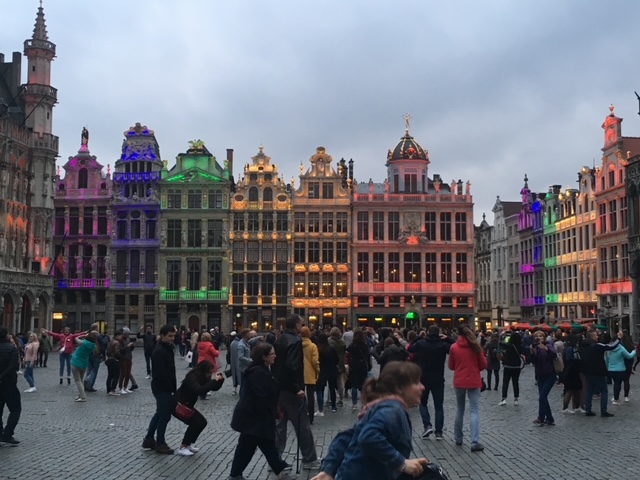
As part of a global dynamic, Brussels Pride occupies a special place in the landscape of European and even global pride events. Its inclusion in the inventory of intangible heritage of the Brussels-Capital Region contributes to a dynamic of recognition of LGBTQIA+ memory and heritage, including in states where rights are threatened.
Towards recognition by UNESCO
This Brussels recognition, the first in Belgium, is part of a broader international movement for the recognition of Pride. The Netherlands recognised Pride Amsterdam as national heritage in 2019, and Luxembourg and other countries have also started a process to have their respective Pride events listed as intangible cultural heritage at national level.
United under the umbrella of WorldPride, the various national LGBTQIA+ umbrella organisations are working together on the recognition of dossiers. Luxembourg, Thailand, Spain, Germany, Finland, Iceland, Mexico, Norway, Portugal, Sweden and Switzerland are currently working on this.
The aim is for as many countries as possible to register their Pride as national heritage, so that in the near future a transnational and intercontinental candidacy file can be submitted to UNESCO, in order to recognise Pride events worldwide and include them as Intangible Cultural Heritage of Humanity.
The Netherlands wants to present the initiative to UNESCO during the WorldPride that will be organised in Amsterdam in 2026. As a reminder, the WorldPride is organised every two years. The last one took place in Sydney in 2023, in Washington DC in 2025 and the next one in Amsterdam in 2026.
2025
WorldPride was originally scheduled to be hosted by Kaohsiung in Taiwan, marking the first WorldPride to be held in Asia.
However, WorldPride and the Kaohsiung hosts came into conflict over the branding of the event, and withdrew in August 2022. WorldPride had requested that the event be named ‘WorldPride Kaohsiung‘ or ‘WorldPride Kaohsiung, Taiwan‘, despite having previously agreed to using ‘Taiwan’ (which was chosen for alignment with Taiwan Pride and mark associated events being held across Taiwan).
WorldPride stated that this was for consistency with its prior events (which have typically used the host city name), but reports indicated that WorldPride’s changes may have been politically-motivated due to the People’s Republic of China‘s political influence.
The latest on prides in Belgium
- Limburg Pride 2025 to focus on mental wellbeing.
- Leuven Pride 2024 parade route from railway station to Ferdinand Smoldersplein.
- Liège Pride 2025 on Friday 22, Saturday 23 and Sunday 24 August.
- Antwerp Pride 2025 from Wednesday 6 to Sunday 10 August.
- CHARLEROI PRIDE | Three days of inclusivity and festivities.
- Antwerp Queer Arts Festival from 3 to 31 August 2024: programme.
- Darklands 2025 from Tuesday 25 February until Monday 3 March.
- Brussels Pride 2024 programme starts on Wednesday 8 May with Pride Opening at Molenbeek and a Pride Week.
- Darklands 2025 theme: ‘Darklands Glows’, stays at Waagnatie until 2030.
- Queer March Ghent 2024 on Saturday 30 March at Viernulvier.
 Trip By Trip
19 Comments Add yours