
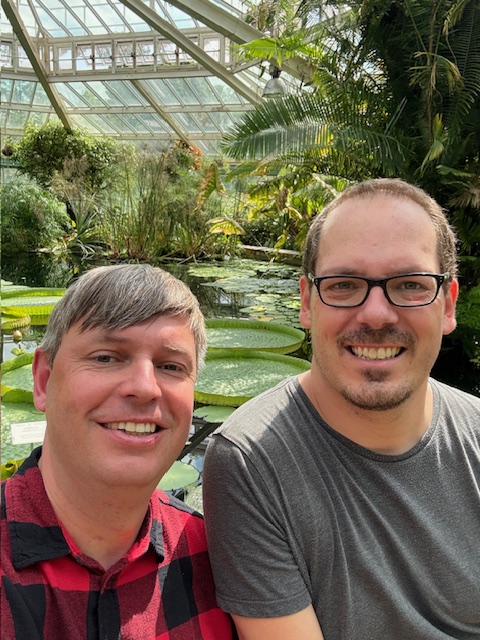
During the Ascension weekend in May 2025, Jeroen and I visited the Meise Botanic Garden. World famous in Belgium, but I had never been.
Meise Botanic Garden (Plantentuin Meise, Jardin botanique de Meise) is located in the municipality of Meise, in the province of Flemish Brabant and not far from the Brussels-Capital Region. It is one of the largest botanical gardens in the world, spanning 92 hectares. The garden is home to extensive scientific collections and living plant species from around the globe.

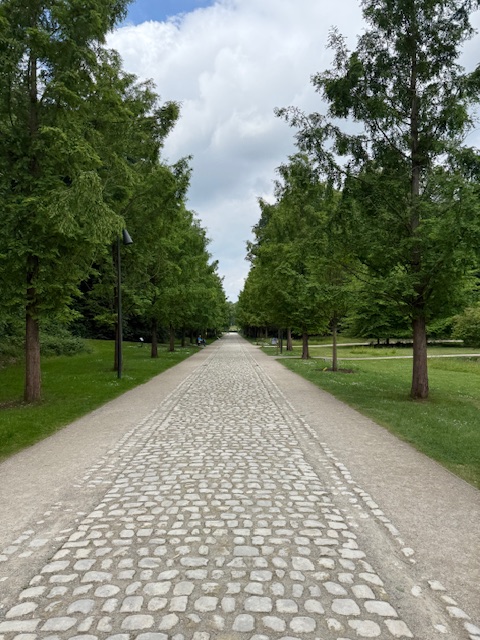


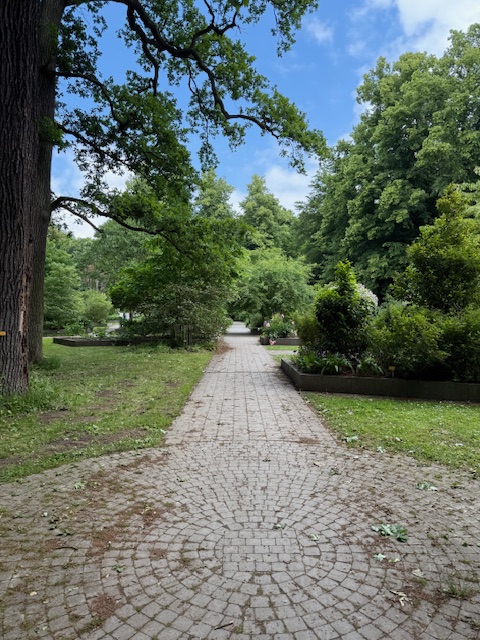
Organisation
Formerly known as the National Botanic Garden of Belgium, the garden has been operating since 2014 as an agency of the Flemish government under the name Agentschap Plantentuin Meise. It was previously a Federal Scientific Institution.
The garden houses two research departments, a herbarium containing around four million specimens, a specialised library, and living collections comprising over 20,000 species. Together with the Royal Botanical Society of Belgium, it also publishes the peer-reviewed journal Plant Ecology and Evolution, launched in 2010.
Historical development
The garden’s origins date back to the French period, emerging from the grounds of the former Nassau Palace in Brussels, where the École centrale was established in 1797. The first director referred to it as Le Jardin Botanique de Bruxelles. In 1822, management was transferred to the Société de Flore. The collection was relocated in 1829 to the Brussels Botanical Garden, and later moved in 1958 to its present site in Meise. Since its relocation, the garden has seen continuous development, including the 2022 Island Garden installation by the artist duo Gijs Van Vaerenbergh.

Grounds and collections
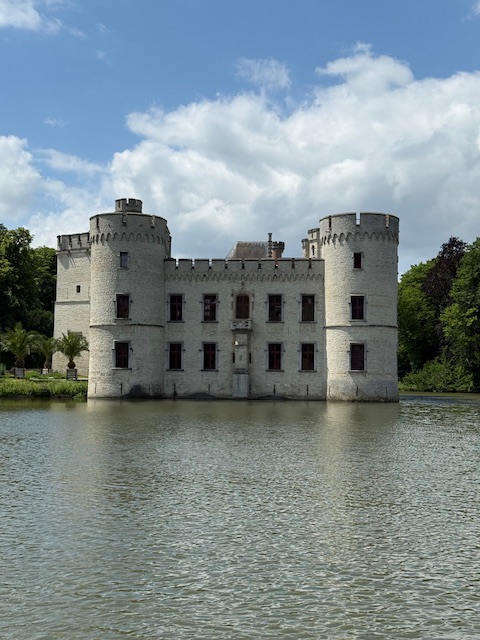
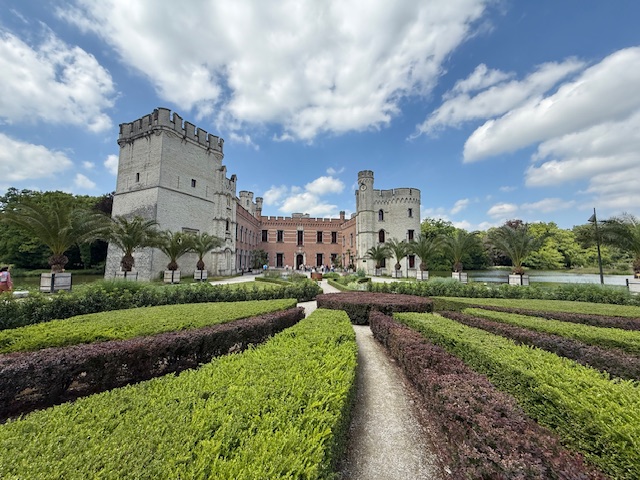
The garden includes the estates of Meise Castle and Bouchout Castle, the latter a former stronghold of the House of Arenberg. Bouchout Castle is not be confused with the municipality of Boechout between Mortsel and Lier in the province of Antwerp.
The Amelvonnebeek stream flows through the domain. The library of the garden also accommodates the collection of the Royal Botanical Society of Belgium.
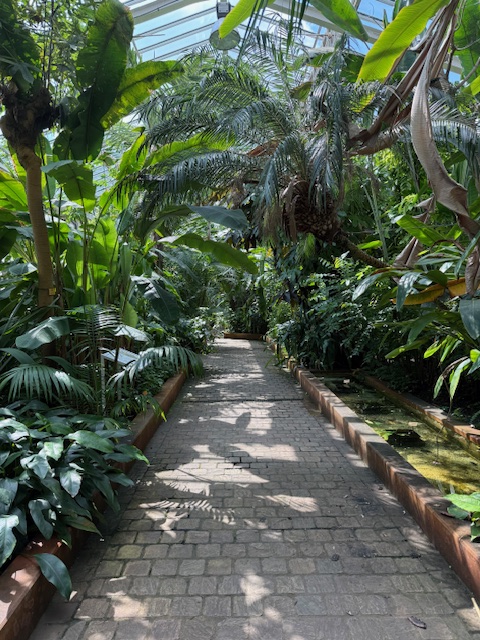
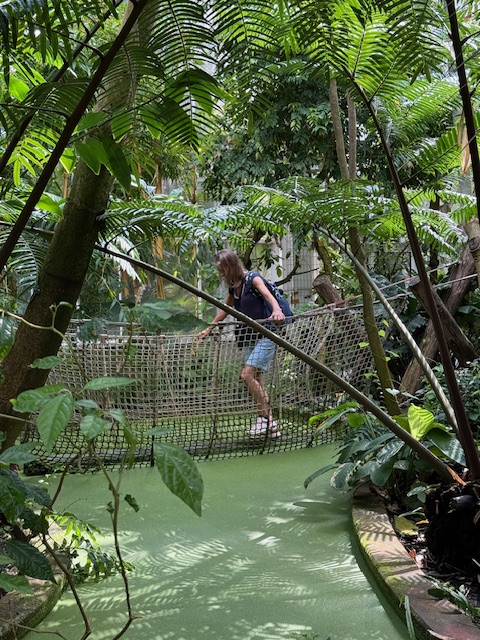
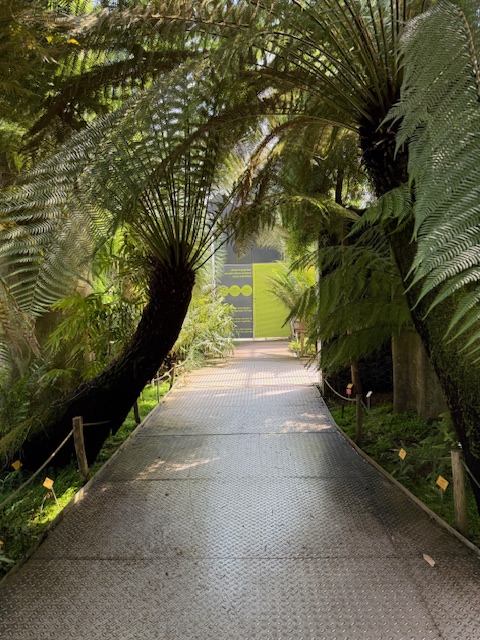
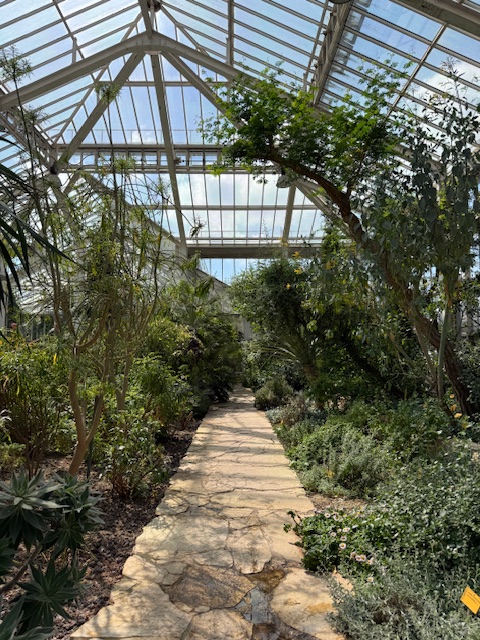
Living plant collections are housed in a series of greenhouse pavilions known as the Plant Palace. This includes thirteen public glasshouses that together hold over 18,000 plant species.
These glasshouses recreate various ecosystems, including evergreen forests, tropical rainforests, montane cloud forests, Mediterranean climates, deserts, and monsoon regions.
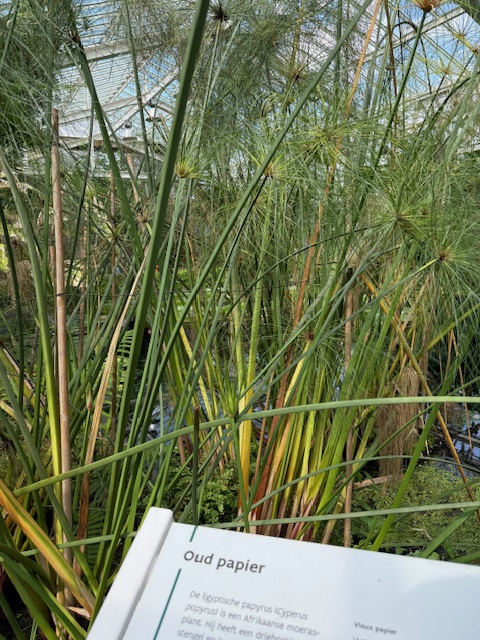
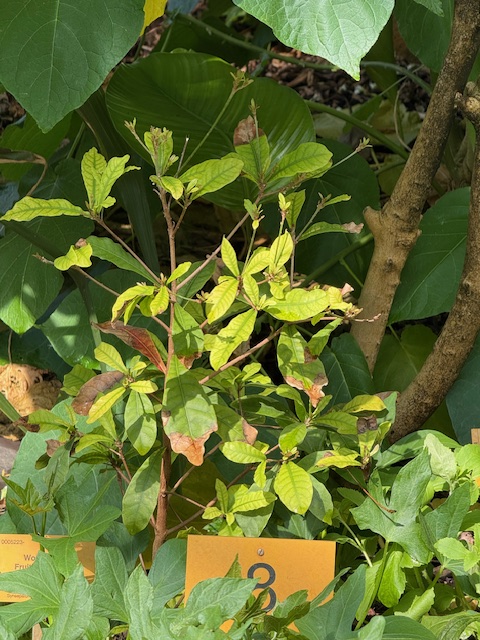
Highlights include the Victoria greenhouse, which features giant water lilies and papyrus, and the Mabundu house, showcasing tropical fruit plants such as banana, coconut, and papaya. Notable species such as guava (psidium guajava) and cempedak (artocarpus integer) are also cultivated.








Conservation and research
Meise Botanic Garden plays a significant role in global plant conservation. It maintains a seed bank for the preservation of wild plant species, with seeds stored at –20 °C.
This includes the world’s largest collection of wild bean species, numbering 211 in total. The garden collaborates with international initiatives such as the Svalbard Global Seed Vault and the Millennium Seed Bank Project.
It is a member of several international organisations, including Botanic Gardens Conservation International (BGCI), the Council on Botanical and Horticultural Libraries (CBHL), and the European Botanical and Horticultural Libraries Group (EBHL).
These affiliations support the garden’s mission to conserve biodiversity and foster global scientific exchange.

Green Ark
The Green Ark is a major new facility devoted to the conservation of endangered plant species from across the world. Officially inaugurated on 22 May 2024—International Biodiversity Day—it marks a significant expansion of the garden’s role in safeguarding plant diversity for future generations.
The Green Ark is a 7,600-square-metre complex of 22 high-tech greenhouses designed to support a wide range of climatic conditions. These structures vary in height between four and ten metres and maintain four distinct temperature regimes, allowing for the cultivation of both arid and humid zone plants.
The facility integrates modern environmental control systems and includes infrastructure such as a technical room, warehouse, wide internal corridor for horticultural work, and two dedicated quarantine greenhouses where all new specimens are screened before being introduced to the main collection.
Sustainability has been a key consideration throughout, with features such as rainwater harvesting and thermal screening built into the design to improve energy efficiency.
Its efforts are particularly focused on groups such as succulents and euphorbia, where it holds more than 1,000 taxa, including over half of the world’s threatened species in that genus. The garden also houses 1,079 species not found in any other botanical collection, as well as 3,227 species that are rarely cultivated elsewhere.
Among the rare and endangered plants housed in the Green Ark are nymphaea thermarum, a miniature water lily from Rwanda that is extinct in the wild, and franklinia alatamaha, which disappeared from natural habitats in the early 19th century. The greenhouses also contain thousands of endangered cacti, all maintained under conditions that mimic their native environments.
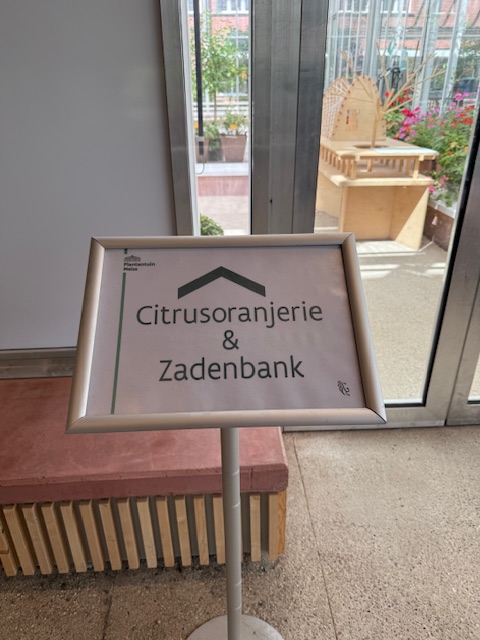
Attached to the greenhouse complex is Belgium’s only national seed bank, which serves as a genetic archive and a resource for future food and ecological security. It holds seeds from more than 1,000 plant populations covering approximately 600 species of Belgium’s wild flora, including 70% of the country’s Red List species.
The seed bank also includes international collections such as wild beans (phaseolus and vigna), wild banana species, and unique flora from the copper belt of Katanga in the Democratic Republic of Congo.
The Katangese plants are adapted to high concentrations of copper in the soil and are now under threat from mining. The seed bank currently preserves 65 species from this unique ecosystem.
The entire Green Ark project represents an investment of €18.6 million.
Construction began in 2019 and concluded in 2024. In total, the greenhouses incorporate 8,740 square metres of glass in the roofs and 2,631 square metres in the side walls. The facility accommodates over 10,000 plant taxa, with three specimens maintained for each.
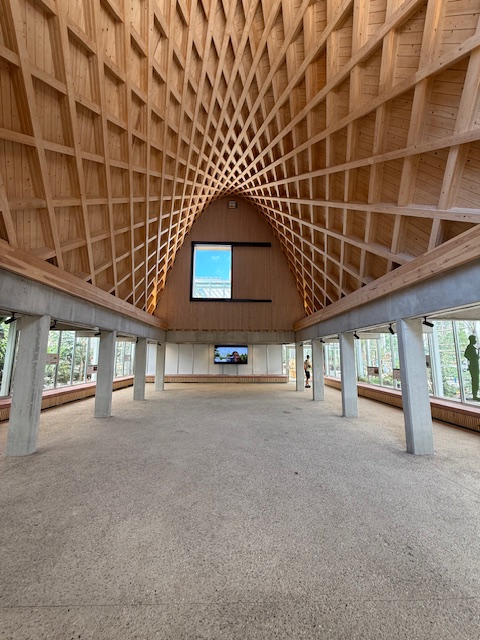
At the centre of the complex is the visitor pavilion, an architecturally striking structure featuring a hyperbolic paraboloid roof and two-tier interior layout. Rising to a height of 12 metres, the pavilion offers views of the greenhouses and hosts exhibitions and events that inform the public about conservation work and the global challenges facing plant biodiversity.



Noteworthy specimens
Among the garden’s remarkable specimens is Wollemia nobilis, a tree species believed extinct until its rediscovery in Australia in 1994. Previously known only from 90-million-year-old fossils, the plant was found in a remote location kept secret to protect it. Meise Botanic Garden holds two specimens of this rare species.
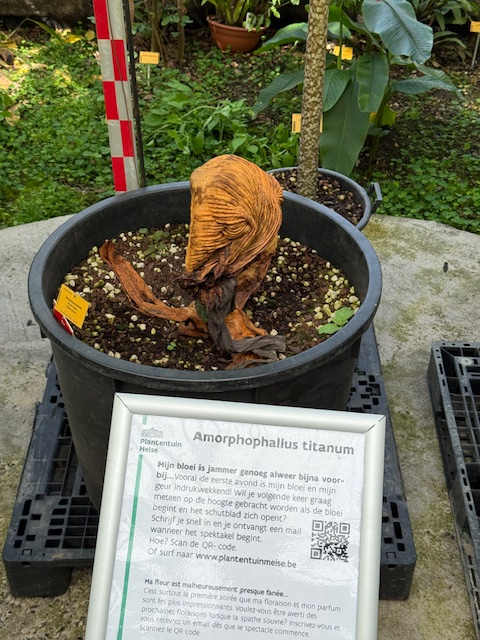
Amorphophallus titanum
In the summer of 2024 a titan arum (amorphophallus titanum), popularly known as the ‘corpse flower’, burst into bloom—an occurrence both rare and brief, drawing thousands of visitors. The plant’s appearance was not only remarkable in itself but also historic: it reached a height of 3.22 metres, officially recognised by Guinness World Records as the tallest titan arum ever recorded, surpassing the previous record of 3.10 metres.
The titan arum is native to the rainforests of Sumatra and is best known for two qualities: its towering height and its overpowering odour, which resembles that of decomposing flesh.
The stench, although repellent to humans, plays an essential ecological role by attracting carrion beetles and flesh flies that act as pollinators. This evolutionary adaptation ensures the plant’s reproduction in its natural habitat, where blooming events are rare and unpredictable.
The bloom at Meise was a classic case of this plant’s theatrical lifecycle. For just two to three days, the enormous inflorescence opened in full, releasing its potent scent in a dramatic bid for attention.
Given the fleeting nature of the event, Meise Botanic Garden extended its opening hours to accommodate the surge of interest, allowing visitors to experience the spectacle into the late evening of 7 August 2024.

Ownership and governance
Following the 1999 dioxin crisis, Belgium’s federal Ministry of Agriculture was devolved to the regions, prompting the need to reorganise the governance of the National Botanic Garden.
In 2000, the Verhofstadt I Government decided to transfer the institution to the Flemish Community, subject to several conditions.
The 2001 Lambermont Agreement established that while the scientific collections, herbarium, and library would remain federal property, they would be on loan to the Flemish Government. The French Community was permitted to employ its own researchers at Meise.
However, conflicting interpretations of the agreement led to a political deadlock. The federal government ceased investment, and the garden’s infrastructure and operations suffered due to the lack of funding and consensus.
In June 2006, the Flemish Government unilaterally invested €1.5 million to sustain the garden. A formal resolution came in December 2012, when the Flemish and French Community governments agreed on a new governance model.
The main sticking point had been the language status of the 184 employees. The agreement stipulated that the board of directors would include nine members: five appointed by the Flemish government, two by a newly established scientific council, and two by the French Community government. The scientific council itself would be composed of representatives from Flemish and French-speaking universities, members of the scientific staff, and international experts.
Flemish staff would be paid by the Flemish Community, and French-speaking staff by the French Community.
The agreement was signed in February 2013 and entered into force on 1 January 2014. From that date, the new Agency Meise Botanic Garden became officially part of the Flemish administrative structure.




A visit
The centrepiece is the Plant Palace, a large complex of interconnected greenhouses, each representing a different climate zone. Visitors can walk through humid tropical forests, Mediterranean drylands, arid deserts, and regions shaped by monsoon cycles.
The Victoria greenhouse, with its giant water lilies and carnivorous plants, draws particular attention, while the collection of orchids and cycads demonstrates the breadth of the garden’s conservation work. These greenhouses are open daily from 10 AM and close 30 minutes before the park itself.
Bouchout Castle
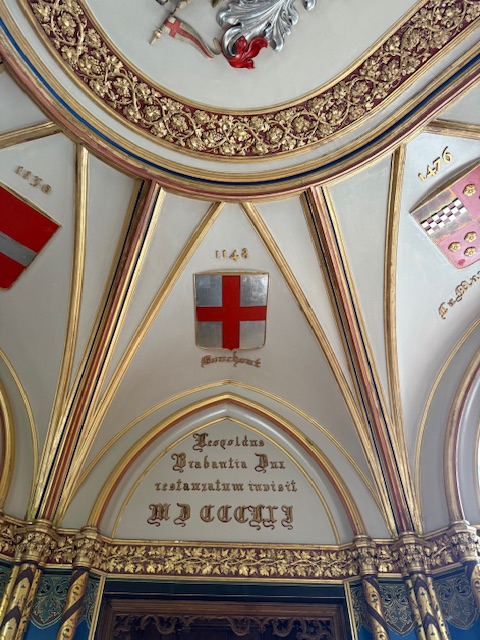
Bouchout Castle stands at the heart of the estate. Dating back to the 12th century, the castle is known for its later associations with Empress Charlotte of Mexico and now serves as an event and exhibition space. The grounds surrounding the castle are integrated into the broader garden design and provide quiet, historically layered walking routes.
In 1879, the Bouchout estate was purchased by the Belgian royal court and became the residence of Princess Charlotte of Belgium, the sister of King Leopold II.
Known as Empress Carlota of Mexico, Charlotte had married Archduke Ferdinand Maximilian of Austria in 1857. In 1864, Maximilian was installed as Emperor of Mexico under the auspices of the Second Mexican Empire.
This short-lived monarchy had been established with the support of Mexican monarchists and the strategic ambitions of Napoleon III, who deployed French troops to occupy the country.
Following the conclusion of the American Civil War, diplomatic pressure from the United States forced Napoleon III to withdraw French forces from Mexico.
Maximilian, despite repeated pleas from Charlotte, chose to remain. In 1867, he was captured by Republican forces and executed. The traumatic events surrounding the collapse of the Mexican Empire deeply affected Charlotte’s mental health, and she returned to Europe in a fragile psychological state.
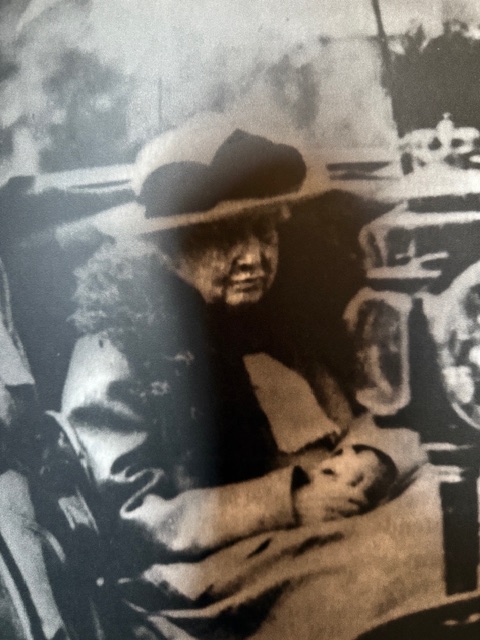
Charlotte lived in relative seclusion at Bouchout Castle, where she maintained a small court but withdrew entirely from public life. During the World War I, the property was left undisturbed by German occupation forces, reportedly due to Charlotte’s familial connection to Emperor Franz Joseph I of Austria, who was her brother-in-law.
As a result, local residents were able to use the castle grounds as a place of refuge during the conflict. Charlotte, Empress Dowager of Mexico, died at Bouchout Castle on 19 January 1927.
For me Bouchout Castle was the third residence of Charlotte I visited after the Castillo de Chapultepec in Mexico City in June 2022 and Miramare Castle in Trieste in October 2022.









Specialised collections
Beyond the greenhouses and castle, several themed areas offer more specialised collections.
The Rose Garden is at its peak in June, while the Herb Garden presents a wide variety of medicinal and culinary plants.
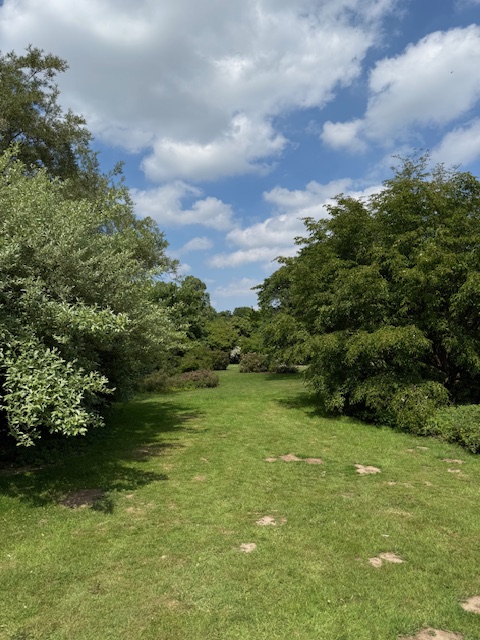
Nearby stands the 19th-century Balat Greenhouse, designed by Alphonse Balat, better known for mentoring Victor Horta. The Rhododendron Forest, with its dense understorey and occasional open glades, adds to the botanical and visual diversity of the site.
Visitor facilities
Visitor facilities include the Orangery, which serves full meals, and the KAWA coffee bar. The Garden Shop, situated near the entrance, offers plant-related publications and products for those who want to learn more or take a reminder of their visit home.
A visit
Jeroen had spotted a GPS-based tracking game, where you have to deduce tour next stop by looking for coordinates. At the first stop, we already failed to find the clue so we decided to drop that and just follow the prefabricated Spring Walk. That ‘hike’ was 3 kilometres long, but according to Strava, I walked 10 km.
We were just under 4 hours at the Botanic Garden. We didn’t rush, but we also didn’t insect every flower, herb, tree and plant. The Meise Botanic Garden warrants a few hours or multiple visits.
For us, that afternoon was a pleasant discovery.
The Meise Botanic Garden is open year-round.
Exploring Brussels
- REVIEW | ‘Jules Verne 200: An Immersive Journey’ in Brussels.
- REVIEW | ‘A Century of Belgian Comics’ at the Comic(s) Art Museum Brussels by the Belgian Comic Strips Center.
- MUSEUM | House of European History in Brussels.
- Visiting the European Parliament in Brussels.
- RIDE & DINE | Brussels Tram Experience.
- REVIEW | M-Gallery Le Louise in Brussels.
- Inside the Royal Palace of Brussels.
- Brussels’ Atomium.
- REVIEW | Orient-Express exhibition at Train World, Brussels’ railway museum.
- The orange world of Design Museum Brussels.
- AfricaMuseum in Tervuren near Brussels.
- Brussels Planetarium.
- Brussels’ Gare Maritime.
- Brussels’ Pannenhuis Park and L28 Park.
- Brussels’ Senne Park.
- The Hotel. Brussels.
- REVIEW | ‘Royals & Trains’ exhibition at Train World in Brussels.
- Ducal and Imperial Palace of Coudenberg in Brussels.
- MIMA – Millennium Iconoclast Museum of Art in Brussels.
- Villa Empain in Brussels.
- Pullman Brussels Centre Midi.
- Autoworld automobile museum in Brussels.
- Royal Museum of the Armed Forces and Military History in Brussels, Belgium.
- Royal Military Museum, War Heritage Institute, Brussels, Belgium.
- PHOTOS | Train World railway museum in Brussels.
- Josaphat Park and residential Schaerbeek.
- BRUSSELS | BELvue Museum of Belgium.
 Trip By Trip
💚
LikeLiked by 1 person
🍀💐🌹🌺🎄🌸🌷🌻🌴🥀🌲🎋
LikeLike