
September 2023. Oriol and I are flying to Toulouse for a road trip in Occitania and (French) Catalonia. We include the Principality of Andorra, which I can finally tick off the bucket list, and Llívia, Spain‘s exclave in France. Besides Toulouse we visit Mont-Louis, Villefranche-de-Conflent, Perpignan and Carcassonne.

Nestled in the heart of the Pyrenees, between France and Spain, lies a small principality often overlooked by travelers and history books alike. That sounds like the start of a fairytale, or a teen romcom: ‘The Co-Prince and I‘ or the ‘The Co-Princess Diaries‘.
Perhaps is a bit less flashy than its microstate siblings. Monaco is jet set and has a major sporting events such as the Formula 1 Monaco Grand Prix or the Monte-Carlo Rally. Liechtenstein is a banking and false teeth h(e)aven. Vatican City has St. Peter’s Basilica and the Pope. San Marino had the Formula 1 San Marino Grand Prix at Imola in Emilia-Romagna in Italy and its participation to the Eurovision Song Contest put it on the map. And Malta has also the ESC and is one big film location. Andorra, is perhaps a bit less famous.
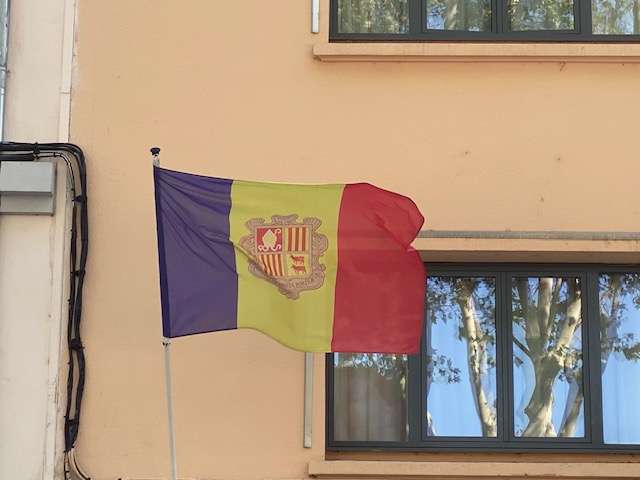
Geography
Andorra spans only 468 square kilometers (180.70 square miles) and is sandwiched between France and Spain. The principality’s strategic location in the eastern Pyrenees mountains has played a significant role in shaping its history and culture.
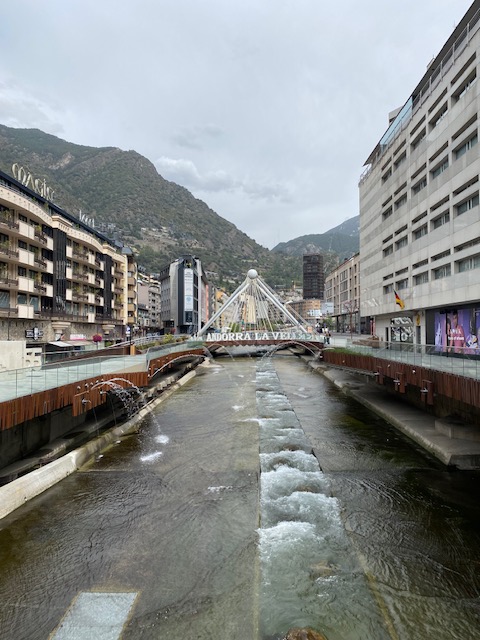
To the north, Andorra shares its border with France, specifically with the Occitanie region. The border is defined by the Valira River, which meanders through the principality, creating breathtaking valleys and gorges.
To the south, Andorra is bordered by Catalonia, an autonomous community in Spain. This geographical position not only gives Andorra its unique cultural blend but also provides it with a stunning natural landscape, making it a year-round destination for outdoor enthusiasts.
Andorra’s geography is dominated by rugged mountain terrain, with the highest peak, Coma Pedrosa, standing at 2,942 meters (9,652 feet) above sea level. This topography has gifted the country with mountain landscapes, deep valleys, and crystal-clear mountain lakes.
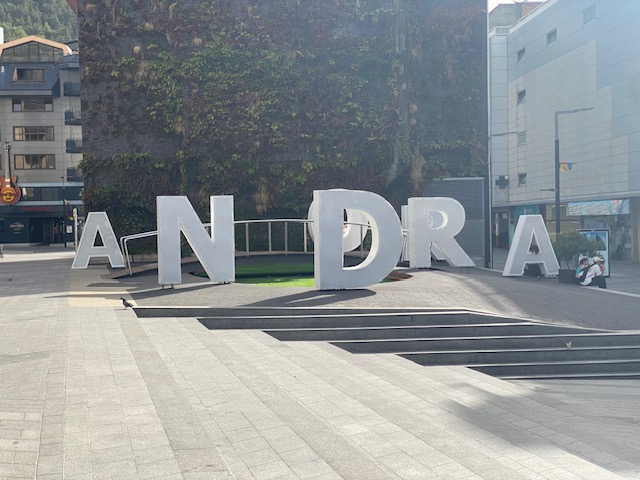
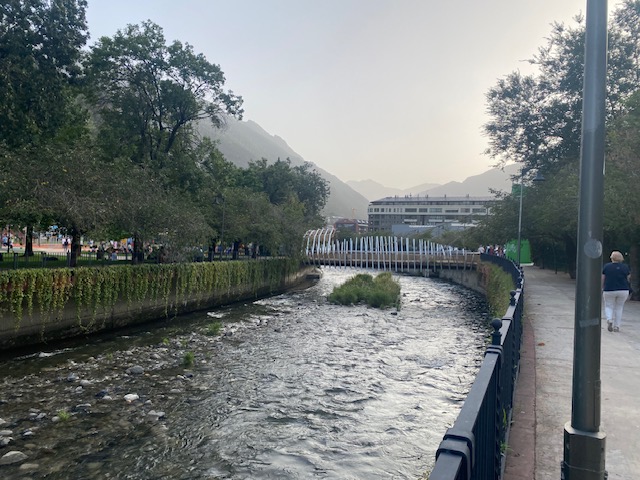
The capital city, Andorra la Vella, lies in a picturesque valley surrounded by peaks, showcasing the harmonious coexistence between man and nature that characterizes the entire country.





History
The history of Andorra is as fascinating as its geography. Andorra’s origins can be traced back to the medieval period, making it one of the world’s oldest nations with a continuous existence. Its history is closely intertwined with the co-princeship, a unique political arrangement that sets Andorra apart.
Co-princes
The co-princes of Andorra are the Bishop of Urgell in Catalonia and the President of France, who both serve as the principality’s joint heads of state.
This unusual arrangement dates back to 1278 when Andorra sought protection from its powerful neighbors, France and Spain. The resulting agreement, known as the ‘Paréage‘, established a co-sovereignty that endures to this day, granting Andorra a remarkable degree of autonomy.
It codified a lay and ecclesiastical agreement between the Count of Foix, Roger-Bernard III, and the Bishop of Urgell, Pere d’Urtx, establishing their joint sovereignty over the territory of Andorra.
The paréage established the system of condominium in Andorra, placing it under suzerainty of both lords. This system was later ratified in 1993 by the signing of the Constitution of Andorra.
he House of Foix eventually extended its power across the Pyrenees mountain range, joining the House of Béarn and moving their court to Pau in Béarn. Count Francis Phoebus became King of Navarre in 1479. The last count was King Henry III of Navarre, after whose accession to the French throne as Henry IV the county entered the French royal domain. And when France became a republic, the president became co-prince.

Culture
Andorran culture is a tapestry of influences, and its people take great pride in preserving their unique identity while celebrating their heritage.
The official language of Andorra is Catalan, which reflects its historical ties to Catalonia. Catalan is spoken by the majority of the population, and it’s a crucial element of Andorran identity. However, due to its location and history, many Andorrans are multilingual, with French and Spanish also commonly spoken.
One of the most celebrated aspects of Andorran culture is its cuisine. The principality boasts a rich gastronomic heritage influenced by its neighbors, featuring a delectable blend of French and Catalan flavors.
Dishes like trinxat (a cabbage and potato dish) and escudella (a hearty meat and vegetable stew) are beloved Andorran classics. Additionally, the principality is known for producing high-quality cheeses and wines, such as tupí (a creamy cheese dip) and borda wines.
Visitors to Andorra can savor these culinary delights in the cozy, family-run bordas (mountain restaurants) that dot the countryside.
But we had half-board at the Eurostars Andorra hotel.
St. George
Andorra’s culture also comes alive through its festivals and traditions.
The Diada de Sant Jordi (St. George’s Day) is a popular event (as in the rest of Catalonia), celebrated with enthusiasm across the country every April 23rd. On this day, people exchange books and roses in a vibrant display of Catalan culture.
Another cherished tradition is the Festival of the Canolich Cross, where Andorrans hike up to the Canolich Cross, perched high in the mountains, to celebrate the arrival of spring with picnics and traditional dancing.
Despite its small size, Andorra is home to several museums and art galleries that showcase its cultural heritage. The Museu Nacional d’Art de Andorra (National Art Museum of Andorra) houses an impressive collection of Andorran art and artifacts, offering a glimpse into the country’s creative legacy.
Tourism and economy
Over the past few decades, Andorra has seen a significant transformation, evolving from a sleepy mountain principality into a bustling tourist destination. Its economy has thrived primarily due to its status as a tax haven and its burgeoning tourism industry.
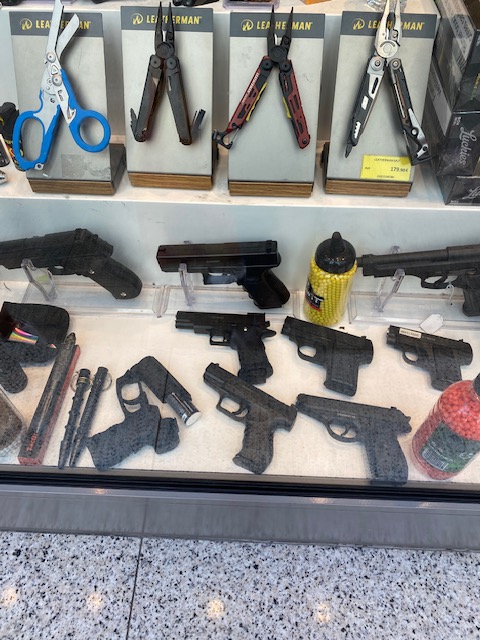
Andorra’s duty-free status attracts shoppers from all over Europe. The capital city, Andorra la Vella, and the town of Escaldes-Engordany are known for their extensive shopping districts, where visitors can find everything from luxury brands to electronics and cosmetics at competitive prices. Additionally, the country’s low taxes on consumer goods have made it a haven for bargain hunters.
Skiing
Beyond shopping, Andorra offers a wide range of recreational activities throughout the year. In winter, it becomes a winter wonderland with numerous ski resorts, including Grandvalira and Vallnord, attracting skiers and snowboarders. In the summer, the mountains transform into a playground for hikers, mountain bikers, and nature enthusiasts, with an extensive network of trails that showcase Andorra’s breathtaking landscapes.
The tourism sector in Andorra has been a driving force for economic growth, providing employment and stimulating local businesses. The principality has also invested in modern infrastructure, including hotels, restaurants, and entertainment venues, to cater to the needs of tourists. As a result, Andorra offers a comfortable and convenient experience for visitors while maintaining its unique charm.
Top sights and activities
What are top sights and activities in Andorra?
- Vallnord and Grandvalira Ski Resorts. Andorra is a winter sports paradise, and these two major ski resorts offer excellent skiing and snowboarding opportunities during the winter months. In the summer, they transform into hiking and mountain biking destinations with scenic trails and stunning mountain vistas.
- Caldea Spa. Located in the capital, Andorra la Vella, Caldea is one of Europe’s largest thermal spas. It features a range of pools, saunas, and relaxation areas set in a futuristic glass pyramid, providing a perfect place to unwind and rejuvenate.
- Andorra la Vella. The capital city itself is worth exploring. Stroll through its charming streets, visit historic sites like the Casa de la Vall (House of the Valley) and the Sant Esteve Church, and indulge in tax-free shopping along the bustling commercial avenues.
- Santa Coloma Church. This Romanesque church, located in the town of Santa Coloma, is one of Andorra’s oldest and most beautiful religious structures. It features stunning frescoes and is a testament to the country’s rich history.
- Sant Joan de Caselles. Another impressive Romanesque church, Sant Joan de Caselles, is located in Canillo. It boasts beautiful frescoes and a peaceful atmosphere, making it a worthwhile stop for history and architecture enthusiasts.
- Andorra’s natural parks. Andorra is blessed with natural beauty, and its national parks are a testament to this. The Coma Pedrosa Natural Park and Sorteny Valley Natural Park offer breathtaking hiking opportunities amidst pristine landscapes.
- Vallnord Bike Park. In the summer, Vallnord Bike Park is a haven for mountain biking enthusiasts. It features downhill and cross-country trails catering to riders of all levels.
- Romanesque Churches. Throughout Andorra, you’ll find numerous Romanesque churches, each with its unique charm. Other notable examples include the Church of Sant Serni in Canillo, the Church of Sant Martí in La Cortinada, and the Church of Sant Miquel d’Engolasters.
- Museums. Andorra may be small, but it has a few interesting museums to explore. The National Automobile Museum showcases a collection of vintage cars, and the Postal Museum offers insights into the history of mail services in the country.
- Vall de Sorteny Botanical Garden. Located in the Sorteny Valley, this botanical garden is a paradise for nature lovers. It features a wide variety of native plants and flowers, making it a serene place to explore.
- Hiking Trails. Andorra offers numerous hiking trails with varying levels of difficulty. Popular routes include the Madriu-Perafita-Claror Valley (a UNESCO World Heritage site), Ruta del Ferro, and the Estanys de Tristaina trail.
- Mountain Lakes. Explore Andorra’s stunning mountain lakes, such as Estany de Juclà and Estany de les Abelletes. These serene lakes are perfect for picnics and photography.
- Santuario de Meritxell. This modernist sanctuary is dedicated to the country’s patron saint, Our Lady of Meritxell. It’s an architectural gem and an important religious site.
- Palau de Gel: Located in Canillo, this sports and entertainment complex offers ice skating, swimming, and a variety of other activities, making it a fun family destination.
- Engordany Art Center: This cultural space in Escaldes-Engordany hosts exhibitions, concerts, and cultural events throughout the year, providing a glimpse into the contemporary arts scene in Andorra.
Mirador del Roc del Quer
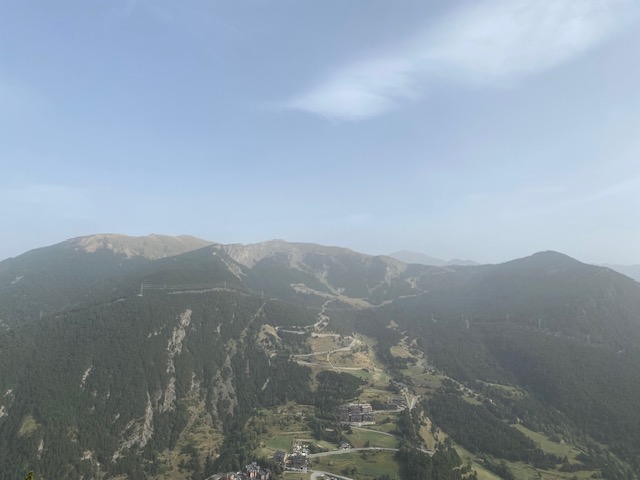
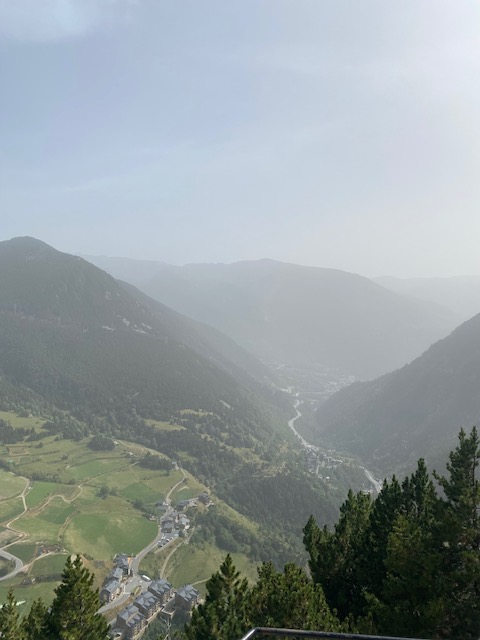
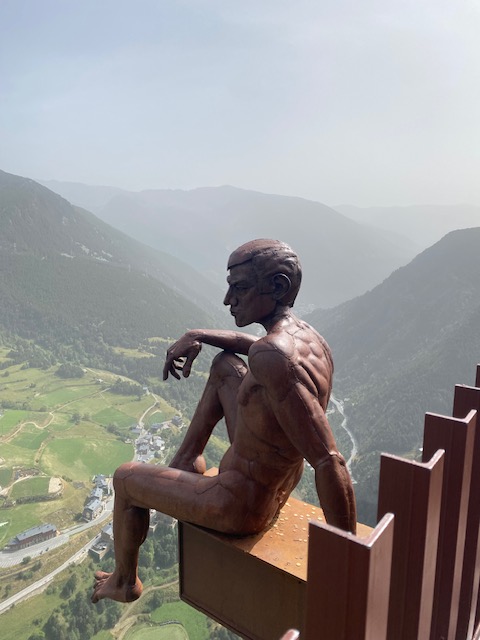
We did one excursion outside Andorra la Vella. A ride to the Mirador del Roc del Quer. It is a scenic viewpoint located in Andorra, specifically in the parish of Canillo. It offers spectacular panoramic views of the surrounding natural landscapes, including the picturesque valleys and majestic peaks of the Pyrenees. Mirador del Roc del Quer is often referred to as one of the best viewpoints in Andorra due to its unique design and stunning vistas.
The Mirador is situated at an elevation of approximately 2,291 meters (7,516 feet) above sea level. It is located in the vicinity of Canillo, one of the parishes in Andorra.
To reach the Mirador del Roc del Quer, visitors typically embark on a moderate hiking trail that leads to the viewpoint. The trail is well-marked and maintained, making it accessible to hikers of various skill levels. The hike is part of the overall experience, allowing visitors to immerse themselves in the natural beauty of the Pyrenees as they make their way to the viewpoint.
What sets Mirador del Roc del Quer apart from other viewpoints is its unique architectural design. The viewpoint features a suspended platform that extends out over the edge of a cliff, providing an exhilarating sensation of floating above the valley below. The platform is made of metal and glass, allowing for unobstructed views of the breathtaking scenery.
Once you reach the Mirador, you’re rewarded with 360-degree panoramic views of the Andorran landscape. The viewpoint offers a bird’s-eye view of the valleys, forests, mountains, and winding streams, creating a stunning vista that captures the natural beauty of Andorra.

So?
Andorra has more than meets the eye, from outdoor adventures in the pristine mountains to cultural explorations in charming towns and cities. Whether you’re a nature enthusiast, history buff, or simply seeking relaxation, Andorra has something to offer every traveler.
It’s certainly an A-destination, but if you’re looking for something more original, try Andorra.
2023 Occitania – Andorra – Catalonia Road Trip
- TOULOUSE-BLAGNAC AIRPORT | Arrival, ID check, car rental and unusually strict security at departure.
- REVIEW | Novotel Toulouse Purpan Aéroport.
- Circuit Andorra.
- HOTEL REVIEW | Eurostars Andorra.
- REVIEW | Caldea hot spring spa and treatments in Andorra la Vella.
- Andorra la Vella & Escaldes–Engordany.
- QUEER ANDORRA | Entre Nous, the only gay bar in the village.
- ANDORRA PARLIAMENT HOUSE | Casa de la Vall.
 Trip By Trip
Andorra looks beautiful! I imagine its expensive?
LikeLiked by 1 person
Actually no. It’s not Monaco 🇲🇨 or Liechtenstein 🇱🇮. Duty free shipping is one of Andorra’s 🇦🇩 attractions.
LikeLiked by 1 person
Oh good to know!!😊
LikeLiked by 1 person
🙂
LikeLike