
We haven’t travelled to the Grand Duchy of Luxembourg since 2018 and 2019, but in January 2025 we returned to get a taste of the Alstom Coradia Stream HC which the Société Nationale des Chemins de Fer Luxembourgeois (CFL) runs under the name Série 2400. The Coradia Stream HC was a candidate to become NMBS /SNCB‘s AM30, until it was (all but) decided Construcciones y Auxiliar de Ferrocarriles (CAF) from Spain would adapt its CAF Civity Duo. Although that decision is being challenged. While in the grand duchy, we also visited Schengen and Diekirch. 2025 is big year for the country, as on 3 October, Grand Duke Henri (Henry) will abdicate in favour of his son, Guillaume, who will become Grand Duke Guillaume V (or William V).
After a night at the Sofitel Luxembourg Europe, we took tram T1 to the Pfaffenthal-Kirchberg funicular, adjacent to Pfaffenthal-Kirchberg Railway Station. There we took the train to Diekirch. And we were lucky. It was a Alstom Coradia HC, named Series 2400 by CFL. Sampling the Coradia was on our checklist for this excursion.
The weather was bad on 8 January 2025 and we thought of not going to Diekirch, but stopping over at Ettelbruck, where there is a connection to Gouvy and Liège-Guillemins in Belgium. But we persevered.
It turns out Diekirch is larger than we expected. We started by visiting the Conservatoire National de Véhicules Historiques and the Musée d’Histoire de la Brasserie de Diekirch, which are located in the same building.
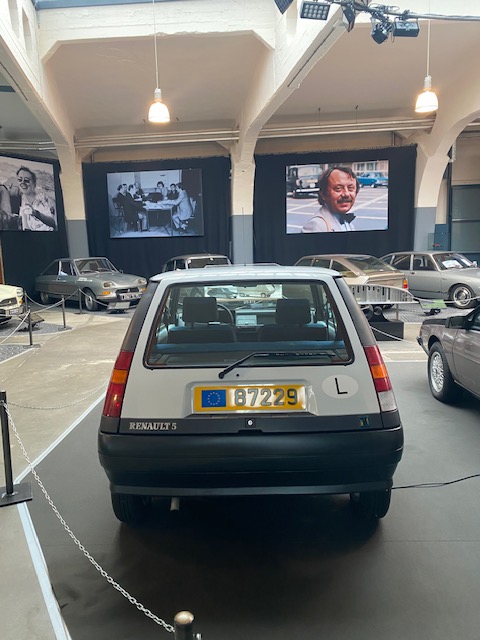

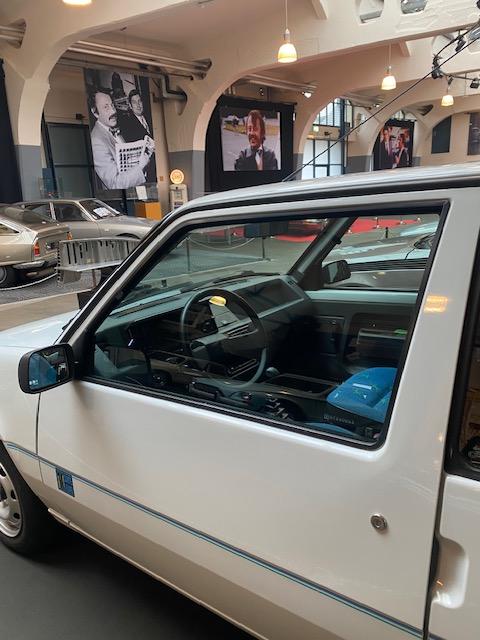

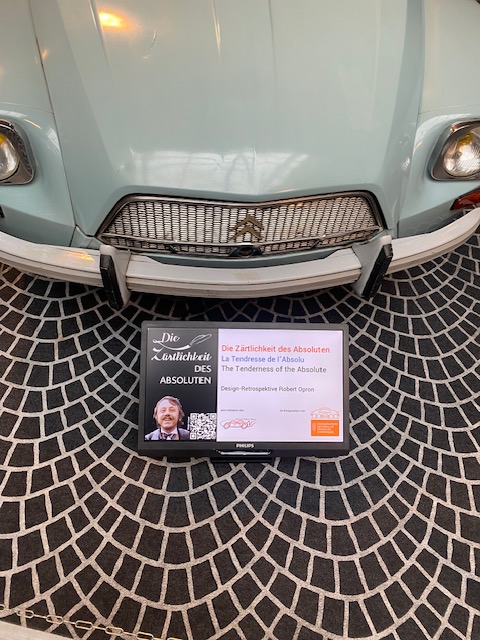
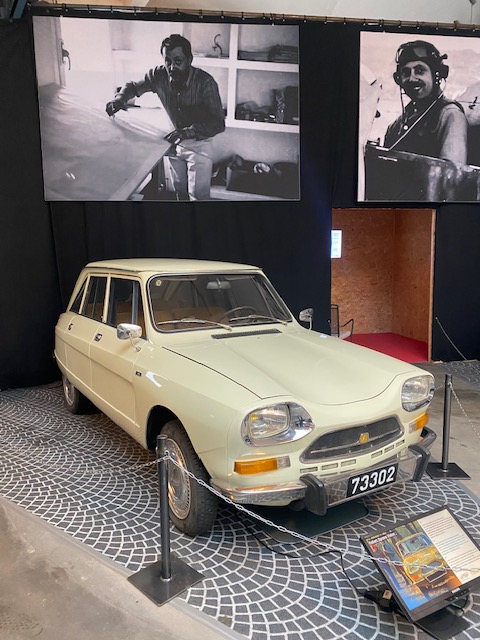
Conservatoire National de Véhicules Historiques
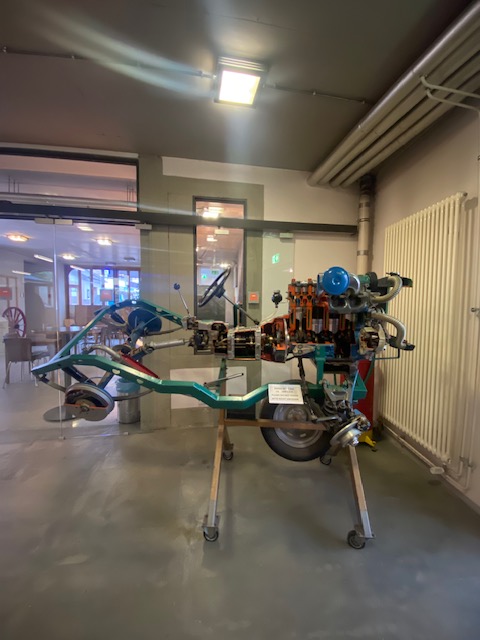
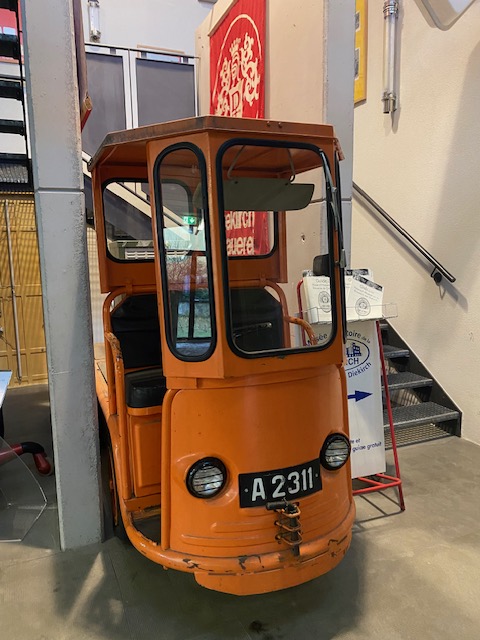
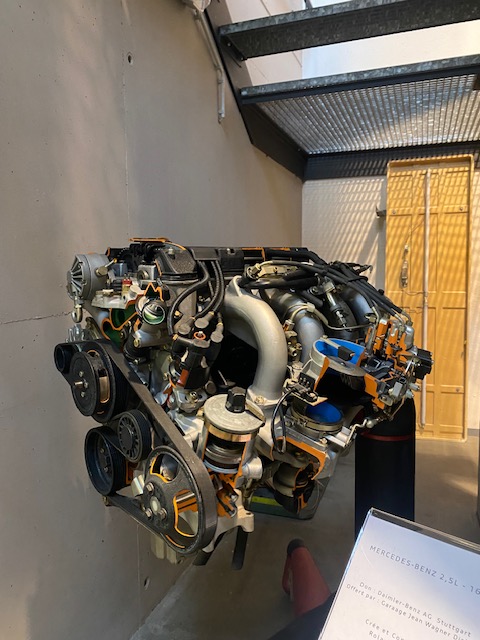
Don’t expect too much of the National Conservatory of Historic Vehicles. It’s basically a garage.
“The National Conservatory of Historic Vehicles is not a museum like the others”, Diekirch.lu says.
“It shows the history of the automobile and land motorized transport in general, since the end of the 19th century. The former Jean Wagner car factory in Diekirch, which houses the collections, is the predestined location for this conservatory, because it is a unique architectural and technical heritage that dates back to the beginning of the automobile history in Luxembourg.
“In addition to the vehicle exhibition, the CNVH includes, among other things, an archive, a specialized shop, a cafeteria and an equipped conference room. The reception of groups and school classes is ensured, by reservation, by a team of specialists.”
Being small, the Conservatory makes choices. It chose to offer a retrospective on the design work of Robert Opron.


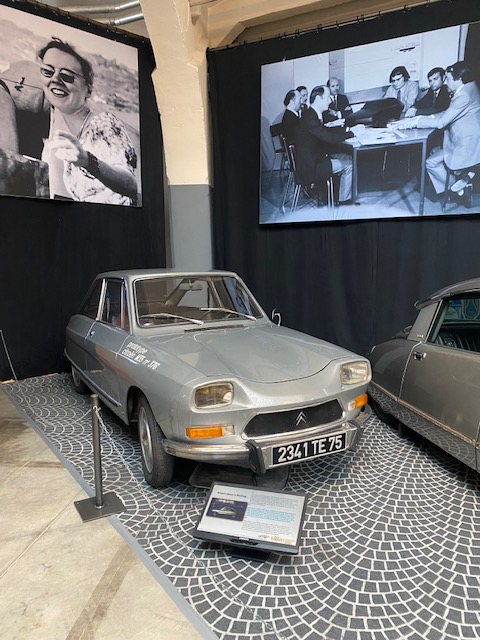

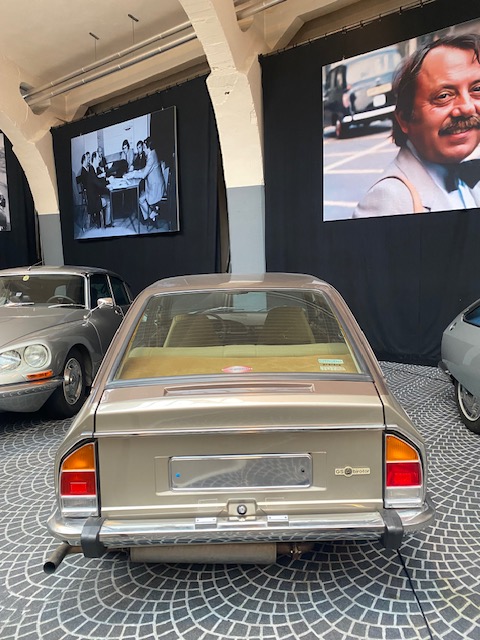
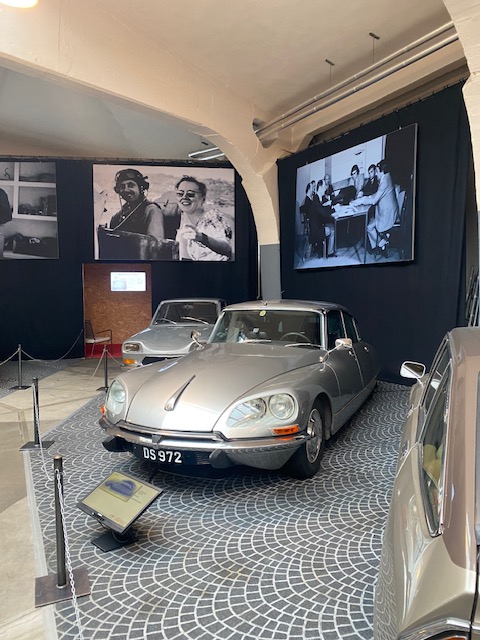


Who was Robert Opron?
Robert Maurice Jean Opron (22 February 1932 – 29 March 2021) was a French automotive designer. Over his career, he contributed to numerous projects that became production vehicles for brands such as Simca, Renault, and Fiat. However, he is most celebrated for his work at Citroën, where he joined in 1962 and became the ‘responsable de style‘ (head of design) in 1964.

Opron was born in Amiens in Picardy in France. His father, a military officer, was stationed in various parts of French Colonial Africa, leading Opron to spend his childhood in locations such as Algeria, Mali, and Abidjan in Côte d’Ivoire (Ivory Coast).
At the age of 18, he contracted tuberculosis and spent time in a sanatorium.
In 1952, after recovering, he returned to France and enrolled at the École des Beaux-Arts in Amiens. A year later, he transferred to the École nationale supérieure des Beaux-Arts in Paris, where he studied architecture under Auguste Perret. Over eight years, he trained in architecture, painting, and sculpture.
At 21, Opron married Geneviève Mercier. During the early 1950s, his passion for aviation led him to take up flying, including acrobatics. His professional career began in 1952 as a machine designer at the Compagnie Nationale des Sucreries in Ham in the Somme. By 1954, he had joined the Société Nationale de Constructions Aéronautiques du Nord, where he specialised in cockpit design for the Nord Noratlas aircraft.
Opron entered the automotive industry in 1958, joining Simca at the age of 26. Following the dissolution of his department in 1961, he received a two-year severance payout with a non-compete clause, which temporarily steered him away from the automotive sector. During this period, he worked for Arthur Martin, a manufacturer of housewares and home appliances, as Director of Style. In 1962, he returned to automotive design with Citroën.
Known for his collaborative and team-oriented approach, Opron balanced collective creativity with individual input throughout his career. He retired in 2001 after a long and influential career. Opron passed away from complications related to COVID-19 on 29 March 2021 in Antony, near Paris.
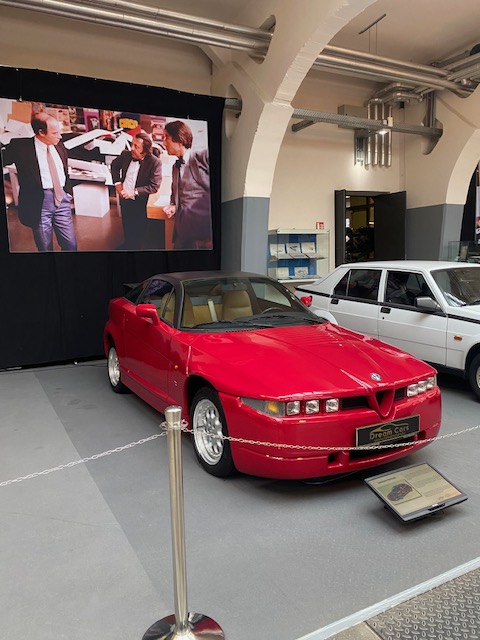



Opron received several accolades during his lifetime. In 1999, he was one of 25 designers nominated for the Car Designer of the Century competition. In 2002, a celebration marking 50 years of his design career was held in Verrières-le-Buisson. He received the Car Design News Lifetime Achievement Award in 2016.
Opron’s design philosophy often reflected a harmony between form and function, as seen in his works for Simca, Citroën, Renault, and Fiat. His designs have been praised for their organic integration of light, structure, and movement. Throughout his career, Opron consistently pushed the boundaries of automotive design, leaving a lasting legacy in the industry.


Musée d’Histoire de la Brasserie de Diekirch
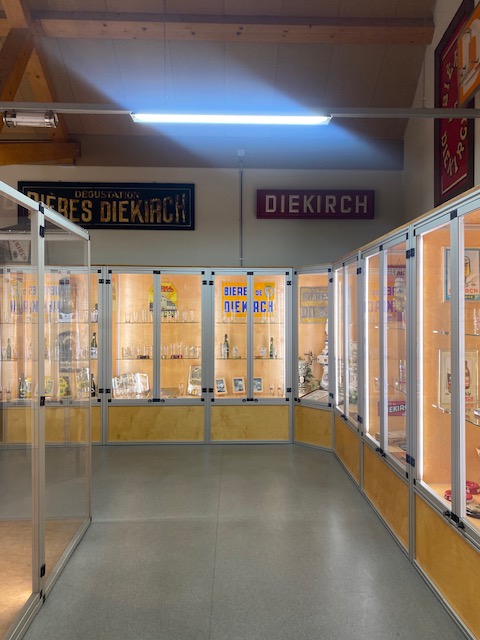
On the first (second in American) floor of the car museum, there’s the Musée d’Histoire de la Brasserie de Diekirch or Diekirch Brewery History Museum.
It’s one room with glasses and other Diekirch beer related memorabilia.
Diekirch is a Luxembourgish blond pilsner beer. It has been brewed since 1871 by Brasserie de Luxembourg Mousel-Diekirch SA, a subsidiary of AB InBev
The water for the beer comes from the Sources des collines verdoyantes (Springs of the green hills) in Diekirch.
So?
The combined museums are not worth a detour. But while you’re in Diekirch, why not pay a visit? It’s only 5 euros per person.
Railway and transport museums
- A visit of the Flemish Tram and Bus Museum – Vlaams Tram- en Autobusmuseum (VlaTAM) in Antwerp.
- MONTREAL | Exporail – Canadian Railway Museum in Saint-Constant.
- REVIEW | Motion and emotion at the London Transport Museum.
- BAVARIA | Lokwelt – Locomotive World in Freilassing .
- REVIEW | Orient-Express exhibition at Train World, Brussels’ railway museum.
- REVIEW | Train World exhibition ‘From Peking to Hankow: a Belgian adventure in China’.
- PHOTOS | Train World railway museum in Brussels.
- Railway and transport museums (not) to visit.
- Nuremberg Transport Museum / DB Museum.
- Slovenian Railway Museum in Ljubljana.
- VIDEO | Mail Rail and The Postal Museum in London.
- Plans for a steam train heritage service between Brussels and Mechelen shelved.
- PHOTOS | Museo del Ferrocarril de Madrid Delicias railway museum.
- VIDEO | Museu del Ferrocarril de Catalunya – Catalonia Railway Museum in Vilanova.
- REVIEW | Romanian Railway Museum ‘Muzeul CFR’ and Bucharest.
- PHOTOS | UK’s National Railway Museum (NRM) in York.
- PHOTOS | Swiss Museum of Transport Verkehrshaus in Lucerne.
- PHOTOS | Het Spoorwegmuseum – Dutch Railway Museum in Utrecht.
- VIDEO | Return to Spoorwegmuseum Utrecht for the dining car exhibition ‘Tosti’s, truffels, treinen’.
- VIDEO | Stoomtram Hoorn – Medemblik steamtram light rail in Holland.
- Visiting Odense and the Danish Railway Museum.
- Deutsches Museum’s Verkehrszentrum or Transport Centre in Munich.
 Trip By Trip
13 Comments Add yours