
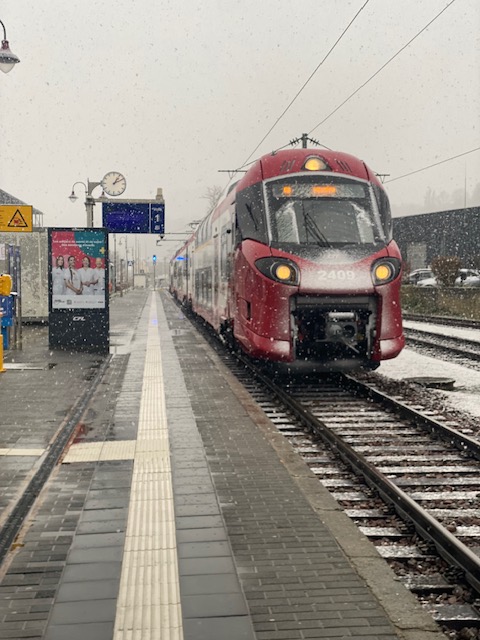
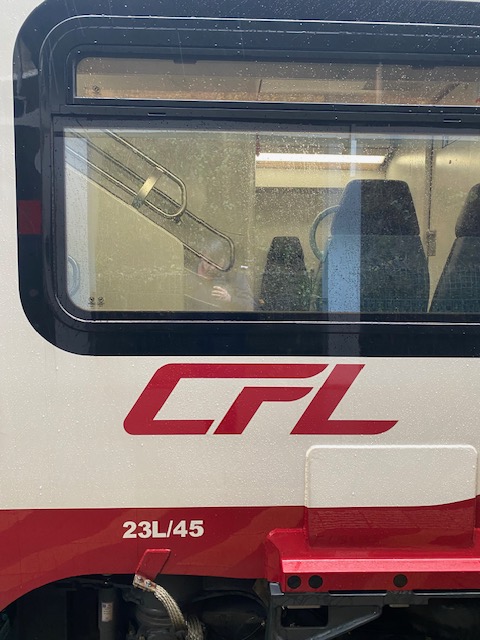
We haven’t travelled to the Grand Duchy of Luxembourg since 2018 and 2019, but in January 2025 we returned to get a taste of the Alstom Coradia Stream HC which the Société Nationale des Chemins de Fer Luxembourgeois (CFL) runs under the name Série 2400. The Coradia Stream HC was a candidate to become NMBS /SNCB‘s AM30, until it was (all but) decided Construcciones y Auxiliar de Ferrocarriles (CAF) from Spain would adapt its CAF Civity Duo. Although that decision is being challenged. While in the grand duchy, we also visited Schengen and Diekirch. 2025 is big year for the country, as on 3 October, Grand Duke Henri (Henry) will abdicate in favour of his son, Guillaume, who will become Grand Duke Guillaume V (or William V).

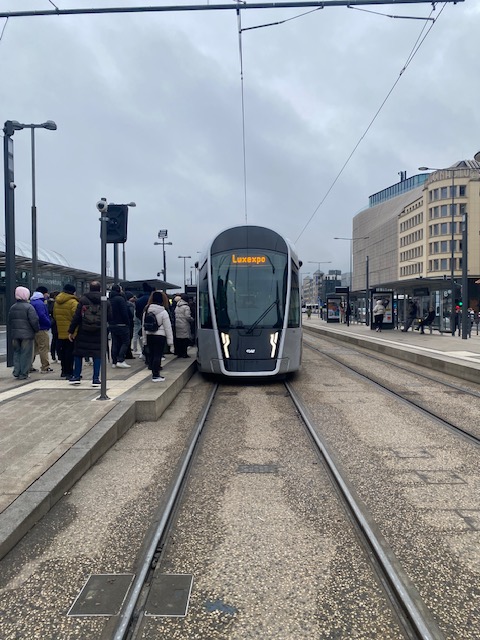


We came to the Grand Duchy of Luxembourg with a mission. Sampling the Alstom Coradia Stream HC, but also see Schengen and stay at the Sofitel Luxembourg Europe (after staying at the Sofitel Luxembourg Le Grand Ducal in 2019).
As we have both visited the City of Luxembourg: its Old Quarters and Fortifications (tat’s its official UNESCO designation) before, we focused on other areas.


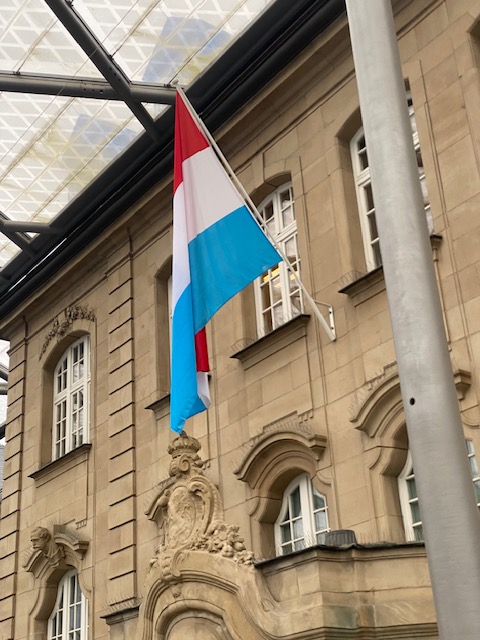

Schengen
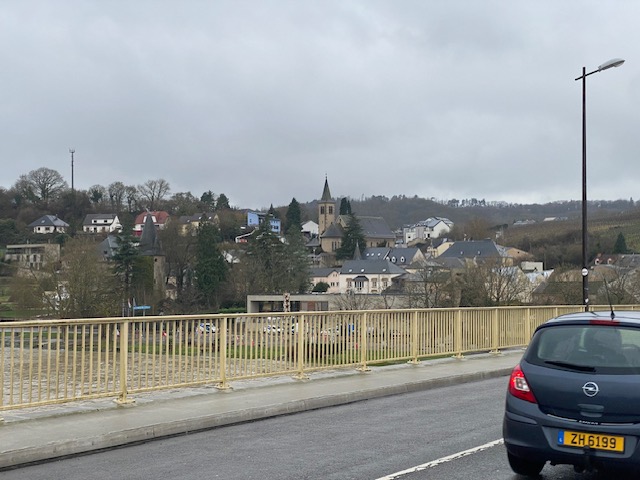
Schengen is a small yet historically significant town located in the southeast of Luxembourg, nestled along the banks of the Moselle River at the border triangle where Luxembourg, Germany and France converge. This picturesque village is best known as the namesake and birthplace of the Schengen Agreement, a landmark treaty that has come to symbolise the free movement of people, goods, and services across much of Europe.
The town’s geographical location at a tri-border region makes it a natural crossroads for international collaboration and exchange. Across the Moselle lies the German municipality of Perl in Saarland, connected by the historic Moselle bridge, while the French municipality of Apach in Lorraine (Grand Est) lies to the south.
Schengen itself is a part of the Remich canton and is one of several localities within the municipality, alongside villages such as Remerschen, Bech-Kleinmacher and Schwebsingen. The administrative centre of the municipality is in Remerschen, but Schengen remains the cultural and historical heart of the region.
Schengen’s identity as a wine-growing village adds to its charm. The town is situated within the lush vineyards of Luxembourg’s Moselle Valley, which form part of the renowned Luxembourg Wine Route. This scenic area is celebrated for its high-quality wines, particularly white varietals such as Riesling and Pinot Gris. The combination of its viticultural heritage and its position at the nexus of three countries gives Schengen a unique character that attracts both wine enthusiasts and history buffs.
The historical significance of Schengen was cemented on 14 June 1985, when representatives of five European Economic Community member states—Belgium, France, Germany, Luxembourg, and the Netherlands—signed the Schengen Agreement aboard the passenger ship MS Princesse Marie-Astrid, anchored on the Moselle.
This agreement laid the groundwork for the abolition of border controls between participating states, enabling the free movement of people. The treaty, supplemented by the 1990 Schengen Convention, officially came into force on 26 March 1995, creating what is now known as the Schengen Area.
Today, the Schengen Area encompasses 29 countries, including most European Union member states and four members of the European Free Trade Association: Iceland, Liechtenstein, Norway, and Switzerland.
Additionally, four European microstates—Andorra, Monaco, San Marino and Vatican City—are de facto part of the area due to their open borders with neighbouring Schengen states.
The area covers more than 4.59 million square kilometres and is home to over 450 million people, making it one of the largest zones of free movement in the world. The Schengen Agreement, alongside the euro currency, is regarded as a cornerstone of European integration.
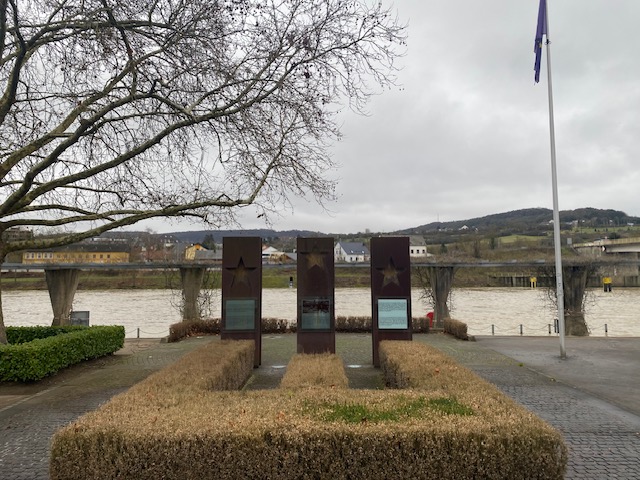
The town of Schengen celebrates its historic role in European unity through several monuments and institutions. The European Museum in Schengen, located on the riverbank, offers an in-depth exploration of the Schengen Agreement’s history and its impact on the continent.
Visitors can view historical documents, photographs, and interactive displays that explain the evolution of European borders and the implementation of the Schengen acquis. Outside the museum, a segment of the Berlin Wall and a European monument serve as powerful reminders of the importance of open borders and cooperation.
In addition to its connection to the Schengen Agreement, the town is home to other cultural and historical landmarks.
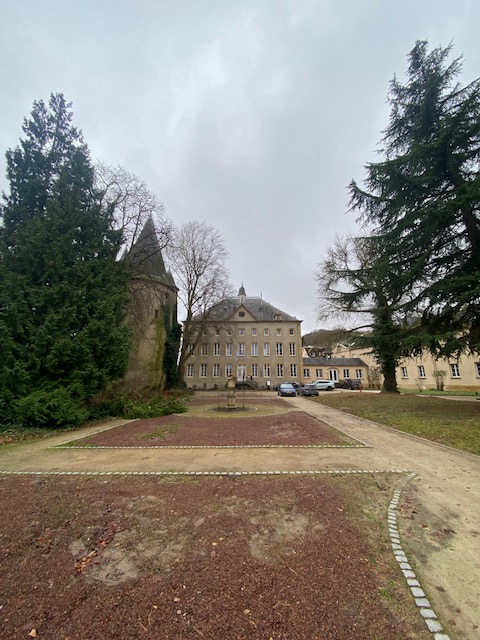
Schengen Castle, dating back to the 13th century, stands as a testament to the region’s medieval heritage. Its reconstructed baroque gardens are part of the Gardens Without Borders project, showcasing the transnational ties that define the area. The Church of the Redeemer is another architectural highlight, contributing to the town’s historical narrative.
Schengen’s legacy is not only tied to its agreement but also to its enduring role as a symbol of European unity and openness. It stands as a testament to the transformative power of cooperation and shared vision, illustrating how a small village in Luxembourg became a cornerstone of modern European history. For visitors, Schengen offers a unique blend of natural beauty, cultural richness, and profound historical significance, making it a destination of both local charm and global importance.



Europe in Luxembourg: Kirchberg
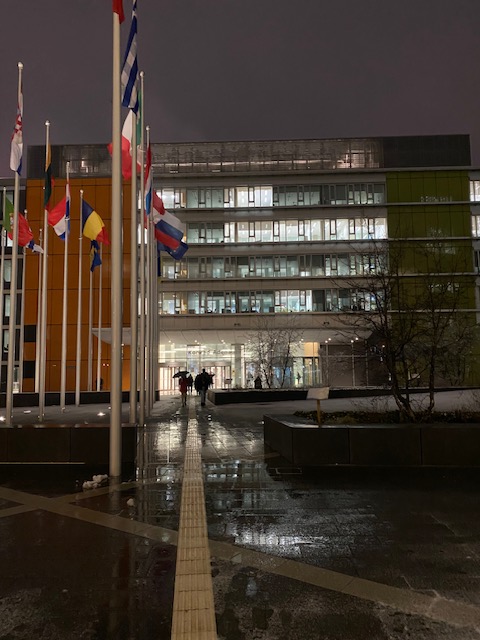
Kirchberg is a quarter situated in north-eastern Luxembourg City. This plateau overlooks the north-eastern part of the historic city centre, Ville Haute, and is connected to the elevated areas of the city by the Grand Duchess Charlotte Bridge, which spans the Pfaffenthal valley. Locals often refer to the area as the Kirchberg plateau, reflecting its topography.
Kirchberg is home to numerous European Union institutions and is frequently used as a metonym for the EU’s judiciary, which is based in this quarter. It serves as Luxembourg’s central business district.
Historically, Kirchberg was first documented in 1222, although its advantageous location near the Roman road between Reims and Trier suggests earlier settlement. This Roman road, known locally as Kiemwee, was a popular walking route in the late 19th century.
Historian Nicolas van Werveke praised its preservation in 1900, calling it one of the best-preserved Roman roads in Gaul. Kirchberg and the nearby Neudorf were once part of the Weimerskirch parish. Without its own church, Neudorf residents had to ascend the hill to attend services, leading to the name Kirchberg, meaning Church Hill.
The plateau’s elevated position made it a key defensive site. Forts Thüngen and Olizy were constructed in 1732 as part of Luxembourg’s extensive fortifications, which were later largely dismantled after the 1867 Treaty of London.
By 1875, the Parish Church of Our Lady, Refuge of the Sick, was built to serve the small farming community in Kirchberg.
Development in Kirchberg accelerated post-World War II, driven by its inexpensive land and proximity to the city.
Following Luxembourg’s designation as a provisional seat for the European Coal and Steel Community in 1952, the government invested heavily to attract further European institutions. Key to these efforts was the construction of the Grand Duchess Charlotte Bridge, which opened the plateau for urbanisation.
Today, Kirchberg remains one of the EU’s three de facto capitals and houses the Court of Justice of the European Union.
Urbanisation of Kirchberg was guided by the French architect Pierre Vago, with Avenue John Fitzgerald Kennedy as its central axis. This 3.5-kilometre avenue runs from the Grand Duchess Charlotte Bridge to the Grünewald forest and has evolved from an expressway into a pedestrian- and cyclist-friendly thoroughfare.
The University of Luxembourg‘s Kirchberg campus and the National Library of Luxembourg are located along this avenue, which is flanked by modern glass and steel buildings housing financial and commercial institutions. Kirchberg Hospital lies in the north-eastern section.
Kirchberg has become a cultural hub, featuring the Mudam modern art museum, designed by I. M. Pei, and the Philharmonie concert hall, which seats over 1,500 people.
The National Sports and Culture Centre, d’Coque, offers an Olympic-sized pool and an 8,300-seat indoor arena. The Kirchberg District Centre includes Eurostat offices, an Auchan hypermarket, a cinema, and Luxexpo The Box exhibition centre.
The quarter’s south-west is dominated by EU institutions, including the Court of Justice of the European Union, the European Investment Bank, and the European Parliament Secretariat. The European School, Luxembourg I, serves the children of EU employees. Kirchberg’s association with the EU judiciary has cemented its reputation as a European administrative hub.
As of 31 December 2023, Kirchberg had a population of 9,714, with over a quarter holding Luxembourgish nationality.
Public transport in Kirchberg has been significantly upgraded. In December 2017, a funicular linked Kirchberg to a new station in the Pfaffenthal valley, providing a connection to the national and international rail network.
A tram line, operational since July 2024, now runs from northern Kirchberg along Avenue J.F.K, through the city centre, and to the Cloche d’Or business district. A major transport hub was completed in May 2022 near Luxexpo, with future plans to extend tram services to Luxembourg Airport by early 2025 and to further urban developments in Kirchberg by 2035.


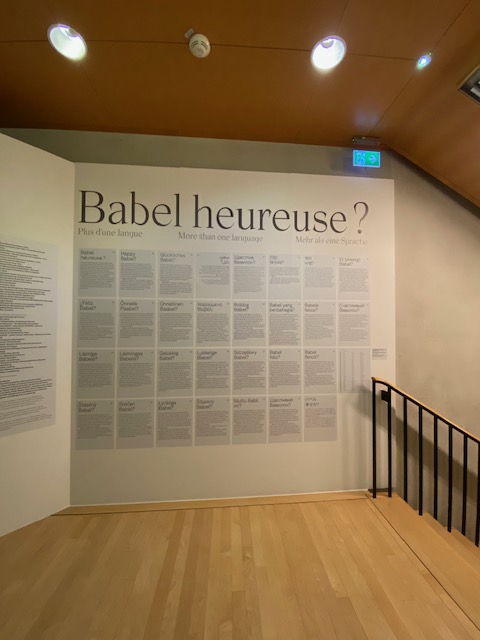
Lëtzebuerg City Museum
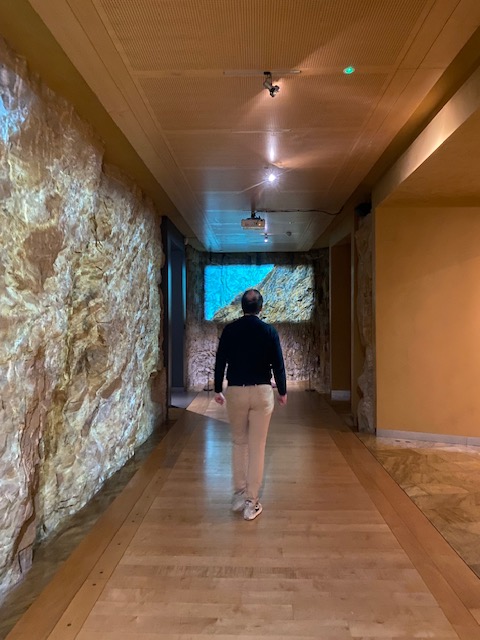
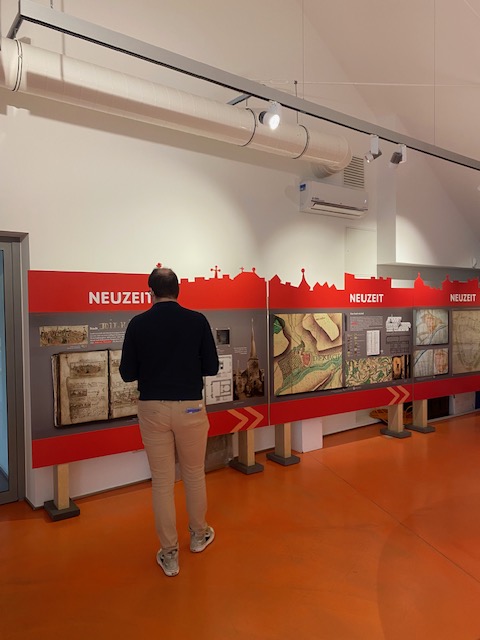
he Lëtzebuerg City Museum, located in the heart of Luxembourg City, offers visitors a detailed exploration of the city’s history, culture, and development. Housed in a series of restored historical buildings, some dating back to the 17th century, the museum seamlessly integrates contemporary architecture with its heritage.
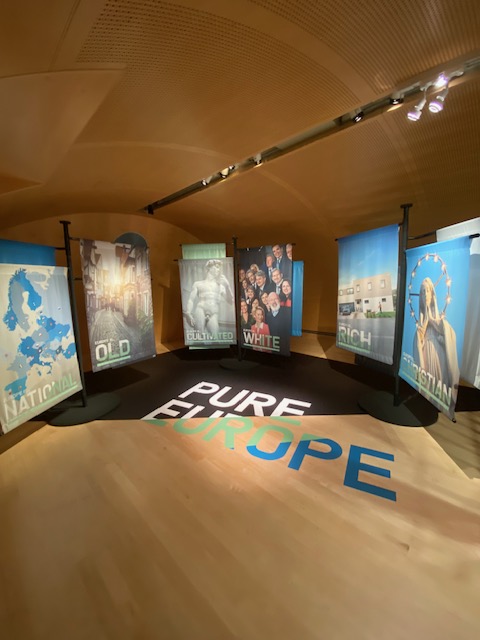
The museum’s permanent exhibitions provide a comprehensive narrative of Luxembourg City’s evolution from its early medieval origins to its current status as a European hub. Through a combination of artefacts, documents, photographs, and multimedia installations, visitors can trace the city’s growth, its role in European history, and its cultural significance.
A unique feature of the museum is its glass elevator, which allows guests to travel through time as they descend multiple levels, each representing a different period of the city’s past. Temporary exhibitions are regularly curated, showcasing various aspects of Luxembourg’s cultural, artistic, and historical landscape.
The museum also offers educational programmes, guided tours, and events to engage a wide audience, making it an essential destination for understanding the heritage and identity of Luxembourg City.



Grand Ducal Palace
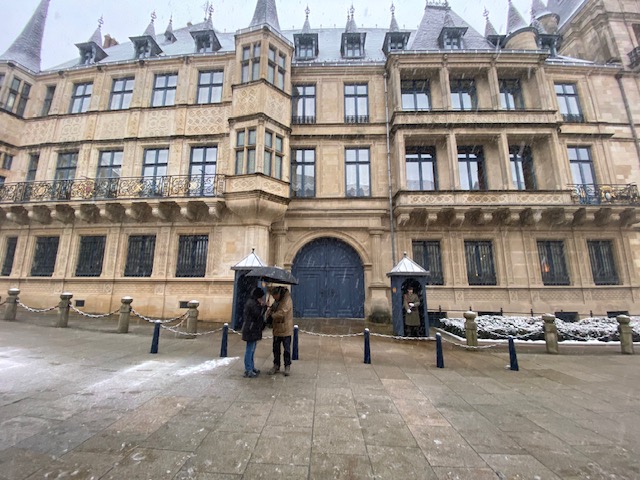
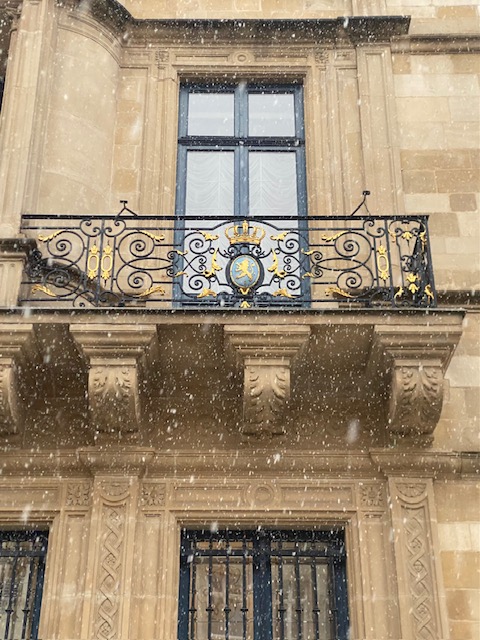
Close to the Lëtzebuerg City Museum, the Grand Ducal Palace stands next to Hôtel de la Chambre, the Chamber of Deputies or Parliament of Luxembourg.

The Grand Ducal Palace serves as the official residence of the Grand Duke of Luxembourg and is where he performs most of his duties as the head of state of the Grand Duchy. However, his primary residence is Berg Castle, situated in Colmar-Berg.
Historically, the building has played several roles. From 1572 to 1795, it served as Luxembourg’s city hall. It then became the seat of the prefecture of the Département des Forêts in 1795 when it was part pf France and, later, the headquarters of the Luxembourg Government in 1817. From that year, the palace was used as the residence of the governor, who represented the Dutch Grand Dukes.
Prince Henry of the Netherlands occupied the building during his tenure as lieutenant-representative of Luxembourg. In 1883, the interior was renovated in anticipation of a visit by King William III and Queen Emma, who were the Grand Duke and Grand Duchess of Luxembourg.
When the House of Nassau-Weilburg ascended to the throne in 1890, the palace was designated exclusively for the Grand Duke and his family. During the reign of Grand Duke Adolphe, the building underwent extensive renovations, and a new wing with family rooms and guest accommodations was added. These works were carried out by the Belgian architect Gédéon Bordiau and Luxembourgian state architect Charles Arendt.
During the German occupation in the Second World War, the palace was repurposed by the Nazis as a concert hall and tavern. Many of the palace’s furnishings, artworks, and jewels were destroyed, and large swastika flags were hung on its façade.
After Grand Duchess Charlotte returned from exile in 1945, the palace once again became the seat of the Grand Ducal Court. Under her supervision, the palace was redecorated during the 1960s and underwent a thorough restoration from 1991 to 1996. The interior continues to be periodically updated to meet modern standards of style and comfort.
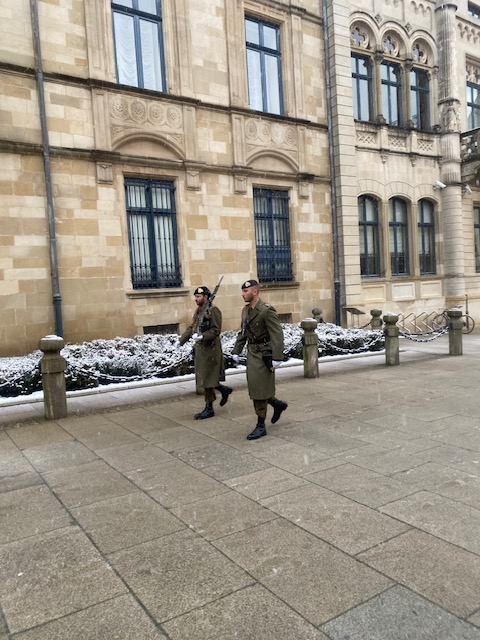
Between 1945 and 1966, the Grand Ducal Guard performed ceremonial guard duties at the palace. Since 1966, soldiers from Luxembourg’s military have assumed these responsibilities.
Today, the Grand Ducal Palace is the official workplace of the Grand Duke, where he performs his ceremonial and administrative functions. Both the Grand Duke and Grand Duchess, along with their staff, maintain offices at the palace. The state rooms on the first floor are used for various meetings and audiences, and the Grand Duke’s annual Christmas message is broadcast from the Yellow Room on Christmas Eve.
The palace also accommodates foreign heads of state during official visits to Luxembourg, with state banquets held in the Ballroom in their honour. Throughout the year, receptions such as the New Year’s event for members of the Government and the Chamber of Deputies are hosted at the palace.
During the summer, the Grand Ducal Palace opens its doors to the public for guided tours. These usually take place from mid-July to mid-September and are available in Luxembourgish, French, English, and German.



Diekirch
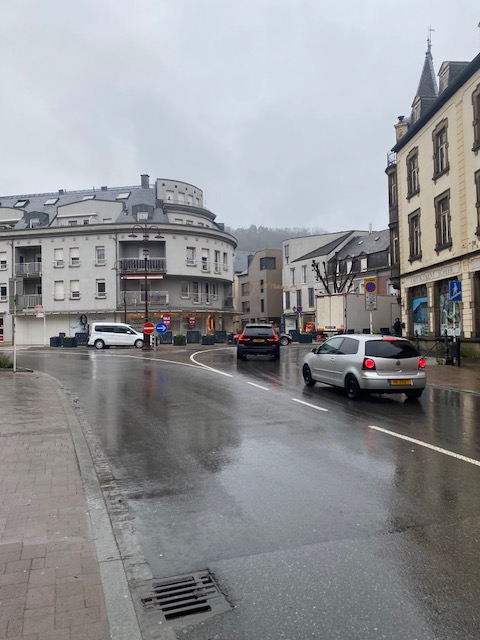
Diekirch is a historic town and commune in north-eastern Luxembourg, situated on the banks of the Sauer River. It lies within the canton of Diekirch and formerly belonged to the district of the same name until the district’s abolition in 2015. Known for its rich history and cultural significance, Diekirch combines a vibrant modern identity with its deep historical roots.
The town’s name originates from ‘Diet-Kirch‘ meaning ‘people’s church‘ a reference to its early Christian settlement during the reign of Charlemagne in the late 8th century. Over centuries, Diekirch evolved into a fortified medieval settlement, its walls and moat built under the rule of John, King of Bohemia, in the 14th century. These fortifications stood until the early 19th century, when they were removed by the occupying French forces.
Diekirch is renowned for its contribution to Luxembourg’s national identity. It was the first town in the country to establish a pedestrian zone in 1977 and is home to the National Museum of Military History, which commemorates its pivotal role in the Battle of the Bulge during World War II.
The town also hosts the national operational headquarters of the Luxembourg Army and one of the six regional headquarters of the Grand Ducal Police.
In addition to its historical and military significance, Diekirch is known for its brewery, which produces beer under the town’s name and holds a special place in Luxembourg’s brewing tradition.
The town also serves as a centre for education, with three prominent secondary schools located within its borders. Diekirch’s cultural charm is further reflected in its mascot, the donkey, celebrated annually through the town’s carnival cavalcade and symbolised by a donkey fountain in the town centre.





The Coradia
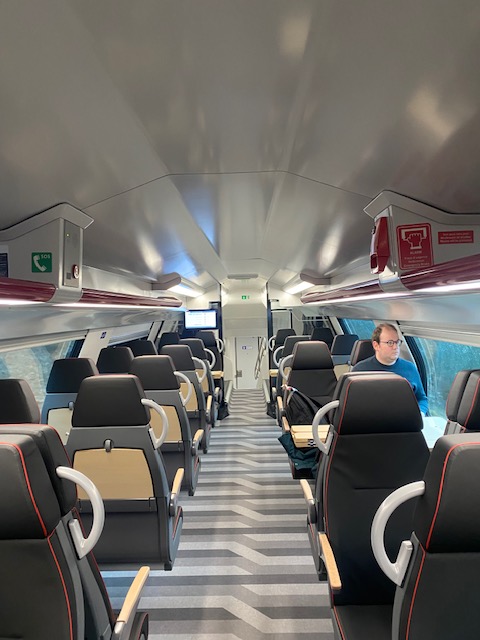
The Alstom Coradia Stream High Capacity is a modern, high-performance regional train designed to address growing passenger demand while optimising operational efficiency. As it’s a candidate to become NMBS / SNCB’s AM30, we wanted to have a closer look.
This versatile train is part of Alstom’s Coradia Stream family and offers a scalable solution for high-capacity regional and intercity transport. It is designed to accommodate both single and double-deck configurations, maximising passenger capacity and enhancing comfort.
The train features advanced propulsion technology for improved energy efficiency and reduced environmental impact, aligning with contemporary sustainability goals. It incorporates state-of-the-art digital systems, including passenger information and diagnostics, to improve the travel experience and simplify maintenance operations.
The Coradia Stream High Capacity is fully compliant with European standards for interoperability and safety, ensuring seamless operation across diverse rail networks. It is tailored to meet the needs of operators seeking reliability, flexibility, and future-ready transportation solutions.



So?
Despite inclement weather, which wasn’t motivating to walk a lot, we actually had a productive excursion.
Luxembourg 2025
- What is Schengen?.
- REVIEW | Lëtzebuerg City Museum or Luxembourg City History Museum.
- REVIEW | Sofitel Luxembourg Europe.
- REVIEW | Conservatoire National de Véhicules Historiques & Musée d’Histoire de la Brasserie de Diekirch car and beer museums in Diekirch, Luxembourg.
- LUXEMBOURG | Diekirch and the Musée d’Histoire[s] or Museum of History/ies.
- TRAINS IN LUXEMBOURG | CFL’s Alstom Coradia Stream HC ‘Série 2400’.
 Trip By Trip
7 Comments Add yours